Perkins Metallic Tractors
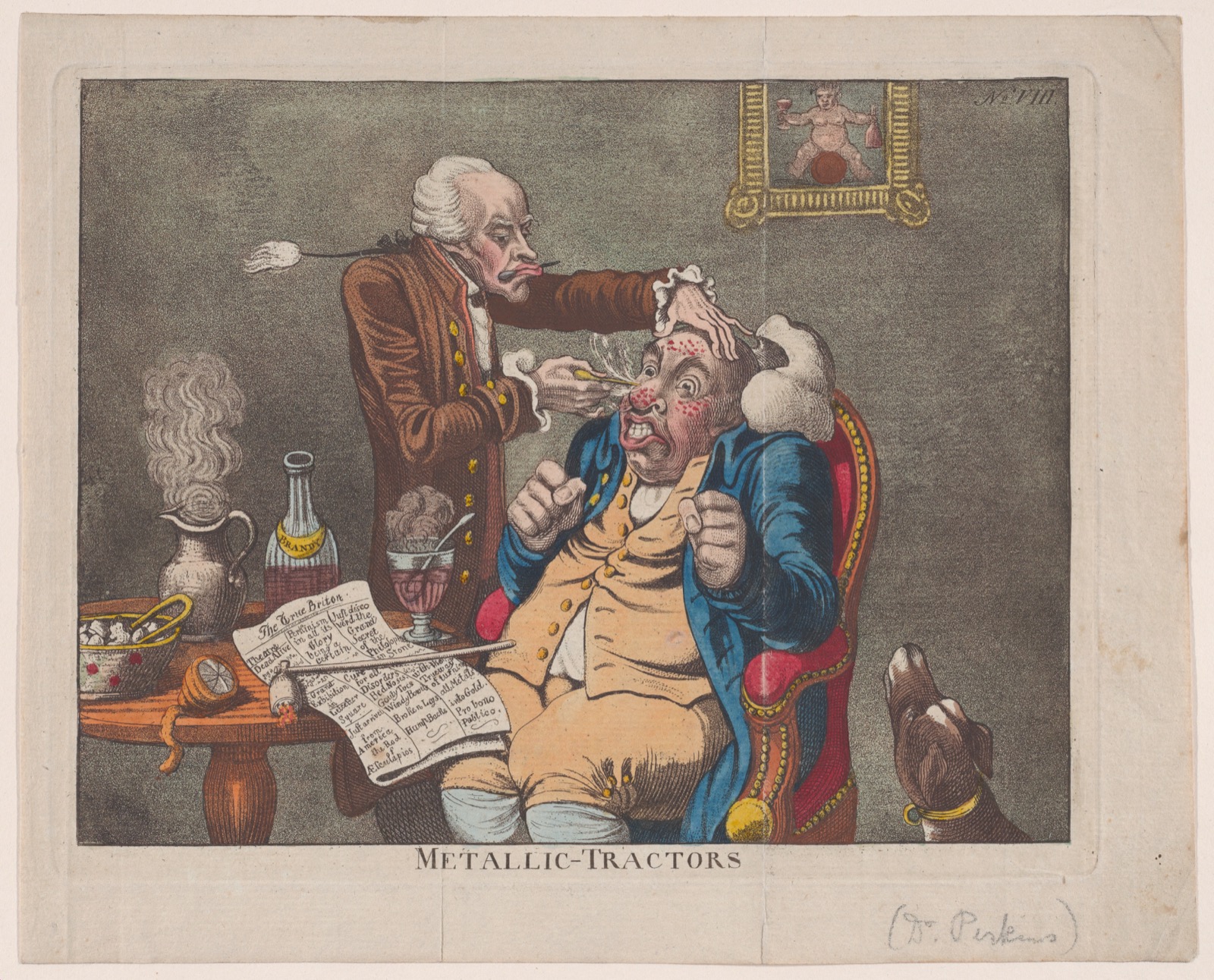
In 1796 the Connecticut physician Elisha Perkins patented two small metal rods of a secret alloy that, drawn across the skin, were said to pull a noxious electrical fluid out of the body and cure pain, gout, and paralysis. They sold for five guineas a pair. In January 1799 John Haygarth carved wooden fakes, stroked them over five patients at Bath, and got the same relief for nothing; Richard Smith repeated it at Bristol.
The doctor who patented two metal rods
On 19 February 1796, during the Washington administration, a rural Connecticut physician named Elisha Perkins received a United States patent for two short pointed rods, one of a yellow metal and one of a white metal, cast from an alloy he refused to name. Drawn lightly across the skin, he claimed, they pulled a ‘noxious electrical fluid’ out of the body and with it the pain of rheumatism, gout, inflammation, and paralysis. He began selling them within weeks at five guineas a pair.
Perkins (1741 to 1799) was no fringe figure. He had trained in medicine under his own father, practiced in Plainfield, and signed the Connecticut Medical Society’s charter at its founding in 1792. That standing was the point: a credentialed member of a state medical society, a patent signed by the federal government, and a confident mechanistic theory gave the tractors the surface form of legitimate medical innovation. His own colleagues saw through it first. In 1797, less than eighteen months after the patent, the Connecticut Medical Society expelled him for ‘delusive quackery’ on the strength of the tractor promotion.
Five guineas, and a clinic off Leicester Square
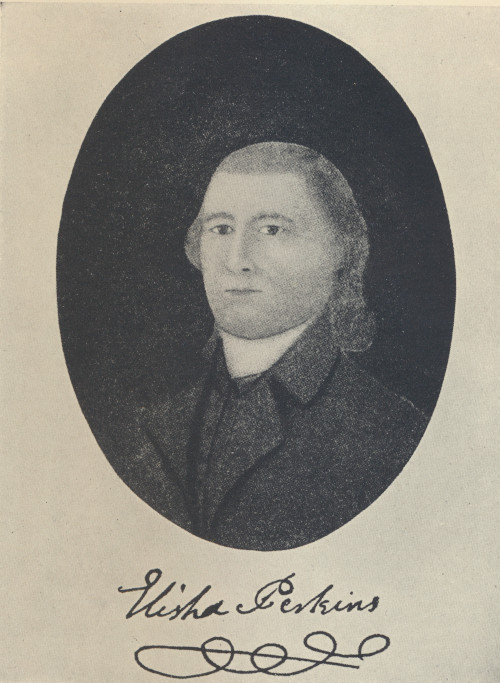
Access ran through the patent monopoly. Perkins sold the tractors at five guineas a pair, the better part of two months’ wages for a skilled artisan and pocket change for the elite household the device was aimed at. Tractors were marketed through subscription pamphlets, direct sales, and (after 1798) the Perkinean Institution in Leicester Square, London (founded 1804 by Benjamin Douglas Perkins, the practitioner’s son, under the deceased father’s patent). The London Perkinean Institution was the period’s flagship elite-medical-device retail establishment and the model for the later 19th-century pattern of patent-medicine retail organization. Notable purchasers and users in the United States included clergy, lawyers, and the wealthy mercantile families of New England; in England, the practice spread quickly through the fashionable medical-tourist circles of Bath and the West End of London. George Washington is widely reported in American popular sources to have purchased a set of tractors but this attribution is not directly documented in primary sources contemporaneous with Washington and is not cited by Wootton 2006 or Haygarth 1800.
The fluid that was never there
The mechanism was a ‘noxious electrical fluid’, lodged in the patient’s tissues and blamed for the pain, paralysis, or inflammation of whatever ailed them. The tractors, by virtue of a proprietary alloy left undisclosed in the patent (one rod yellow-tinted, one white-tinted), drew the fluid out when stroked lightly across the skin over the affected area. The mechanism was within the late-18th-century speculative-physics tradition that grouped electricity, magnetism, and animal-magnetism-style universal fluids as variant forms of a single subtle medium (the same tradition that had produced Mesmer’s animal magnetism in Paris 18 years earlier); it was speculative from the outset and had no experimental grounding. The proprietary-alloy posture was integral to the commercial proposition: customers could not reproduce the device by inspection or by visit to a competing manufacturer, so the patent monopoly carried the commercial logic.
Patent holder, sole maker, and his own witness
Perkins held the United States patent monopoly and was the sole authorized American manufacturer. Revenue derived from direct retail sales of pairs at five guineas, plus practitioner-license fees for those who wished to administer the tractors under the Perkins name. After the elder Perkins’s 1799 death, his son Benjamin Douglas Perkins continued the operation in London under the same patent, founding the Perkinean Institution in Leicester Square in 1804 as a dedicated retail-and-clinical site. The practice published no controlled outcome data; its evidentiary base consisted of Benjamin Douglas Perkins’s 1798 Influence of Metallic Tractors on the Human Body, a compilation of unblinded patient and family-member testimonials collected by the practitioner-vendor. The conflict structure (practitioner-developer, patent-monopoly-vendor, sole testimonial-aggregator, family-business successor) is the structural prototype of the patent-medicine-elite-device-quackery pattern that recurs in the 19th-century radium-tonic market (Bailey, 1925 to 1931) and in 20th-century cellular-therapy practice (Niehans, 1931 to 1971).
The wooden tractors that worked just as well
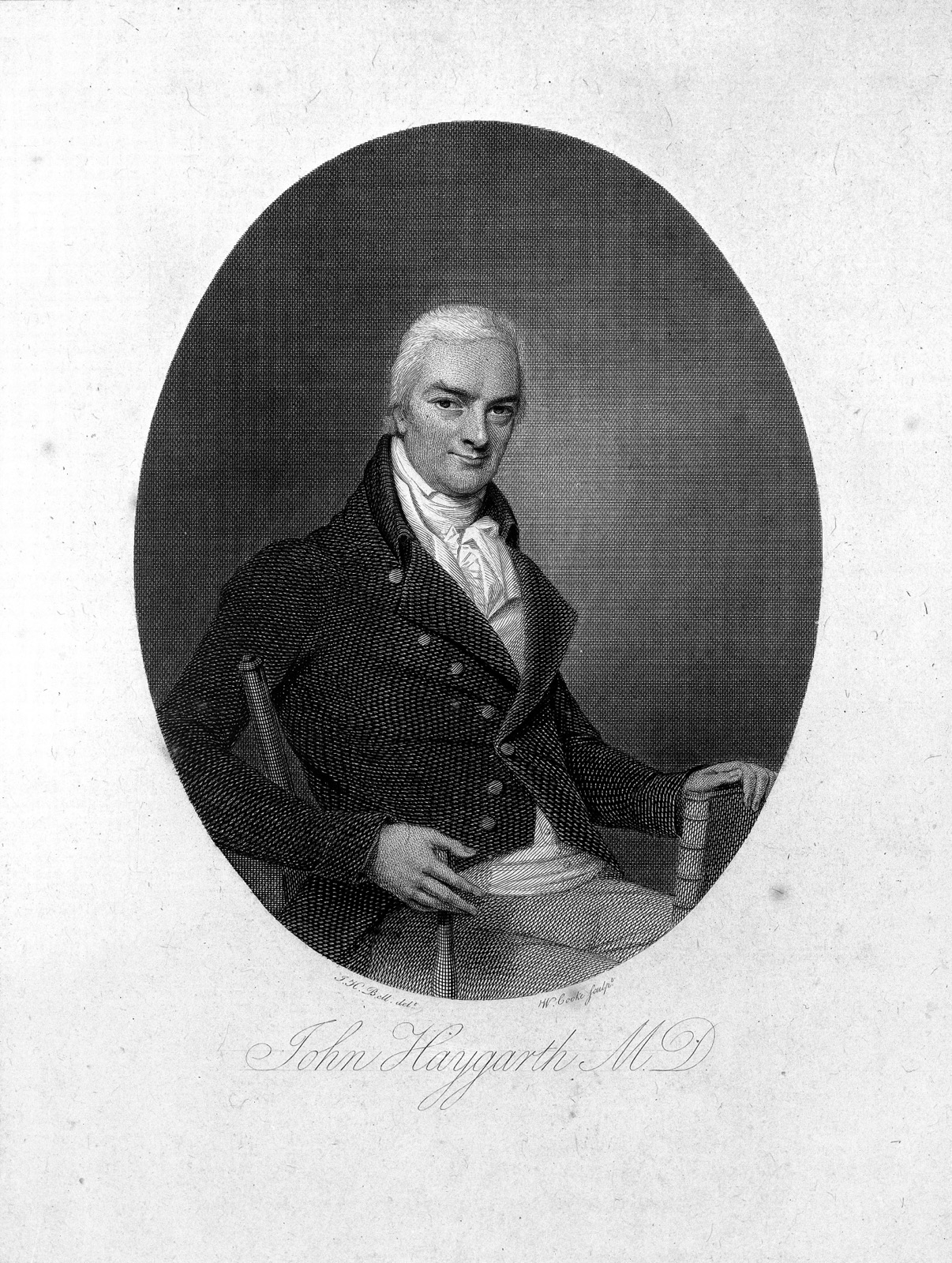
John Haygarth (1740 to 1827), a retired senior physician of Chester Infirmary and a Fellow of the Royal Society, encountered Perkinism in 1798 and (in collaboration with Richard Smith at Bristol Royal Infirmary) designed a fictitious-tractor experiment for the Bath General Hospital. In January 1799 Haygarth had wooden imitation tractors carved to resemble the patented metallic pair and applied them to five chronic patients under matched conditions. The wooden imitations produced the same reported relief at no cost. The Bath General Hospital experiment was independently replicated by Smith at Bristol within months. Haygarth published the results in 1800 as Of the Imagination as a Cause and as a Cure of Disorders of the Body (Bath: R. Cruttwell), which contains both the founding placebo-controlled clinical trial in the modern Anglophone medical literature and the first documented nocebo observation. The Perkins Tractors faded from active use by approximately 1810. Haygarth’s discovery of the placebo effect was not picked up by the contemporary medical community (Wootton 2006, p. 169: ‘his name does not appear in histories of medicine for his discovery of either iatrogenesis or the placebo effect’); the methodological framework was not generalized to other interventions during the 19th century, and the next major elite-medical disconfirmation arrived only with Brown-Séquard’s 1894 organotherapy debunking, 95 years later.
The pattern repeats
The same structural machinery appears in different treatments and eras. These cases show the claimed mechanism and how the claim met evidence.
Brodum's Restorative Nervous Cordial and Botanical Syrup
I-ON-A-CO
Overbeck's Rejuvenator
More related cases · 14
Part of the lineage
Evidence · 4 sources
- Bad Medicine: Doctors Doing Harm Since Hippocrates (2006)
- Of the Imagination as a Cause and as a Cure of Disorders of the Body; Exemplified by Fictitious Tractors, and Epidemical Convulsions (1800)
- Homeopathy and Its Kindred Delusions: Two Lectures Delivered Before the Boston Society for the Diffusion of Useful Knowledge (1842)
- John Haygarth, line engraving by W. Cooke, 1801 (1801)