Brown-Séquard testicular extract (organotherapy)
In June 1889 Charles-Edouard Brown-Sequard, 72 and professor of experimental medicine at the Collège de France, told the Société de Biologie he had injected himself with extract of dog and guinea-pig testes and felt his vigor return. Within a year pharmacists were selling "Brown-Sequard's elixir" across Europe and North America. He died in 1894, no rejuvenation shown, and Cussons et al. (2002) put the dose at 10,000-fold below any therapeutic level: the effect was placebo.
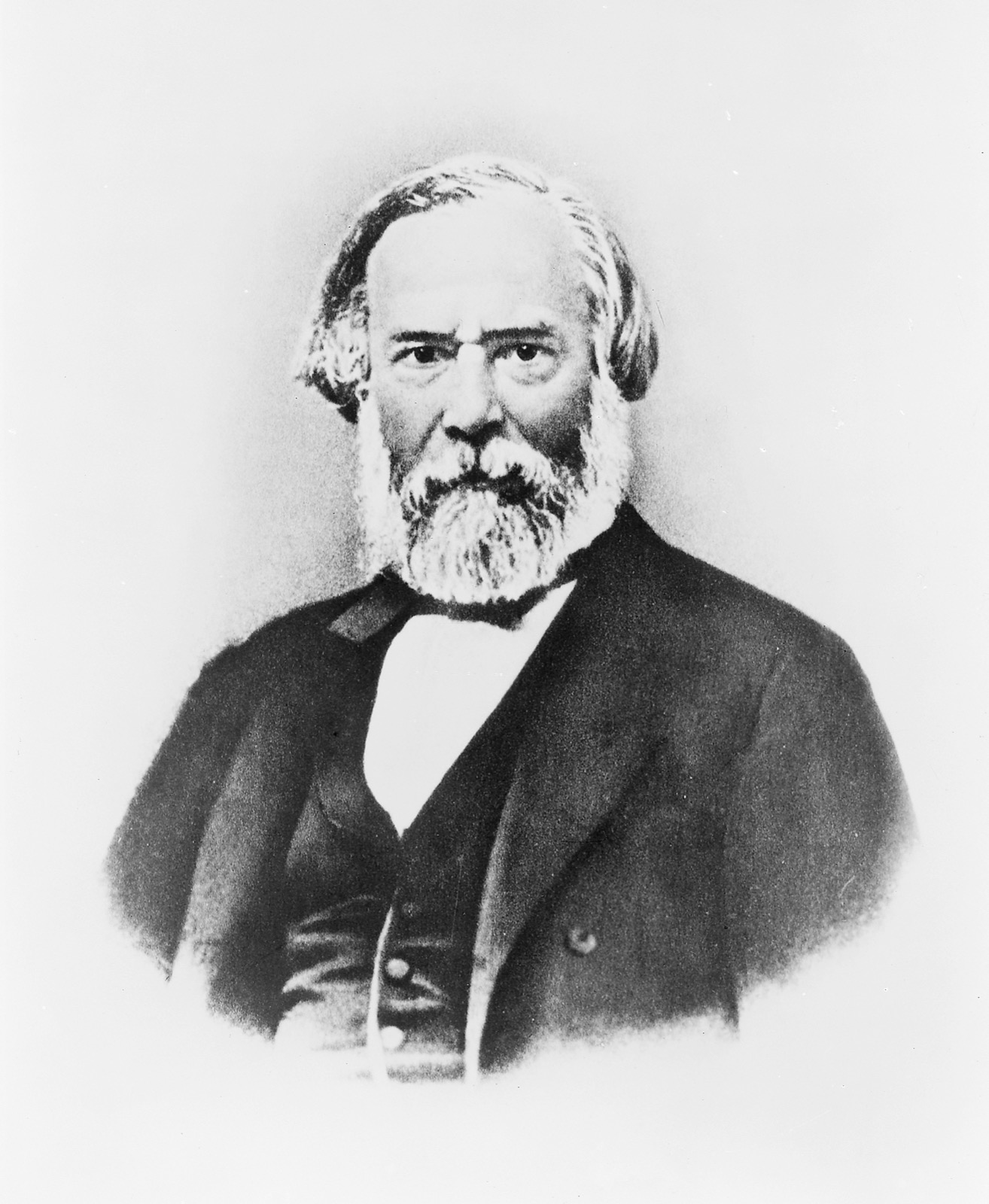
The professor who used himself as the experiment
On 1 June 1889, a 72-year-old man stood before the Société de Biologie in Paris and reported that he had injected himself five times over eighteen days with a water extract of dog and guinea-pig testes, and that his physical and mental vigor had come back. The man was Charles-Édouard Brown-Séquard (8 April 1817 to 1 April 1894), and he was not a fringe figure. Mauritius-born and Paris-educated, he had held senior academic posts in Paris, London, Dublin, and at Harvard; the spinal-cord injury pattern still called Brown-Séquard syndrome is named for him; and since 1878 he had occupied the chair of experimental medicine at the Collège de France. It was that standing, plus the fact that the subject of the experiment was the experimenter himself, that lifted the announcement above the lay rejuvenation claims of his era and gave it immediate traction inside the profession.
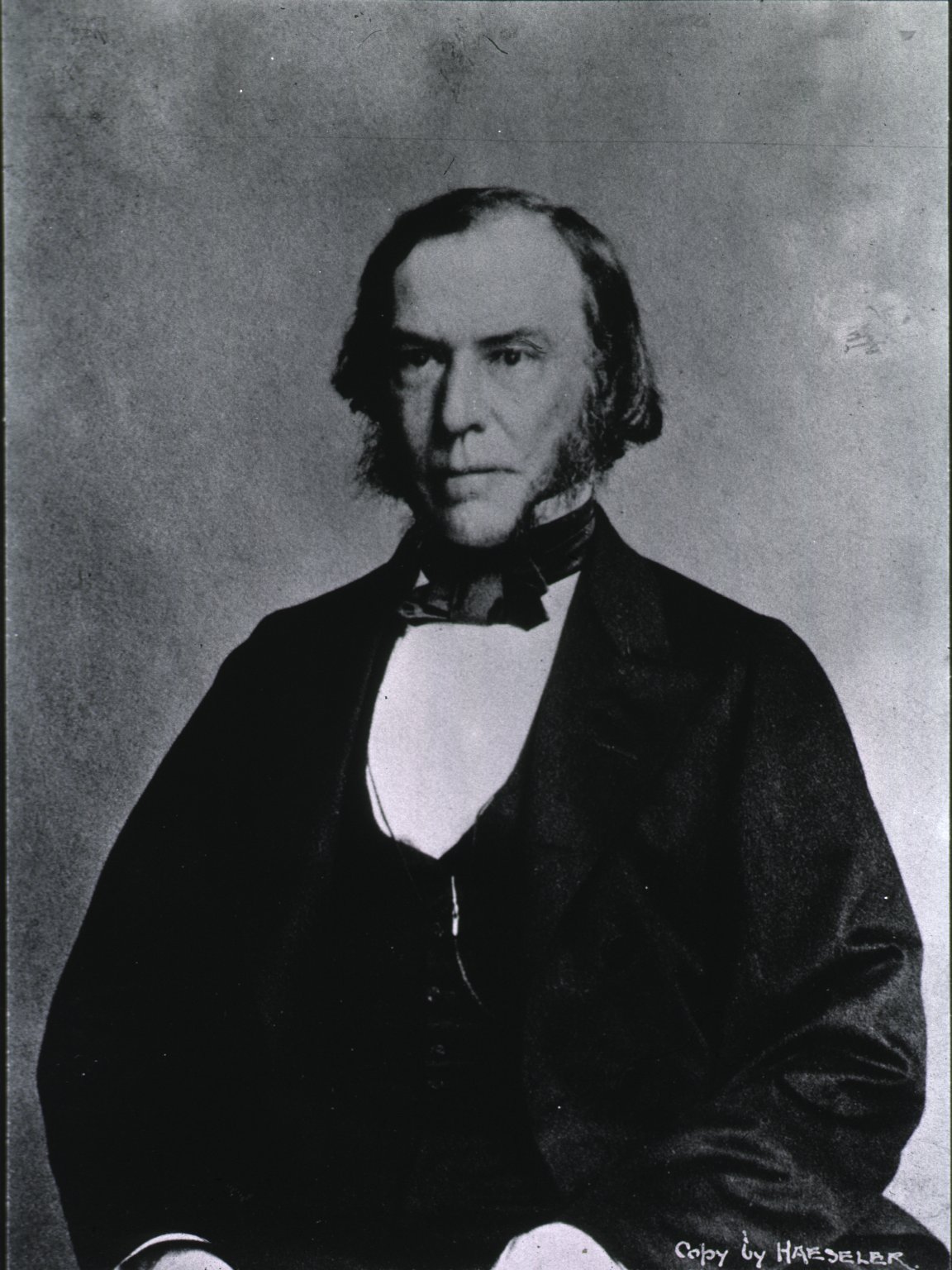
From his own circle to every pharmacy in a year
The initial protocol was administered by Brown-Séquard to himself and to a small number of older men in his immediate circle. Within months of the June 1889 announcement, the protocol was being produced and distributed by Brown-Séquard and his assistant Jacques-Arsène d’Arsonval to physicians and colleagues across Europe. Within roughly a year it had been picked up by pharmacists and pharmaceutical manufacturers and was being sold as ‘Brown-Séquard’s elixir’ and similar testicular-extract preparations across Europe and North America. The patient population for the commercial product was the urban professional and upper-class male; the protocol moved from exclusive personal use to mass-elite distribution within a single year.
Right about the gland, wrong about the bottle
Brown-Séquard claimed that aqueous extract from the freshly removed testes of guinea pigs and dogs, when injected subcutaneously into an older male, would restore physical vigor, mental acuity, and various functional capacities. The proposed mechanism rested on the assumption that the testes secrete a ‘vital substance’ that diminishes with age and that exogenous supplementation can restore the lost function. The mechanistic premise prefigured modern endocrinology in concept (testes do secrete an active substance, later identified as testosterone) but failed in execution: the aqueous extract Brown-Séquard prepared contained essentially no testosterone. Modern reconstruction (Cussons et al, Med J Aust 2002) estimates the testosterone delivered per injection at roughly four orders of magnitude below any therapeutic dose.
He gave it away; others sold his name
Brown-Séquard and d’Arsonval initially distributed the extract free of charge to physicians as research material. Commercial production, marketing, and sale of ‘Brown-Séquard’s elixir’ was conducted by independent pharmacists and pharmaceutical manufacturers across Europe and North America from 1890 onward. Brown-Séquard himself did not directly profit from the commercial sale of the preparation. The conflict in this case is academic-reputational rather than direct-financial: the published announcement and subsequent claims preserved his professional standing in a domain his contemporaries had begun to consider eccentric. The pharmaceutical industry that grew up around the announcement, however, was a major commercial enterprise driven by Brown-Séquard’s published authority.
Dead in five years, the dose later measured at nothing
Brown-Séquard died on 1 April 1894 in Paris, less than five years after his announcement and without having demonstrated objective rejuvenation. Critical assessment within the scientific community began almost immediately; by the early twentieth century the broader project of ‘organotherapy’ had been narrowed to a few effective interventions (notably thyroid extract for myxedema, where the active substance is in fact present in the preparation) and most of the testicular and adrenal extracts were recognised as therapeutically inert. The canonical modern reassessment is Cussons AJ, Bhagat CI, Fletcher SJ, Walsh JP, ‘Brown-Séquard revisited: a lesson from history on the placebo effect of androgen treatment,’ Medical Journal of Australia 2002;177(11-12):678-679, which reconstructed the testosterone dose and concluded that the reported clinical effects were necessarily attributable to placebo response.
The pattern repeats
The same structural machinery appears in different treatments and eras. These cases show the claimed mechanism and how the claim met evidence.
Blueprint (Project Blueprint)
Spermin-Poehl (Sperminum-Poehl) organotherapy
Brinkley goat-gland transplantation (goat-to-human gonad implant)
More related cases · 11
Evidence · 7 sources
- Effets produits chez l'homme par des injections sous-cutanées d'un liquide retiré des testicules frais de cobaye et de chien (1889)
- The effects produced on man by subcutaneous injections of a liquid obtained from the testicles of animals (1889)
- Brown-Séquard's Elixir — period advertisement (1890)
- Brown-Séquard revisited: a lesson from history on the placebo effect of androgen treatment (2002)
- Bad Medicine: Doctors Doing Harm Since Hippocrates (2006)
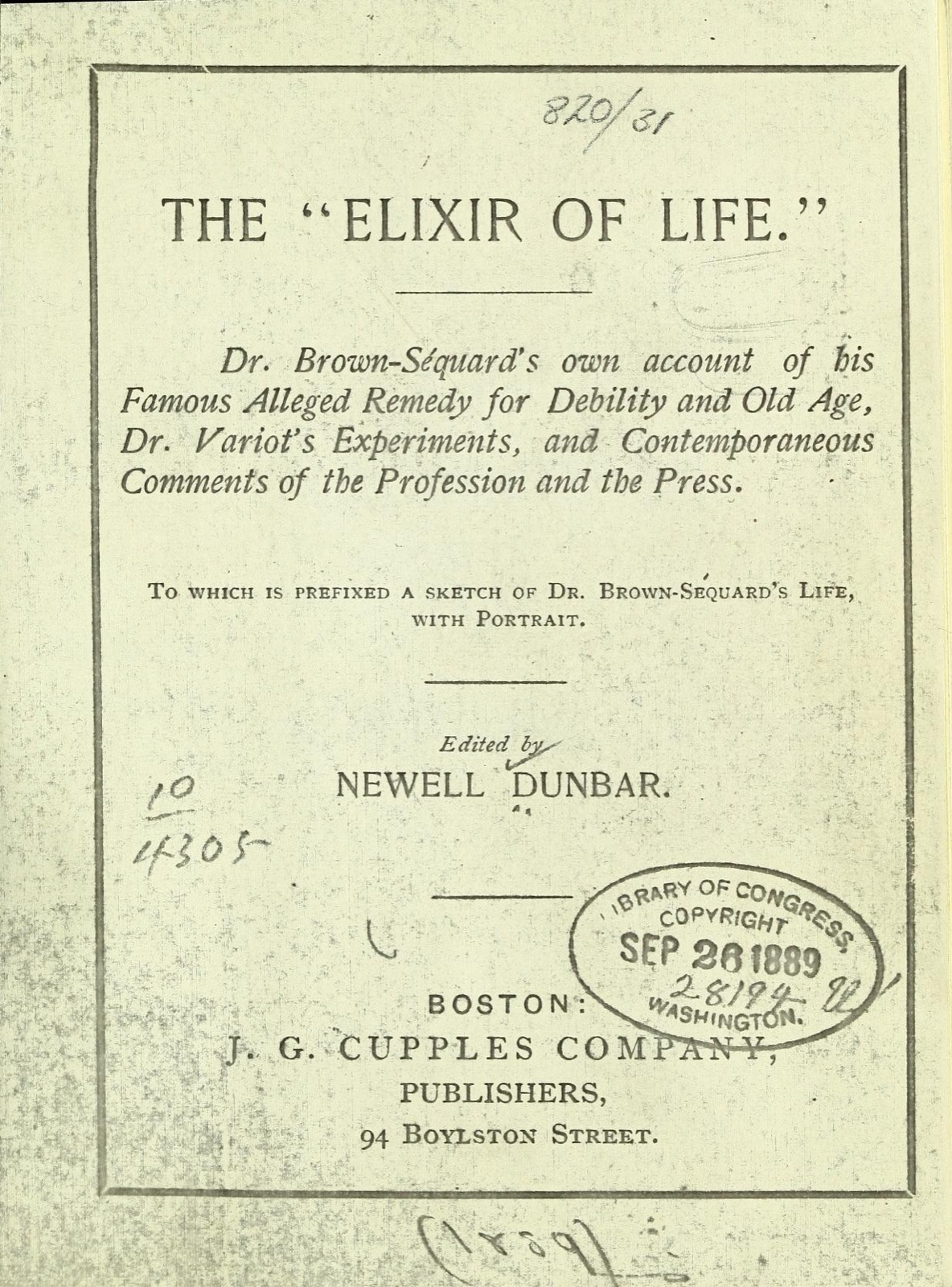
- The Elixir of Life title page (1889)
- Injection, ligation and transplantation: the search for the glandular fountain of youth (2007)