METHUSELAH ARCHIVE CASES / OVERBECK-REJUVENATOR-1924-1937
Archive case

Overbeck's Rejuvenator

A brewer with no medical degree wrote his own "electronic theory of life," signed it "the well-known British Scientist," and sold the body a recharge.
subjectOtto Overbeck active1924–1940 ● disconfirmed outcomepublicly disconfirmed

A chemist and brewer with no medical degree, Otto Overbeck patented a battery-and-comb set in 1924, declared that life is electricity you can top up, and sold the Rejuvenator straight to the public, growing rich enough to leave the National Trust a house. The British Medical Association refused him advertising in 1928 and had an engineer test the device; Australia moved against it in 1934. The milliampere currents could do nothing the advertising promised.
The recurring five-stage cycle
01
Charismatic practitioner
A brewer with no medical degree wrote his own "electronic theory of life," signed it "the well-known British Scientist," and sold the body a recharge.
02
Exclusive access
Not a clinic procedure but a branded home appliance, built at scale by Ediswan and sold straight to the public over the doctor's head.
03
Vague mechanism
The pitch: life is electricity stored in the body, illness is a low charge, and a comb, rod, and plate plugged into a battery top you back up.
04
Financial conflict
One man was the theory's author, its eleven-country patent-holder, and the proprietor of the firm that made and sold the cure.
05
Disconfirmation / collapse
The BMA refused him advertising in 1928 and had an engineer open up the box; Australia moved against it in 1934; the currents cured nothing.
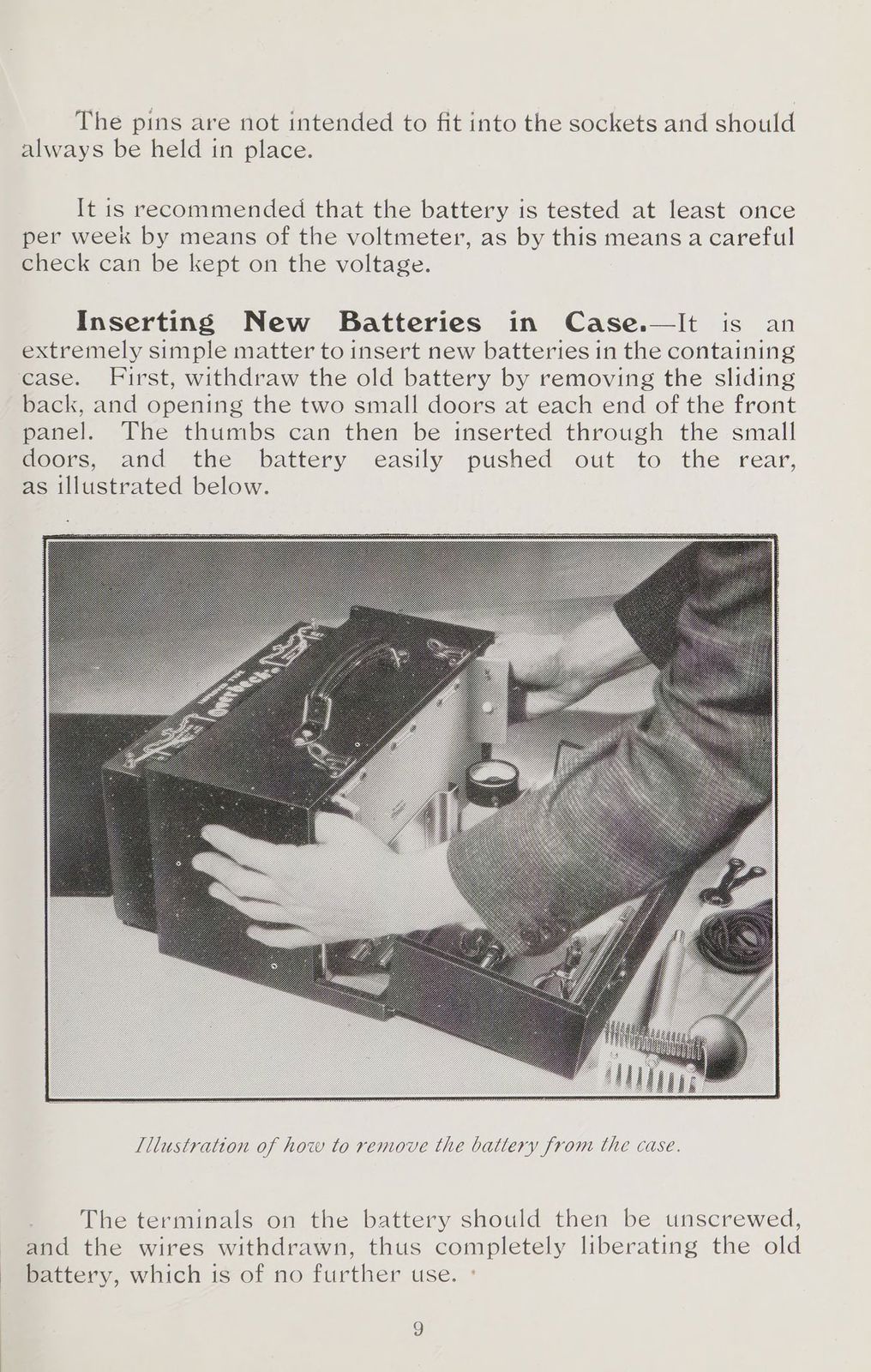
Black-and-white photograph of a metal boxed apparatus on a table, its sliding back open and a hand reaching inside; rod and comb electrodes and cords lie beside it.
FIG 1 Overbeck's Rejuvenator with its case open, from the device's own 1938 Supreme Model directions booklet. The photograph illustrates removing the battery; the boxed apparatus and its electrodes are visible. Wellcome Collection, Public Domain Mark. (1938) PUBLIC DOMAIN source

The brewer who discovered the electrical basis of life

In 1924 Otto Christoph Joseph Gerhardt Ludwig Overbeck (1860 to 1937), a chemist and brewer born in London, filed a patent for an ‘Electric Multiple Body Comb’ and set about telling the public he had discovered what life is made of. He was not a physician. He was, by his own publicity, ‘the well-known British Scientist,’ and the year after the patent he published his case in his own book, A New Electronic Theory of Life (1925), followed by The New Light in 1936. James F. Stark’s 2014 study in Medical History identifies the missing medical degree as the engine of the whole enterprise rather than an embarrassment to it: having no professional reputation to protect, Overbeck could advertise directly and aggressively to lay buyers in a way a registered doctor never could. The authority he projected was the inventor-scientist with a published theory and a patented machine, which dressed a home electrical gadget in the surface form of an applied discovery.
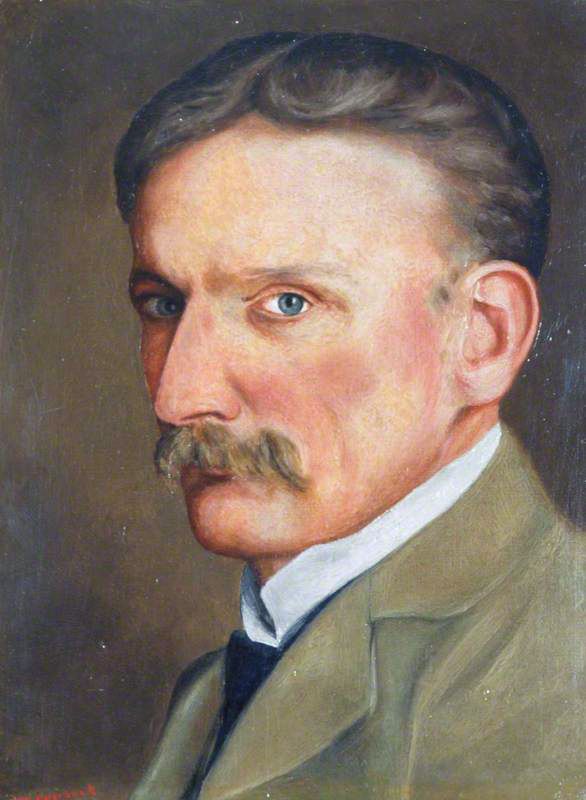
Painted head-and-shoulders self-portrait of a moustached man with dark hair parted to the side, wearing an olive jacket over a white collar and dark tie, against a plain brown background.
FIG 2 Otto Overbeck (1860 to 1937), self-portrait dated 1902. Overbeck was a chemist, brewer, and painter before he patented and sold his electrical Rejuvenator. Public domain, via Wikimedia Commons (credited to Art UK). (1902) PUBLIC DOMAIN source

Rejuvenation in a fitted case, sold over the doctor’s head

Access was structured as a branded, patented consumer product sold directly to the public and used at home, bypassing the medical profession entirely. Stark records that Overbeck foregrounded the device’s patented status (he held patents in eleven countries on its ‘Electric Multiple Body Comb’ component) as a mark of legitimacy and had it manufactured at scale by the prestigious Ediswan (Edison Swan Electric) company, signals of quality deployed in the marketing. The Rejuvenator was supplied as a self-contained set, a battery and interchangeable rod, comb, and plate electrodes in a fitted case, with an illustrated directions booklet prescribing electrode placements for a long list of complaints. The premium home apparatus, sold direct rather than dispensed by a clinician, is the same elite-device retail logic seen in Perkins’s metallic tractors and, contemporaneously, in Abrams’s leased Oscilloclast, here recast as an over-the-counter product the buyer operated alone.

The body as a battery that runs low

The proposed mechanism was Overbeck’s ‘electronic theory of life’: the claim, in Stark’s summary, that life consists of appropriate amounts of electricity stored within and passing between the different parts of the body, so that illness is an imbalance of that bodily electricity and health is restored by topping it up with small externally applied currents. The directions booklet operationalized the theory by mapping electrode shapes and three power strengths (high, medium, low, selected by which sockets the cords were plugged into) to specific ailments. The vocabulary of charging and balance was borrowed from electrical engineering without its physics: physiology recognizes bioelectric phenomena such as nerve and muscle action potentials, but not a stored, depletable whole-body ‘electrical balance’ that a comb electrode could replenish. The device’s own booklet instructed weekly battery testing with a voltmeter at 4, 8, or 12 volts, confirming that the currents involved were very small.
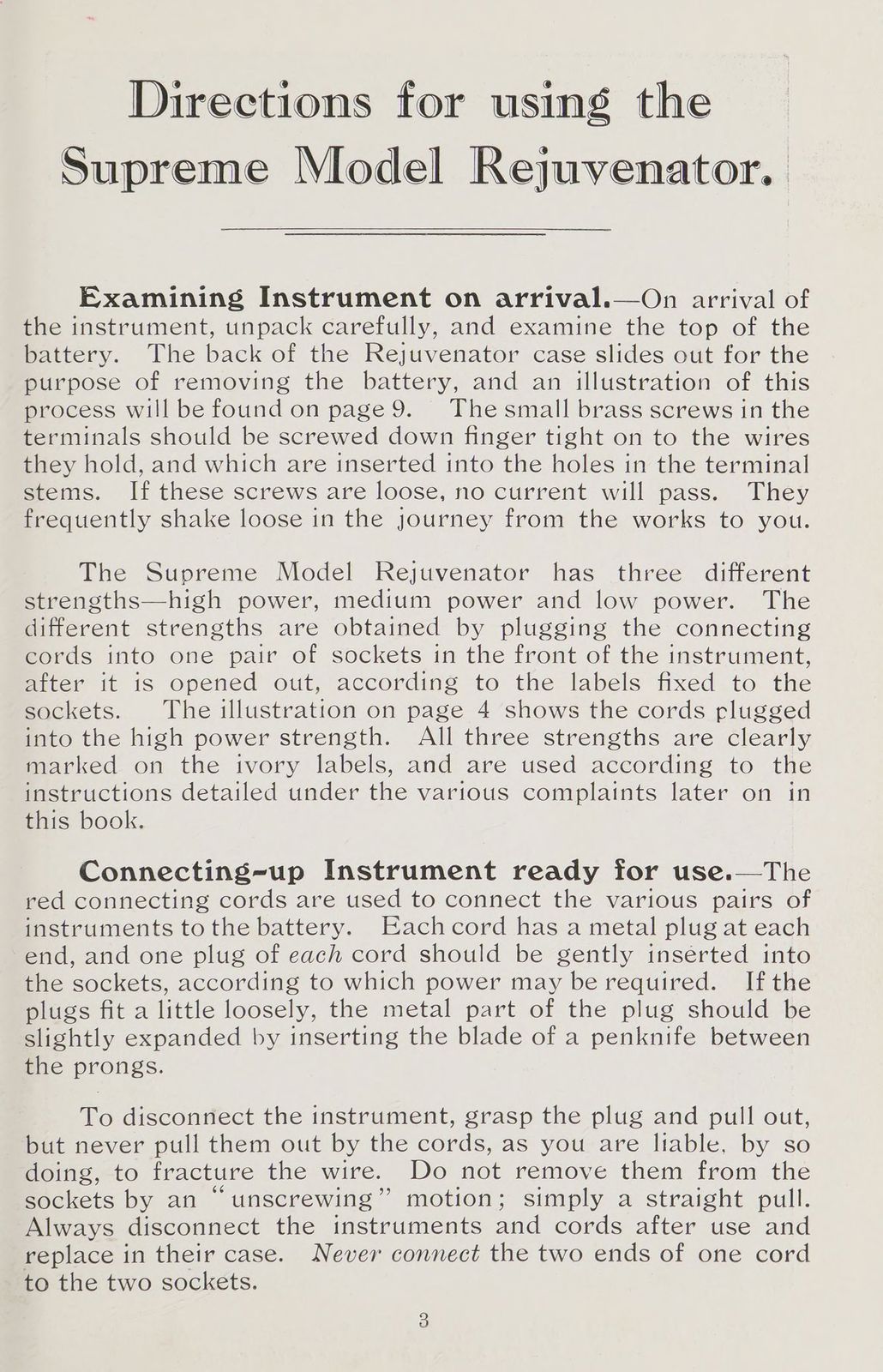
A printed page from a booklet headed 'Directions for using the Supreme Model Rejuvenator,' with several paragraphs of instructions in serif type.
FIG 3 The directions page of Overbeck's Rejuvenator Supreme Model booklet (1938), headed 'Directions for using the Supreme Model Rejuvenator,' describing the device's three power strengths and its connecting cords. Wellcome Collection, Public Domain Mark. (1938) PUBLIC DOMAIN source

Author, patent-holder, and shopkeeper in one man

Overbeck was at once the author of the doctrine, the patent-holder, and the proprietor of the business that made and sold the device (trading under his own name and later as Overbeck’s Rejuvenator Ltd of Grimsby). Stark records that the Rejuvenator brought him wealth and notoriety: he bought a large Edwardian house on the South Devon coast at Salcombe, with an exotic garden, which he later left to the National Trust (the property is now ‘Overbeck’s’). The marketing relied on testimonials from users and from named practitioners, some of whom, Stark notes, said their endorsements had been quoted without their knowledge or consent. What the sources support is the concentration of theory-author, patent-holder, and vendor in one person, and a direct-to-consumer model that monetized a home device while bypassing the professional scrutiny a prescribed treatment would have drawn.

An engineer opens the box

The organized medical profession rejected the Rejuvenator, though without a single decisive courtroom debunking. Stark documents that the British Medical Association refused Overbeck advertising space in the British Medical Journal in 1928 after receiving complaints, commissioned an electrical engineer to examine the apparatus, and contacted the practitioners whose endorsements appeared in his publicity to check them. In 1934 Australian authorities, in one of his largest advertising markets, moved against the product as not a reliable method of treatment. The reception was, in Stark’s account, essentially uniformly hostile even as the device sold well to the lay public. No controlled outcome data were ever produced; the evidence base was solicited testimonial throughout, and the milliampere-scale currents the device delivered have no rejuvenating or curative effect. The rejuvenation and broad cure claims are refuted. Production ceased around 1940 with the war, and the business wound down to supplying spare parts before fading entirely.

Notes

Otto Overbeck (1860 to 1937) was a chemist and brewer, not a doctor, who in 1924 patented a domestic electrotherapy device he called the Rejuvenator and sold it directly to the public through the later 1920s and 1930s. James F. Stark’s 2014 study in Medical History reconstructs the enterprise. Overbeck’s pitch rested on his own ‘electronic theory of life,’ set out in his 1925 book A New Electronic Theory of Life: the claim that life consists of appropriate amounts of electricity stored within and passing between the parts of the body, so that illness is an electrical imbalance and health can be restored by applying small currents from a battery through a set of electrodes. The device was sold as renewing the vitality of old and young alike, the rejuvenation promise that gave it its name and placed it in the same 1920s boom as Voronoff’s gland grafts and Steinach’s rejuvenation operation.

The commercial form was a branded, patented consumer product rather than a clinical service. Stark records that Overbeck held patents in eleven countries on the device’s ‘Electric Multiple Body Comb’ component, had the apparatus manufactured at scale by the prestigious Ediswan company, and marketed it directly to lay consumers through testimonial-led newspaper advertising, notably in Australia and New Zealand, while presenting himself as ‘the well-known British Scientist.’ Because he was not a medical man, he could advertise in ways a registered doctor could not, and the patent and the Ediswan manufacture were themselves used as marks of legitimacy. The Rejuvenator was supplied as a battery and interchangeable rod, comb, and plate electrodes in a fitted case, with an illustrated directions booklet, examples of which survive in the Wellcome Collection, prescribing electrode placements and three power strengths for a long list of complaints. The booklet’s instruction to test the battery weekly at 4, 8, or 12 volts confirms that the currents delivered were very small.

The medical profession rejected the device, though without one decisive public debunking. Stark documents that the British Medical Association refused Overbeck advertising space in the British Medical Journal in 1928 after complaints, commissioned an electrical engineer to examine the apparatus, and wrote to the practitioners whose endorsements appeared in his publicity, some of whom said they had been quoted without their consent. In 1934 Australian authorities moved against the product as not a reliable method of treatment. No controlled outcome data were ever produced; the evidence base was solicited testimonial, and the milliampere-scale currents involved have no rejuvenating or curative effect. The claims are refuted.

The Rejuvenator nonetheless made its inventor rich: Stark records that Overbeck bought a large Edwardian house on the South Devon coast at Salcombe, which he left to the National Trust and which is open today as ‘Overbeck’s.’ Overbeck died in 1937; production ceased around 1940 with the war, and the business wound down to supplying spare parts before disappearing. The case belongs to the electrical-and-vitalist sub-lineage of this archive alongside Mesmer’s animal magnetism and Perkins’s metallic tractors, and most closely to Abrams’s Electronic Reactions of the same period. Its distinctive feature is the form of the thing sold: not a clinic procedure or a sealed leased box but a mass-manufactured home appliance, backed by a patent and a brand and operated by the buyer alone, promising to recharge the body back to youth.