Animal magnetism (mesmerism)
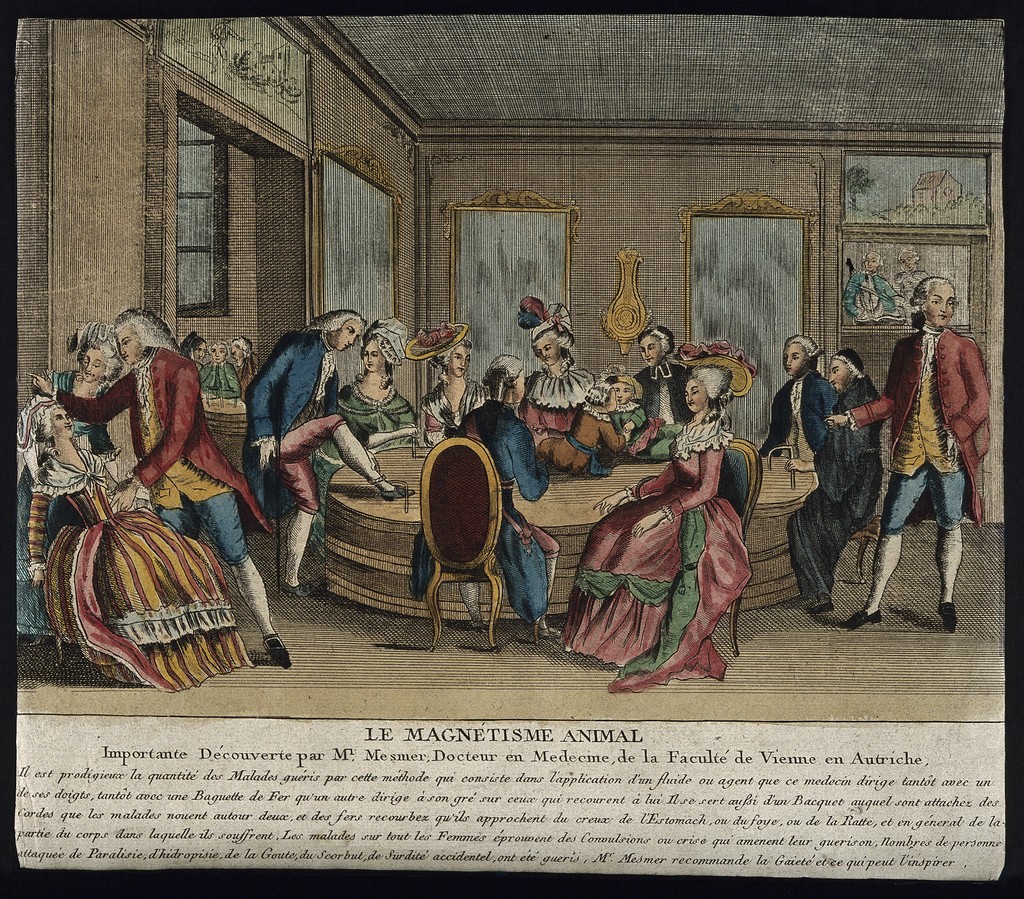
From 1778 Mesmer treated the Paris court around his baquet, a tub of magnetized water whose iron rods, he claimed, channelled an invisible universal fluid that cured by throwing patients into convulsive "crises." In 1784 a royal commission under Benjamin Franklin and Antoine Lavoisier tested the practice blind, found no fluid, and traced the crises to imagination and suggestion — the first time the scientific method was turned on a clinical claim.
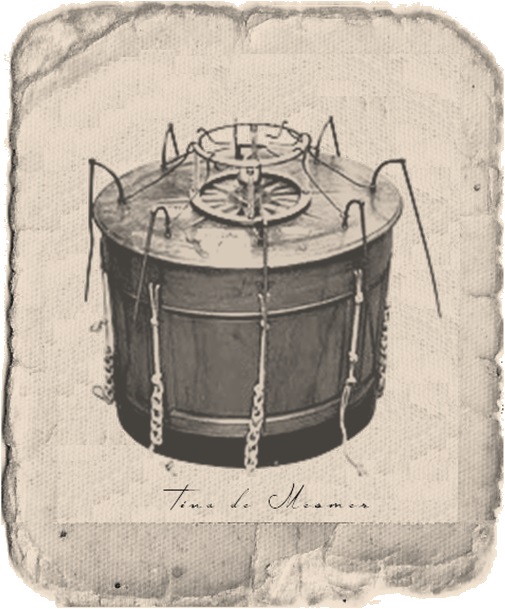
The physician who magnetized the court
In 1778 a Vienna-trained physician arrived in Paris with a theory that a single invisible fluid pervaded every living body, and that illness was nothing but a blockage of its flow. Within a few years Franz Anton Mesmer (1734-1815) had assembled a clientele drawn from the upper reaches of the French court, the salon culture, and the wealthy bourgeoisie around his practice in the Place Vendôme. His theory of ‘animal magnetism’ had taken shape in Vienna through the 1770s, after he received his medical degree there in 1766. What set him apart from the period’s many peripheral magnetic operators was the package: a University of Vienna degree, fluency in elite social codes, and the production of dramatic clinical effects in his patients.
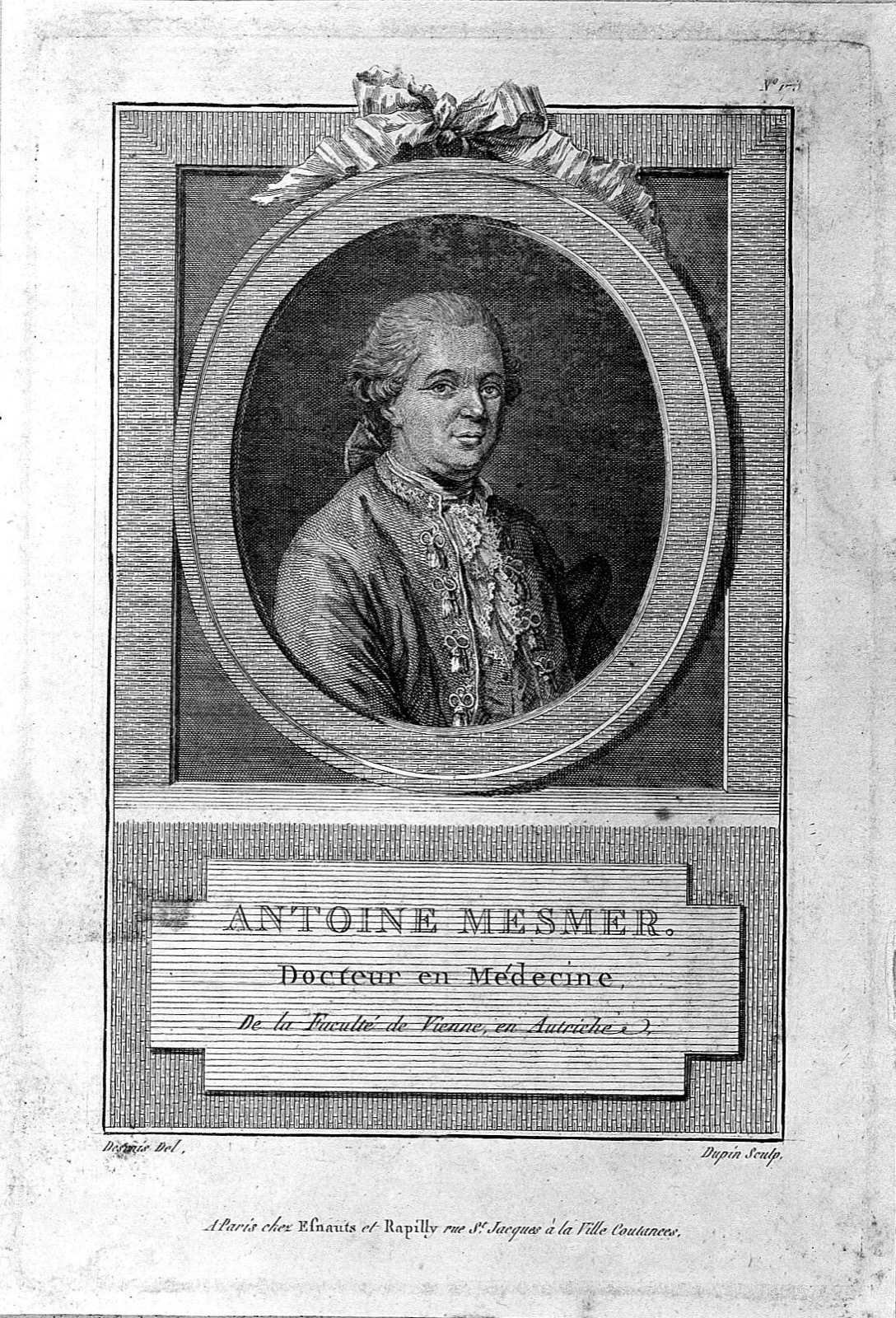
A hundred louis to join the circle
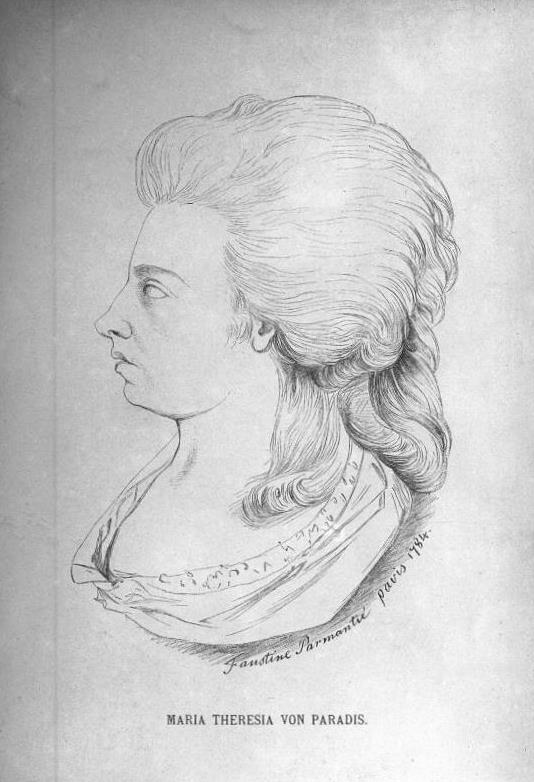
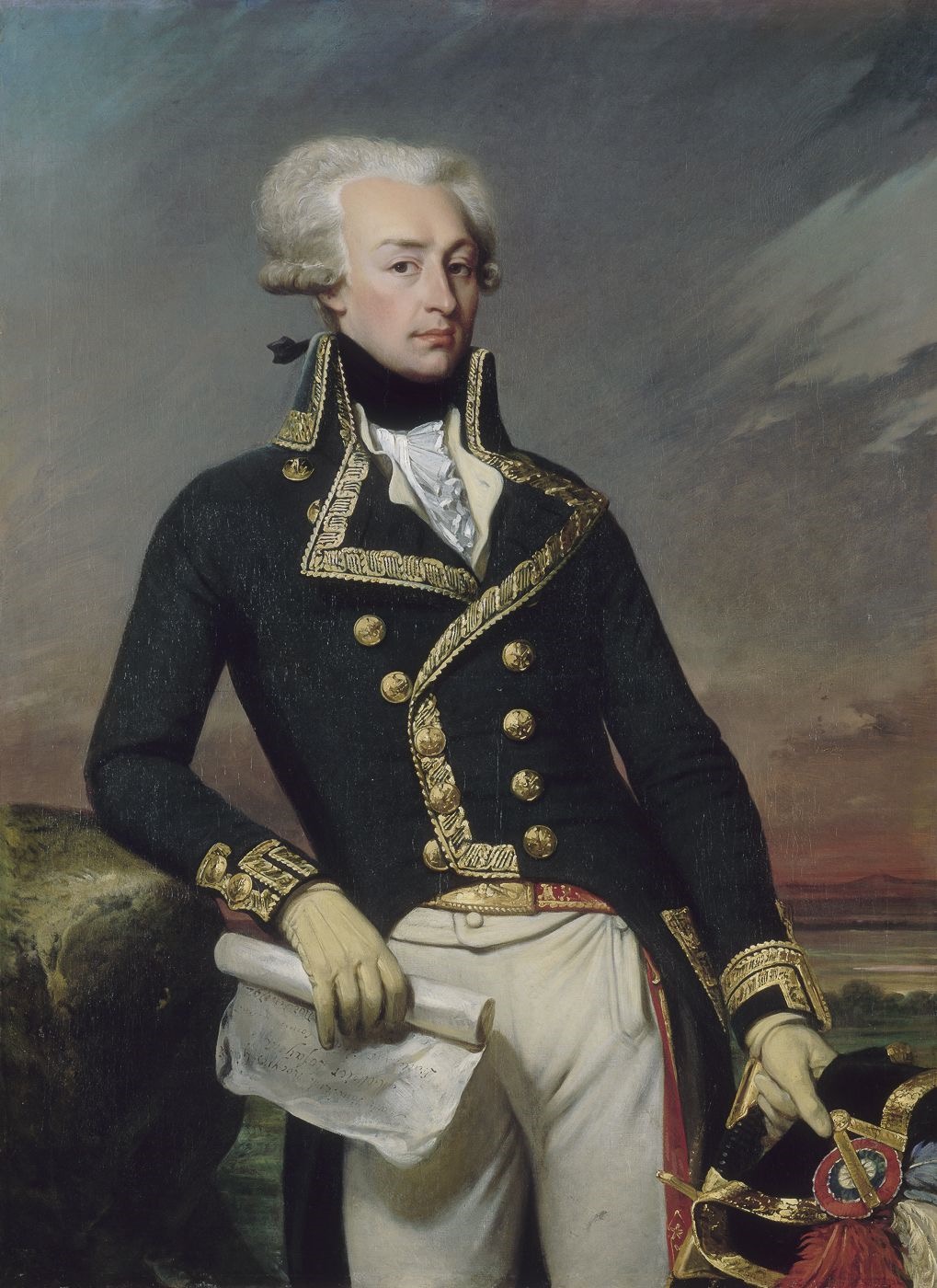
Access to Mesmer was structured through subscription. The Société de l’Harmonie Universelle, founded in Paris in 1783, formalized the access model: members paid 100 louis (a substantial sum that priced out everyone below the urban professional class) for the right to be instructed in the technique and to practice it on others. Group treatments around the ‘baquet’ (a large wooden tub fitted with iron rods, holding water and metal filings, around which patients sat holding the rods or joined by cords) were the practice’s signature setting. Patients commonly experienced convulsions, weeping, laughter, fainting, or trance-like ‘crises’ during sessions. Notable patrons of the Société and the practice included the Marquis de Lafayette (who later attempted to introduce mesmerism to the United States). Maria Theresia von Paradis, the blind Viennese pianist, was Mesmer’s best-known earlier (Vienna) patient. Mesmer’s wider Paris client list ran into the hundreds and reached the court of Marie Antoinette.
A fluid no instrument could find
The proposed mechanism was a ‘universal fluid’ analogous to gravity or electricity that flows through and connects all living things. Illness was reframed as a disruption of fluid flow; treatment as the restoration of flow via a properly trained operator’s hands and the baquet apparatus. The mechanism was speculative from the outset and had no physical or experimental grounding. Mesmer published his Mémoire sur la découverte du magnétisme animal in 1779 to expound the theory; the document contains case descriptions and theoretical claims but no controlled experimental work.
Every role in one man
Mesmer’s income derived from private patient fees and from Société de l’Harmonie Universelle subscriptions and licensing of the protocol to trained practitioners. He was the developer, the principal vendor, and the credentialing authority for a network of derivative operators across France and beyond. His personal wealth grew substantially during his Paris years; the Société’s subscription receipts were the principal revenue mechanism. He published no controlled outcome data and ran no comparison studies of his own practice. The conflict structure (developer-vendor-credentialing-author concentrated in a single individual) is the earliest documented full instance of the pattern that recurs across this archive.
When the test was run blind
In 1784 King Louis XVI ordered an official investigation, and it did the one thing Mesmer never had: it removed the patient’s knowledge of when the fluid was supposedly being applied. Two commissions were convened. The principal royal commission, drawn from the Académie des Sciences and the Faculté de Médecine, was headed by Benjamin Franklin (then American envoy to France) and included Antoine Lavoisier, Jean-Sylvain Bailly, Joseph-Ignace Guillotin, Jean d’Arcet, and Jean-Baptiste Le Roy; a second was drawn from the Société royale de médecine. The principal commission examined the practice of Charles d’Eslon (Mesmer’s principal Paris collaborator) under blind and controlled conditions. It concluded that there was no evidence for a magnetic fluid and that the observed effects (the ‘crises’) were attributable to imagination, expectation, and suggestion. A public report was issued in August 1784. A separate confidential report warned that the intimate physical contact of the practice posed risks of moral and physical harm, particularly to women. The commissions’ work is the canonical case in the history of the scientific method of using blinded, controlled procedures to disconfirm a clinical claim.
The pattern repeats
The same structural machinery appears in different treatments and eras. These cases show the claimed mechanism and how the claim met evidence.
I-ON-A-CO
Overbeck's Rejuvenator
Electronic Reactions of Abrams (ERA)
More related cases · 9
Part of the lineage
Evidence · 4 sources
- Mémoire sur la découverte du magnétisme animal (1779)
- Rapport des commissaires chargés par le Roi de l'examen du magnétisme animal (Public Report) (1784)
- Confidential Report of the Commissioners to the King on Animal Magnetism (Secret Report) (1784)
- Mesmerism and the End of the Enlightenment in France (1968)