Radithor
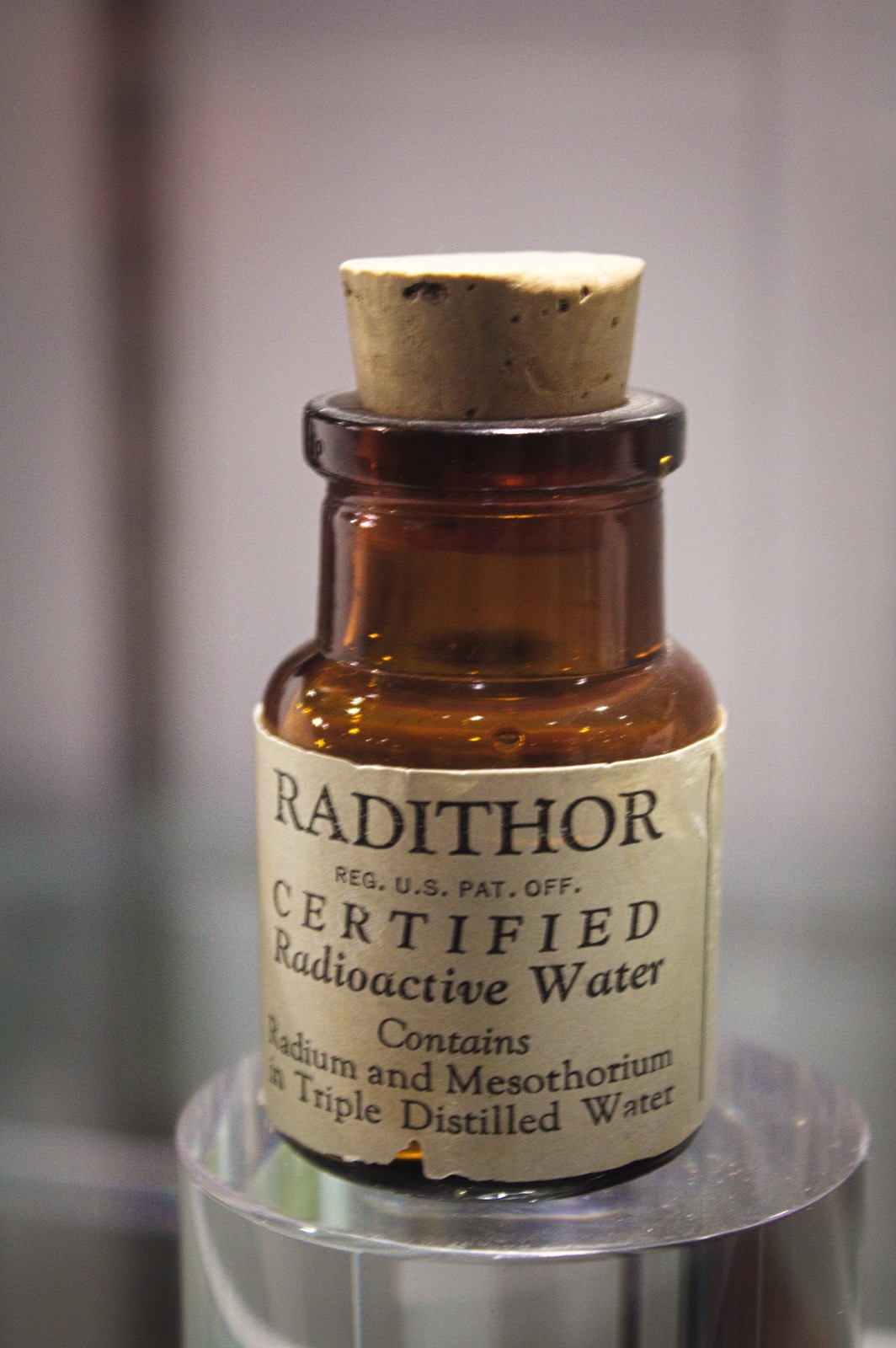
Radithor was distilled water laced with radium, sold by the bottle as "mild radium therapy" to stimulate the glands and cure 150 ailments. Eben Byers, a Pittsburgh industrialist and amateur golf champion, drank roughly 1,400 bottles. The radium lodged in his bones; his jaw and skull dissolved, and he died of radiation-induced cancers in 1932. William Bailey, a Harvard dropout styling himself "Dr." on a fraudulent doctorate, had sold it at a 400 percent margin.
The “Dr.” who never earned the title
The radium in Radithor was real; the doctor selling it was not. William J. A. Bailey had dropped out of Harvard College, then claimed a medical doctorate he never earned and put ‘Dr.’ in front of his name. From 336 Main Street in East Orange, New Jersey, with a second office at 27 Front Street East in Toronto, his Bailey Radium Laboratories ran from about 1925 to 1930-1931, bottling distilled water dosed with radium and advertising it as a tonic for more than 150 conditions, among them dyspepsia, hypertension, impotence, lassitude, and rheumatism. He reached buyers through a network of cooperating physicians, paying each a 17 percent rebate on every dose prescribed, and through direct mail order. The credentials were spurious; the salesmanship was not.
A fall on a football train, then 1,400 bottles
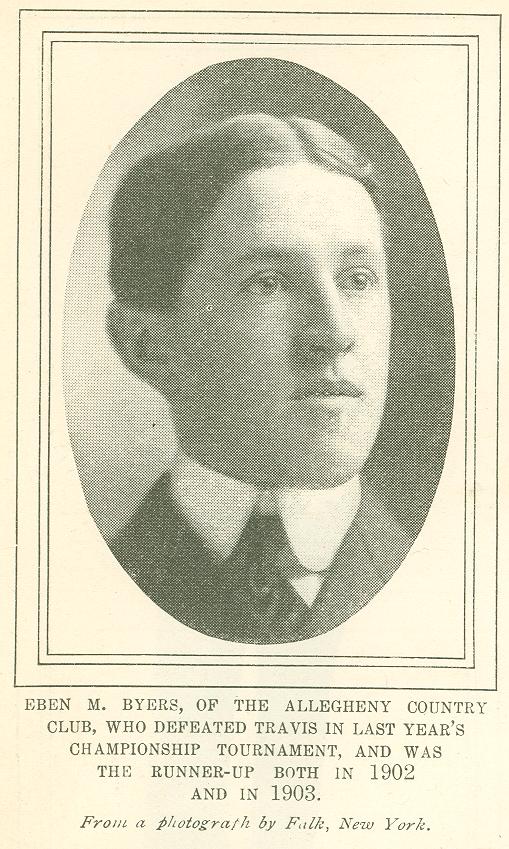
The patient who made Radithor infamous came to it by accident. Eben McBurney Byers (1880-1932) was a Pittsburgh industrialist, a Yale graduate, and the 1906 U.S. Amateur golf champion. In late 1927 he fell from a sleeping berth on a Harvard-Yale football special train and was left with chronic pain in his injured arm. His Pittsburgh physiotherapist, Charles Clinton Moyar, recommended Radithor. Byers began drinking it in December 1927, at age 47, and did not stop for nearly three years, taking about 1,400 bottles in all and three a day at his peak, until his health gave way in October 1930. At $1 a bottle, against a production cost of roughly a quarter of that, the tonic carried margins near 400 percent; over 400,000 bottles were sold worldwide between 1925 and 1930.
“Mild radium therapy,” and the alpha particles in the bone
Bailey marketed Radithor as a ‘mild radium therapy’ that would stimulate the endocrine system and restore vitality. The proposed mechanism rested on the contemporary speculation that low-dose radium would stimulate cellular metabolism and the endocrine glands, drawing on the broader category of ‘mild radium therapy’ that existed within respectable medical practice during the 1910s and 1920s. The mechanism failed catastrophically in execution: each bottle contained at least 1 microcurie (37 kBq) each of radium-226 and radium-228 in approximately 15 mL of distilled water. The radium isotopes, once ingested, were deposited in skeletal tissue and emitted high-energy alpha radiation locally over years to decades, causing progressive osteonecrosis and radiation-induced bone cancers.
Inventor, seller, and his own credentialing board
Bailey was the developer of Radithor, the principal vendor, the owner of Bailey Radium Laboratories, and the credentialing authority through his fraudulent ‘Dr.’ Bailey self-presentation. The 17 percent kickback to prescribing physicians financialized the medical-professional referral channel; the 400 percent production-to-sale margin made the business highly profitable. Bailey published no controlled outcome trial and no adverse-event registry. The developer-vendor-credentialing-author identity was concentrated in a single individual; the conflict structure was complete and undisclosed.
The radium water worked fine until his jaw came off
After two years of consumption Byers’s teeth began to fall out; his jaw began to disintegrate; bone pain became severe and progressed to skeletal collapse. A Federal Trade Commission investigator who visited Byers in 1931 reported that ‘his whole upper jaw, excepting two front teeth, and most of his lower jaw had been removed. All the remaining bone tissue of his body was disintegrating, and holes were actually forming in his skull.’ Byers testified to the FTC. On 19 December 1931 the FTC issued a cease-and-desist order against Bailey Radium Laboratories. Bailey did not contest the order. Eben Byers died in New York City on 31 March 1932 of multiple radiation-induced bone cancers, jaw and skull osteonecrosis, anemia, and bone marrow failure. After exhumation in 1965 MIT physicist Robley Evans estimated his total lifetime radium intake at approximately 1,000 microcuries (37 MBq), split roughly evenly between radium-226 and radium-228; the residual radium burden measured in his remains at the 1965 exhumation was about 225,000 becquerels (roughly 6 microcuries). The 1990 Wall Street Journal retrospective coverage of the case carried the headline ‘The Radium Water Worked Fine Until His Jaw Came Off.’ The Byers case, alongside the contemporary Radium Girls litigation, became one of the principal precipitating events for the strengthening of US federal authority over patent medicines and radioactive substances; both contributed to the legislative changes that produced the modern FDA.
The pattern repeats
The same structural machinery appears in different treatments and eras. These cases show the claimed mechanism and how the claim met evidence.
Electronic Reactions of Abrams (ERA)
Brinkley goat-gland transplantation (goat-to-human gonad implant)
Animal magnetism (mesmerism)
More related cases · 9
Part of the lineage
Evidence · 4 sources
- Radithor and the Era of Mild Radium Therapy (1990)
- The Radium Water Worked Fine Until His Jaw Came Off (1990)
- Federal Trade Commission Cease-and-Desist Order against Bailey Radium Laboratories (1931)
- Oak Ridge Associated Universities Health Physics Historical Instrumentation Museum: Radithor Entry (2010)