Electronic Reactions of Abrams (ERA)
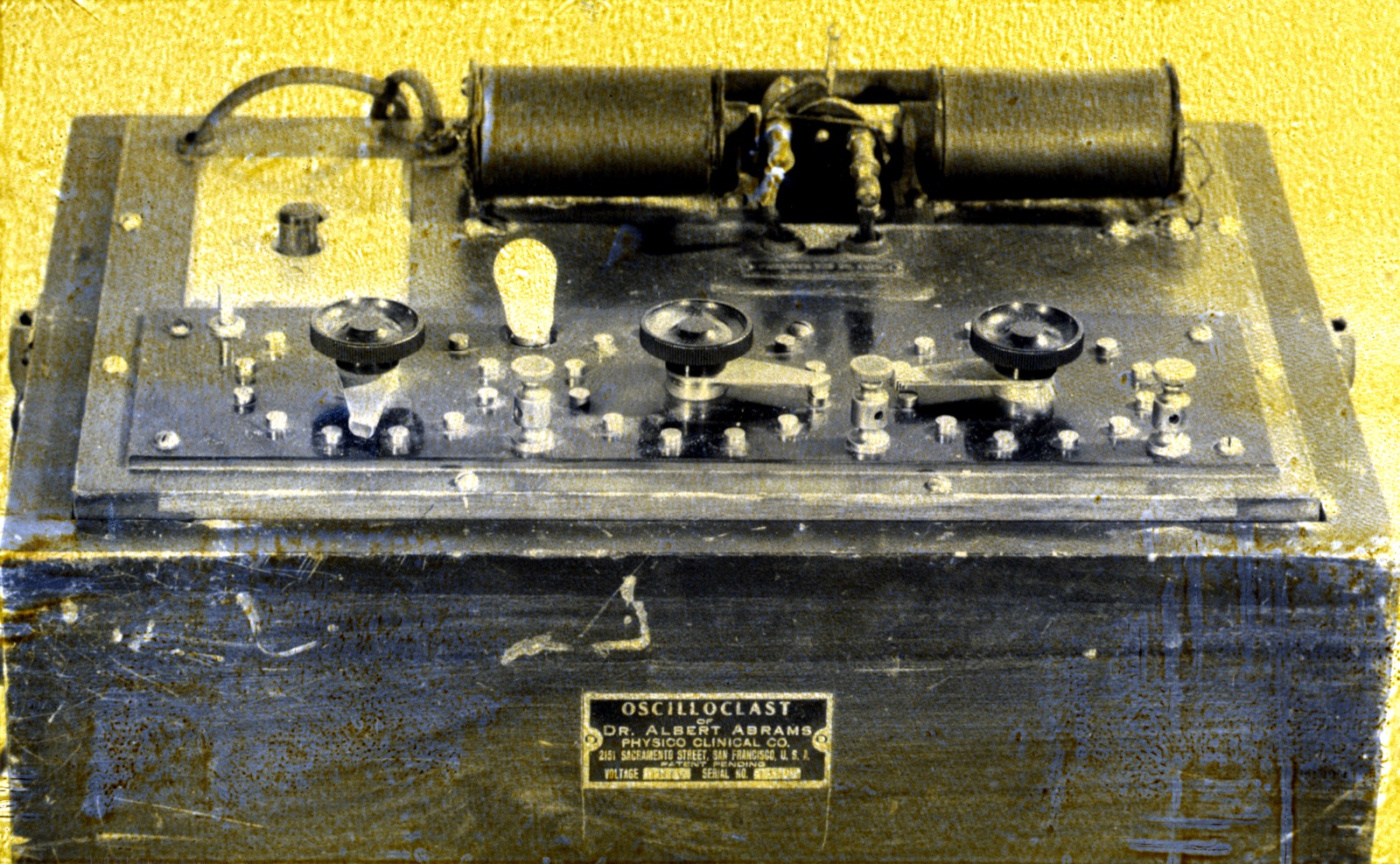
Albert Abrams, a Heidelberg-trained San Francisco physician, claimed a sealed box could diagnose any disease from a drop of dried blood and a second cure it by radio. He leased the devices under a contract forbidding anyone to open them. When Sir Thomas Horder's engineers finally did, reporting in Nature in 1925, they found the apparatus functionless but for an interrupter leaking a micro-ampere. A Scientific American committee judged the claims "not substantiated."
The degree that vouched for the box
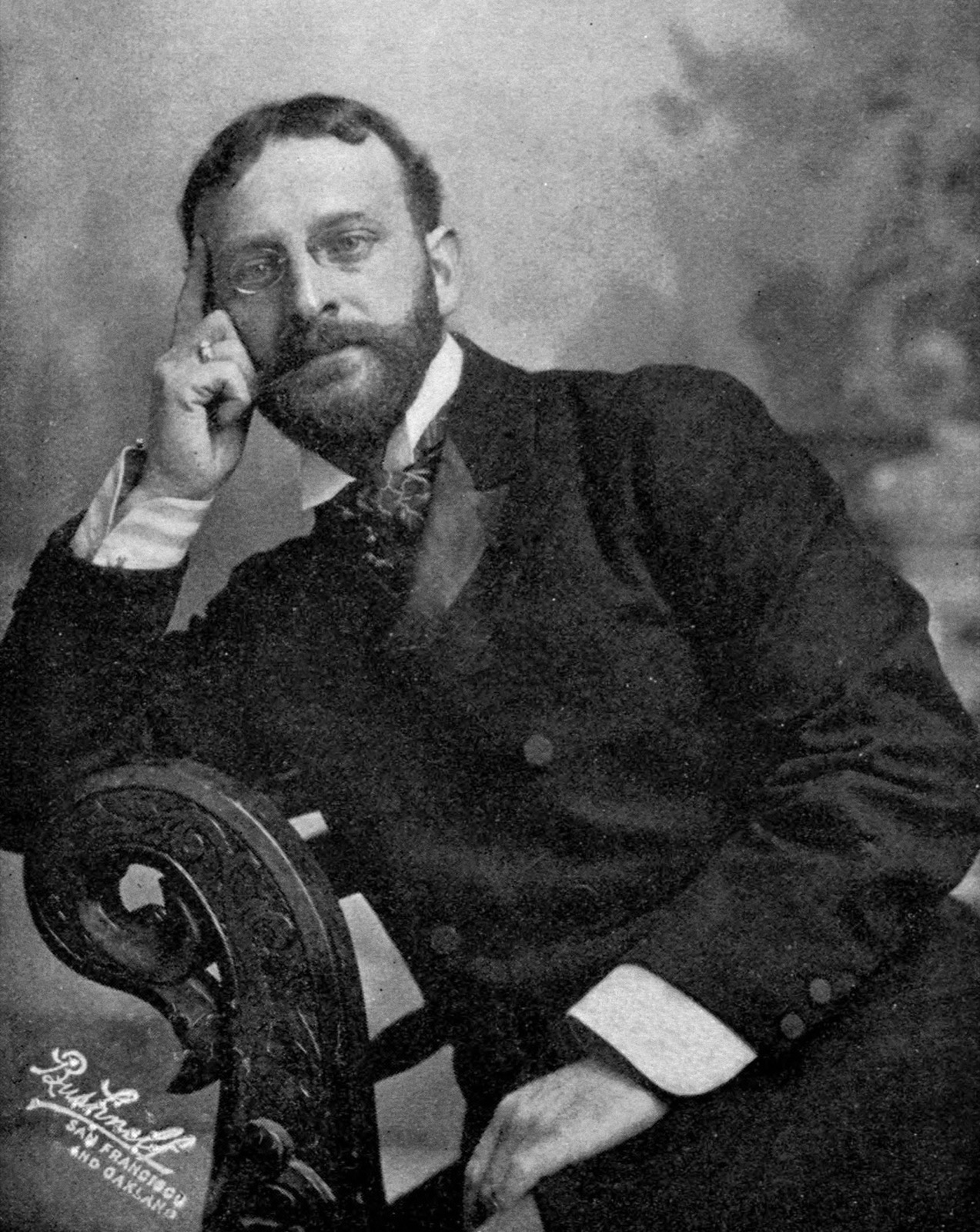
Albert Abrams (1863 to 1924) had credentials his rivals could not match. The 1925 Nature account records that he ‘graduated in medicine at Heidelberg at the age of nineteen years,’ then practiced for years in San Francisco as an established clinician, lecturer, and author of medical books. From that base he founded a method he called ‘Spondylotherapy,’ and in 1910 introduced a system of diagnosis and treatment he named ‘electronic vibrations.’ The credentials did the work the device could not: they gave the Electronic Reactions of Abrams the surface form of a clinical advance rather than a proprietary product. Abrams codified the system in his 1916 New Concepts in Diagnosis and Treatment and built it into a national commercial operation, leasing the Oscilloclast under his own name. The conjunction of orthodox credentials, a published mechanistic theory, and a closed licensing network is the structural feature that let a sealed box circulate as legitimate diagnosis.
Leased, never sold, never opened
Access was structured as a closed practitioner network rather than a retail product. The American Medical Association’s 1923 statement records that the Oscilloclast ‘is not for sale; it can be leased, to those who are willing to pay the price and sign a contract that they will not open it,’ that ‘the first payment is $200 or $250, according to whether it is wired for alternating or direct current,’ followed by ‘a monthly payment of $5,’ and that Abrams ‘publishes a list of more than 130 men who have leased one or more “Oscilloclasts,”’ with Sir James Barr’s name at the head of that list. Patients reached the Electronic Reactions of Abrams only through this licensed network of practitioners operating the leased Oscilloclast they were contractually barred from inspecting. The lease-not-sale structure is the same elite-device retail logic seen earlier in the Perkinean Institution’s patent-monopoly sale of metallic tractors, recast as a recurring-revenue franchise.
A drop of blood and a man facing west
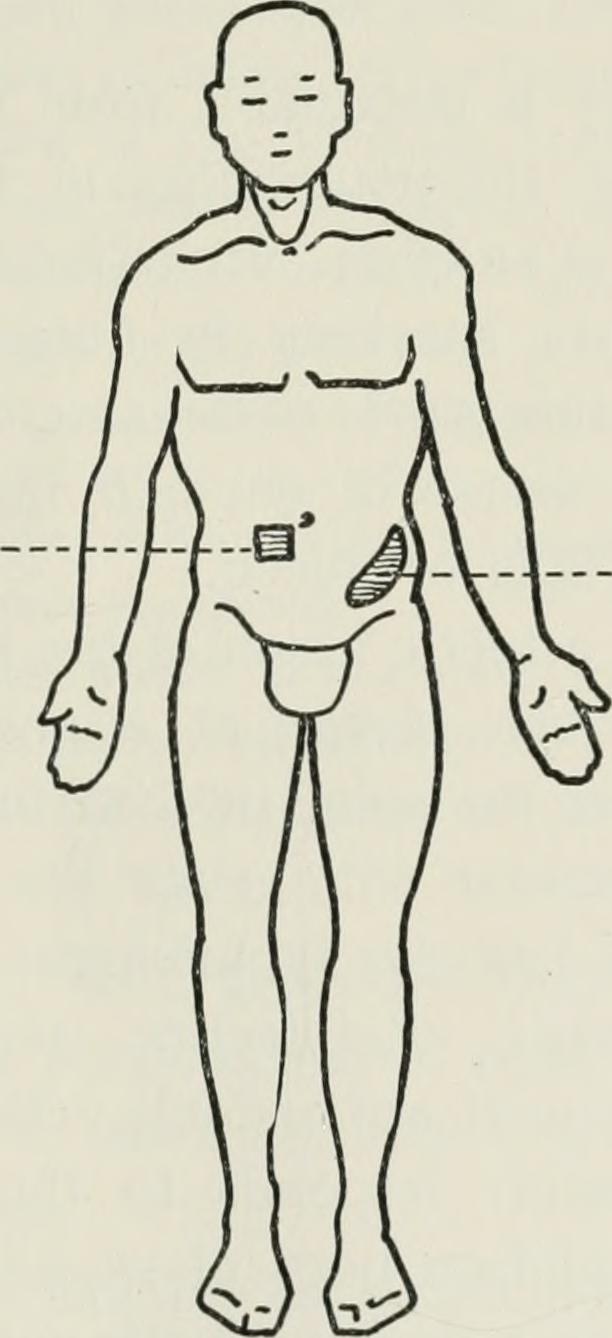
The proposed mechanism was ‘electronic vibration’: Abrams held that every individual, organ, and disease has a constant and specific vibratory rate, so that health and disease are expressions of electronic oscillation. Diagnosis ran through the Dynamizer, described in the 1925 Nature account as a box of electrodes on which a drop of the patient’s blood (or ‘sputum, saliva, or even his signature’) was placed, wired through resistance boxes labelled ‘amplifier’ and ‘reflexophone’ to a healthy ‘subject’ standing on earthed plates ‘facing west,’ whose abdomen the operator percussed; the resistance settings at which the percussion note turned ‘dull’ were recorded as the disease’s ‘rate,’ said to encode ‘sex, race, religion, as well as disease in all its varying forms.’ Treatment reversed the procedure through the Oscilloclast, which emitted a chosen rate to neutralize the disease. The vocabulary was borrowed from wireless telegraphy without its physics, and the sealed construction of the boxes meant the proprietary mechanism could not be examined by the lessee. The reading depended entirely on the operator’s own percussion of a human subject and on no instrument independent of that operator.
Author of the theory, landlord of the device
Abrams was the originator of the doctrine, its principal author, and the lessor of the sealed Oscilloclast. The lease-not-sale arrangement documented by the AMA in 1923 (a first payment of $200 or $250 plus $5 per month, under a contract not to open the device) tied a recurring revenue stream to a device the paying practitioner could not inspect, so the commercial model and the apparatus’s unfalsifiability reinforced each other. A 17 January 1925 newspaper report records that his will ‘provided for the erection of a college of electronic healing,’ indicating that the enterprise was organized to outlast him. What the sources directly support is the concentration of doctrine-author and Oscilloclast-lessor in a single person, and a leasing model that monetized a device its users were forbidden to examine.
What the engineers found when they opened it
The Electronic Reactions of Abrams drew formal investigation from two directions. In the United States, the Scientific American convened a committee that investigated ERA across 1923 and 1924 and concluded that ‘the claims advanced on behalf of the electronic reactions of Abrams, and electronic practice in general, are not substantiated’; a contemporary newspaper report of January 1925 records that the committee ‘after a year of inquiry made public a report last August in which the Abrams electronic reaction theory was pronounced unfounded.’ In Britain, where Sir James Barr and others had taken up the method, the apparatus was investigated by a committee under Sir Thomas Horder and reported on in 1925; the Nature account of 23 May 1925 records the consulting engineers’ finding that ‘the greater part of the apparatus is functionless, the essential part consisting of a simple rocking magnetic interrupter, which permits about a micro-ampere of current, interrupted about 200 times, to flow to the patient.’ The British Medical Journal had already, on 26 January 1924, treated ERA as a ‘cult.’ No controlled outcome data were ever published, and no hard clinical endpoint was demonstrated; the evidence base was testimonial throughout. Abrams himself died on 13 January 1924, while the Scientific American series was still running; the bequest in his will for a ‘college of electronic healing’ indicates that the enterprise was organized to continue beyond his death.
The pattern repeats
The same structural machinery appears in different treatments and eras. These cases show the claimed mechanism and how the claim met evidence.
I-ON-A-CO
Overbeck's Rejuvenator
Perkins Metallic Tractors
More related cases · 7
Part of the lineage
External references
Evidence · 7 sources
- The "Electronic Reactions of Abrams" (1925)
- What the American Medical Association Thinks of the Electronic Reactions of Abrams (1923)
- Albert Abrams and the "E.R.A." Cult (1924)
- Targeted treatment of cancer with radiofrequency electromagnetic fields amplitude-modulated at tumor-specific frequencies (2013)
- "The Abrams Treatment" in Practice: An Investigation (1925)
- New Concepts in Diagnosis and Treatment (1916)
- Newspaper report on Albert Abrams's will and the Scientific American report (1925)