Homeopathy (Hahnemann's system of medicine)
Samuel Hahnemann swallowed cinchona bark while healthy, felt fever-like symptoms, and built a medicine on it: like cures like, and a dose diluted past any surviving molecule. In 1835 the blinded Nuremberg salt test found his C30 dilution indistinguishable from distilled water. A 2005 Lancet meta-analysis judged the modern trial record compatible with placebo and the dilution doctrine inconsistent with chemistry; homeopathy is still sold worldwide, and he died a millionaire in 1843.
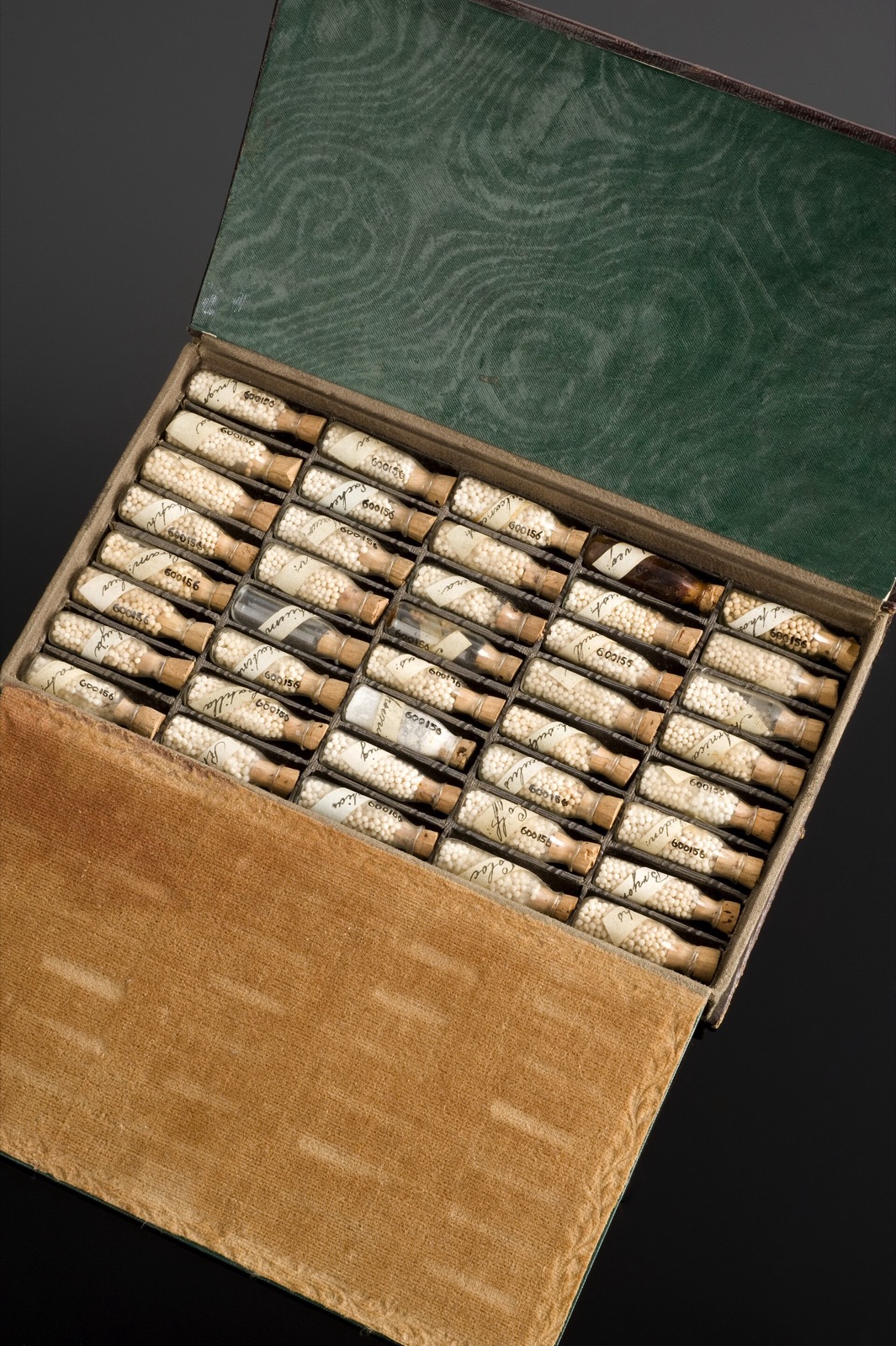
A poison taken on purpose
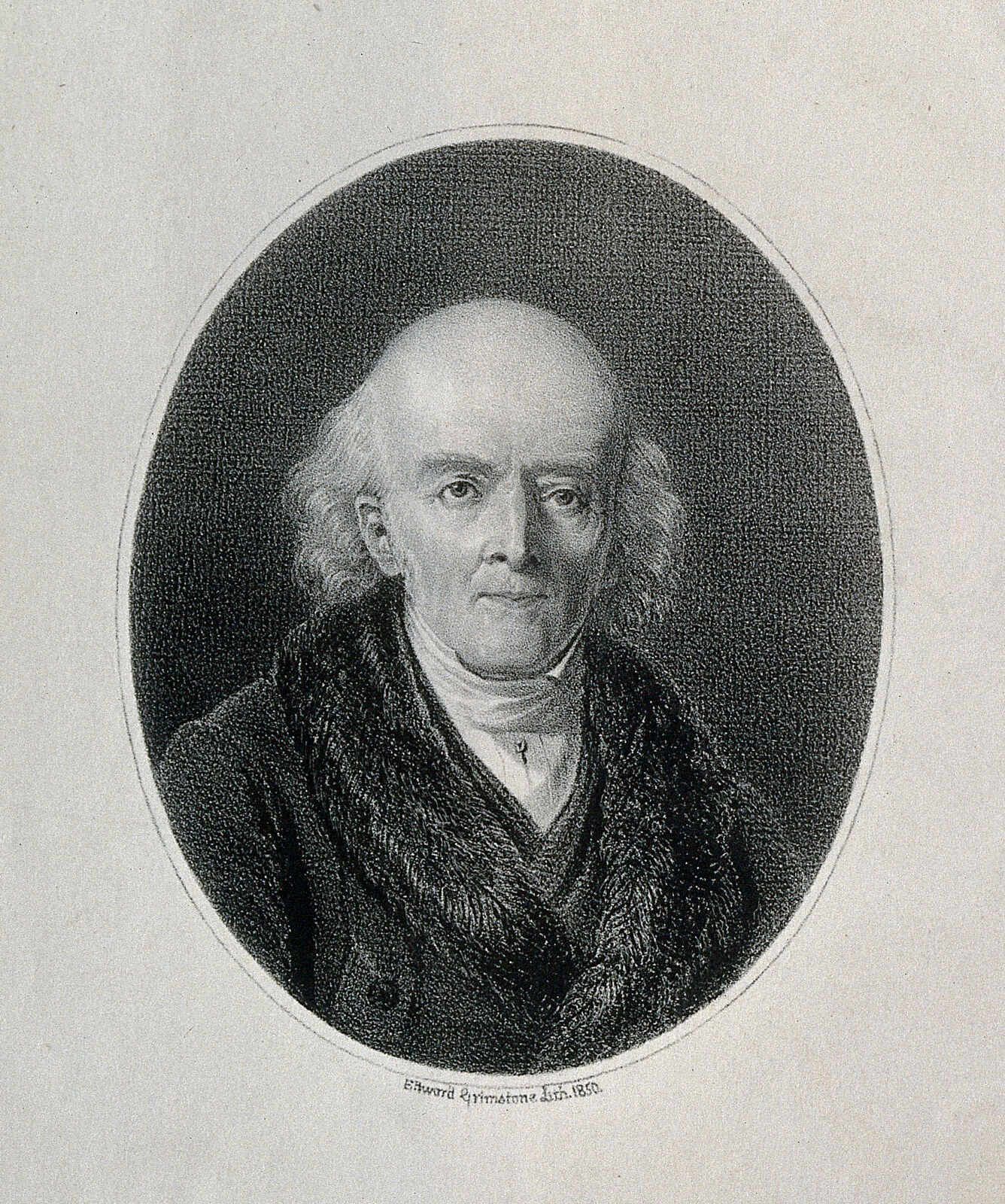
Around the mid-1790s, a healthy man dosed himself with cinchona bark, the source of quinine, and recorded that it produced in him symptoms resembling the intermittent fever the bark was used to treat. From that single self-experiment Samuel Hahnemann (1755-1843) drew a general rule of medicine. Born at Meissen in Saxony and a medical graduate of Erlangen (1779), he was a physician, chemist, and medical translator who had set himself against the heroic purging and bleeding of his day. He first published the rule in 1796 in Christoph Wilhelm Hufeland’s Journal der practischen Arzneykunde und Wundarzneykunst (the same periodical in which Hufeland would publish Kant’s open letter on macrobiotics) and systematized it in the Organon der rationellen Heilkunde (Dresden: Arnold, 1810). What carried homeopathy was not a clinic or a proprietary substance but a doctrine, a foundational book, and Hahnemann’s standing as a reformer offering a gentler alternative to a genuinely harmful contemporary medicine (Loudon 2006; Haehl 1922).
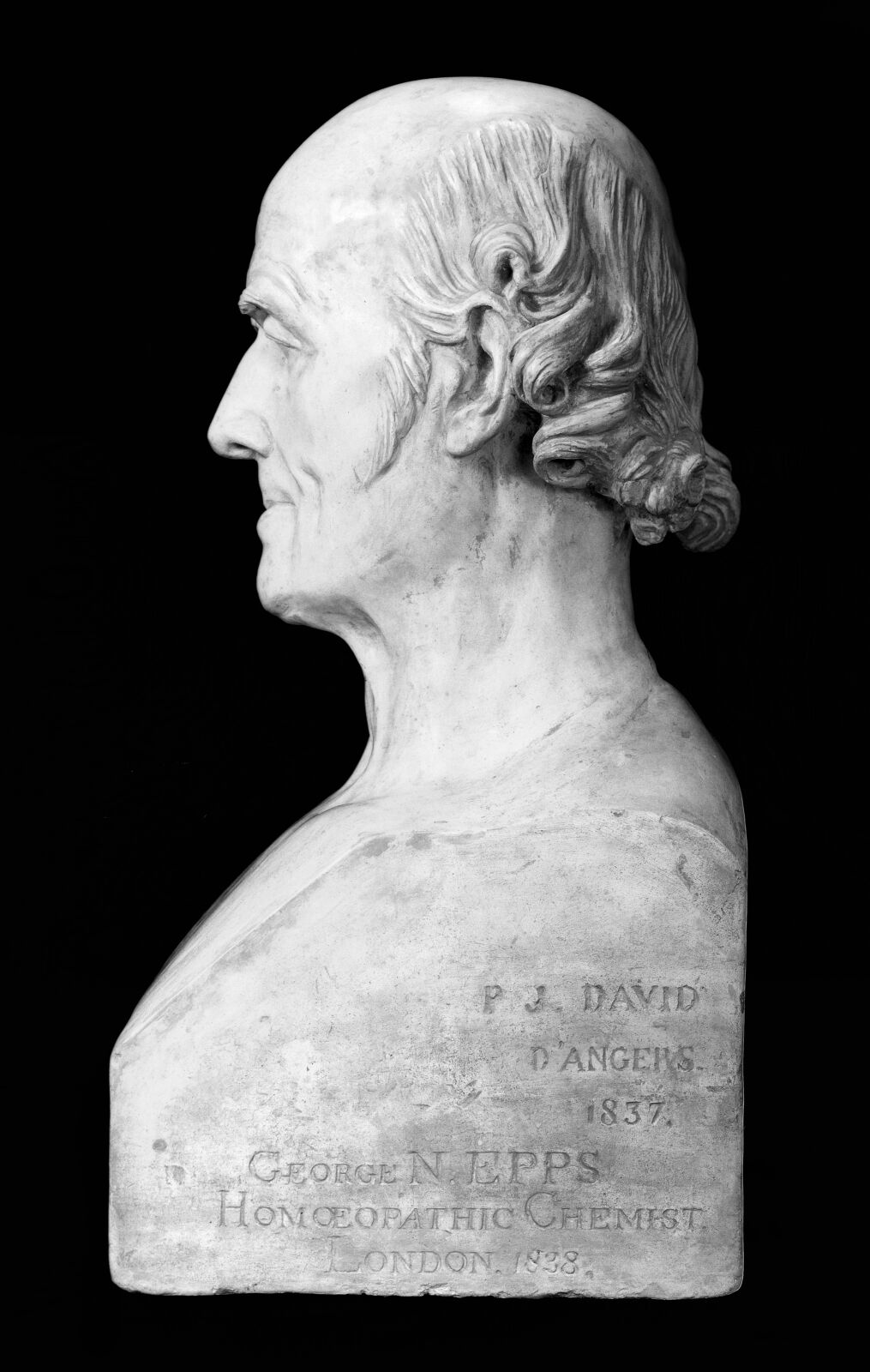
Cheap remedies, expensive doctor
The intervention was not scarce: the remedies were inexpensive, the system was published in a book any literate reader could buy, and it spread through trained practitioners across Europe. Hahnemann’s personal practice was the premium access point, above all the lucrative Paris clinic of his final years. He married his second wife, Mélanie d’Hervilly, in 1835, moved to Paris, and practised there until his death (Mix and Cameron 2011); Loudon records that he ‘died a millionaire in Paris in 1843’.
Dilute it until nothing is left
Homeopathy rests on two propositions and a vitalist premise, and on no measured endpoint. The first is the law of similars: a drug that produces a symptom-picture in a healthy prover is the remedy for a disease of like symptoms (similia similibus curentur). The second is the law of infinitesimals: that serial dilution accompanied by vigorous shaking, a process Hahnemann named potentization, develops a remedy’s curative power even as it reduces the material dose toward nothing, the diluted medicine persisting (in Loudon’s phrase) as a ‘dematerialized spiritual force’. Both act, in the doctrine, on the vital force (Lebenskraft), the same vitalist principle that anchors the Hufeland case. The evidence offered was Hahnemann’s drug ‘provings’ (symptom records from dosing the healthy) and cured-case reports, neither of which separates a specific effect from the natural course of illness or from expectation. Neither a surrogate nor a hard endpoint was measured. The mechanism also collides with chemistry: past roughly the twelfth centesimal step (12C, about 10^-24, or 24X), the Avogadro constant makes it improbable that a dose contains even one molecule of the starting substance (Bellavite et al. 2005).
A millionaire on his own evidence
The conflict is the authorial-and-practice-income pattern rather than the developer-vendor model, and it is named from documented facts. Hahnemann earned his living from a fee-charging medical practice that became lucrative in his Paris years, and he held a direct authorial interest in the Organon, the foundational text of the system he originated, which ran through six editions and many translations. He profited, through both an elite practice and a much-reprinted book, from a doctrine resting on his own provings and case reports rather than on controlled evidence, whose central high-dilution claim had been contradicted under blinded test within his lifetime. Loudon’s history records that he died a millionaire in Paris in 1843. The characterization is held to what the sources support: a fee-charging practice and a much-reprinted book have many other costs and recipients of income, so the conflict is named as personal enrichment from his practice and his book, not as exclusive command of homeopathy’s income.
A hundred vials, none telling water from cure
Homeopathy is unusual in this archive in having faced an early, explicit, controlled disconfirmation. In 1835 the senior Nuremberg public health official Friedrich Wilhelm von Hoven, prompted by the local homeopath Johann Jacob Reuter’s challenge over a C30 dilution of common salt, organized the Nuremberg salt test: a hundred numbered vials, fifty holding distilled snow water and fifty the C30 salt dilution, were shuffled and distributed so that neither the participants nor the organizers knew which was which. Of the fifty who reported back, eight noticed anything unusual, split five to three between the dilution and plain water, a result read as no effect attributable to the remedy and an early instance of the blinded comparison later formalized as the randomized double-blind trial (Stolberg 2006). The modern verdict converges: a 2005 comparative meta-analysis in The Lancet concluded that homeopathy’s clinical effects are compatible with placebo (Shang et al. 2005), and the dilution doctrine is inconsistent with the Avogadro limit (Bellavite et al. 2005). The evidence for a specific, beyond-placebo action is insufficient, and is labelled insufficient. The case is atypical in one respect worth stating plainly: because the high dilutions are materially inert, the harm was not toxic, and in its own period the system spared patients the active injury of heroic purging and bleeding; what was disconfirmed was the specific curative claim, not a claim of poisoning.
The pattern repeats
The same structural machinery appears in different treatments and eras. These cases show the claimed mechanism and how the claim met evidence.
Magnetic somnambulism (artificial somnambulism)
Animal magnetism (mesmerism)
Perkins Metallic Tractors
Part of the lineage
Evidence · 9 sources
- Versuch über ein neues Prinzip zur Auffindung der Heilkräfte der Arzneisubstanzen (1796 essay) (1796)
- Organon der rationellen Heilkunde (first edition) (1810)
- Samuel Hahnemann: His Life and Work (1922)
- A brief history of homeopathy (2006)
- Inventing the randomized double-blind trial: the Nuremberg salt test of 1835 (2006)
- Are the clinical effects of homoeopathy placebo effects? Comparative study of placebo-controlled trials of homoeopathy and allopathy (2005)
- Immunology and homeopathy. 1. Historical background (2005)
- From Hahnemann's hand to your computer screen: building a digital homeopathy collection (2011)
- Homeopathy (2026)