Marine plasma (Sérum de Quinton)
In 1897 René Quinton drained a dog's blood and refilled its veins with diluted seawater; the dog lived, and he declared seawater the body's primordial milieu, able to replace plasma and cure disease. No controlled trial confirmed it, and the French drug authorization, held from 1943, was revoked in 1993. Laboratoires Quinton still sells the same preparation as "marine therapy" health products, untested by any controlled trial and not held to a medicine's efficacy standard.
The scientist who was also a war hero
In 1897, in a physiology laboratory at the Collège de France, René Quinton drained the entire blood volume out of a dog and pumped sterilized seawater, diluted to the salt concentration of blood, in after it. He reported that the animal survived and recovered within five days. From that single experiment he built a career and a product.
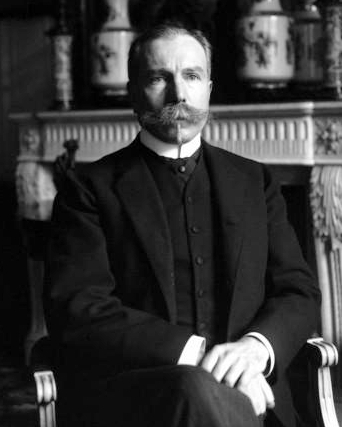
Quinton (15 December 1866, Chaumes-en-Brie – 9 July 1925, Paris) was an assistant at the Laboratoire de Physiologie pathologique des Hautes-Études at the Collège de France, where Étienne Jules Marey was his mentor. The address gave his claims the authority of French academic science at its most prestigious institution. Then the 1904 monograph L’eau de mer, milieu organique was followed by something rarer than a laboratory pedigree: WWI service as a reserve artillery captain who rose to colonel, was wounded eight times across more than twenty battlefronts, and received the Légion d’honneur at Chevalier, Officier, and Commandeur levels along with decorations from Belgium, the United Kingdom, and the United States. His public standing fused the credentials of the laboratory scientist with the moral authority of the decorated war hero, and that double authority was what kept the idea of seawater-as-blood credible.
Seawater only his laboratory could make
Commercial production of marine plasma required Quinton’s own processing pipeline: collection of Atlantic seawater from specific deep offshore zones selected for plankton density, cold micro-filtration (without boiling or chemical treatment) to remove microorganisms, dilution to approximately 9 g/L total dissolved salts, and sterile packaging. From 1905 this pipeline ran through Quinton’s own Paris laboratory. He patented the preparation as ‘sérum de Quinton’ in 1907. The marine dispensaries he established from 1906 supplied the preparation free to destitute patients while commercial versions were sold to paying clients. The production process, the collection geography, and the laboratory protocols were proprietary to Quinton and, after his death, to his commercial successors.
The sea in our veins
Quinton argued through a ‘Law of Marine Constancy’ that animal life, having originated in the sea, maintains an internal milieu identical in mineral composition to primordial seawater. The law presented three sub-constancies: marine (ionic composition preserved), osmotic (tonicity preserved), and thermal (temperature preserved). The argument combined genuine observations (blood and seawater share a similar overall salt concentration) with a conceptual leap that modern physiology does not support: seawater and plasma differ in the ratio of ions in ways that matter clinically, and the evolutionary argument for ionic identity is not consistent with the phylogenetics of vertebrate blood composition. The proposed mechanism was at once specific enough to sound like science (it cited chemistry and comparative anatomy) and broad enough to explain any condition involving dehydration, wasting, or cellular weakness.
Selling it and giving it away at once
Quinton held the production and distribution rights to the preparation through the patent of 1907 and the laboratory established in 1905. He derived income from commercial sales while simultaneously operating charitable dispensaries for destitute patients. The free dispensaries and the commercial product shared the same preparation and the same scientific claims, with the free-dispensary operation providing both humanitarian cover and a large clinical case series that Quinton used to document therapeutic success. The conflict between his role as scientific authority on the preparation’s efficacy and his role as commercial producer of that same preparation was not separately disclosed in the clinical accounts of his time.
The license that was taken back
In 1993 the French drug authorization (AMM) for Plasma de Quinton and Duplase de Quinton, granted in 1943, was revoked: the preparations failed to meet modern European regulatory standards and the laboratories could not be adapted (quinton.bio/about-us/laboratory-history, accessed 27 June 2026). Quinton’s therapies were ‘abandoned by medicine’ and removed from the French physicians’ reference (Vidal) after decades on the market. Wikipedia characterizes the scientific views in Quinton’s 1904 book as ‘not valid.’ Harriet Hall, a physician and critic of alternative medicine, wrote of the 1897 dog experiment that the claim does not ‘meet the standards of ordinary peer-reviewed published evidence’ (Wikipedia, René Quinton, accessed 2026-06-27). No randomized controlled trial of marine plasma therapy has been published.
Notes
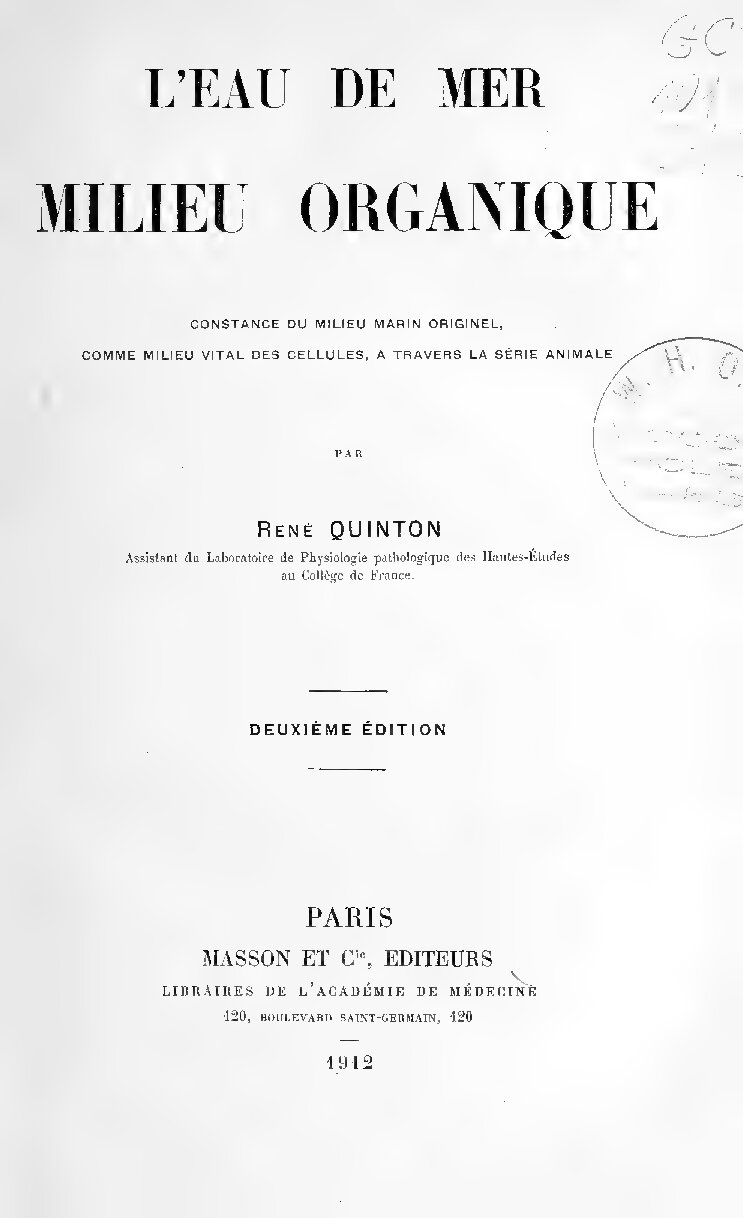
In 1897 René Quinton, then working as an assistant at the Laboratoire de Physiologie pathologique des Hautes-Études at the Collège de France, reported that he had replaced the entire blood volume of a dog with sterilized isotonic seawater and that the animal survived and recovered within five days. The experiment was the empirical foundation for his broader theoretical claim: that seawater, diluted to the salt concentration of body fluids (~9 g/L), constitutes the original physiological environment of all animal cells and can therefore substitute for blood plasma or extracellular fluid. He published this argument in full in L’eau de mer, milieu organique (Masson, Paris, first edition 1904; second edition 1912), his only book published during his lifetime.
From 1905 Quinton operated his own Paris laboratory producing filtered, cold-sterilized Atlantic seawater collected from selected deep offshore zones he specified for plankton richness. He patented the preparation as “sérum de Quinton” in 1907. In 1906 he opened the first Marine Dispensary in Paris, providing daily injections to hundreds of patients (quinton.bio/about-us/rene-quinton, accessed 27 June 2026); a second dispensary opened in Lyon in 1913 (quinton.bio/about-us/laboratory-history, accessed 27 June 2026). The dispensaries served destitute patients without charge, while commercial sales of the preparation continued separately.
Quinton’s theoretical system, which he called the Law of Marine Constancy, argued through three sub-principles: that the mineral composition of animal internal fluid (marine constancy), the total dissolved-salt concentration (osmotic constancy), and the body temperature (thermal constancy) all preserve the conditions of the primordial marine environment in which life originated. The argument drew on comparative physiology: the proportion of sodium to other ions in blood and seawater showed partial overlap in the data available in 1904. Quinton cited this overlap as evidence for physiological identity. Modern physiology does not support the identification: blood plasma and seawater differ in the ratios of magnesium, calcium, sulfate, and potassium in clinically significant ways, and the evolutionary argument for preserved ionic identity is not consistent with the phylogenetics of vertebrate blood composition developed in the century after Quinton’s book.
The therapeutic claims attached to marine plasma extended from infant enteritis and cholera-type diarrheal illness (the primary dispensary indications) through tuberculosis-related wasting, military trauma, and various systemic conditions. A 1913 review in the Buffalo Medical Journal by Rollin H. Stevens, a Detroit dermatologist and roentgenologist, surveyed Quinton’s clinical claims in favorable terms, documenting that his work had reached English-language professional attention (PMID 36886323). The review contains no controlled comparison, no blinding, and no independent outcome measurement; it reports Quinton’s own case series.
The plausible subset of the efficacy claim is that isotonic fluid replacement prevents death from severe dehydration. Cholera and enteritis kill primarily through fluid loss; replacing lost fluid and electrolytes with any isotonic solution reduces mortality. The specific claim that seawater provides additional benefit over pharmaceutical saline, by virtue of its trace mineral content or its supposed equivalence to the primordial cellular environment, has not been tested in controlled trials and was not supported by the evidence available in Quinton’s time.
Quinton’s WWI service (1914–1918) as reserve artillery captain, rising to colonel, wounded eight times, and decorated by France, Belgium, the United Kingdom, and the United States, added the moral authority of combat heroism to his scientific profile. He died suddenly of cardiac angina in Paris on 9 July 1925, aged 58, with his public reputation intact.
After Quinton’s death the preparations continued on the French market. In 1943 Plasma de Quinton and Duplase de Quinton were registered with the French healthcare system (AMM) as reimbursable medicines in drinkable, injectable, and topical forms. In 1993 the AMM was revoked when the preparations failed to meet modern European regulatory standards and the laboratories could not be adapted (quinton.bio/about-us/laboratory-history, accessed 27 June 2026). The preparations were removed from Vidal, the French physicians’ desk reference. In 1996 a Spanish entrepreneur acquired the rights and established new laboratories in Alicante, Spain (quinton.bio/about-us/laboratory-history, accessed 27 June 2026).
The active enterprise Laboratoires Quinton International S.L. currently markets seawater-based products at quinton.bio and quintonmedical.com, including Quinton Medical, Quinton Sport, Eau de Quinton, and nasal, dermatological, and eye spray formulations. The company states that its products follow Quinton’s original cold-filtration protocols and are sold as health and hygiene products rather than licensed pharmaceutical drugs (quinton.bio/about-us/laboratory-history, accessed 27 June 2026), and it markets the line as “marine therapy” while maintaining a research collaboration with the René Quinton Foundation (quinton.bio/about-us/rene-quinton, accessed 27 June 2026).
That regulatory category is itself the present-day critique. The same seawater preparation held a French drug authorization (AMM) from 1943 until it was revoked in 1993, when the preparations failed to meet modern European regulatory standards and the laboratories could not be adapted to them (quinton.bio/about-us/laboratory-history, accessed 27 June 2026); the current enterprise sells the preparation as health and hygiene products rather than as licensed pharmaceutical drugs, a category not held to the efficacy standard a medicine must meet. The therapeutic claims attached to the preparation have not been demonstrated in a randomized controlled trial, and the mechanism Quinton proposed for them remains unsupported by contemporary physiology. The one plausible effect of any isotonic preparation, fluid and electrolyte replacement, is a property of dilute saline generally and not of marine water specifically, so it does not support the distinct properties the “marine therapy” framing attributes to seawater. A search across regulatory, peer-reviewed, and recognized science-based-medicine sources found no strong independent critique naming the current preparations and no peer-reviewed trial of the current products; the present-day assessment here rests on the 1993 loss of the drug authorization and the absence of controlled evidence for the therapeutic claims.
Parallels
Evidence · 7 sources
- L'eau de mer, milieu organique (2nd ed., 1912) (1912)
- Isotonic Sea Water in Therapeutics (1913)
- Laboratory History (quinton.bio) (2026)
- René Quinton biography (quinton.bio) (2026)
- René Quinton (Wikipedia) (2026)
- René Quinton, 1908 (Agence Rol photograph, BnF) (1908)
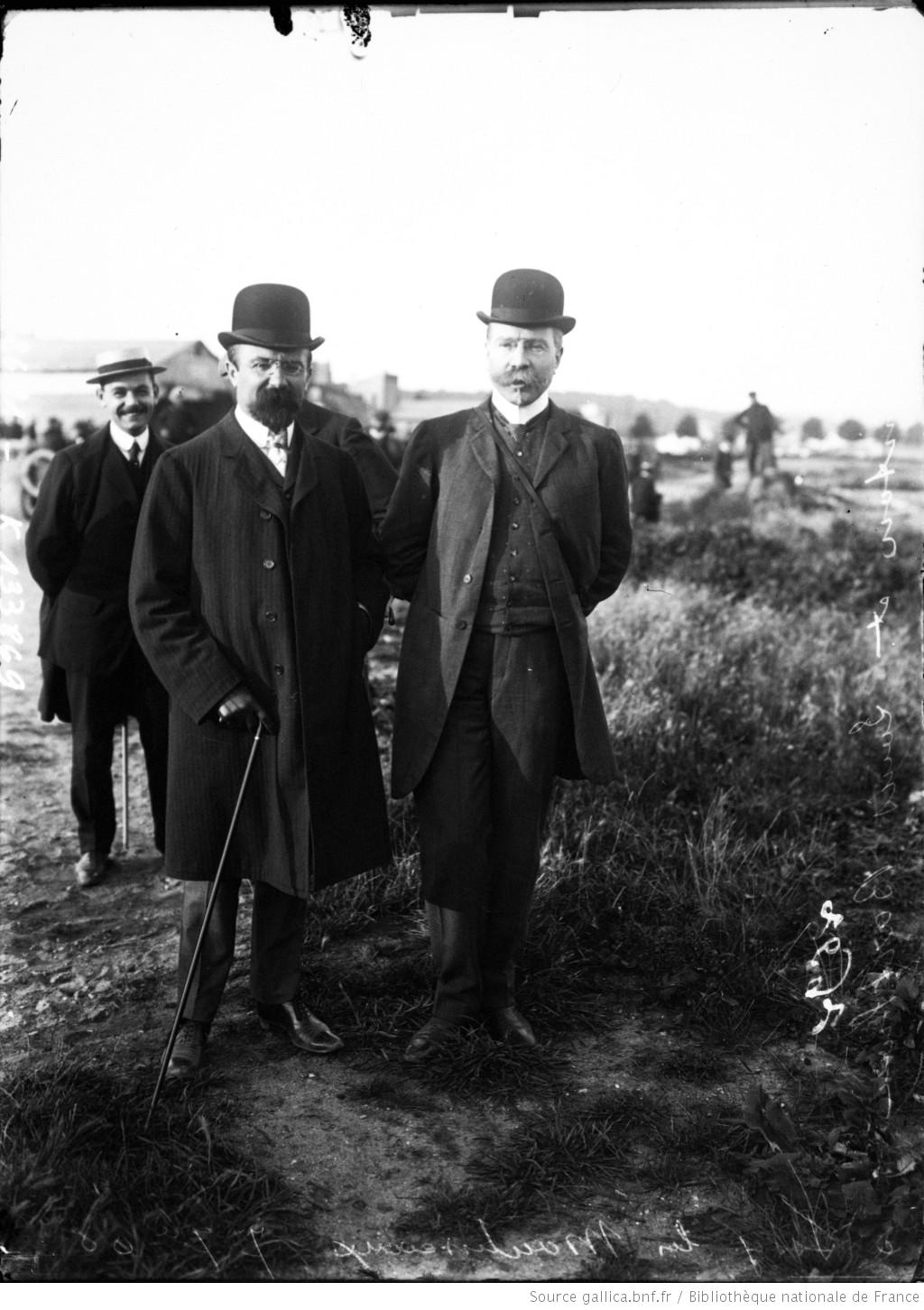
- René Quinton et Louis Barthou, Issy-les-Moulineaux, 7 septembre 1908 (Agence Rol, BnF) (1908)