Spermin-Poehl (Sperminum-Poehl) organotherapy
St. Petersburg court pharmacist Alexander von Poehl isolated a base from semen and bull testes, named it spermin, and sold it in sealed injection ampoules as a catalyst of tissue oxidation, an antitoxin against "autointoxication," and a cure for senile decline. He owned the theory, the factory, the journal, and the product; his proof was uncontrolled cases. The doctrine was rejected; spermine is a real polyamine that binds nucleic acids, not any of that.
The court pharmacist who bottled a theory of aging
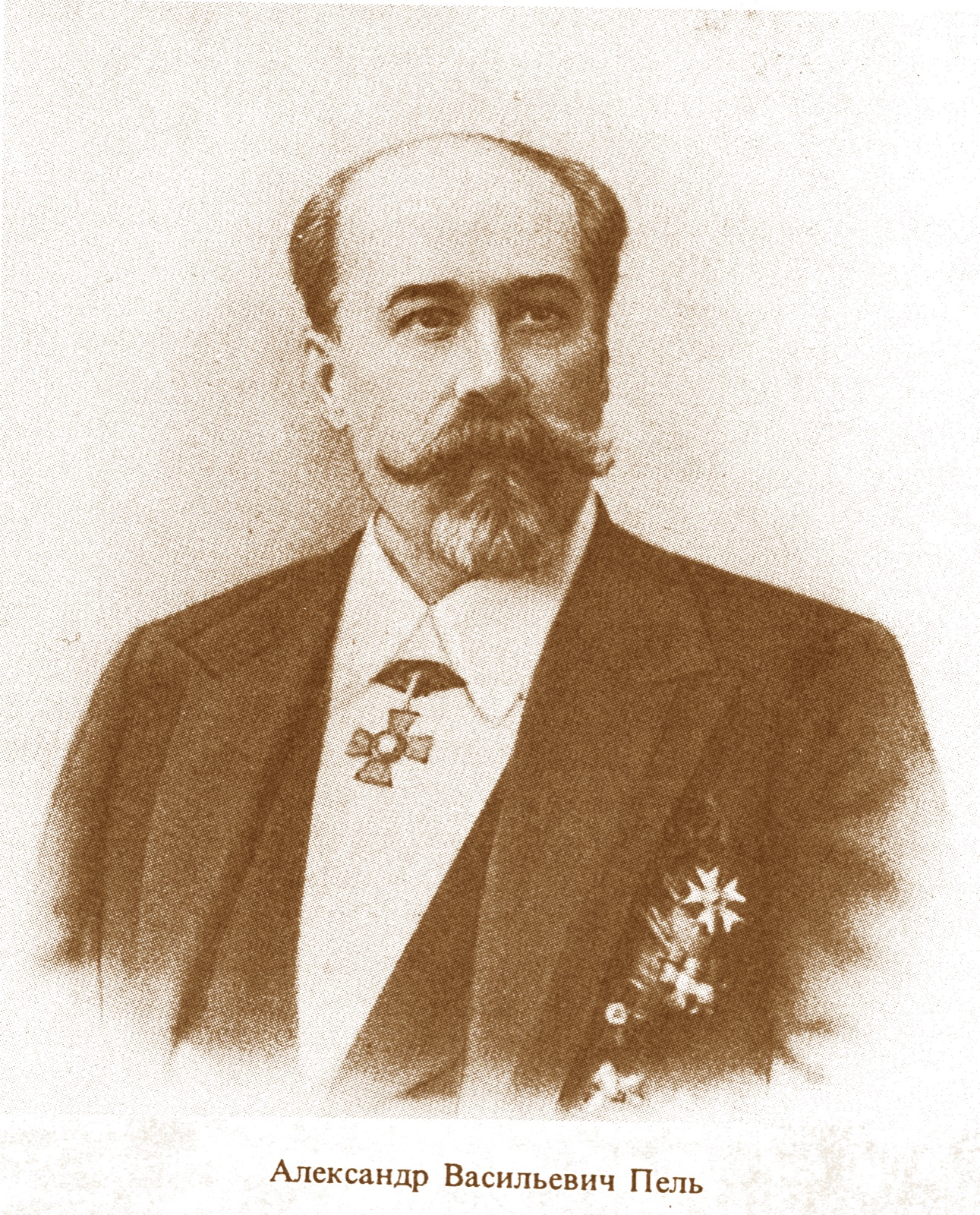
In a laboratory behind the best-known pharmacy in St. Petersburg, a Baltic German chemist crystallized a base out of semen and bull testes and announced that it governed how the body ages. The chemist was Alexander von Poehl (Александр Васильевич Пель; born 27 February 1850 in St. Petersburg, died 28 August 1908 in Berlin), and almost nobody was better placed to be believed. His father had bought the pharmacy in 1848; it became the imperial court pharmacy (Hofapotheke) in 1871, and Poehl took it over in 1875 and built the research laboratory there. He held doctorates from Gießen (1876) and Dorpat (1882), an honorary professorship at the Imperial Medical Academy (1886), a seat on the medical advisory council of the Ministry of the Interior (1878-1892), and hereditary nobility from 1884, and is credited with sealing sterile injection solutions in glass ampoules. Court-pharmacist standing, academic titles, his own laboratory, and his own journal gave his organotherapy products an institutional authority that lay nostrum-sellers lacked. (Biographical detail from the German Wikipedia biography; birth and death years independently confirmed by the Wellcome authority-controlled name, Poehl 1850-1908, and Wikidata Q1706566.)
One pharmacy, one ampoule, one approved buyer
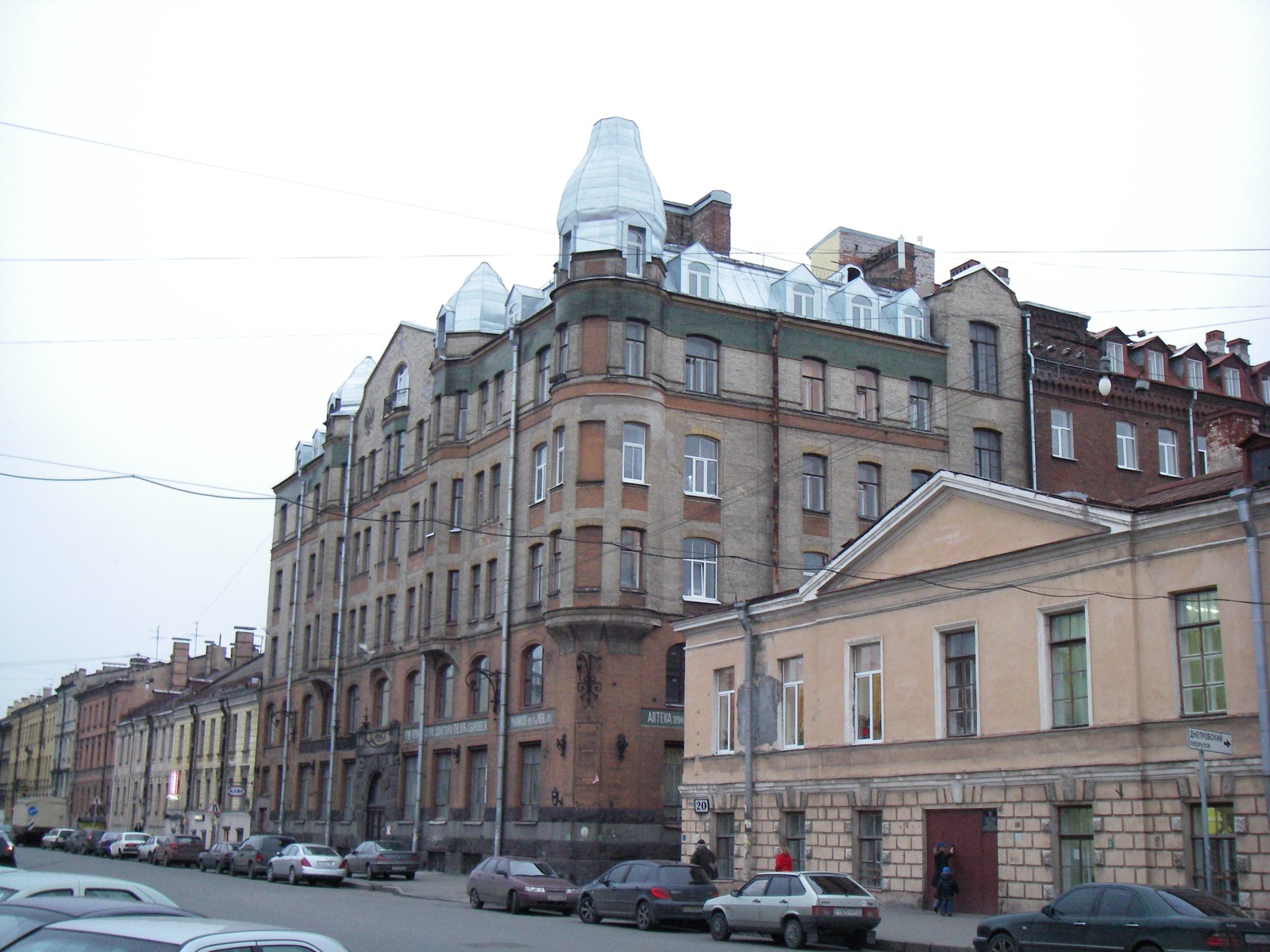
Spermin-Poehl was a branded, proprietary preparation (the title of Poehl’s 1898 monograph names ‘Sperminum-Poehl’ explicitly) manufactured and distributed through Poehl’s own St. Petersburg pharmacy and its attached organotherapeutic centre and pharmaceutical factory, with branches in Nizhny Novgorod and Novosibirsk. It was sold as standardized ampoules for subcutaneous injection, and in oral forms, positioned as a physician-prescribed ‘scientific’ organotherapeutic rather than an over-the-counter tonic. The clinical case material in the 1898 book directed physicians to the branded product. The buyers were physician-attended patients of means: the elderly, the neurasthenic, convalescents, and men with sexual complaints. Demand was tied to Poehl’s name and his court-pharmacy prestige.
A catalyst against the body’s own poisons
Poehl’s ‘spermine theory’ (Spermintheorie) held that spermin, a crystalline base he isolated from semen and from animal organs such as bull testes, was a catalytic agent that increased oxidation in the tissues and acted as a physiological antitoxin against ‘autointoxication’, the then-current doctrine that endogenous metabolic toxins accumulate when oxidative metabolism is inadequate (the 1894 monograph argues this for autointoxication in general and uric-acid diathesis in particular). On this account spermin restored ‘vital energy’ and checked senile decline, and its supposed decline with age explained senescence. The mechanism was a surrogate construct: it rested on the autointoxication framework and on uncontrolled clinical impression, not on any demonstrated oxidative or antitoxic action in patients. Spermin’s chemical identity was itself unsettled; spermine was repeatedly confused with piperazine, which a Berlin firm sold under the trade name ‘Spermin’, and the piperazine formula was printed under the name spermine as late as 1903 (Mann, The Biochemistry of Semen, 1954, pp. 161-162).
Theorist, manufacturer, and prescriber under one roof
Poehl owned the pharmacy, the organotherapeutic centre, and the pharmaceutical factory that manufactured and sold Spermin-Poehl, and he was also the author of the theory and the clinical literature that justified its use; the journal in which the doctrine circulated (retitled Zeitschrift für medizinische Chemie und Organotherapie from 1900) was his own. He profited from the sale of a branded preparation whose indications he himself defined and promoted. This is a direct commercial conflict, distinct from Brown-Sequard’s reputational one: the theorist, the manufacturer, and the prescribing authority were a single house. The firm operated until 1927; the St. Petersburg pharmacy was nationalized in 1918. (Enterprise detail and dates per the German Wikipedia biography.)
A real molecule, the wrong story
Spermin-Poehl’s claims were never supported by controlled evidence; the reported cures were uncontrolled case series in Poehl’s own publications (the 1898 book recorded cases ranging, per Mann’s survey, from scurvy to syphilis as apparent successes). Poehl’s pharmacological and clinical work aroused controversy, drew severe criticism, and was finally rejected (Mann 1954). Spermine is real: it is a ubiquitous aliphatic polyamine of living cells, its free base isolated and characterized in the 1920s (Dudley and Rosenheim; see Pegg, J Biol Chem 2018), with a known role in binding nucleic acids and modulating cell growth (Lightfoot and Hall, Nucleic Acids Res 2014). None of that corresponds to Poehl’s oxidation-catalyst-and-antitoxin doctrine or to a rejuvenating action on senile organisms. The evidence for the rejuvenation and antitoxin claims is insufficient by any controlled standard. A weaker residual point is noted by Mann (polyamines do have pharmacodynamic activity, and parenteral spermine is toxic in animals), but that does not vindicate the spermine theory. Poehl died in 1908; the organotherapy enterprise around spermin did not outlast the collapse of the broader organotherapy project.
The pattern repeats
The same structural machinery appears in different treatments and eras. These cases show the claimed mechanism and how the claim met evidence.
Brown-Séquard testicular extract (organotherapy)
Voronoff testicular xenograft (chimpanzee-to-human)
Steinach Vasoligation (Steinach Operation)
More related cases · 6
Evidence · 7 sources
- Die physiologisch-chemischen Grundlagen der Spermintheorie, nebst klinischem Material zur therapeutischen Verwendung des Sperminum-Poehl (1898)
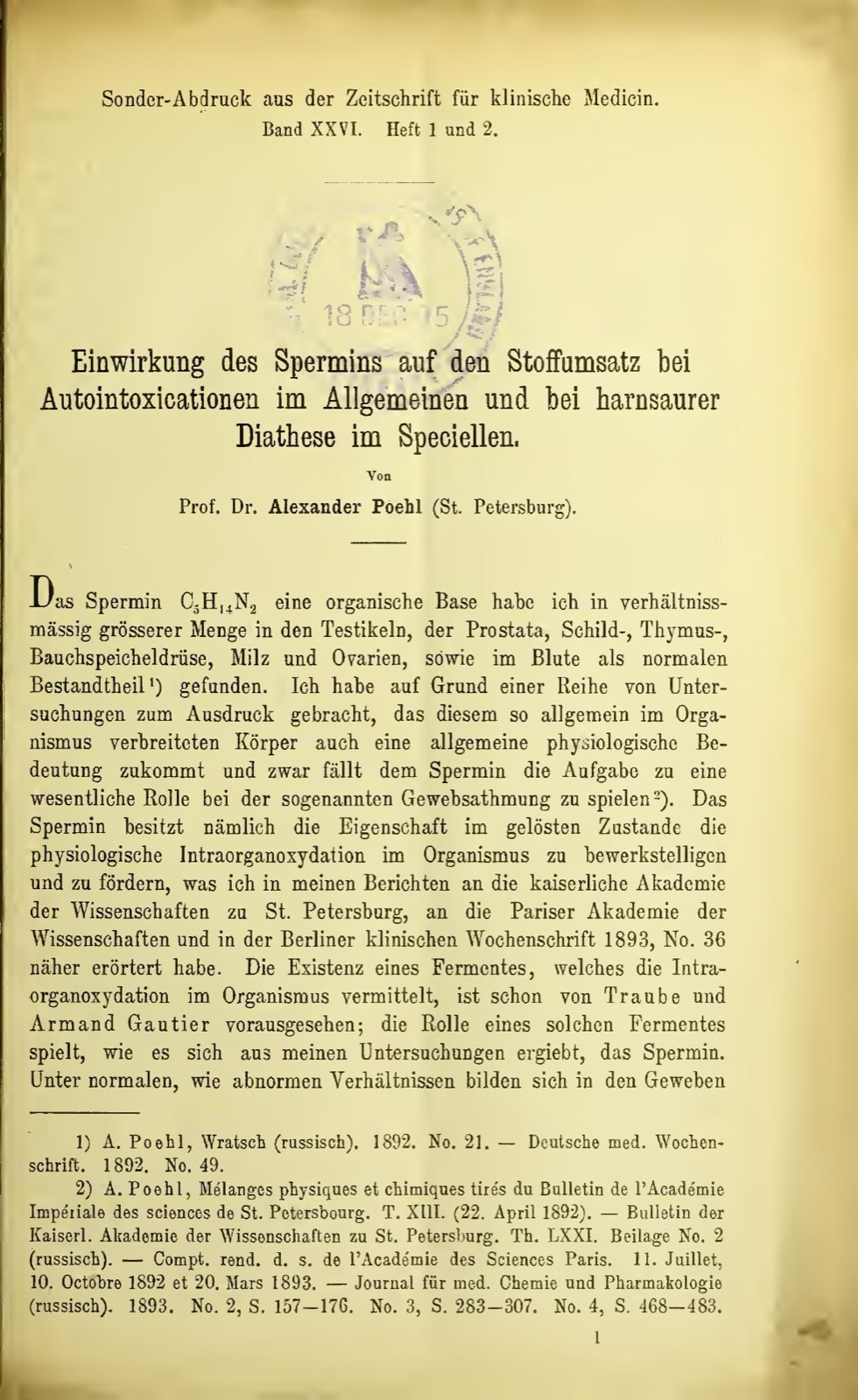
- Einwirkung des Spermins auf den Stoffumsatz bei Autointoxicationen im Allgemeinen und bei harnsaurer Diathese im Speciellen (1894)
- Rational organotherapy: with reference to urosemiology (1906)
- The Biochemistry of Semen (1954)
- Introduction to the Thematic Minireview Series: Sixty plus years of polyamine research (2018)
- Endogenous polyamine function: the RNA perspective (2014)
- Alexander Wassiljewitsch Poehl (German Wikipedia biography) (2026)