Soured-milk ('Bulgarian bacillus') longevity therapy
In 1907 the Nobel laureate Elie Metchnikoff told the world the secret of long life was a bowl of soured milk: lactic-acid bacteria would suppress the colon's putrefying flora and the autointoxication that ages us. His evidence was a food-preservation analogy and Bulgarian centenarians, never a trial. The premise was rejected within a decade, the Bulgarian bacillus does not colonize the gut, and Metchnikoff died at 71. The pattern survives in today's probiotic marketing.
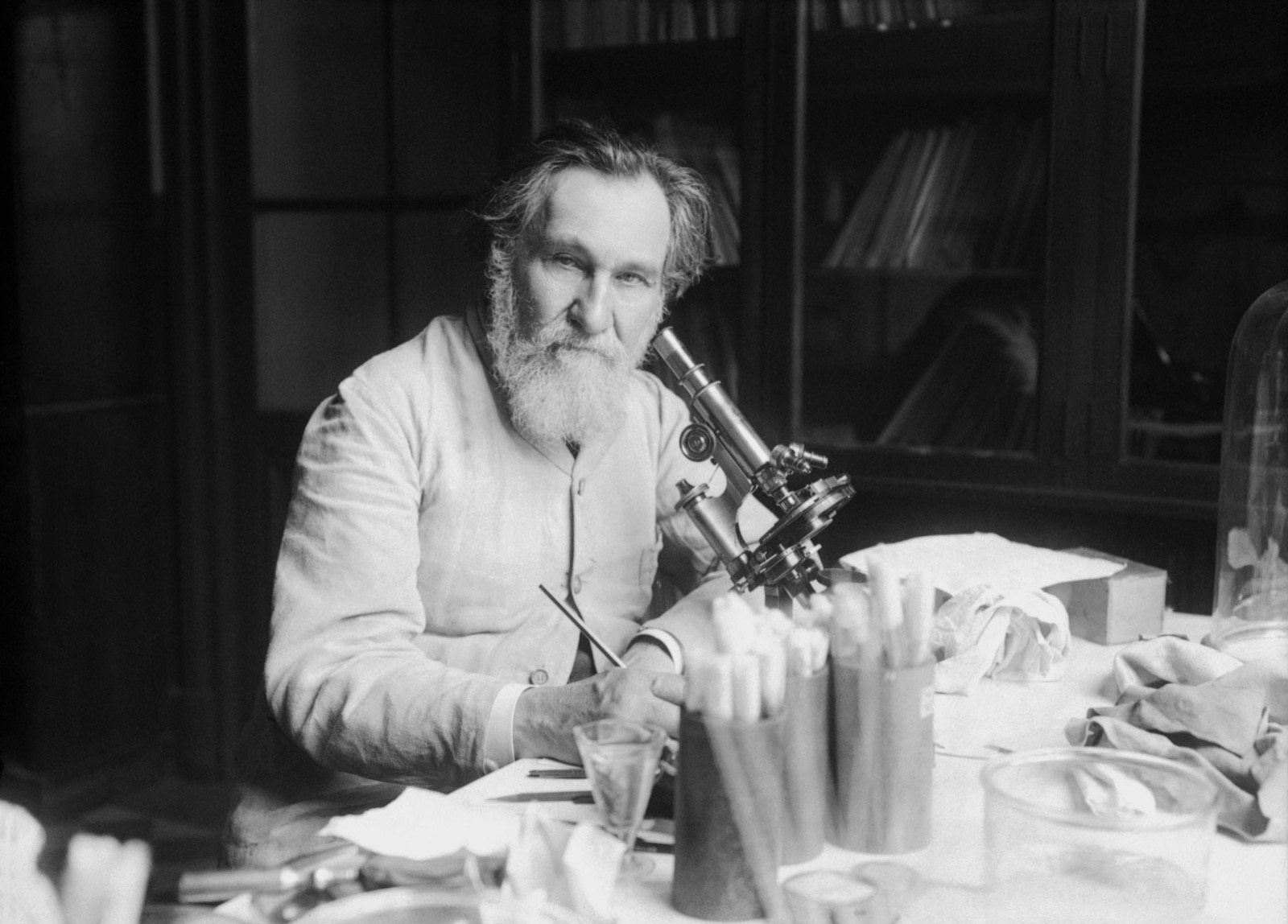
The laureate who prescribed yogurt
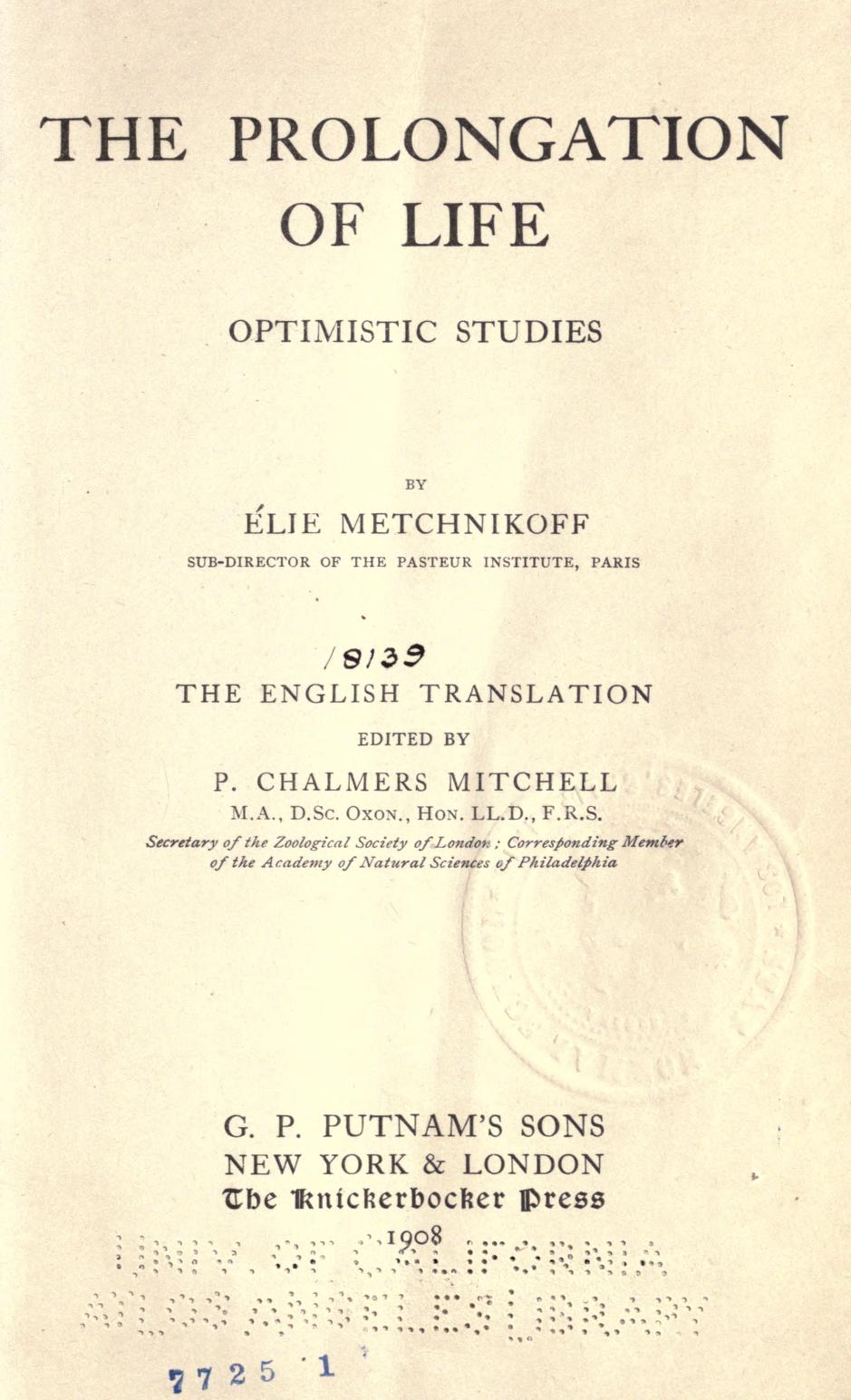
In a 1904 public lecture on old age, one of the most decorated scientists in Europe told his audience that the way to a longer life ran through the dinner table: eat soured milk every day. The man making the claim was Élie Metchnikoff (1845-1916), born Ilya Ilyich Mechnikov, deputy director of the Pasteur Institute in Paris and, in 1908, co-recipient with Paul Ehrlich of the Nobel Prize in Physiology or Medicine for phagocytosis and cellular immunity. That scientific standing, not a clinic or a proprietary device, was the asset that carried the longevity programme. He laid it out in two widely translated books, The Nature of Man (1903) and The Prolongation of Life (French Essais optimistes, 1907; English translation by P. Chalmers Mitchell, G.P. Putnam’s Sons, 1908). The Nobel Prize, awarded for his immunology, lent its authority to the separate and unproven sour-milk claim.
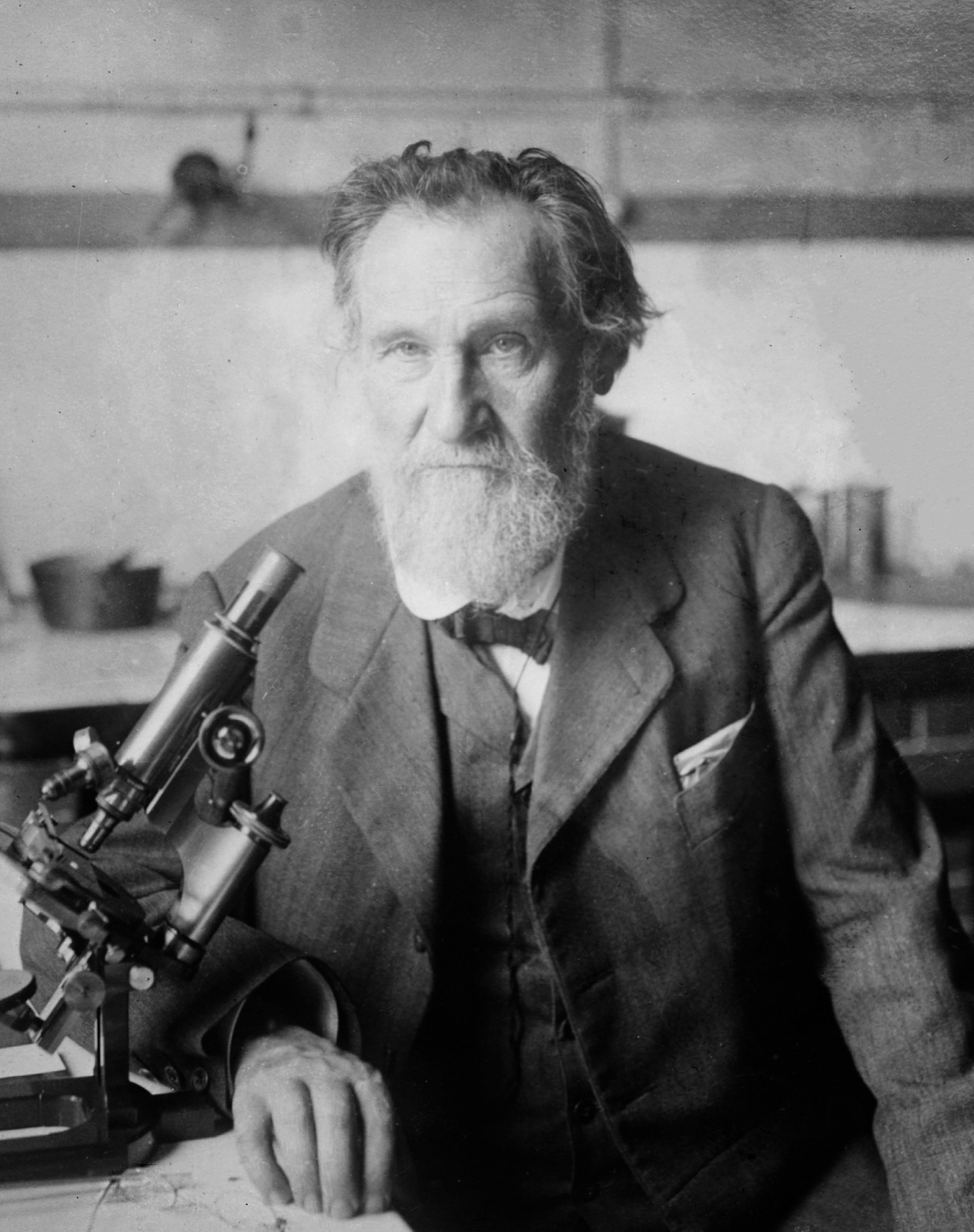
Selling the label, not the milk
Unlike the other early cases in this archive, the intervention itself was a cheap and ancient food. Exclusivity attached not to the product but to authority and authenticity. The scientific endorsement came from a Nobel laureate and the Pasteur Institute, where Metchnikoff cited the mouse experiments of Dr. Belonowsky on the ‘Bulgarian bacillus’ isolated from yahourth (the bacillus had been described in 1905 by Stamen Grigorov in Léon Massol’s Geneva laboratory). The commercial market that formed around the claim sold the premium element: pharmacies in Europe and the United States offered ‘authentic’ Bulgarian cultures as tablets, powders, and bouillons, and home-fermentation incubators were marketed under brand names including Sauerin, Lactobator, and Lactogenerator. What customers paid a premium for was the certified culture and the scientific imprimatur, not the soured milk as such.
From the silo to the gut
The mechanism was intestinal autointoxication. Metchnikoff held that the large intestine harbours putrefactive microbes whose toxic products are absorbed and drive arteriosclerosis and senility, and that lactic-acid bacteria from soured milk produce lactic acid (and, per Belonowsky, a further secreted antiseptic) that arrests this putrefaction. The inferential step was an analogy from food preservation: lactic fermentation keeps meat, silage, and distillery must from putrefying, so, in his words, ‘why should it not be used for the same purpose within the digestive tube?’ (The Prolongation of Life, 1908, p. 166). No human endpoint was measured. The supporting evidence Metchnikoff offered was animal experiment (mice, dogs) and the uncontrolled observation of Bulgarian centenarians. The leap from arresting putrefaction in a silo to prolonging a human life was asserted by analogy, not demonstrated.
A name others cashed in
The conflict here is institutional and reputational rather than personal-financial, and is named as such. The sources reviewed do not document that Metchnikoff patented soured-milk preparations, held equity in a producer, or took royalties, and one historical account records that he distanced himself from the commercial profiteering his advocacy set off. He was a salaried Pasteur Institute scientist. The conflict is that the scientific authority of a Nobel laureate and his Institute became the marketing engine for a commercial sour-milk and culture industry whose life-extension promise rested on no controlled trial. This is the inverse of the Bailey and Voronoff pattern, where the promoter was also the vendor; here the endorsement itself was the monetized asset, supplied by the promoter and capitalized by others.
Undone on the theory, the bug, and the man
The programme was undone on three fronts. First, its enabling theory collapsed: intestinal autointoxication was discredited in the early 20th century, with Walter C. Alvarez among its most vehement critics, on the empirical ground that putrefactive substances are not absorbed from the gut in the harmful quantities the theory required (Bested, Logan and Selhub, 2013). Second, the specific agent failed its own test: the yogurt organism (now Lactobacillus delbrueckii subsp. bulgaricus) is relatively acid-sensitive, and while ingested yogurt bacteria can be recovered in feces there is no evidence that the Bulgarian bacillus permanently colonizes the human large intestine, so the proposed continuous in-gut antiseptic action does not occur. Third, the promoter’s own case did not bear out the claim: Metchnikoff died in 1916 at age 71, attributed to heart failure, short of the long life his programme implied, and historical accounts mark his death as the point at which soured milk’s reputation as a fountain of youth faded. Modern microbiome research is a separately evidenced field; it does not vindicate the autointoxication framework as Metchnikoff stated it.
The pattern repeats
The same structural machinery appears in different treatments and eras. These cases show the claimed mechanism and how the claim met evidence.
Hauser's "Wonder Foods" diet (Look Younger, Live Longer)
The Hay System (food combining / 'food separation')
Order-energy raw-food regimen (Bircher-Benner's 'Lebendige Kraft' nutrition)
More related cases · 18
Evidence · 5 sources
- The Prolongation of Life: Optimistic Studies (1908)
- Cultural divergence: Elie Metchnikoff's Bacillus bulgaricus therapy and his underlying concept of health (1998)
- Recycling Metchnikoff: probiotics, the intestinal microbiome and the quest for long life (2013)
- Intestinal microbiota, probiotics and mental health: from Metchnikoff to modern advances: Part I - autointoxication revisited (2013)
- The Prolongation of Life title page (1908)