Antireticular cytotoxic serum (ACS / ATsS)
Aleksandr Bogomolets promised his antireticular cytotoxic serum could carry people past a hundred, perhaps to 150. As President of the Ukrainian Academy of Sciences, with Stalin's patronage, he pushed it through the Soviet medical system on no controlled evidence, having built the serum, written the theory, and credentialed it himself. Harry Goldblatt reviewed 3,500 treated patients: "it is not a cure for anything." Bogomolets died at 65 in 1946, short of his own promise.
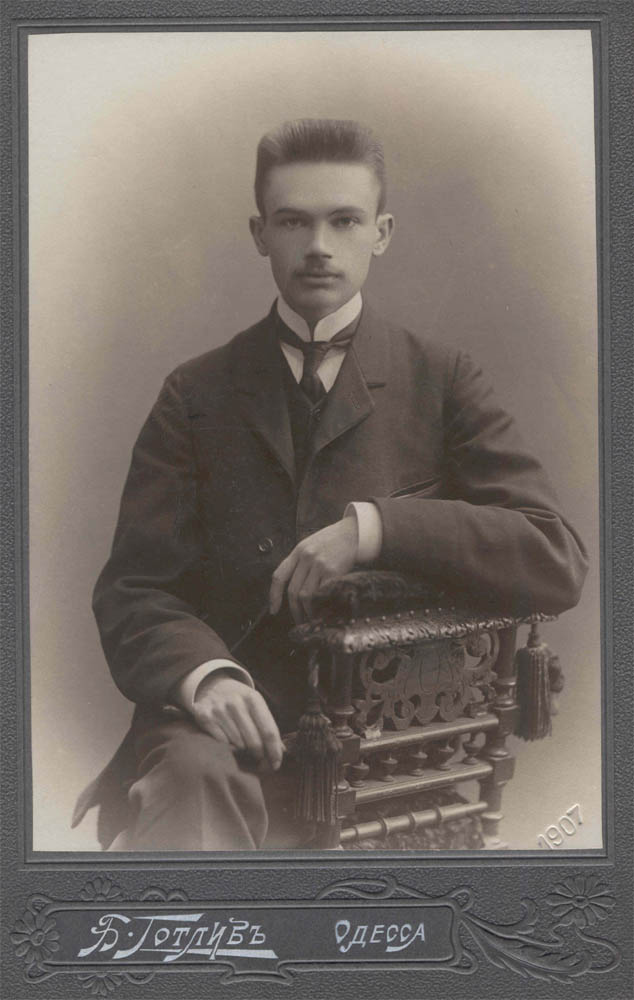
The serum that promised 150 years
The pitch was a number: live past a hundred, maybe even to 150. The man making it was not a back-alley quack but Aleksandr Aleksandrovich Bogomolets (24 May 1881 to 19 July 1946), a Soviet and Ukrainian pathophysiologist who from 1930 until his death served as President of the Academy of Sciences of the Ukrainian SSR. He directed the Kyiv institute that produced antireticular cytotoxic serum (ACS), and he became the institutional face of Soviet anti-aging science in the 1930s and 1940s. His connective-tissue theory of aging and the serum that applied it received their definitive English-language statement in his monograph The Prolongation of Life (Duell, Sloan and Pearce, 1946), published in the year of his death. The Frank and Knopov 2021 Arkhiv Patologii retrospective (PMID 33822557) and the 1956 Neiman Arkhiv Patologii memorial (PMID 13382647) are the two PubMed-indexed Russian-language biographical anchors for the dates and institutional placement used here. According to Joe Schwarcz’s 20 September 2024 article at the McGill Office for Science and Society (first published in The Montreal Gazette), Stalin appointed Bogomolets director of the Institute of Clinical Physiology in Kyiv where ACS was produced for wide distribution in the Soviet Union, and ‘is said to have gotten shots of it from time to time’; that political endorsement, more than any controlled clinical evidence, drove the serum’s diffusion across the Soviet healthcare system.
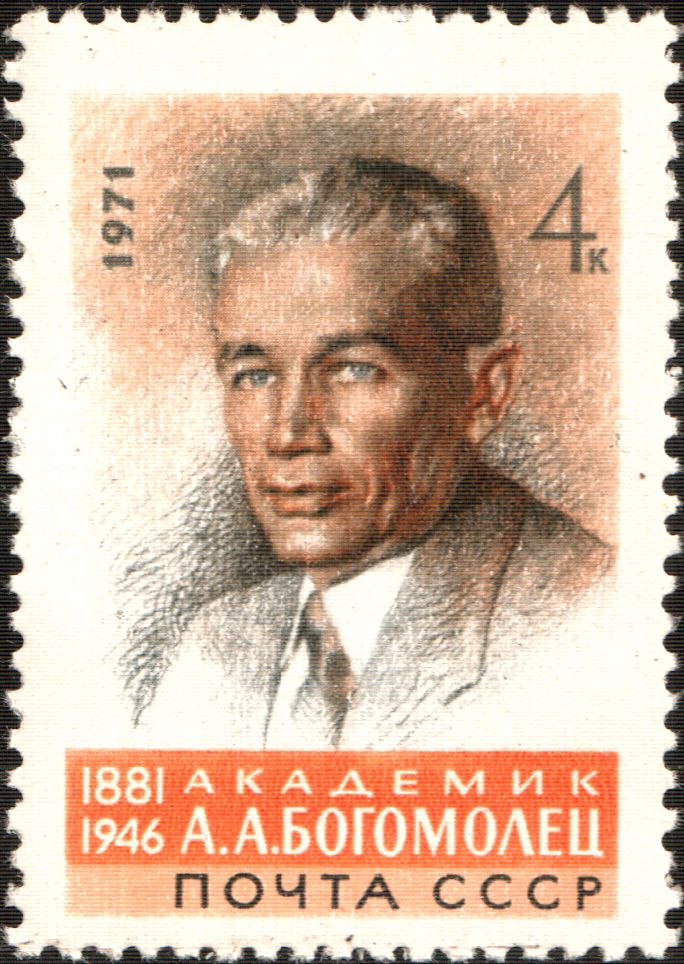
A state, not a clinic, as the dispensary
Production of ACS was concentrated in Bogomolets’s Kyiv institute, with subsequent wide distribution through the Soviet medical system (Schwarcz writes that ACS ‘was subsequently produced for wide distribution in the Soviet Union’). The mode of access differed structurally from the Western private-clinic model of the same period: where Niehans’s Clarens patients self-selected by referral and price, ACS was disseminated as a state-medical agent rather than as a private-clinic offering. The only individual patient framing Schwarcz attests is Stalin himself, who ‘is said to have gotten shots of it from time to time’; this bundle therefore treats Stalin as a documented enthusiast and political patron rather than as a confirmed notable patient, and the case carries no notable_patients entry for him. Bogomolets’s monograph names no Soviet leadership patient. The clinic admitted no controlled cohort; each treatment was an administered clinical service rather than a recorded experiment with internal controls.
The body’s “cement” and the dose that was supposed to flip
Bogomolets argued that the reticuloendothelial connective tissue is the ‘cement’ that holds the body together and that its deterioration is the central process of aging. ACS was framed as a low-dose application of standard immunological reasoning of the 1930s: a serum prepared from an animal donor sensitised against human spleen and bone marrow tissue would, given in small doses, paradoxically stimulate rather than destroy the reticular system in the recipient. The proposed mechanism extrapolated well beyond the immunology of the period, which gave no basis for selective xenogeneic stimulation of human connective tissue. Bogomolets’s monograph (Duell, Sloan and Pearce, 1946) presented the theory as expository synthesis and case description rather than as the report of a controlled investigation; it contained no controlled outcome data, no statistical methodology, no blinding, and no independently verified clinical endpoints. The mechanism remained vague throughout his career and was not supported by molecular biology as it emerged after the war.
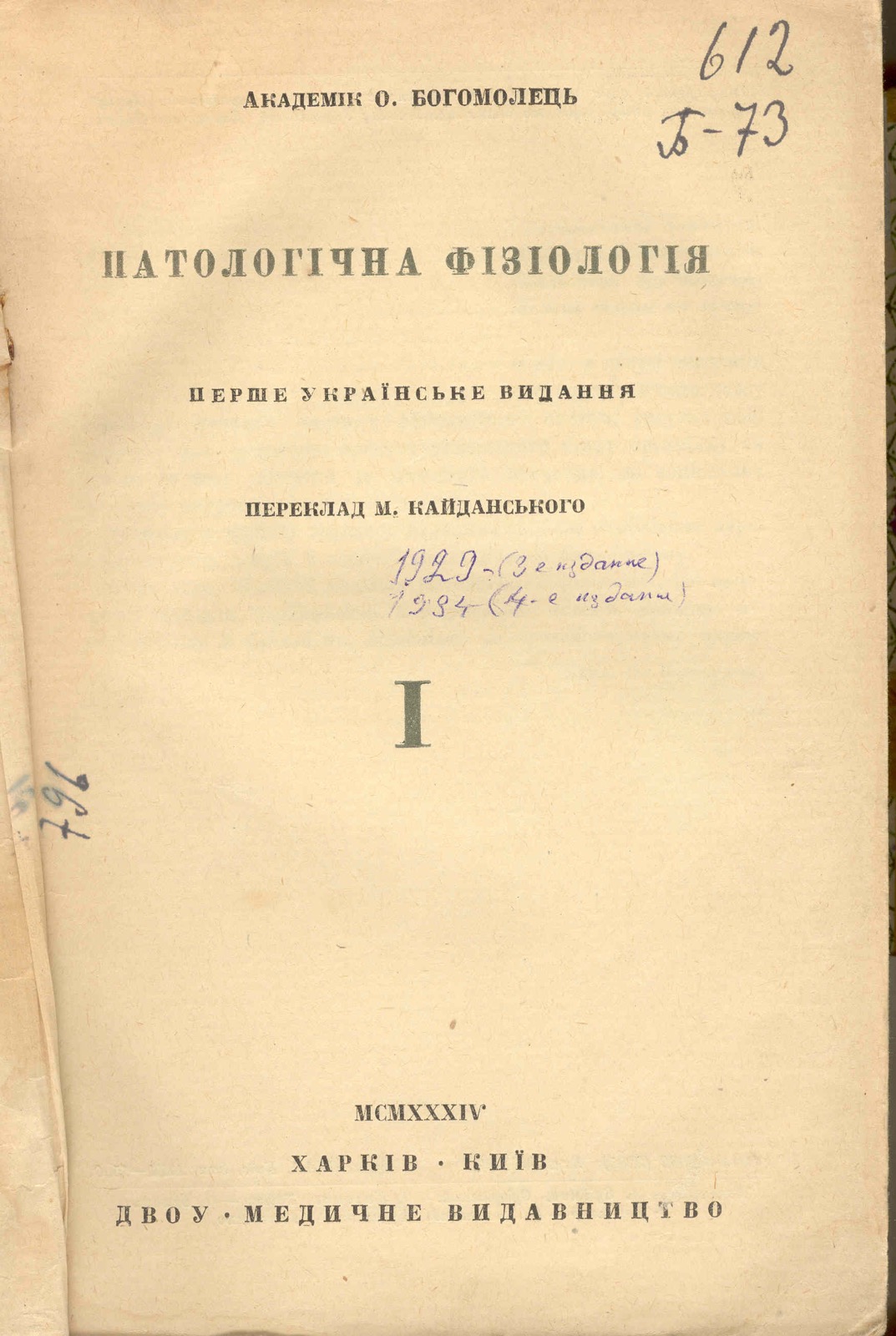
Inventor, judge, and salesman in one man
Bogomolets directed the institute that produced ACS, authored the theory that justified it, wrote the English-language monograph that gave both the theory and the serum their popular framing, and headed the academic body (Academy of Sciences of the Ukrainian SSR) through which the serum was distributed. The conflict of interest in this case is structural rather than narrowly commercial: developer, credentialing authority, and principal scientific advocate were one person, and the state-sponsored Soviet promotion of the work substituted political endorsement for independent controlled evaluation. Bogomolets published no controlled trial of his own work and no formal disclosure with his clinical and theoretical accounts. The political-scientific concentration of roles is reconstructible from his institutional positions and his monograph rather than from a contemporary disclosure.
“Not a cure for anything” — and dead at 65
Bogomolets’s own death visibly contradicted the longevity claim attached to ACS at the biographical level: he died at age 65, on 19 July 1946 in Kyiv (the year range 1881-1946 is anchored against the PubMed-indexed memorial title PMID 13382647 ‘[In memoriam Aleksandr Aleksandrovich Bogomolets, 1881-1946]’; the exact birth and death dates are anchored against the English Wikipedia infobox, listed in this bundle as the source entry wikipedia-aleksandr-bogomolets), well short of the ‘past one hundred, perhaps as long as a 150’ figure his monograph had set for the serum’s effect. The bundle does not establish that Bogomolets himself received ACS; the personal-mortality fact is offered as biographical context for his longevity promise rather than as a clinical endpoint demonstrated by the serum, and hard_endpoints_demonstrated is empty for this case. The Schwarcz 2024 McGill OSS article does not give an age or cause of death and does not contain a Stalin remark on Bogomolets’s death; this bundle therefore makes no claim about cause of death and no claim about a Stalin remark beyond Stalin’s documented patronage of the serum. Interest in ACS waned in the late 1940s after, in Schwarcz’s account, Harry Goldblatt (McGill MD 1916) was given a grant to prepare and study the serum and concluded, after reviewing the results of 3,500 patients treated at various centres, that ‘it is not a cure for anything’. A Goldblatt-authored primary publication of that 3,500-patient series was not located here via NCBI (searches combining ‘Goldblatt’ with ‘antireticular cytotoxic serum’ or ‘Bogomolets serum’ returned biographical pieces but no Goldblatt clinical paper), and the figure is therefore cited through the Schwarcz secondary article rather than a Goldblatt paper. After 1950 ACS no longer figures in mainstream Western medical literature; the connective-tissue theory of aging persists as a chapter heading in histories of Soviet science rather than as a current clinical programme. The Bogomolets Institute of Physiology in Kyiv and Bogomolets National Medical University continue under his name; the specific serum does not.
The pattern repeats
The same structural machinery appears in different treatments and eras. These cases show the claimed mechanism and how the claim met evidence.
Spermin-Poehl (Sperminum-Poehl) organotherapy
Brinkley goat-gland transplantation (goat-to-human gonad implant)
Brown-Séquard testicular extract (organotherapy)
More related cases · 8
Part of the lineage
Evidence · 8 sources
- The Prolongation of Life (1946)
- The Life and Death of a Soviet-Era Search for Longevity (2024)
- In memoriam Aleksandr Aleksandrovich Bogomolets, 1881-1946 (1956)
- Academician A.A. Bogomolets. Life dedicated to science. On the occasion of the 140th anniversary of his birth (2021)
- Aleksandr Bogomolets (English Wikipedia) (2026)
- Alexander Bogomolets, 1907 (Wikimedia Commons) (1907)
- Pathophysiology textbook by Alexander Bogomolets (Wikimedia Commons) (2012)
- USSR 1971 commemorative postage stamp depicting Alexander A. Bogomolets, Hero of Socialist Labour (1971)