Brinkley goat-gland transplantation (goat-to-human gonad implant)
For $750 John R. Brinkley surgically implanted fresh goat gonad tissue into men as a cure for impotence and aging, driving demand through his own radio station KFKB, whose twice-daily Medical Question Box prescribed his remedies on air. The tissue is rejected within weeks and delivers no hormone. JAMA editor Morris Fishbein called it quackery in 1928 and 1930; Kansas revoked his license in 1930, and he died bankrupt and under mail-fraud indictment in 1942.
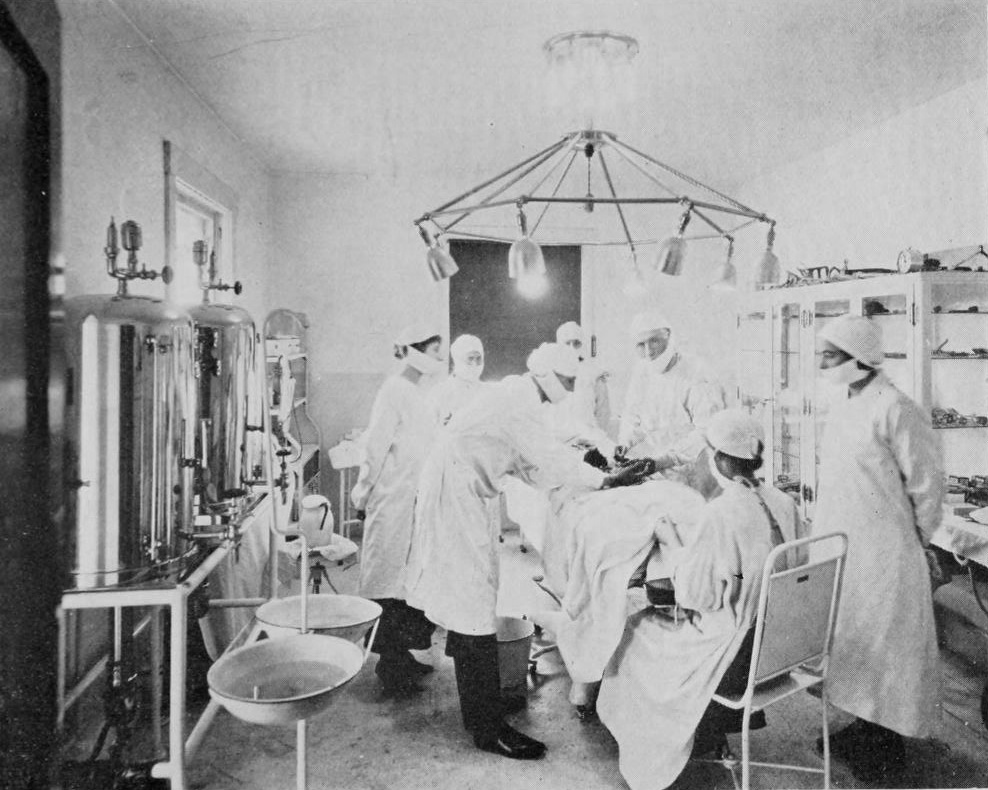
The doctor who built his own audience
In 1917, at a small hospital in Milford, Kansas, John R. Brinkley (1885 to 26 May 1942) began surgically implanting fresh goat gonad tissue into men, marketing it as a cure for impotence and a way to rejuvenate the aging. His authority did not come from his surgical results, or even from a settled credential: his was of contested validity (Smith 2022). It came from a microphone. In 1923 he founded radio station KFKB, whose twice-daily Medical Question Box answered listeners’ health questions on air and steered them to his remedies and his operation. When he lost his United States license, he simply moved the broadcasts to high-powered stations across the Mexican border. Brinkley styled himself a doctor and cultivated a folksy persona; his authority was a media construction more than a clinical one.
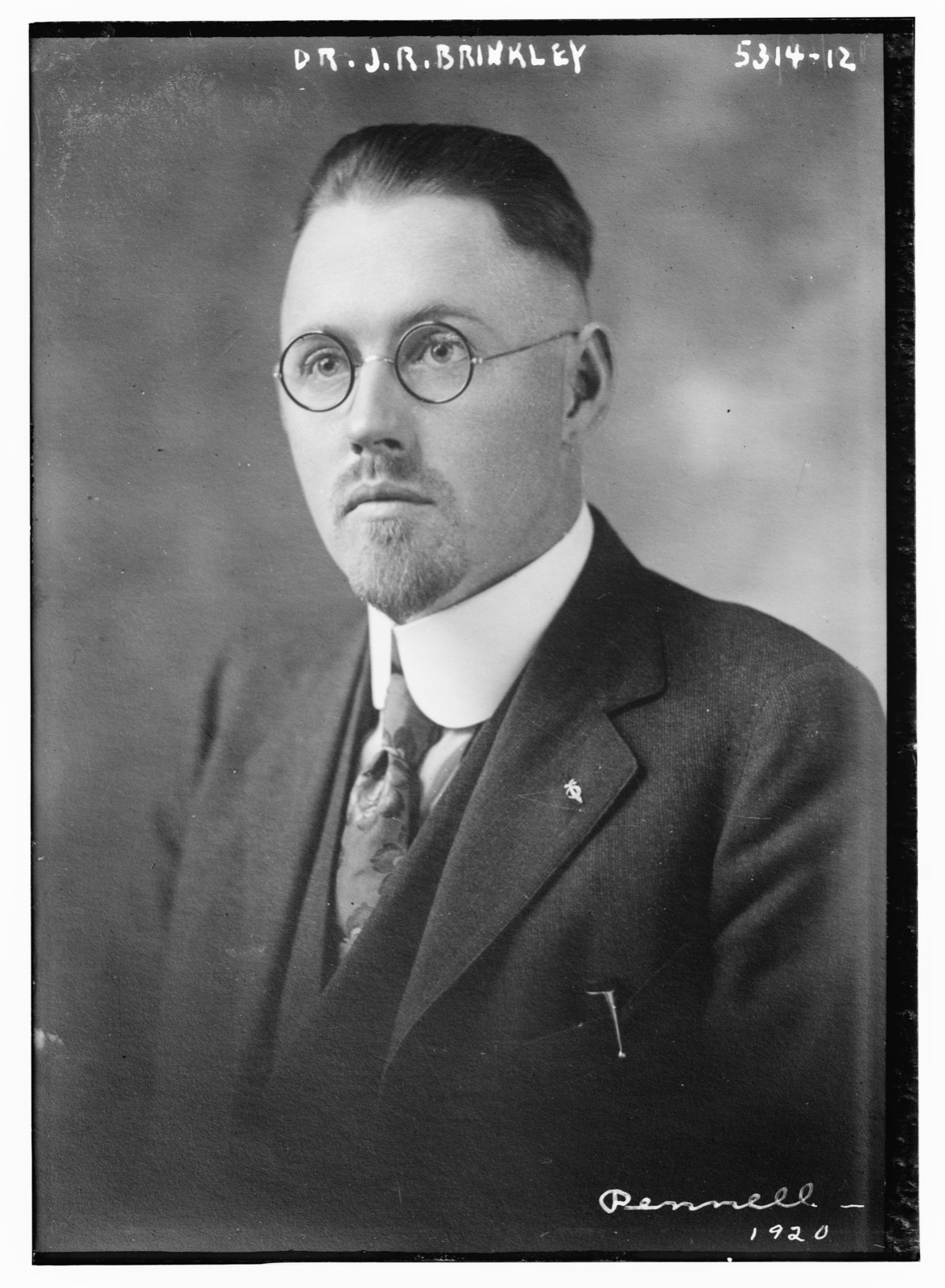
Seven hundred and fifty dollars and a radio dial
The operation was performed at Brinkley’s own hospital at Milford, Kansas, and later at clinics he operated after losing his Kansas license. Access ran through direct payment: Brinkley charged $750 per operation, which Smith 2022 notes is more than $10,000 in 2020 dollars. Unlike the European clinic model of Voronoff, Brinkley’s reach was built on radio and mail order rather than referral within a medical elite; KFKB and, later, powerful Mexican border stations carried his marketing across the United States and converted a regional surgical practice into a mass-market operation. The 1921 promotional pamphlet compiled by his publicist Sydney Flower advertised over 600 operations upon men and women, a promotional figure rather than an audited count.
Tissue the body throws off in weeks
Brinkley claimed that fresh goat gonad tissue, implanted surgically into a human recipient, would take root and supply an ongoing glandular stimulus that restored sexual function and reversed aging. The mechanism had no basis in the endocrinology or immunology of the period and none in modern biology: xenografted goat tissue is rejected by the recipient’s immune system within days to weeks, no integration or sustained endocrine contribution occurs, and no goat-derived hormone is delivered to the recipient. Brinkley measured no objective endocrine endpoint; the reported results were patient self-report and promotional testimony. The operation delivered the form of glandular surgery without any mechanism by which it could act. The immunological basis of this disconfirmation is established by modern xenotransplantation and rejuvenation-history reviews (Bajic 2012; Miller and Fulmer 2007), not by Brinkley’s own sources.
One man, every role in the transaction
Brinkley was the developer of the operation, the surgeon who charged for it, the owner of the hospital where it was performed, and the owner of the radio station that advertised it; his on-air Medical Question Box steered listeners to remedies that associated pharmacies filled (Smith 2022). He published no controlled outcome trial and no adverse-event registry. Developer, vendor, hospital owner, and advertiser were the same person. The bundle states this concentration of roles rather than attributing to Brinkley every dollar in an operation that also paid surgical staff, pharmacists, and broadcasting costs.
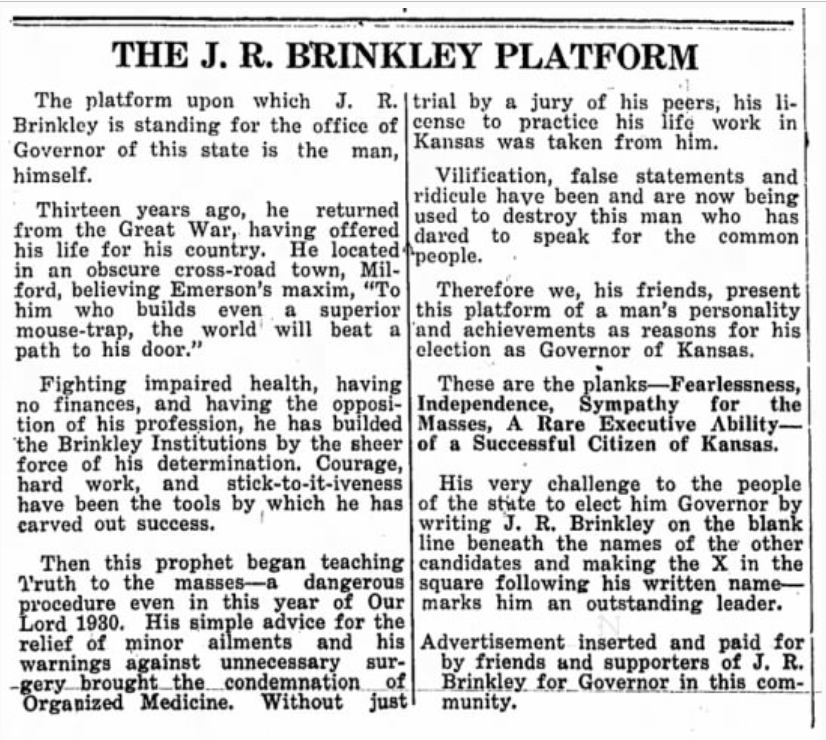
Quackery, then the courts
Brinkley’s practice was disconfirmed on several fronts rather than by a single trial. Professionally, Morris Fishbein, editor of the Journal of the American Medical Association, documented the operation as quackery in articles in 1928 and April 1930 and characterized Brinkley as a charlatan. Officially, the Kansas medical board revoked his license in September 1930; he then ran for governor of Kansas in 1930 and 1932, partly to recover his standing, placing third each time, with the 1930 write-in campaign drawing more than 183,000 votes (Smith 2022). Financially and legally, he declared bankruptcy in February 1941, lost his Mexican station to confiscation, and was indicted on mail-fraud charges in September 1941; he died in 1942. Biologically, the central premise was never tenable: the implanted tissue could not integrate or function, so the operation could deliver no benefit beyond placebo. Goat-gland transplantation left medical practice and survives as a documented episode in the histories of medical fraud and broadcasting regulation.
The pattern repeats
The same structural machinery appears in different treatments and eras. These cases show the claimed mechanism and how the claim met evidence.
Electronic Reactions of Abrams (ERA)
Spermin-Poehl (Sperminum-Poehl) organotherapy
Voronoff testicular xenograft (chimpanzee-to-human)
More related cases · 8
Part of the lineage
Evidence · 7 sources
- John R. Brinkley: A Quintessential American Quack (2022)
- The Goat-Gland Transplantation as Originated and Successfully Performed by J. R. Brinkley, M. D., of Milford, Kansas, U. S. A., in Over 600 Operations Upon Men and Women (1921)
- Charlatan: America's Most Dangerous Huckster, the Man Who Pursued Him, and the Age of Flimflam (2008)
- Quacks and Crusaders: The Fabulous Careers of John Brinkley, Norman Baker, and Harry Hoxsey (2002)
- The Bizarre Careers of John R. Brinkley (2002)
- Voronoff to virion: 1920s testis transplantation and AIDS (2012)
- Injection, ligation and transplantation: the search for the glandular fountain of youth (2007)