Blueprint (Project Blueprint)
Bryan Johnson sold his payments company for $800 million, then spent $2 million a year measuring himself, announcing in 2021 a biological age of 36 against a chronological 44. He has since abandoned three of the regimen's own components — plasma exchange (no benefit), growth hormone (side effects), and rapamycin. The surviving product, built on epigenetic-clock scores a 2025 peer-reviewed review calls unvalidated for individual use, still sells subscriptions today.

The most measured man in the world
On 13 October 2021, a 44-year-old tech millionaire published a blog post announcing that he had reversed the “biological age” of his own organs to 36. He called the project Blueprint, and himself its only subject: “Blueprint is a stock ticker of sorts that will reveal, through the tracking of my biological versus chronological age, the status of today’s anti-aging science (even if an N=1 for now).” Bryan Johnson had the money to run that experiment because he had already run one successful company. He founded the payments processor Braintree in 2007, added Venmo to it in 2012, and sold the combined business to PayPal for $800 million in September 2013; Johnson has said his own after-tax take was $300 million (Hampton interview, 28 February 2025). Rather than retire, he spent it: a reported $100 million to found the venture firm OS Fund in 2014 (Forbes, 15 September 2015), another $100 million announced at the 2016 founding of the brain-monitoring startup Kernel (TechCrunch, 20 October 2016), and, from 2021, roughly $2 million a year (Fortune, 1 February 2023) on a personal medical program built entirely around measuring and re-measuring his own body.

From private obsession to monthly subscription
For its first two years, Blueprint was not for sale to anyone; it was a private research program run out of Johnson’s home and personal laboratory, overseen by what a July 2023 Fortune report described as his team of 30 doctors. In January 2024, Blueprint became a commercial company, opening a 90-day, $333-a-month program (billed as $999 total) to the first 2,500 sign-ups, with optional advanced-testing tiers running to roughly $1,600. The ongoing product line sold under that program includes a “Longevity Mix” powder, softgel and capsule blends, a high-polyphenol olive oil, and related products. In October 2025, Blueprint raised $60 million from a roster of celebrity and technology investors, including Kim Kardashian, Paris Hilton, and the Winklevoss twins, and brought in an outside CEO, Gyre Renwick, alongside Johnson and co-founder Kate Tolo. The company has said it plans to expand from supplements into blood testing, food delivery, and other services. What began as one man’s private $2-million-a-year regimen is now marketed, at a fraction of the price, to anyone willing to pay a monthly subscription.
A younger number, not a longer life
Blueprint’s central evidence is not survival data; it is a set of laboratory scores. Johnson’s protocol page, updated 23 January 2026, reports an epigenetic “speed of aging” score of 0.48, a telomere length it equates to a person of 10 to 15 years old, and a skin-age reduction from 64 to 36. These are the same category of measurement — DNA-methylation “epigenetic clocks,” telomere assays, organ-age estimates — that underlie Johnson’s original 2021 claim and the widely reported 2024 claim that he had reduced his “pace of aging” by 31 years. Dr. Morgan Levine, an epigenetic-aging researcher, told NMN.com in September 2024 that clocks measure a relative rate, not a quantity of years, and that projecting a single-timepoint rate across an entire lifespan the way the 31-year figure implies is not scientifically valid. A 2025 peer-reviewed analysis of the underlying technology, published in the journal Epigenomics, goes further: it concludes that epigenetic clocks “fail to meet common standards for clinical utility compared with established biomarkers,” and that applying them in individual-level decision making “can be uninformative and potentially harmful.” None of Johnson’s biomarker scores has been checked against mortality, disease incidence, or any outcome beyond the score itself.
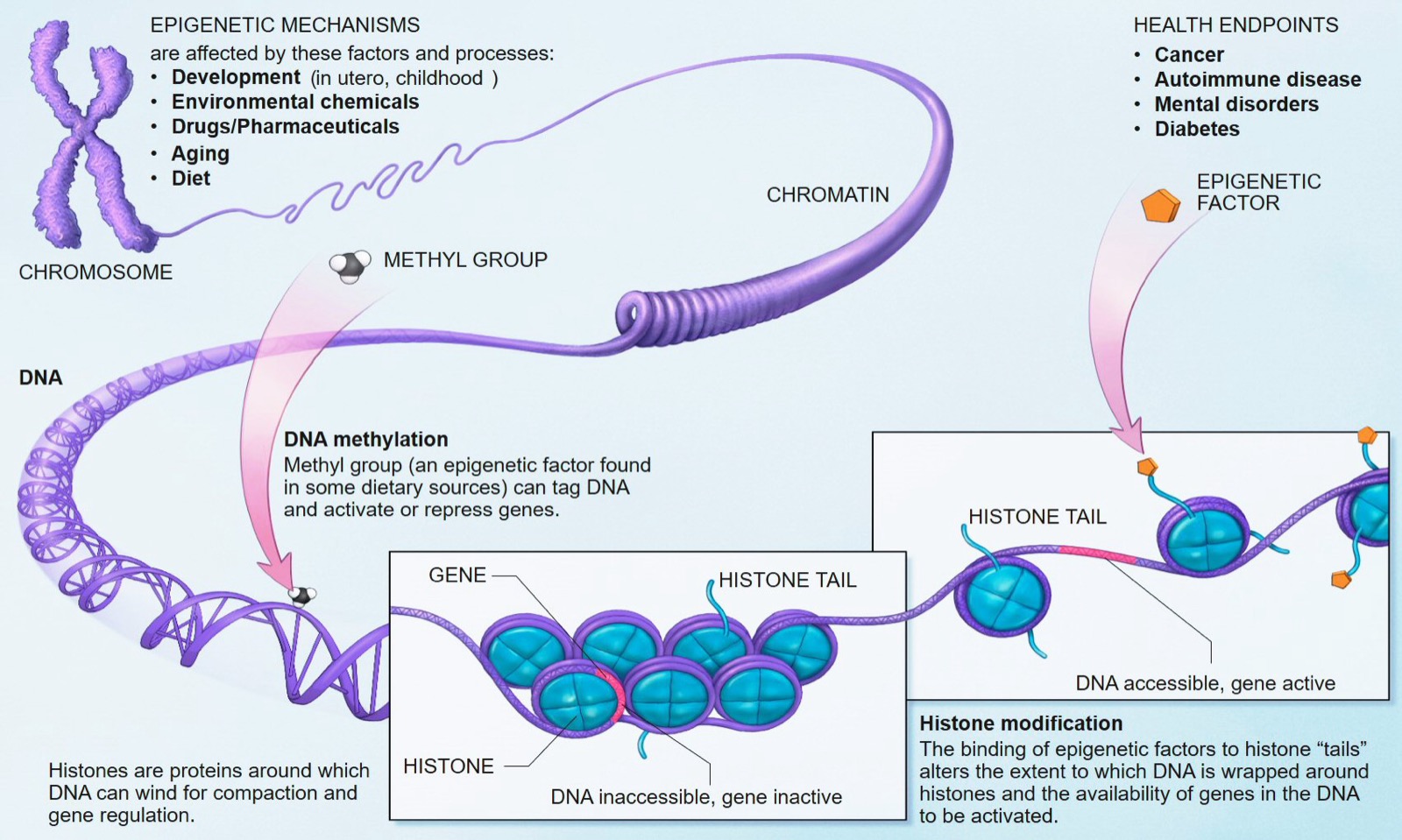
The man selling the measurements he takes of himself
Johnson is not a disinterested researcher publishing results about someone else’s body. He is the founder and personal test subject of the company that sells, to the public, its own approximation of the regimen he runs on himself, and the biomarker improvements he reports are the product’s central marketing content. Longevity scientist Dr. Andrew Steele, reviewing the “essential capsules” component of the retail stack for NAD.com in January 2024, wrote: “That’s OVER $100 PER MONTH on tablets with totally unproven efficacy.” The American Council on Science and Health concluded in February 2025 that Blueprint functions as an online store “selling numerous costly products that its creator—and poster child—considers healthy despite lacking solid scientific evidence,” and that Johnson’s own published results are “in reality, anecdotal evidence or, at best, a case study,” not a controlled trial of the product being sold. No independent audit of Blueprint’s revenue or Johnson’s equity stake has been published, and no source establishes a specific governance title for Johnson after the October 2025 funding round, when Gyre Renwick joined as CEO; what is documented is that Johnson founded the company, remains its public face, and that it raised $60 million in outside capital that same month on the strength of a protocol whose central evidence remains his own uncontrolled measurements of himself.
The parts he already gave up on
Unlike most practitioners in this archive, Johnson has publicly and repeatedly disconfirmed pieces of his own regimen. In 2023 he ran what he called a multigenerational plasma exchange, receiving young donor plasma including one liter from his then-17-year-old son. On 5 July 2023 he announced he was stopping: “Discontinuing therapy: completed 6, 1L young plasma exchanges. 1x/mo (1 w/ my son). Evaluated biomarkers from biofluids, devices and imaging, no benefits detected.” His conclusion tracked the regulatory record: the FDA had already warned in February 2019 that young-donor plasma infusions have no proven clinical benefit for aging-related use, plus disclosed infectious, allergic, respiratory, and cardiovascular risks. Johnson separately discontinued growth-hormone supplementation after about 100 days, citing side effects including increased intracranial pressure, headaches, and elevated blood glucose, and abandoned rapamycin, an immunosuppressant with mouse-lifespan evidence but no completed human longevity trial. None of the three was ever sold to Blueprint’s paying subscribers as an ongoing consumer product. What is still sold is the supplement, food, and testing subscription, marketed on the same category of uncontrolled, surrogate biomarker evidence that a 2025 peer-reviewed review says was never built to support individual-level anti-aging claims. The case is active. Whatever disconfirmation eventually reaches the surviving product will most likely follow the pattern Johnson has already demonstrated three times on the components he dropped himself.
The pattern repeats
The same structural machinery appears in different treatments and eras. These cases show the claimed mechanism and how the claim met evidence.
Hauser's "Wonder Foods" diet (Look Younger, Live Longer)
Therapeutic plasma exchange with intravenous immunoglobulin (TPE-IVIG)
Cellular therapy (Frischzellentherapie)
External references
Evidence · 15 sources
- Project Blueprint (2021)
- Bryan Johnson's Protocol (2026)
- Important Information about Young Donor Plasma Infusions for Profit (2019)
- From population science to the clinic? Limits of epigenetic clocks as personal biomarkers (2025)
- Longevity or Marketing? Dissecting the Claims of the Blueprint Protocol (2025)
- Bryan Johnson's $999 Longevity Plan: Overpriced Anti-Aging Hype or Genuine Health Revolution? (2024)
- Blueprint CEO Bryan Johnson defends blood plasma transfusion with son (2023)
- Longevity Expert Explains How Bryan Johnson Has Not Reduced His Pace of Aging by 31 Years (2024)
- eBay's PayPal Acquires Payments Gateway Braintree For $800M In Cash (2013)
- Bryan Johnson's Longevity Startup Raises $60M, Attracts Big-Name Investors (2025)
- The $300 Million Exit That's Funding Humanity's Future, with Bryan Johnson (2025)
- Braintree Founder Unveils Open Source Playbook For Science Investors (2015)
- Bryan Johnson invests $100 million in Kernel to unlock the power of the human brain (2016)
- How did Bryan Johnson make his money? (2023)
- Epigenetic mechanisms diagram, National Institutes of Health (2005)