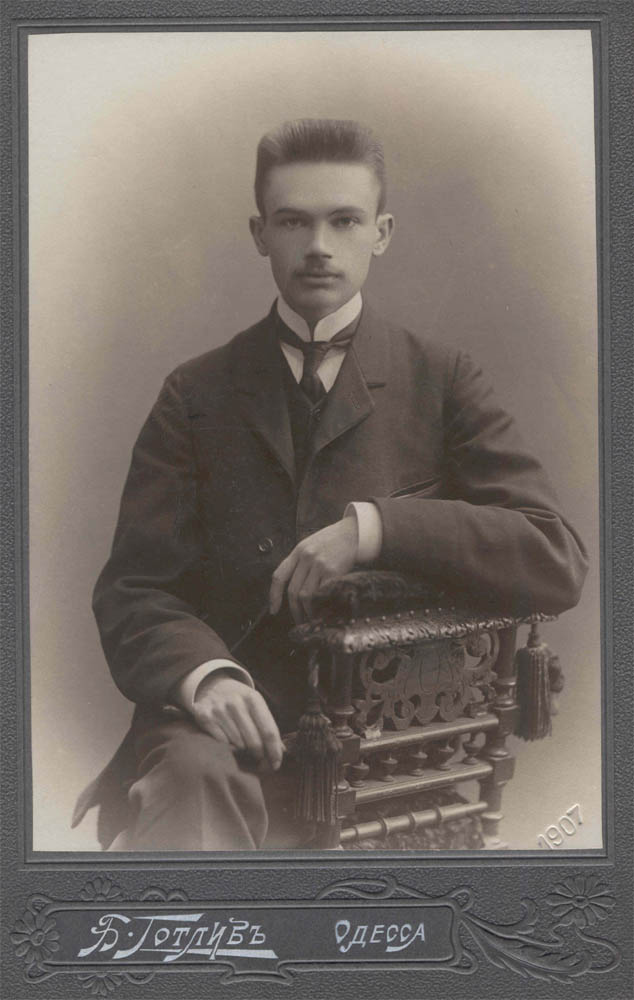
Aleksandr Bogomolets
Aleksandr Aleksandrovich Bogomolets (24 May 1881 to 19 July 1946) was a Soviet and Ukrainian pathophysiologist whose Kyiv institute developed antireticular cytotoxic serum (ACS) in the 1930s on the connective-tissue theory of aging. The Frank and Knopov 2021 retrospective in Arkhiv Patologii (PMID 33822557) and the 1956 Neiman memorial in the same journal (PMID 13382647) are two PubMed-indexed Russian-language biographical anchors for the 1881-1946 dates and the institutional placement of the work. Bogomolets gave the connective-tissue theory and the serum their definitive English-language statement in The Prolongation of Life (Duell, Sloan and Pearce, 1946), the year of his death. According to Joe Schwarcz’s 20 September 2024 synthesis at the McGill Office for Science and Society (first published in The Montreal Gazette), Stalin ‘appointed Bogomolets director of the Institute of Clinical Physiology in Kyiv, where ACS was subsequently produced for wide distribution in the Soviet Union’ and ‘is said to have gotten shots of it from time to time’; Bogomolets himself died at age 65, short of his stated longevity target of ‘past a hundred, maybe even as long as a 150’. The Schwarcz article does not give a cause of death and does not contain a Stalin remark on Bogomolets’s death; this bundle therefore makes no claim about either. Interest in ACS waned in the late 1940s after, in Schwarcz’s account, a grant to Harry Goldblatt (McGill MD 1916) supported a review of ACS in 3,500 patients that concluded the serum ‘is not a cure for anything’. Bogomolets’s later reputation in Ukraine remains as the founder of the Bogomolets Institute of Physiology in Kyiv and the namesake of the medical university there; the specific serum no longer figures in mainstream therapeutic practice.