Egyptian physical regeneration and the Wine of Egypt
Count Cagliostro sold the 1780s aristocracy a forty-day "Egyptian regeneration" and secret elixirs, a vial of "Wine of Egypt" supposedly rejuvenating the lady who drank it by thirty years. In 1791 the Roman Inquisition condemned him for heresy and imposture and issued an official biography unmasking the Grand Kophta as the Sicilian forger Giuseppe Balsamo, his arcana fabricated to defraud. He died imprisoned at San Leo in 1795, at roughly fifty-two.
The count who crowned himself Grand Kophta
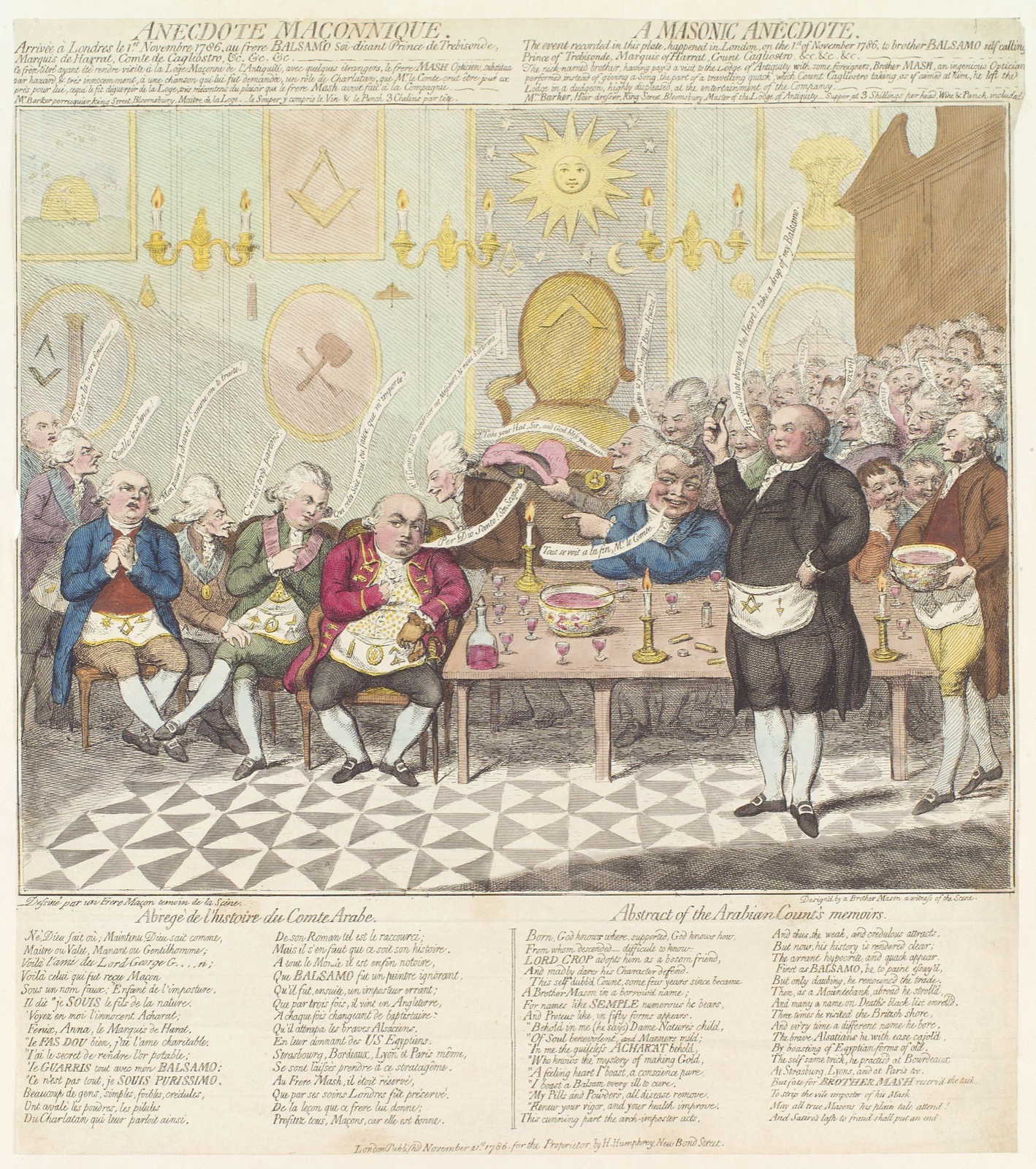
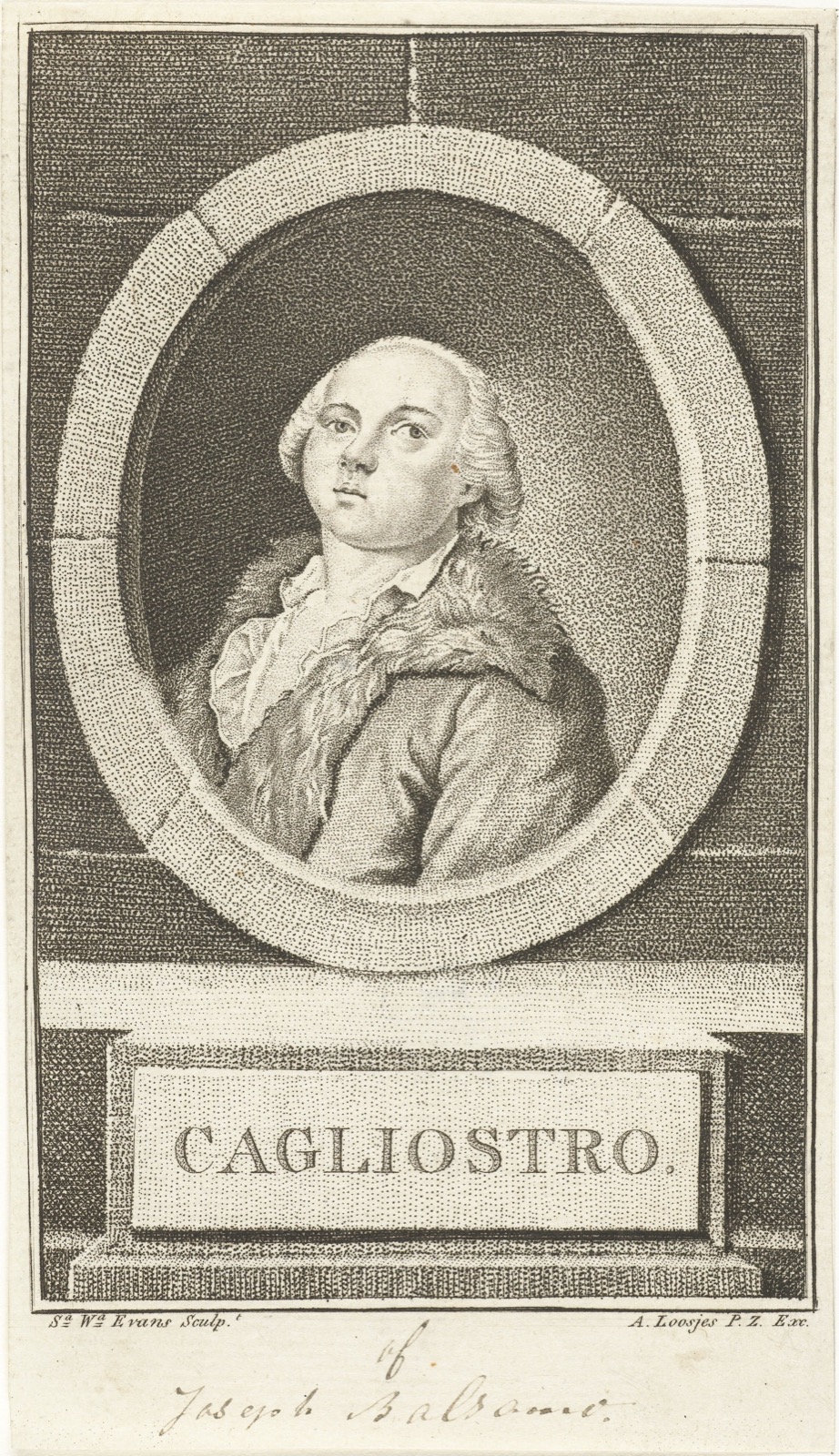
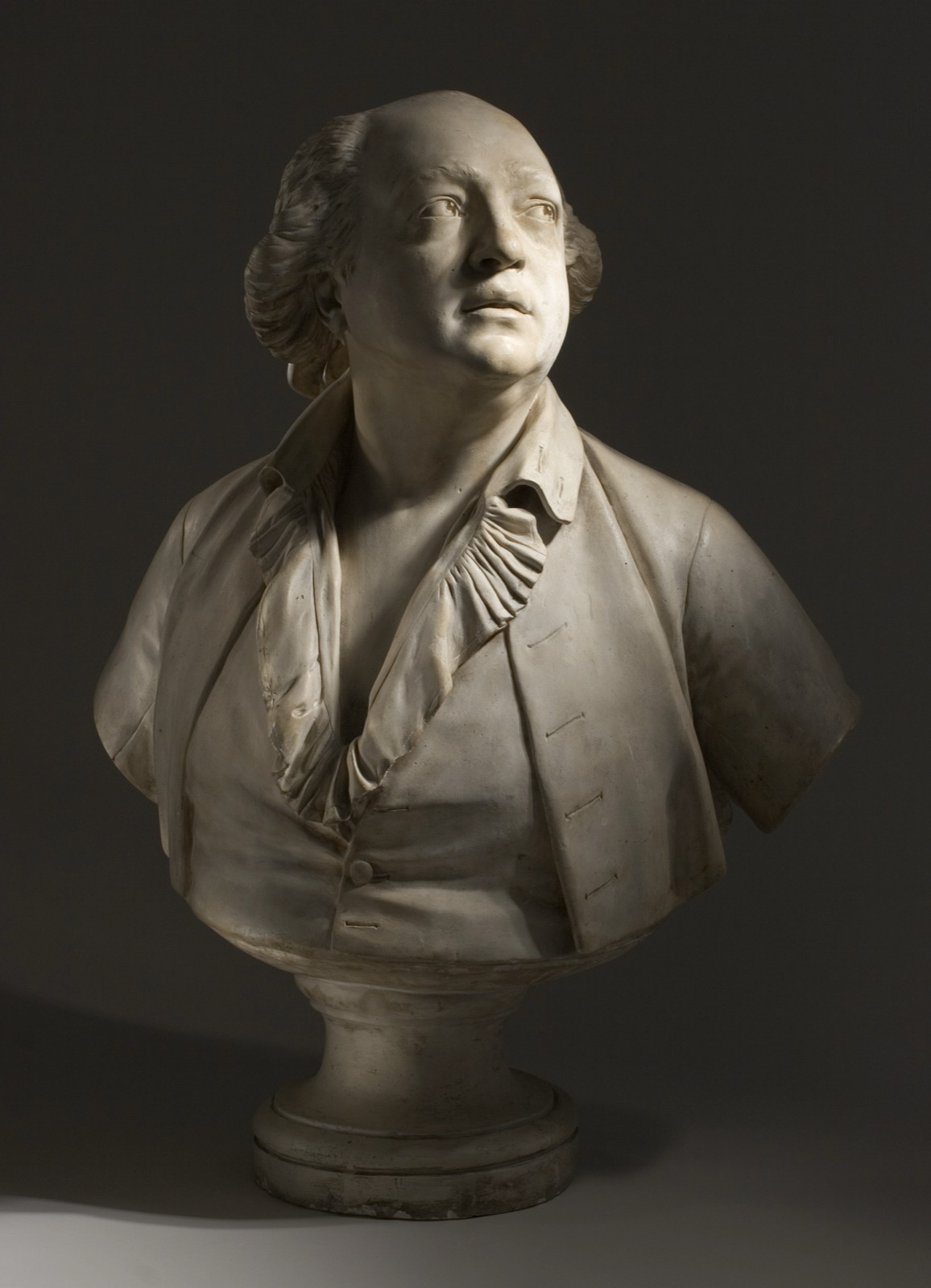
In the salons of the 1780s a man calling himself Count Alessandro di Cagliostro promised the aristocracy of Europe that he could make an old body young again. He claimed command of arcane powers, founded his own ‘Egyptian’ Freemasonry, and styled himself its Grand Kophta. The count was an invention: his real name was Giuseppe Balsamo, born in Palermo in 1743 (the period biographer W. R. H. Trowbridge recorded contemporary uncertainty between 1743 and 1748; standard reference works give 1743). From the late 1770s he travelled the courts of Europe as a healer and alchemist, drawing aristocratic devotion at Mitau and St Petersburg, then at Strasbourg from 1780 under the patronage of Cardinal Louis de Rohan, and at Lyon and Paris in 1784 and 1785. His self-presentation and reputation for spectacular cures gave the regeneration regimen its traction; the 1937 Bulletin of the New York Academy of Medicine history by G. H. Lathrope (PMID 19312029) treats him as a defining figure in the history of charlatanism, and Iain McCalman’s The Last Alchemist (HarperCollins, 2003) is the standard modern scholarly biography.
Sold through the man, never a shop
Access ran entirely through Cagliostro’s person and his Egyptian-Rite lodges rather than through any open market. The forty-day ‘physical regeneration’ was a retreat available to initiates, and the secret elixirs were dispensed by Cagliostro himself to chosen clients. The clientele was aristocratic and wealthy: Trowbridge places the ‘Wine of Egypt’ legend among great ladies of the salons, and McCalman documents a circuit of noble and court patrons across Mitau, St Petersburg, Strasbourg, Lyon, and Paris. Cardinal Louis de Rohan housed and funded him. There was no published protocol and no cohort: each cure and each admission was an individual transaction conducted on Cagliostro’s authority, which is the eighteenth-century salon analogue of the private-clinic exclusivity that recurs across this archive.
Forty days, then “as pure as a child”
The mechanism was alchemical and ritual rather than physiological. The ‘moral and physical regeneration’ was framed as a forty-day retreat (pray for forty days, sleep forty nights in a prescribed tabernacle, under a set diet) after which the body would be made young again, ‘as pure as that of a child’, and the adept would enter ‘that perfect repose which is the beginning of immortality’ (the regimen as recorded by Henry Ridgely Evans in 1919, reproducing the nineteenth-century occultist Eliphas Levi’s account, rather than a contemporary eighteenth-century protocol). The elixirs (the ‘Wine of Egypt’, the ‘Elixir Vitae’, an ‘extract of Saturn’, ‘rejuvenating powders’) were secret preparations whose contents Cagliostro never disclosed, presented as drawing on alchemical ‘prime matter’. No constituent with an effect on human aging is identified anywhere in the record, and the surrogate and hard endpoints alike were left undefined: there was testimony, ritual, and assertion, but no measured outcome.
Inventor, compounder, healer, and gatekeeper at once
Cagliostro was inventor, compounder, vendor, administering healer, and credentialing authority for the regeneration all at once: he devised the Egyptian Rite, sold the secret arcana it used, administered the cures, and as Grand Kophta admitted the initiates who paid to enter. His income came from wealthy patrons and initiates and from the sale of the remedies, and from gifts and lodging supplied by protectors such as Cardinal de Rohan, rather than from a fixed physician’s fee. The 1791 Roman Inquisition proceeding charged him, as Trowbridge frames it, with manufacturing his remedies ‘with the object of defrauding the public by attributing to them fabulous properties which he knew they did not possess’. The bundle states the conflict as that concentration of roles and as the Holy Office framed the fraud, rather than asserting a full accounting of every sum he received or that he was the only person who profited from his circle.
The Holy Office prints his real name
Cagliostro’s standing collapsed in two stages. The Diamond Necklace Affair of 1785 to 1786 saw him held in the Bastille and then expelled from France, though he was not convicted in that matter. He returned to Rome, where the Holy Office arrested him in December 1789. In 1791 the Roman Inquisition condemned him for heresy and imposture and issued an official biography, the Compendio della vita e delle gesta di Giuseppe Balsamo (translated the same year as The Life of Joseph Balsamo), which identified ‘Count Cagliostro’ as the Sicilian forger Giuseppe Balsamo and presented his arcana and regeneration as deliberate impostures. His death sentence was commuted to life imprisonment, and he died in the fortress of San Leo on 26 August 1795, at roughly fifty-two, having neither demonstrated the regeneration he sold nor reached the great age he implied for himself. The disconfirmation is the contemporary exposure and the absence of any demonstrated effect, in the manner of the 1784 royal commission that ended Mesmer’s Paris career, not a modern clinical trial.
The pattern repeats
The same structural machinery appears in different treatments and eras. These cases show the claimed mechanism and how the claim met evidence.
Animal magnetism (mesmerism)
Celestial Bed and Temple of Health
Perkins Metallic Tractors
Part of the lineage
Evidence · 14 sources
- The Life of Joseph Balsamo, commonly called Count Cagliostro (1791)
- Count Cagliostro: An Excursion Into Eighteenth Century Charlatanism (1937)
- Cagliostro: The Splendour and Misery of a Master of Magic (1910)
- The Last Alchemist: Count Cagliostro, Master of Magic in the Age of Reason (2003)
- Cagliostro and His Egyptian Rite of Freemasonry (1919)
- Portrait of Giuseppe Balsamo (called Count Alessandro Cagliostro), marble bust by Jean-Antoine Houdon (1786)
- A Masonic Anecdote (Anecdote Maconique), satirical etching by James Gillray (1786)
- Portret van Alessandro Cagliostro (engraved portrait), Rijksmuseum (1782)
- Mesmerism and the End of the Enlightenment in France (1968)
- Rapport des commissaires chargés par le Roi de l'examen du magnétisme animal (Public Report) (1784)
- Doctor of love: James Graham and his celestial bed [book review] (2010)
- The Prince of Quacks (and How He Captivated London) (2019)
- Of the Imagination as a Cause and as a Cure of Disorders of the Body; Exemplified by Fictitious Tractors, and Epidemical Convulsions (1800)
- Bad Medicine: Doctors Doing Harm Since Hippocrates (2006)