The Hay System (food combining / 'food separation')
A surgeon who said medicine could not cure his Bright's disease cured himself by diet, then made that one recovery a single law of all illness: never eat starch and protein together, or your body acid-poisons itself. He sold it cheaply in books and at a premium at the Briarcliff Lodge hotel. The autointoxication theory beneath it was already collapsing, and a controlled test (Wutzke 2001) found food separation no better than a mixed diet.
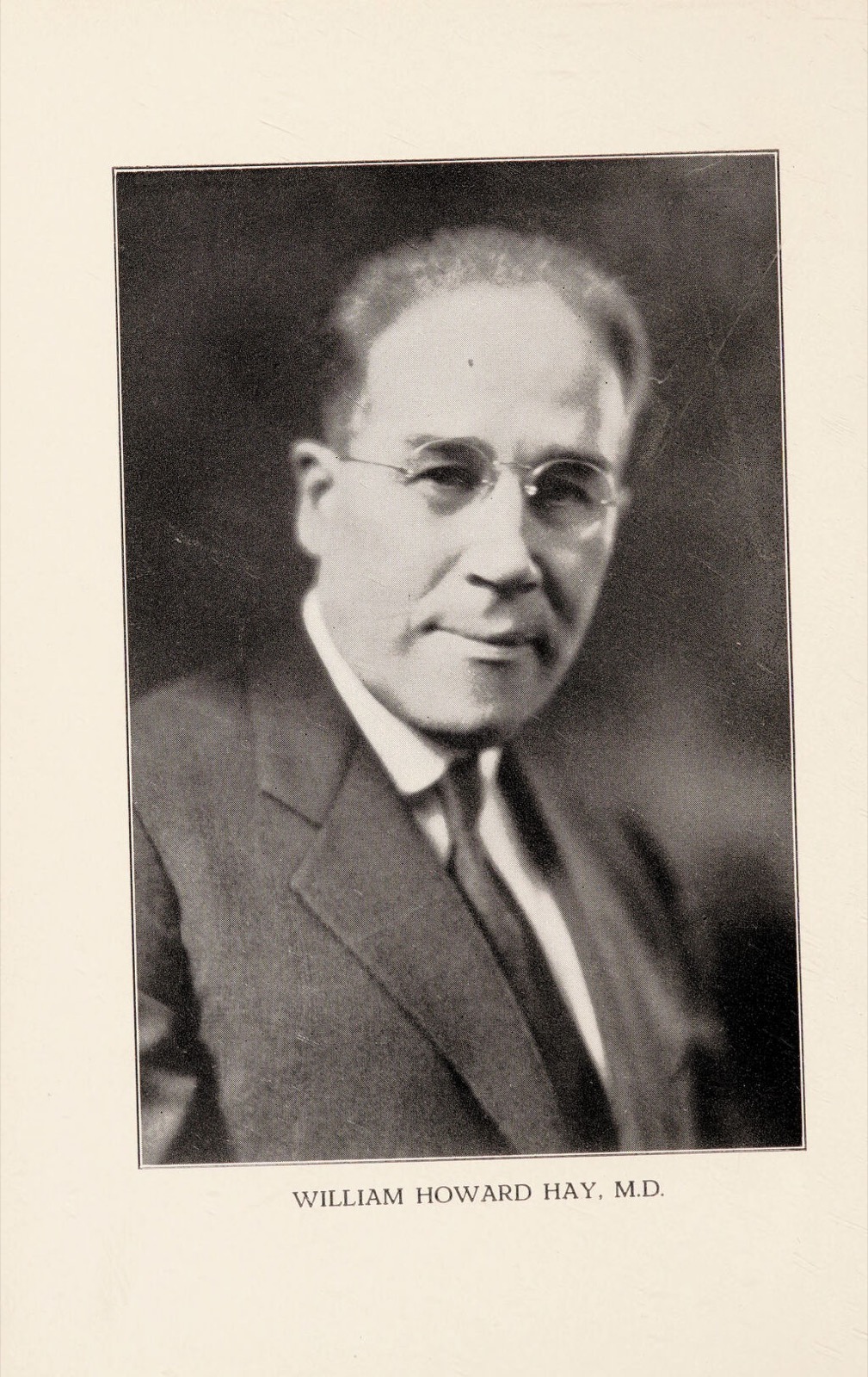
The doctor medicine gave up on
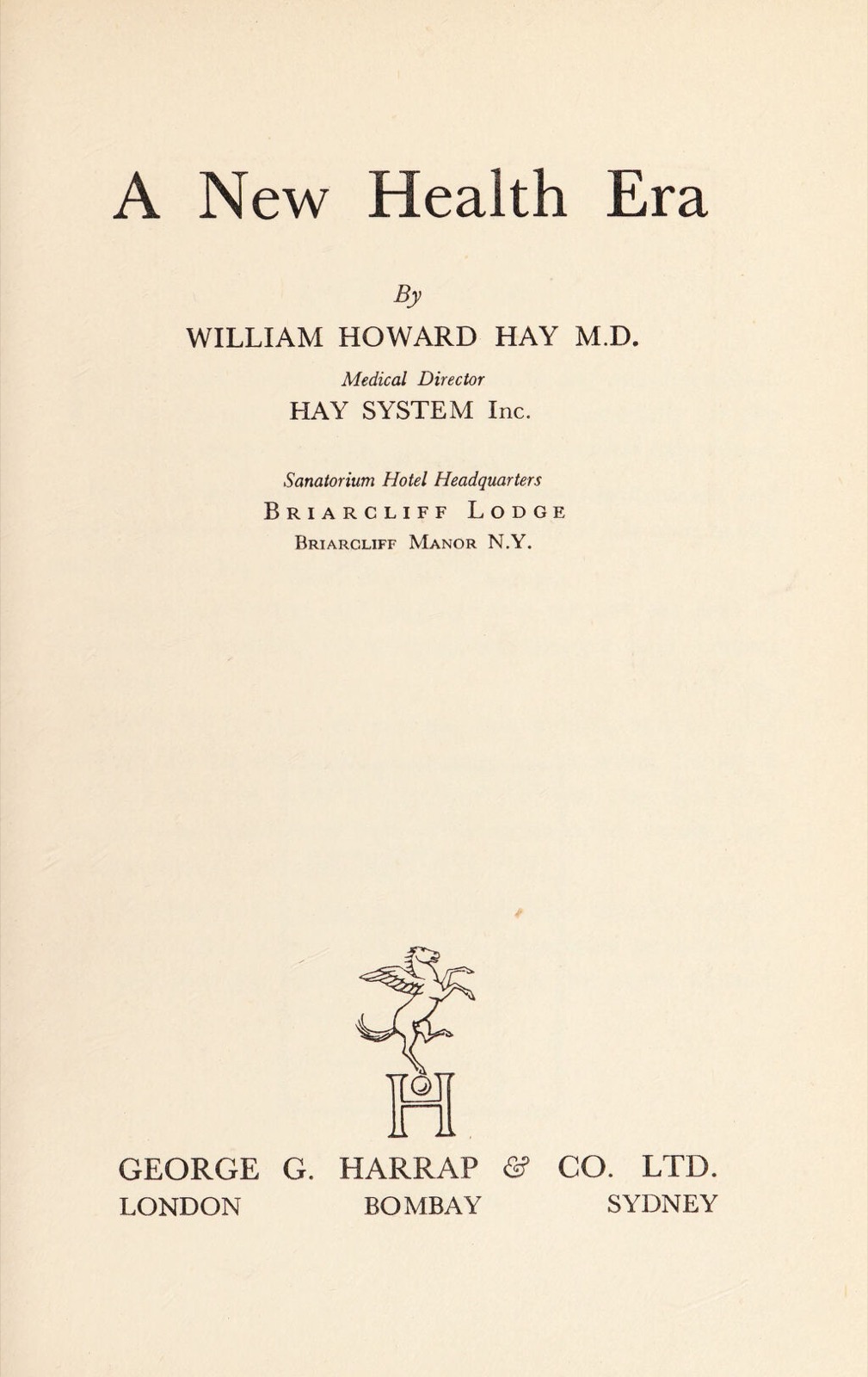
A surgeon, sixteen years into practice, “broke down.” By his own third-person account in the Introduction to A New Health Era (1935), “Bright’s disease developed, with high blood pressure, and finally dilated heart, a condition for which there is no relief in medicine.” William Howard Hay (1866-1940) reasoned his way back to health through diet instead, and from that one recovery built a career. The conversion narrative, a doctor whom orthodox medicine could not save curing himself, was the engine of the system. He carried it into the lay market through Health via Food (New York, 1929) and the Harrap volumes of the mid-1930s, and into the medical press, where (per Bested, Logan and Selhub, 2013) he defended intestinal autointoxication in its most sweeping form, maintaining the theory was responsible for all human ailments.
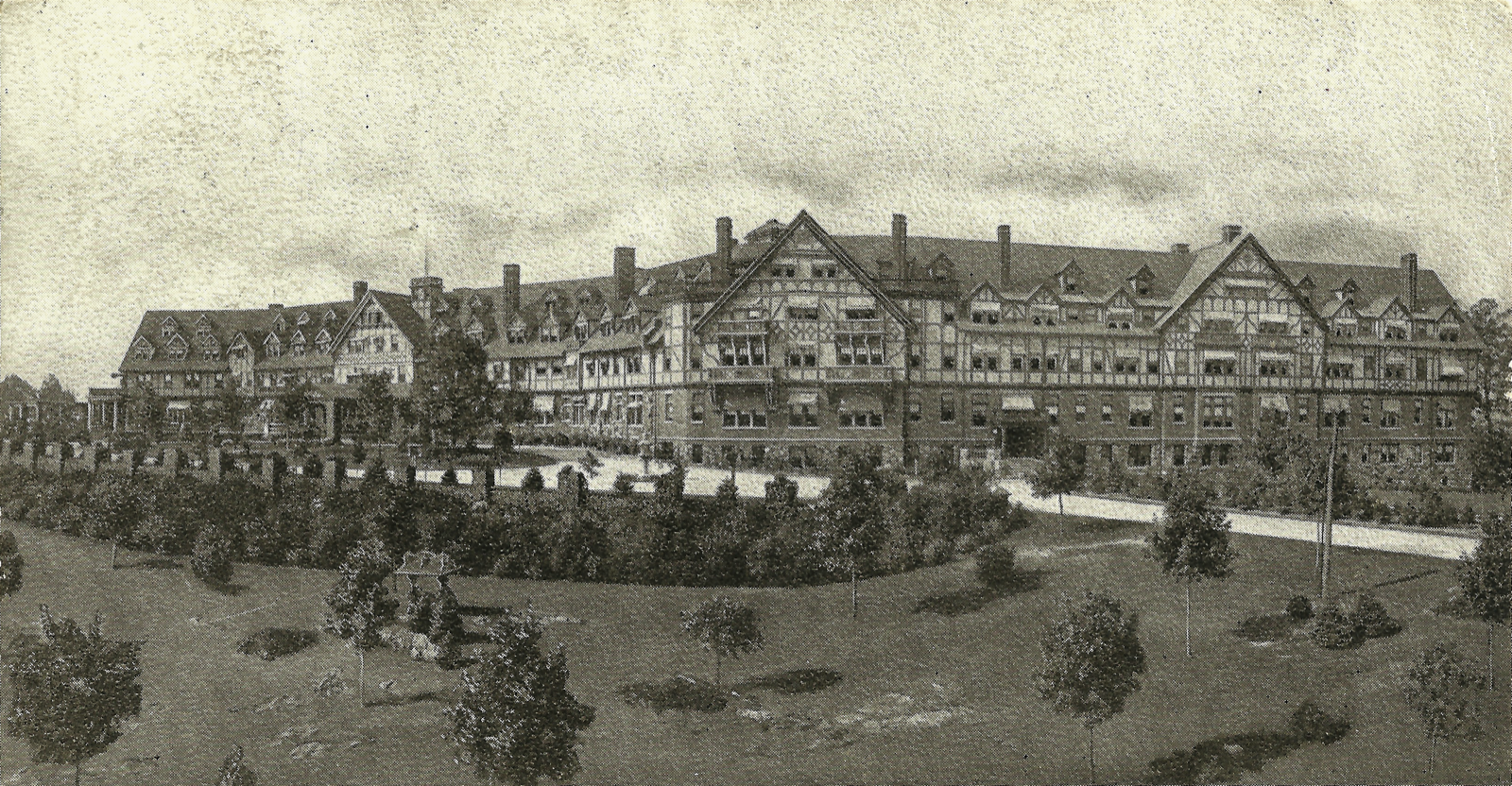
Cheap to read, premium to live
The doctrine was cheap to read but premium to live. Hay’s books sold the regimen to a mass audience, but the signature delivery was a paid stay at the ‘Sanatorium Hotel Headquarters’ he ran as Medical Director of Hay System Inc., given on the 1935 title page as Briarcliff Lodge, Briarcliff Manor, New York, a large luxury resort hotel. The exclusivity attached to the supervised cure in an upscale setting: the same separation-of-foods rule that anyone could read in an inexpensive book became, at the Lodge, a residential program for guests who could afford it. What the wealthy bought was not a scarce substance (the diet has none) but proprietary supervision and a luxury venue.
One acid state, one cause of everything
The mechanism was intestinal autointoxication recast as a kitchen rule. Hay held that named diseases are not distinct entities but local expressions of one underlying state: an acid, self-poisoning condition produced when concentrated starches and concentrated proteins are eaten together, depleting the body’s ‘alkaline reserve.’ The corrective, ‘food separation’, was to eat those food classes at different meals and to weight the diet toward base-forming vegetables, salads, and fruit. No human outcome was measured; the theory was asserted by analogy to acid and alkali chemistry and supported by his own recovery. The premise was the period’s autointoxication theory, already under empirical attack when Hay was promoting it, and the specific separation rule lacks support: most carbohydrate foods themselves contain protein, so strict separation is not even achievable, and a later controlled test found no metabolic benefit from it (Wutzke et al, 2001).
Diagnosing the disease, selling the cure
Hay occupied both ends of the transaction: he authored the books that diagnosed the universal disease and he was Medical Director of the proprietary Hay System Inc. that sold the cure, including the residential program at Briarcliff Lodge. The conflict is named at exactly that: the man defining the single cause of all disease was also the vendor of its single remedy, as popular author and as director of the named enterprise. The sources here do not document the full financial structure of the Lodge arrangement (a luxury hotel with its own proprietors and staff), so the case states only the roles the record supports, his authorship and the directorship of the named enterprise, without attributing the Lodge’s proceeds to him.
When someone finally measured it
The system failed on its theory, its mechanism, and its measurement. The autointoxication framework on which it rested was discredited in the early twentieth century, putrefactive products not being absorbed from the gut in the harmful quantities the theory required (Bested, Logan and Selhub, Gut Pathogens 2013). The specific food-separation premise has no demonstrated basis, and when food separation was finally measured under control, it produced no advantage in body weight or composition over an energy-matched mixed diet (Wutzke et al, Isotopes in Environmental and Health Studies 2001). Hay himself, who promised that universal adoption would make ‘longevity increase notably’, died in 1940 at age 73 or 74. The regimen is harmless; the life-extension and single-cause-of-disease claims attached to it are not supported.
The pattern repeats
The same structural machinery appears in different treatments and eras. These cases show the claimed mechanism and how the claim met evidence.
Bennett's rejuvenation system (muscular contractions and self-massage)
Soured-milk ('Bulgarian bacillus') longevity therapy
Biologic living (the Battle Creek Idea)
More related cases · 7
Evidence · 5 sources
- A New Health Era (1935)
- Health via Food (1929)
- William Howard Hay (1866-1940): library name-authority and bibliographic records (1940)
- Metabolic effects of HAY's diet (2001)
- Intestinal microbiota, probiotics and mental health: from Metchnikoff to modern advances: Part I - autointoxication revisited (2013)