Lahmann's Physiatric Regimen (dietetic blood-dyscrasia cure)
From 1888 the Dresden physician Heinrich Lahmann sold well-to-do Europeans a single diagnosis for nearly every ailment: a wrong diet spoils the blood, and spoiled blood spoils every tissue in the body. His sanatorium prescribed diet, hydrotherapy, supervised sun-and-air bathing, and his own reform underwear as the cure, and by 1900 was treating more than two thousand paying patients a year. Nutritional science never adopted the mechanism; medicine simply moved past it.
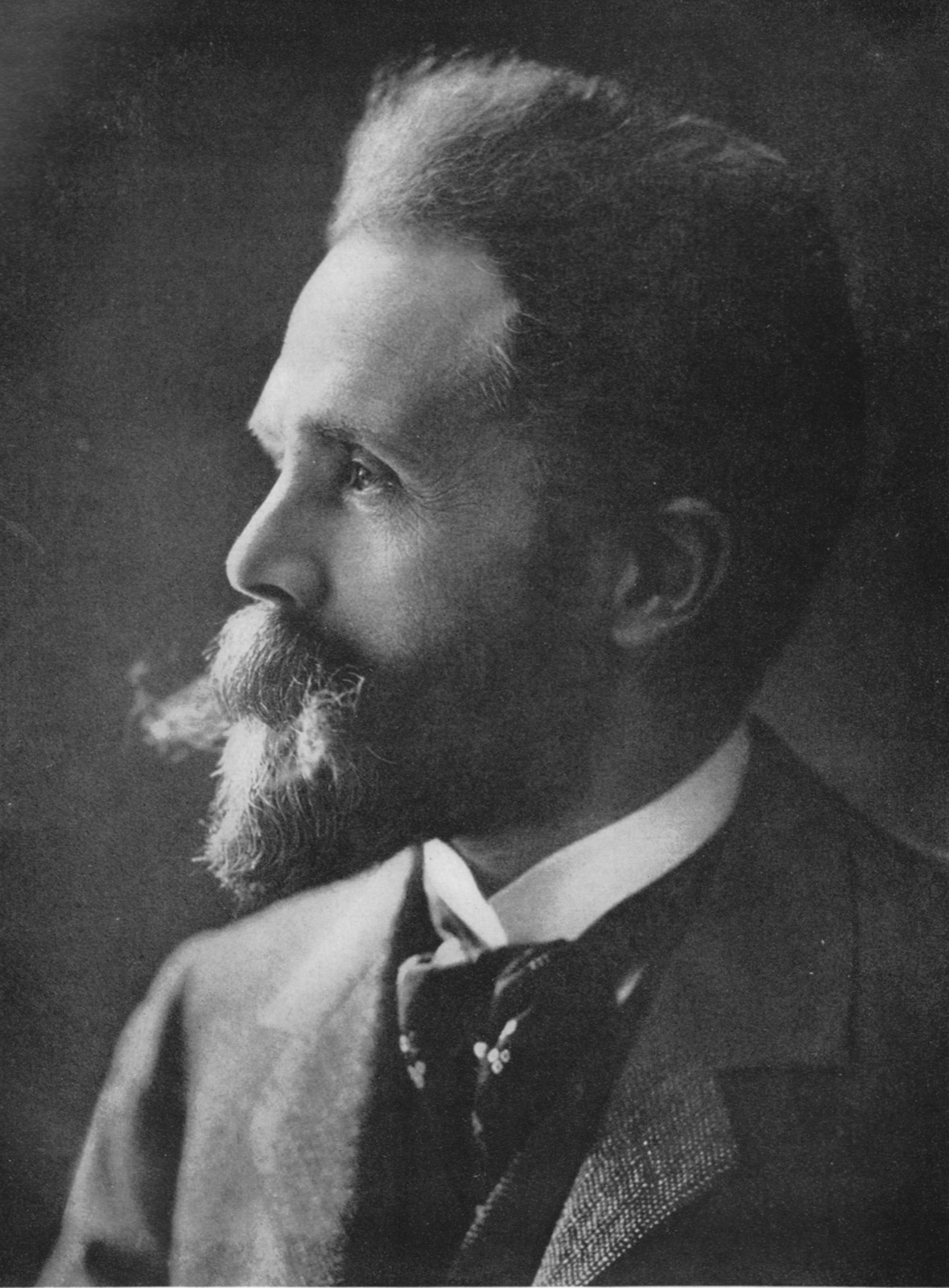
The engineer who diagnosed the whole world’s blood
Heinrich Lahmann started out training to be a civil engineer. Two years into it, in Hannover, he switched to medicine, worked his way through Greifswald, Munich, Leipzig, and Heidelberg, took his doctorate at Heidelberg, and by the mid-1880s was running someone else’s naturopathic institute in Chemnitz (Deutsche Biographie). On 1 January 1888 he opened his own establishment: the “Physiatrisches Sanatorium” at Weisser Hirsch, a spa suburb in the hills above Dresden, staffed at the outset by ten employees (Stadtwiki Dresden). It did not stay small. By 1900 it was treating over 2,000 patients a year and is described in the peer-reviewed history-of-medicine literature as the leading sanatorium in the spa town of Weisser Hirsch at Dresden (Beer, Uehleke & Wiebelitz, Evidence-Based Complementary and Alternative Medicine, 2013). A dedicated article on Lahmann and his sanatorium appeared in the dermatology-history literature as recently as 2026 (Wollina, Hoenig & Parish), a measure of how much of a case study he remains.
What Lahmann sold was not a pill or a tonic but a diagnosis: nearly every chronic complaint, in his account, traced back to one correctable defect in the patient’s own blood. That single claim, argued at book length in 1891, was the engine of the whole enterprise, from the diet served in the sanatorium’s dining hall to the underwear sold under his own name.
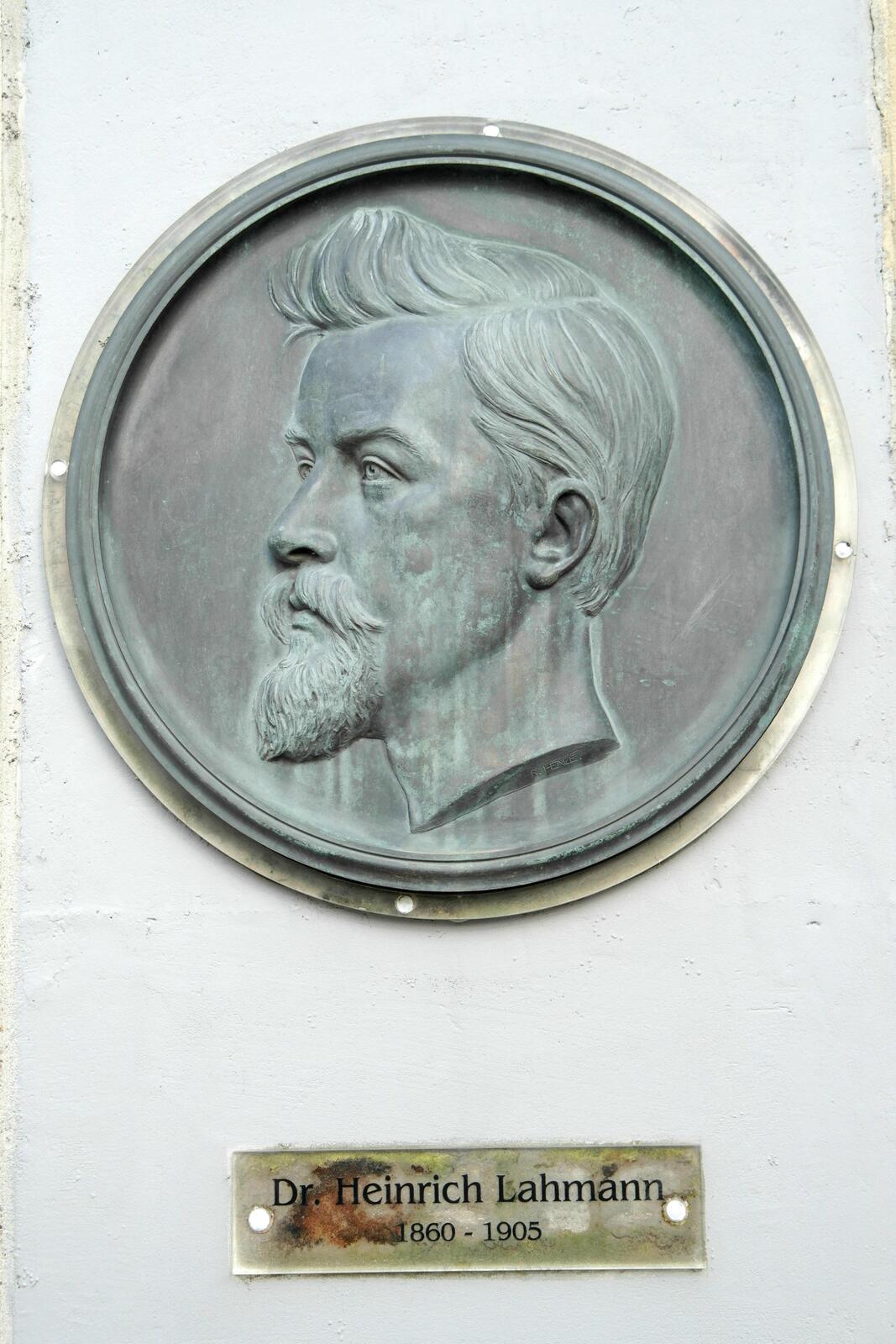
Two thousand cures a year, at a price
Weisser Hirsch was not a mail-order remedy. It was a residence: patients traveled to Dresden, paid for a stay, and submitted to a supervised regimen delivered on-site, in the manner of Bircher-Benner’s Zurich sanatorium or Kellogg’s Battle Creek. The scale by itself signals the fee-paying, propertied clientele such an operation required: a private facility running into the thousands of patients annually, in an era before any insurance system underwrote such stays, was not treating the Dresden poor. A 2026 medical-history article on Lahmann reports that his sanatorium attracted patients from across Europe and beyond (Wollina, Hoenig & Parish, 2026); the wider historiography of the German health-reform movement situates his clinic among the era’s fashionable dietetic sanatoria patronized by the same affluent, often international clientele documented at comparable establishments such as Bircher-Benner’s (Meyer-Renschhausen & Wirz, Medical History, 1999).
What was genuinely inexpensive, and freely available to anyone who could read German (or, after 1901, English), was the theory itself: Lahmann published it, at length, across multiple books. But the cure — residential, supervised, delivered at Weisser Hirsch under Lahmann’s own direction — was the exclusive, monetized asset. As with Hufeland’s macrobiotics and Bircher-Benner’s raw-food regimen, the printed doctrine was cheap; the institution that administered it was not.

Blood gone wrong
Lahmann’s whole system rested on one theoretical claim, stated in the title of his 1891 book, Die diätetische Blutentmischung (Dysämie) als Grundursache der Krankheiten — dietetic blood dyscrasia as the root cause of disease. The argument ran: eat wrongly, and the blood’s composition goes wrong; a blood gone wrong then corrupts the composition of every tissue it feeds; and that chain, not any specific pathogen or lesion, is the “Grundursache” — the fundamental cause — of disease in general. To give the claim a scientific gloss, Lahmann set the chemist Ragnar Berg to work in his own chemical-physiological laboratory, studying mineral metabolism and the balance of acid-forming and alkaline-forming foods in the diet (Stadtwiki Dresden). Acid-rich food and a shortage of mineral salts, on this account, were the principal dietary sin.
Diet was only the doctrinal core; the delivered regimen widened around it. Lahmann prescribed hydrotherapy in the same nature-cure tradition as the earlier practitioners Priessnitz and Schroth (Beer, Uehleke & Wiebelitz, 2013). He promoted the airbath, a supervised regime of sun-and-air exposure meant to harden the body against disease, laid out in his own pamphlet Das Luftbad als Heil- und Abhärtungsmittel, first published in 1898 (Deutsche Biographie) and later issued in English translation as The airbath as a means of healing and hardening the body (2nd ed., 1901). And he extended the theory to clothing: tight, conventional garments were themselves unhealthy, he argued in Die Reform der Kleidung (1898), and he designed a loose-weave, all-cotton alternative, sold as the Dr. Lahmann-Unterkleidung, to improve circulation as part of the same cure (Deutsche Biographie). Every piece of the regimen — what you ate, how you bathed, how much sun touched your skin, what you wore under your clothes — traced back to the single, unmeasured claim about the blood. No endpoint was ever counted against it; the whole system was mechanism first, outcome assumed.
The doctor who owned the cure
The conflict is named on the documented facts, not asserted beyond them. Lahmann personally founded, owned, and directed the Physiatrisches Sanatorium from 1888 until his death in 1905, an institution whose scale (over 2,000 patients in 1900 alone) made it, by the standard of a private, fee-charging clinic in Wilhelmine Germany, a substantial commercial concern. He was simultaneously the author of the book that supplied its theoretical justification — a book successful enough in its own right to reach at least a 17th printed edition by 1907 (Google Books catalog record; original edition 1891) — and the designer and seller of a branded clothing line, the “Dr. Lahmann-Unterkleidung,” marketed as part of the same cure. A physician who diagnosed the world’s blood as defective was also the sole proprietor of the clinic that treated it, the author of the book that sold the diagnosis, and the merchant of the underwear that completed it. As with any residential sanatorium, the fees a patient paid also covered staff, buildings, food, and supplies — Lahmann was not the only person the enterprise supported financially — but the direct, continuing interest a founder-physician-author-manufacturer held in his own unproven theory’s continued acceptance is the pattern this archive records.
Outlived by everything except the theory
There was no single decisive experiment that broke Lahmann’s system, no royal commission of the kind that dissolved Mesmer’s animal magnetism in 1784. The dietetic-blood-dyscrasia doctrine instead lost ground gradually, overtaken by the germ theory and the laboratory medicine that were maturing across Lahmann’s own working life, and by the specific-nutrient and metabolic biochemistry that followed in the decades after his death. Modern local medical history is blunt about the verdict: writing of the very theory Lahmann built his sanatorium on, a Dresden local-history reference calls the underlying view now outdated, under which faulty diet was held to spoil the blood and, through the blood, every body tissue (Stadtwiki Dresden). No controlled human outcome study, then or since, tested whether correcting a “dietetic blood dyscrasia” specifically prevents or cures disease, and neither pathology nor nutritional science adopted the mechanism.
Lahmann himself died on 1 June 1905, at 45, at Friedrichstal near Radeberg outside Dresden, still directing the sanatorium (GND authority record; Deutsche Biographie). As with Hufeland’s macrobiotics, Bircher-Benner’s raw-food regimen, and Kellogg’s Battle Creek, part of what Lahmann prescribed — a plant-forward, mineral-conscious diet; regular exercise; fresh air; hydrotherapy — overlaps with lifestyle advice later associated, on better evidence, with ordinary good health. What did not survive was the specific claim that bound all of it together: that a single, correctable dyscrasia of the blood is the fundamental cause of disease in general. That claim is what nutritional science and pathology left behind.
The pattern repeats
The same structural machinery appears in different treatments and eras. These cases show the claimed mechanism and how the claim met evidence.
Order-energy raw-food regimen (Bircher-Benner's 'Lebendige Kraft' nutrition)
Macrobiotics (Hufeland's art of prolonging life)
Biologic living (the Battle Creek Idea)
More related cases · 5
Evidence · 11 sources
- Die diätetische Blutentmischung (Dysämie) als Grundursache der Krankheiten: Ein Beitrag zur Lehre von der Krankheitsanlage und Krankheitsverhütung (1891)
- The airbath as a means of healing and hardening the body (1901)
- Lahmann, Heinrich (Neue Deutsche Biographie 13, 1982) (1982)
- Deutsche Nationalbibliothek GND authority record: Heinrich Lahmann (GND 117573760) (2026)
- Heinrich Lahmann (Stadtwiki Dresden) (2015)
- The History of Inpatient Care in German Departments Focussing on Natural Healing (2013)
- Natura sanat—nature heals—Dr Heinrich Lahmann and his physiatric sanatorium (2026)
- Dietetics, health reform and social order: vegetarianism as a moral physiology. The example of Maximilian Bircher-Benner (1867-1939) (1999)
- Portrait Heinrich Lahmann (Wikimedia Commons) (1937)
- Kleiderbügel - Dr. Heinrich Lahmanns Sanatorium - Weisser Hirsch 1929 - Dresden (Wikimedia Commons) (2019)
- Dresden-Weißer Hirsch: Lahmann-Sanatorium; Dr.Lahmann-Park, Lahmannrelief am Eingang (Wikimedia Commons) (2016)