METHUSELAH ARCHIVE / CASES / CORNARO-CALORIE-RESTRICTION-1558-1640

LA VITA SOBRIA (CORNARO'S SOBER DIET)

Luigi Cornaro · 1558–1640
era:1558–1640
practitioner: Luigi Cornaro
intervention: La vita sobria (Cornaro's sober diet)
status: quietly_faded
THE FIVE-STAGE ARC
[1] CHARISMATIC PRACTITIONER
Luigi (Alvise) Cornaro (c. 1484-1566) was a Venetian nobleman of Padua, wealthy from estates and land reclamation, who in old age became early modern Europe's most read advocate of dietary moderation. He held no medical office; his authority was personal and literary. By his own account he had wrecked his health by his fortieth year through excess and recovered completely on a spare fixed diet, and he told that story, at progressively greater claimed ages, in the Discorsi della vita sobria, a treatise reprinted and translated across Europe. His standing as living proof, an old man still vigorous, was the engine of the doctrine.
[2] EXCLUSIVE ACCESS
The regimen was the opposite of exclusive. Eating little costs nothing, and the Discorsi were cheap and widely circulated; the doctrine was addressed to everyone as a 'divine medicine.' What stood in place of exclusivity was the prestige of the author and the drama of his self-reported recovery and old age. The pattern matches the other cheap-regimen cases in this archive, Hufeland's macrobiotics and Fletcher's mastication: the value offered was association with a famous long-lived nobleman and his promise, not a priced product.
[3] VAGUE MECHANISM
The mechanism was the principle that strict moderation conserves the body's powers and so lengthens life, quantified as a fixed small daily ration held constant regardless of appetite (by Cornaro's account about twelve ounces of food and fourteen of wine). There was no physiological measurement and no defined endpoint other than length of life itself. The step from Cornaro's single recovery and claimed longevity to a universal law, that the spare ration prolongs any life, was asserted rather than demonstrated. The same conserve-the-vital-power logic was formalised two and a half centuries later by Hufeland.
[4] FINANCIAL CONFLICT
Cornaro had no product to sell and no vendor conflict; the regimen was free and he was independently wealthy. The conflict is reputational and authorial, and is named on the documented facts. He made himself the witness and proof of his own doctrine and bound his public identity and his much-reprinted treatise to it. He also overstated his age: he had declared 1484 as his birth year in an official Venetian document, but in his later writings claimed a far greater age, which inflated the central piece of evidence, his own lifespan, on which the doctrine's appeal depended.
[5] DISCONFIRMATION / COLLAPSE
The doctrine was never refuted by a trial, because it was never tested; its evidentiary basis simply does not hold. The headline claim, that Cornaro reached extreme old age (the 1911 Britannica records ninety-eight, other accounts one hundred and two) on his spare diet, is unverifiable because he overstated his age. Modern scholarship places his birth around 1484 and his death in 1566, about eighty-two years, a good age for the sixteenth century but not extraordinary and not in need of a special explanation. The claim is in any case a single uncontrolled self-report, and the spare ration was never tested as a longevity intervention. Later critics made the logical objection directly: Nietzsche argued that Cornaro mistook consequence for cause, that a naturally slow metabolism may have permitted the spare diet rather than the diet producing the long life. What survived was influence, not proof. Cornaro is the acknowledged precursor of caloric-restriction research, which has extended lifespan in animal models; human lifespan extension by caloric restriction is not established by controlled trial, and the general value of moderate eating is a separate, partly supported matter. The evidence that this regimen prolongs human life was insufficient and is labelled insufficient.
OUTCOME
Cornaro's sober life is the founding case of the eat-less-live-longer tradition and the earliest entry in this archive, predating its former 1700 floor by nearly a century and a half. A wealthy Venetian nobleman, restored from midlife collapse by a fixed spare diet, generalised his single recovery into a universal 'divine medicine' for long life and made himself its proof in a treatise read across Europe for generations. The claim rests on one uncontrolled self-report whose headline, a near-centenarian lifespan, is undermined by Cornaro's own age exaggeration; modern scholarship puts his age at death near eighty-two. The regimen was never tested as a longevity intervention, and a standing logical objection, consequence mistaken for cause, was raised as early as Nietzsche. The case earns its place not because the evidence holds but because the structure does: a charismatic figure converts a personal anecdote into a universal life-extension rule with no controlled support, the template the archive then traces forward through Hufeland's macrobiotics, Fletcher's mastication, and Metchnikoff's sour milk to present-day caloric-restriction and longevity-diet marketing.
FIGURES
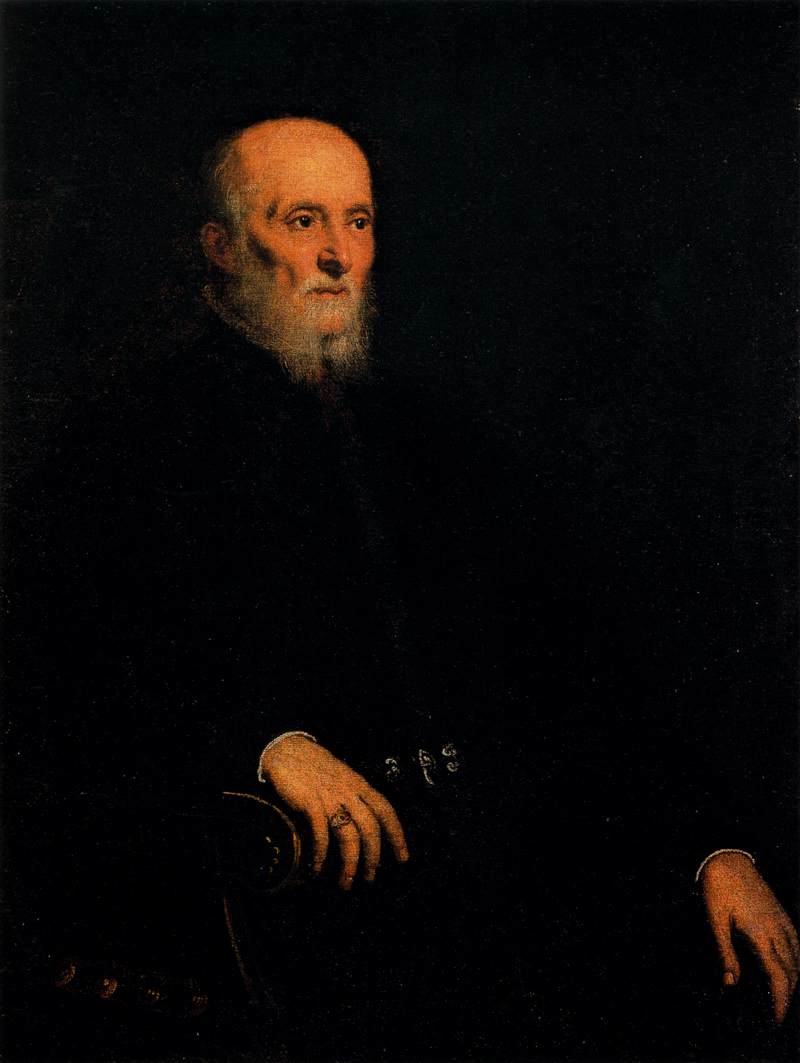
Oil portrait of an elderly bearded man, Luigi Cornaro, in dark robes against a dark background, one hand resting before him.
FIG 1 Alvise (Luigi) Cornaro, by Jacopo Tintoretto, oil on canvas, c. 1560-1565. Galleria Palatina, Palazzo Pitti, Florence. (1560) PUBLIC DOMAIN source
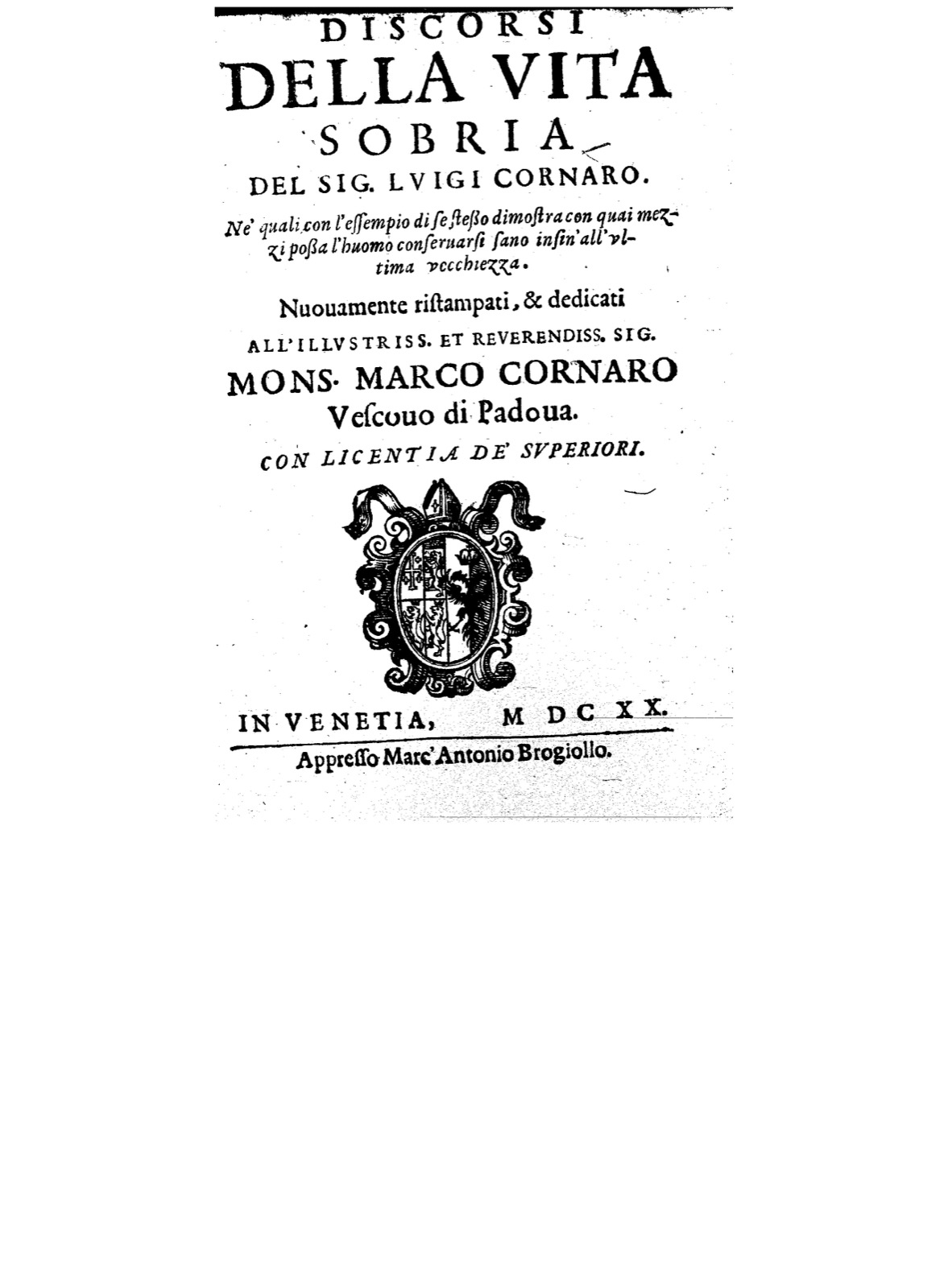
Title page of a 1620 Italian edition of Cornaro's Discorsi della vita sobria, with the title, the author's name, a dedication, and an engraved printer's coat-of-arms device.
FIG 2 Title page of the 1620 Venice edition of Cornaro's Discorsi della vita sobria (Marc'Antonio Brogiollo). Bibliotheque nationale de France (Gallica). (1620) PUBLIC DOMAIN source
PARALLELS
SOURCES
  1. Discorsi della vita sobria (Discourses on the Sober Life) (1558)
  2. History of Slimming Diets up to the Late 1950s (2022)
  3. The More the Years the Less the Food: Alvise Cornaro on The Sober Life (1558) (2023)
NOTES

Luigi Cornaro (c. 1484-1566), a Venetian nobleman who made his fortune from Paduan estates and land reclamation, is the earliest figure in this archive. By his own telling he had ruined his health by the age of forty through heavy eating and drinking, and on his physicians’ advice he cut his intake to a fixed, spare daily ration, by his account about twelve ounces of solid food and fourteen ounces of wine, held constant regardless of hunger. He credited this “sober life” with a complete recovery and with the vigorous old age he then advertised, at progressively greater claimed ages, in the Discorsi della vita sobria (the first three discourses gathered at Padua in 1558, a fourth by 1562). The book was reprinted and translated across Europe well into the seventeenth century, which is why the case era runs to 1640 although Cornaro died in 1566.

The case belongs in this archive for the shape of its argument rather than for any exclusivity, since the regimen was free and the book cheap. Cornaro took a single experience, his own recovery and long life, and generalised it into a universal “divine medicine” for longevity, with himself as the sole proof. That move, a charismatic figure converting a personal anecdote into a universal life-extending rule without controlled evidence, is the template the archive traces forward: Hufeland’s macrobiotics cites Cornaro by name and formalises the same conserve-your-vital-power logic; Fletcher’s mastication and Metchnikoff’s sour milk repeat the cheap-regimen-plus-prestige structure into the twentieth century.

The evidence does not hold. The headline claim that Cornaro lived to near a hundred on his diet is unverifiable because he overstated his age; the most reliable record, his own official declaration of an 1484 birth, puts his age at death near eighty-two, good for his century but not extraordinary. The claim is a single uncontrolled self-report, and the regimen was never tested as a longevity intervention. Nietzsche made the standing objection plainly, that Cornaro confused consequence with cause. What did endure is the idea: Cornaro is the recognised forerunner of caloric-restriction research, which has extended lifespan in animal models but has not established human lifespan extension by controlled trial. The general worth of moderate eating is a separate and partly supported question; the specific claim that this spare ration prolongs human life was insufficient and is labelled insufficient.