METHUSELAH ARCHIVE CASES / BENNETT-REJUVENATION-EXERCISE-1907-1921
Archive case

Bennett's rejuvenation system (muscular contractions and self-massage)

A San Francisco businessman, not a physician, who called himself "the man who grew young at seventy" and made his own before-and-after face the proof.
subjectSanford Bennett active1907–1921 ● disconfirmed outcomequietly faded

A San Francisco businessman who called himself "the man who grew young at seventy" sold a free regimen of in-bed muscular contractions and facial self-massage, and proved it with two photographs of himself: gaunt at fifty in 1889, full-faced at seventy-two in 1912. That was the whole of the evidence. Sanford Bennett was his own sole subject; no controlled study existed, no decisive experiment overturned him, and the system left nothing measurable and faded.
The recurring five-stage cycle
01
Charismatic practitioner
A San Francisco businessman, not a physician, who called himself "the man who grew young at seventy" and made his own before-and-after face the proof.
02
Exclusive access
Not exclusive: a free regimen needing no apparatus, sold in two trade books on a name and a transformation rather than on a price.
03
Vague mechanism
Muscles grow when exercised, so in-bed contractions and facial self-massage were said to rebuild lost tissue and restore youth, a step asserted, not shown.
04
Financial conflict
No substance, no clinic; the man whose books profited from the doctrine was also its sole demonstrated subject and chief witness.
05
Disconfirmation / collapse
No decisive experiment was needed: the rejuvenation claim rested on one self-selected subject and his photographs, was never tested, and left nothing measured.
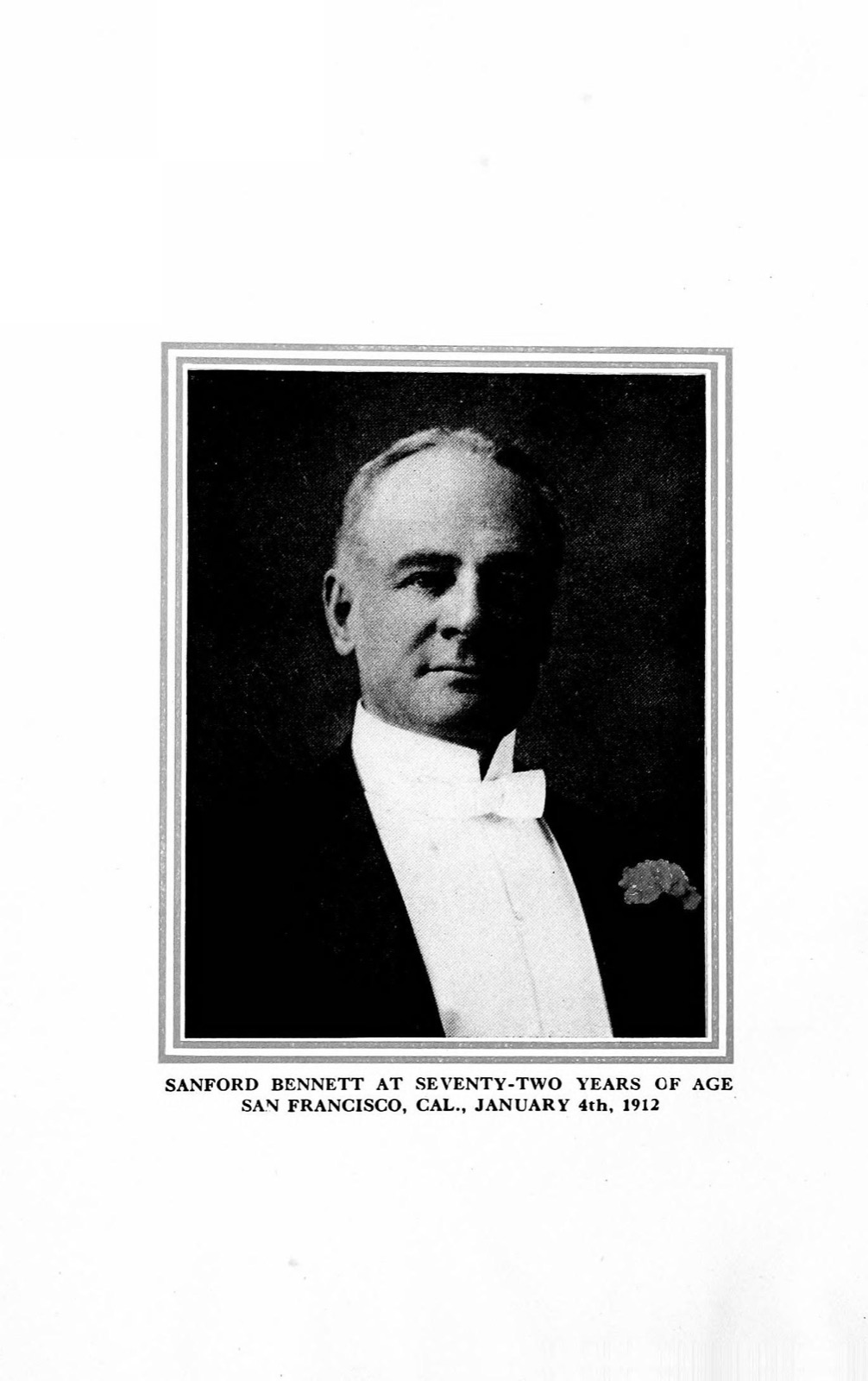
Black-and-white half-length photographic portrait of an older clean-shaven man with full cheeks and combed-back hair, in white tie and dark formal coat.
FIG 1 "Sanford Bennett at seventy-two years of age, San Francisco, Cal., January 4th, 1912." Frontispiece of his Old Age: Its Cause and Prevention (Physical Culture Publishing Co., 1912). Internet Archive (Cornell University Library copy). (1912) NO KNOWN RESTRICTIONS source

The man who grew young at seventy

At the front of his book stood two photographs of the same man. In the first, dated 8 June 1889, he is gaunt and sunken-cheeked, captioned at fifty years of age. In the second, dated 4 January 1912, he is full-faced and upright at seventy-two. That pair was the centrepiece of Sanford Bennett’s case and very nearly the whole of it. Bennett (born 1841 per the Cornell University Library catalog; his own dated photographs imply about 1839) was an American businessman in San Francisco who styled himself ‘the man who grew young at seventy.’ Stark describes him as a businessman and author rather than a physician, and his authority rested entirely on his own story: a decline in his fifties that he said he reversed by a regimen of self-administered exercise and self-massage. The historian James Stark counts him among the most high-profile advocates of rejuvenating methods in the United States before the First World War.
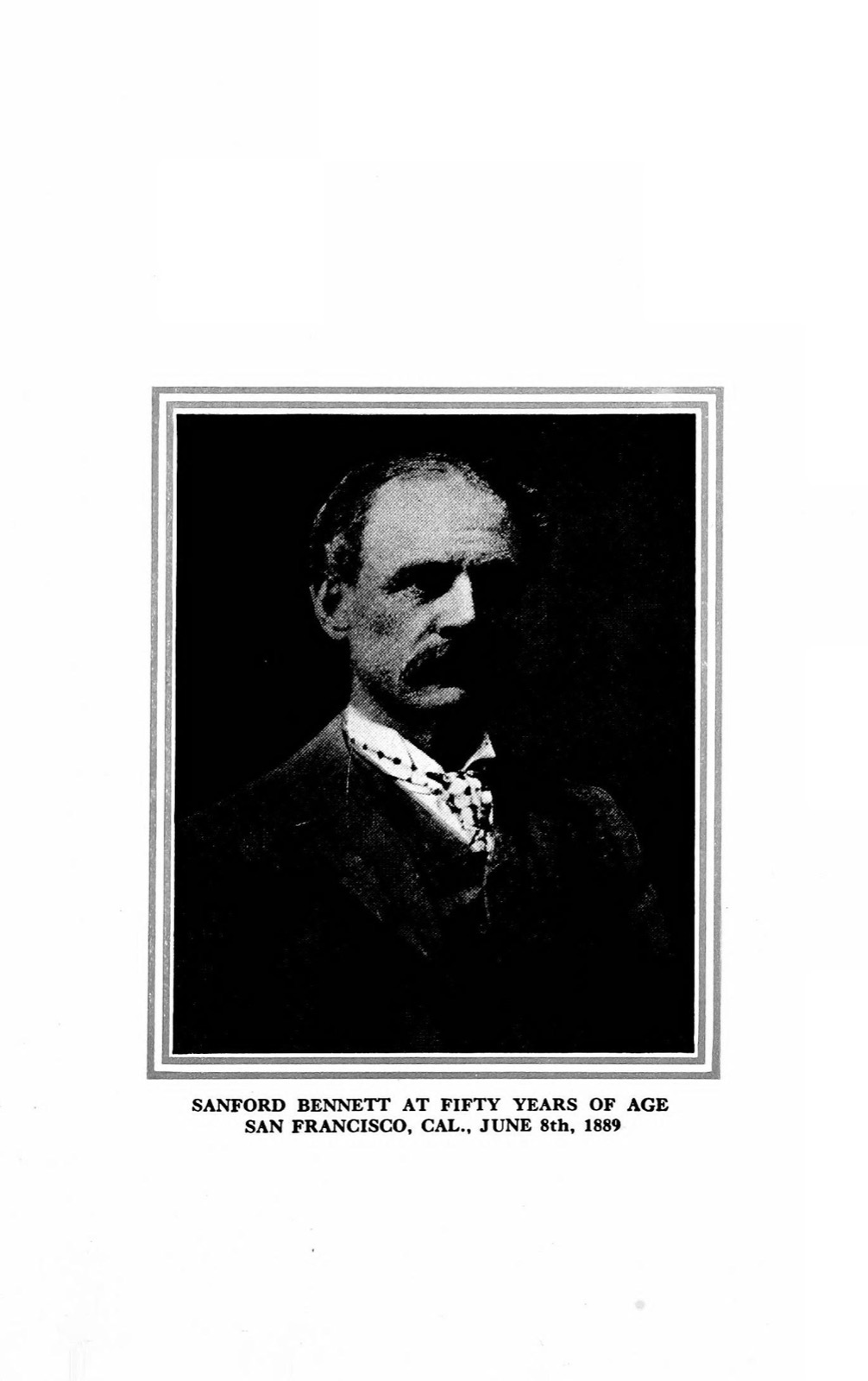
Black-and-white half-length photographic portrait of a gaunt middle-aged man with a moustache and sunken cheeks, in a dark coat and patterned cravat, against a dark ground.
FIG 2 "Sanford Bennett at fifty years of age, San Francisco, Cal., June 8th, 1889," the "before" portrait in his Old Age: Its Cause and Prevention (1912). Internet Archive (Cornell University Library copy). (1889) NO KNOWN RESTRICTIONS source

No gate, no apparatus, no price

Like Fletcherism, this case is atypical for the archive in that the intervention was not exclusive. The exercises cost nothing and required no apparatus, and the doctrine was sold in ordinary trade books, Exercising in Bed (1907) and Old Age: Its Cause and Prevention (1912). What functioned in place of exclusivity was the spectacle of the before-and-after photographs and the cachet of the physical-culture movement: the 1912 book was issued by The Physical Culture Publishing Company, an imprint of the physical-culture movement, and the historian Stark groups Bennett with Bernarr Macfadden as commercial advocates of rejuvenation in the same period. The structure matches Fletcher’s mastication and Macfadden’s physical culture, where a cheap regimen was sold on a name and a personal transformation rather than on price.

From a true fact to a sweeping promise

The proposed mechanism was that muscles and organs grow when exercised, so that systematically contracting every muscle, much of it while lying in bed, and massaging the muscles of the face would rebuild the tissue lost to age and restore the body and face to youth. The title page states the general principle: properly exercising all muscles and organs is ‘the principal secret of health, strength, elasticity of body, and a long life.’ The step from a real and measurable fact, that exercised muscle grows and that activity benefits older bodies, to the sweeping conclusion, a literal restoration of youth and a long life, was asserted rather than demonstrated. No defined health, mortality, or lifespan endpoint was specified or measured.
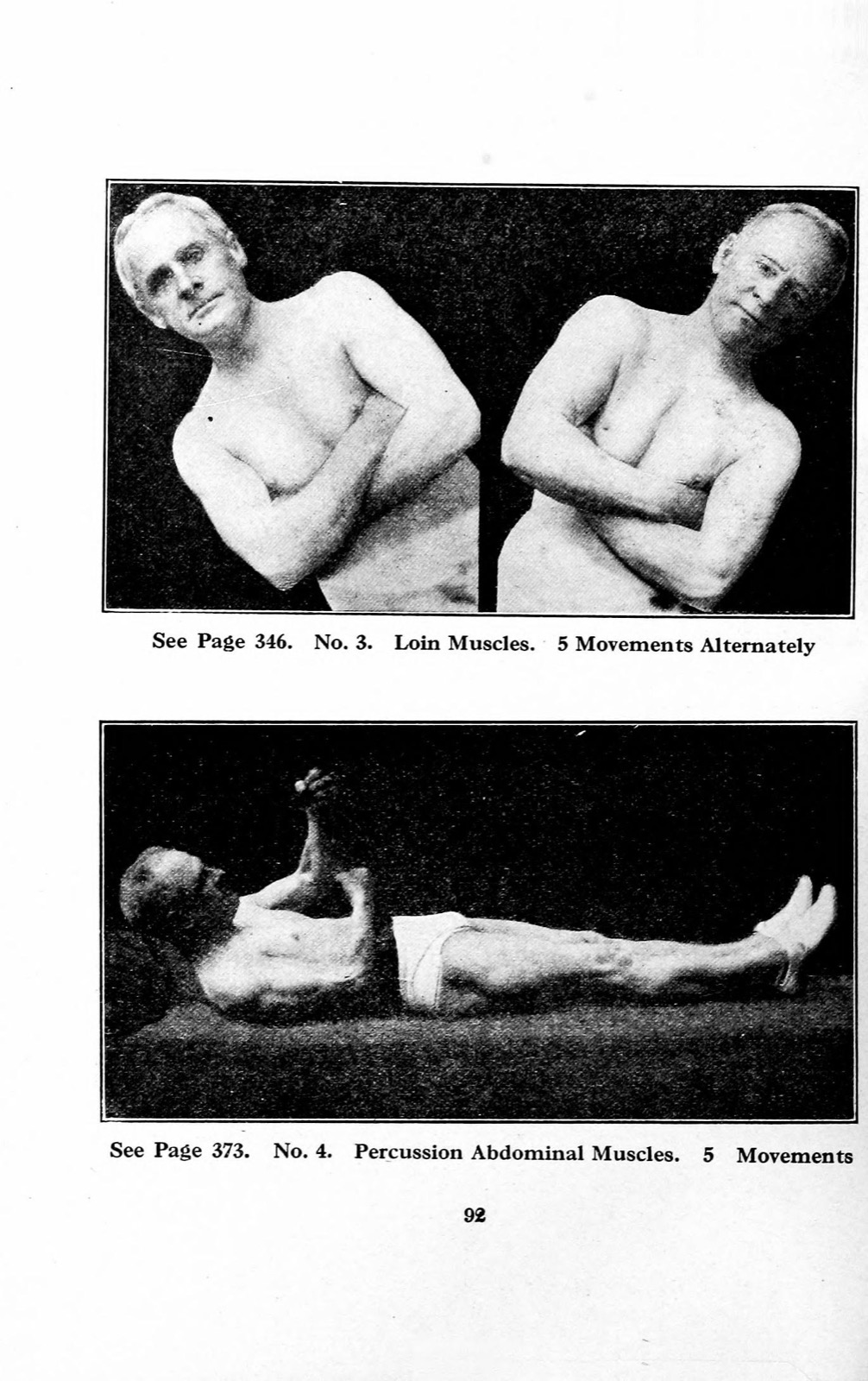
Two black-and-white photographs on one book page: above, a bare-chested older man standing with arms folded shown in two poses; below, the same man lying on his back on the floor demonstrating an abdominal exercise.
FIG 3 Two captioned exercise photographs from Sanford Bennett's Old Age: Its Cause and Prevention (1912), "No. 3. Loin Muscles" and "No. 4. Percussion Abdominal Muscles," showing a man demonstrating the muscular-contraction movements of Bennett's system. Internet Archive (Cornell University Library copy). (1912) NO KNOWN RESTRICTIONS source

Author, subject, and sole witness

The conflict is authorial and reputational rather than the developer-vendor pattern, and is stated on the documented facts. Bennett sold no substance and ran no clinic; his interest lay in the doctrine and the books that carried it, Exercising in Bed (The E. Hilton Co., 1907) and Old Age (The Physical Culture Publishing Company, 1912). The market for those books rested on his own before-and-after photographs and recovery narrative, which were also the whole of the evidence for the system. Stark groups Bennett with Macfadden and Gayelord Hauser as figures for whom commercial considerations underpinned their activities. The conflict named here is that the man whose books profited from the doctrine was also its sole demonstrated subject and chief witness, advancing the central rejuvenation claims on his own testimony rather than on controlled evidence.
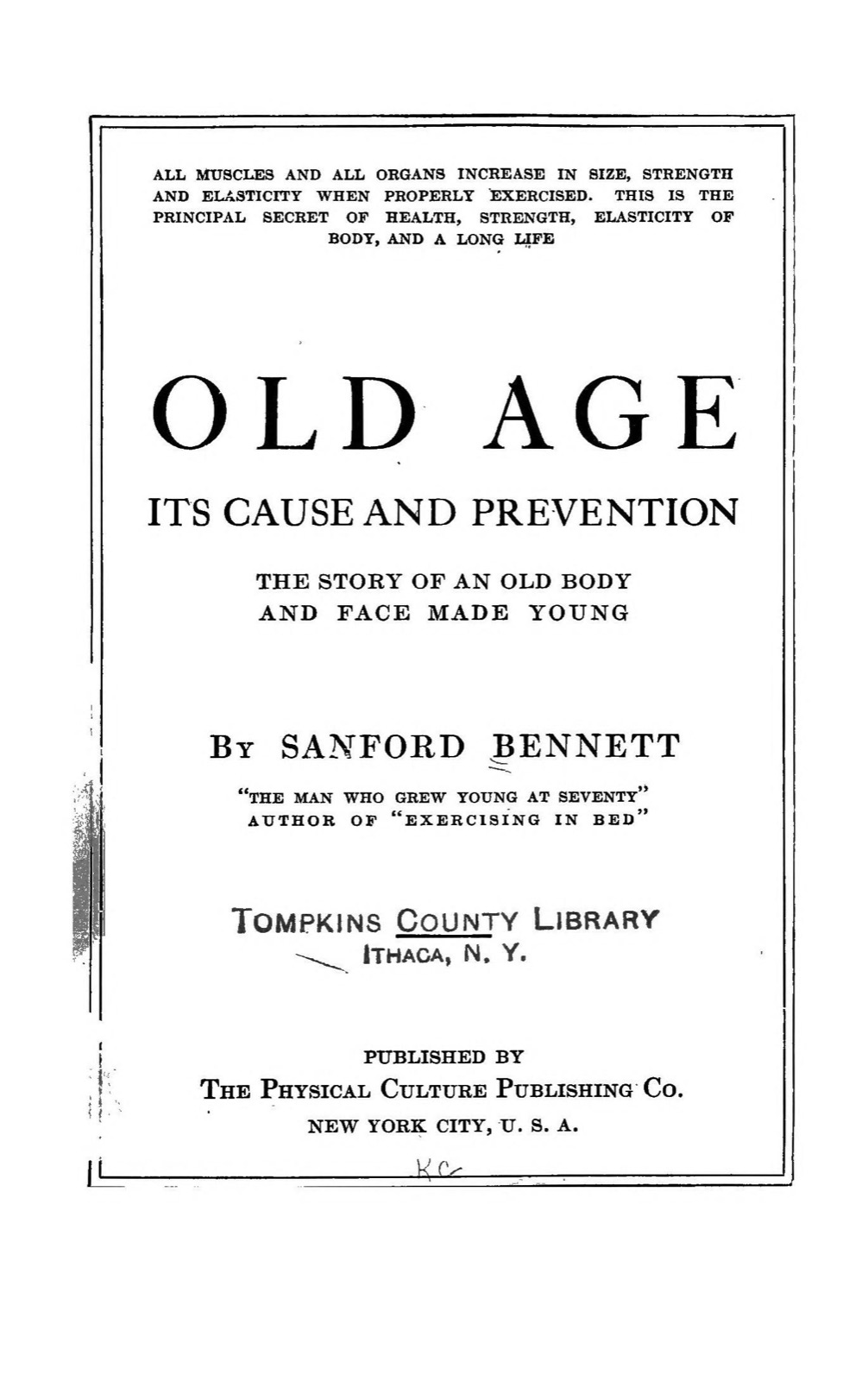
Printed title page within a ruled border reading 'Old Age, Its Cause and Prevention, The Story of an Old Body and Face Made Young, by Sanford Bennett, The Man Who Grew Young at Seventy', with a publisher line for The Physical Culture Publishing Co., New York, and an epigraph about exercising all muscles and organs.
FIG 4 Title page of Sanford Bennett's Old Age: Its Cause and Prevention: The Story of an Old Body and Face Made Young (New York: The Physical Culture Publishing Co., 1912), with the epigraph linking exercise to "a long life." Internet Archive (Cornell University Library copy). (1912) NO KNOWN RESTRICTIONS source

Nothing to overturn, nothing left behind

Bennett’s system was never overturned by a single decisive experiment; it simply left nothing measurable behind and faded. Part of it is unobjectionable and survives in ordinary advice: regular exercise and a moderate diet genuinely benefit strength, mobility, and health in older adults. The specific rejuvenation claim, that muscular contractions and facial self-massage reverse aging and restore an old body and face to youth, was demonstrated only by a single self-selected subject and his photographs, was never tested by any controlled outcome study, and rests in this archive on Bennett’s own testimony alone. It is classed as unreplicated and the evidence for it is insufficient and is labelled insufficient. Bennett himself, according to Stark, did not believe any particular food could prolong life to extraordinary ages; the longevity reading rests on his title-page assertion that exercise is the secret of a long life, for which he produced no lifespan data at all.

Notes

Sanford Bennett (born 1841 by the Cornell University Library catalog; his own dated photographs imply about 1839) was a San Francisco businessman who, in later life, called himself “the man who grew young at seventy.” He was a businessman and author rather than a physician. In his fifties, by his account, he had aged badly, and he set out to reverse it with a system of self-administered exercise: a daily program of muscular contractions performed largely while lying in bed, performed against the body’s own resistance, together with vigorous self-massage of the face intended to rebuild the muscles beneath the skin. He published the method first as Exercising in Bed (The E. Hilton Co., 1907) and then, expanded into a full argument about aging, as Old Age: Its Cause and Prevention: The Story of an Old Body and Face Made Young (The Physical Culture Publishing Company, 1912). The same publisher reprinted Old Age in 1921 (Open Library OL16354062M), keeping the system in currency into the early 1920s, which is the basis for the case’s 1921 endpoint.

The case belongs in this archive not because the intervention was exclusive (it was the opposite, a free regimen sold in trade books) but because of the shape of the claim and how it was sold. Bennett had no clinic and no product; what he had was a transformation story and a pair of photographs, himself at fifty in 1889, gaunt and sunken-cheeked, and at seventy-two in 1912, full-faced and upright, which he placed at the front of the book as the proof of the system. The 1912 volume was published by The Physical Culture Publishing Company, an imprint of the physical-culture movement, and Stark groups Bennett with Macfadden as commercial advocates of rejuvenation. That is the same structure recorded for Fletcher’s mastication and Macfadden’s own physical culture: a cheap regimen lent authority by a name and a personal example rather than by a price. Bennett’s diet, periodic fasting followed by well-cooked vegetables, drew openly on Luigi Cornaro and on Arnold Lorand of the Carlsbad spa (Stark 2018).

Bennett’s system is a clean illustration of the surrogate-versus-hard-endpoint distinction at the centre of the archive’s thesis. Its measurable kernel is real and uncontroversial: exercise and a moderate diet genuinely benefit strength, mobility, and health in older adults. Everything Bennett built on that kernel, that muscular contractions and facial massage reverse aging and restore an old body and face to youth, and that proper exercise of every muscle and organ is “the principal secret of health, strength, elasticity of body, and a long life,” was demonstrated only by his own case and his own photographs. No controlled study, cohort, or measured outcome was ever produced; the claim rests on Bennett’s own testimony alone and is classed as unreplicated, the evidence for it insufficient and labelled insufficient. A photograph of a healthier-looking old man is a surrogate, not a measured outcome; the rejuvenation promise lived in the gap between the two, and when Bennett stopped promoting it the system left no measured evidence and faded into the history of physical-culture fads.