Fletcherism (thorough mastication)
Horace Fletcher, a wealthy businessman with no medical training, told the world that chewing each mouthful until it liquefied would make you eat less, escape disease, and stay young at sixty. Rockefeller and Henry James Fletcherized; Yale's Chittenden tested him. A controlled 2011 study (Smit et al.) confirmed the one measurable part, that chewing cuts intake. The disease and longevity claims were never demonstrated. He died of bronchitis in 1919.
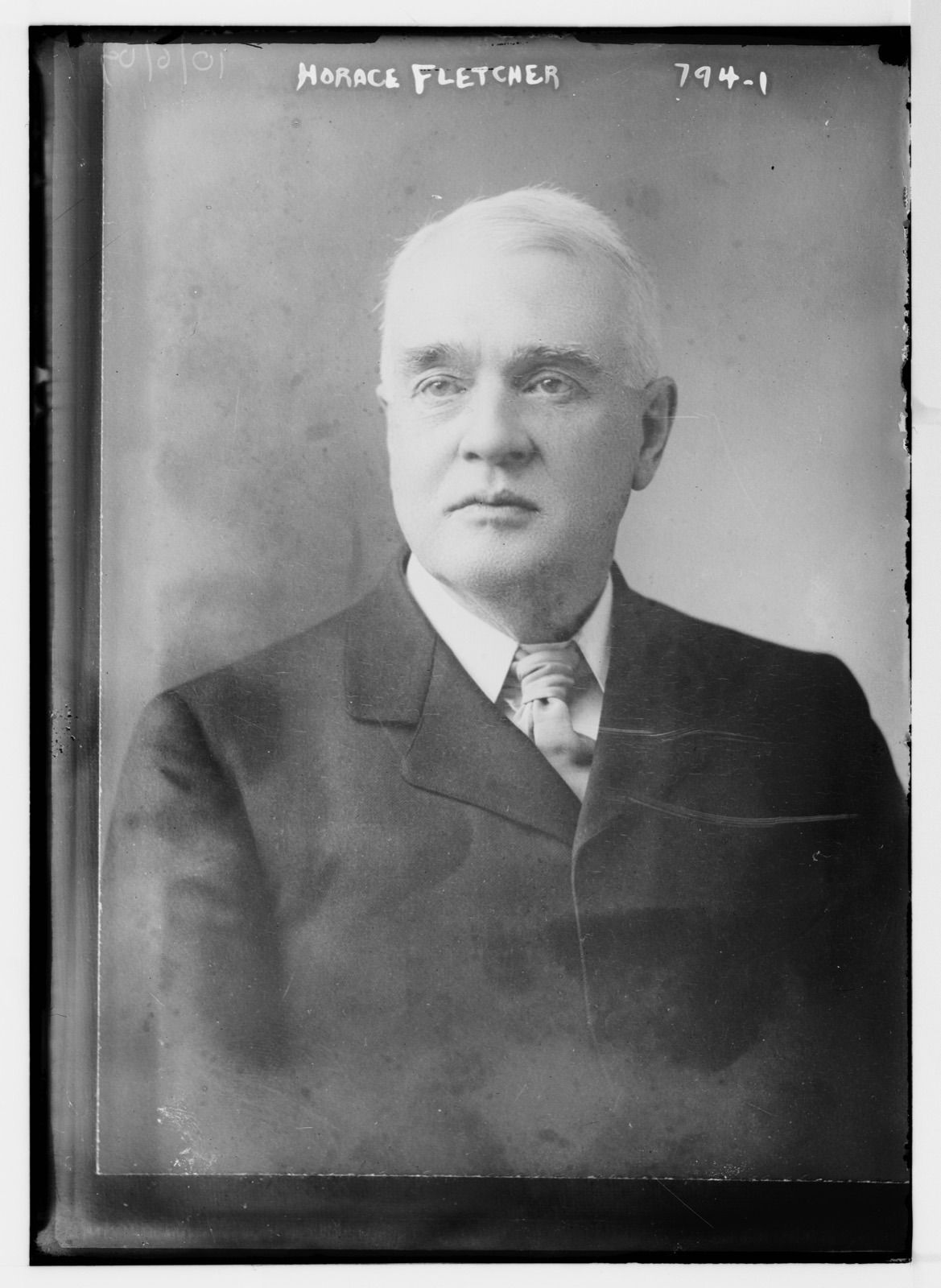
The man an insurance company turned down
In his late forties Horace Fletcher (1849-1919) was overweight, plagued by dyspepsia, and refused when he applied for life insurance. He had no medical training; he had been an importer and an opera-house manager in New Orleans. What he devised in response was a system of thorough chewing, which he credited with restoring his health, and from about 1898 he spent two decades promoting it as ‘the Great Masticator.’ His authority came not from a degree but from that recovery story, a gift for publicity, commercially successful books, and a paid lecture circuit, reinforced by his willingness to be tested by Yale physiology and by his prominent adherents.
Free to all, sold on famous names
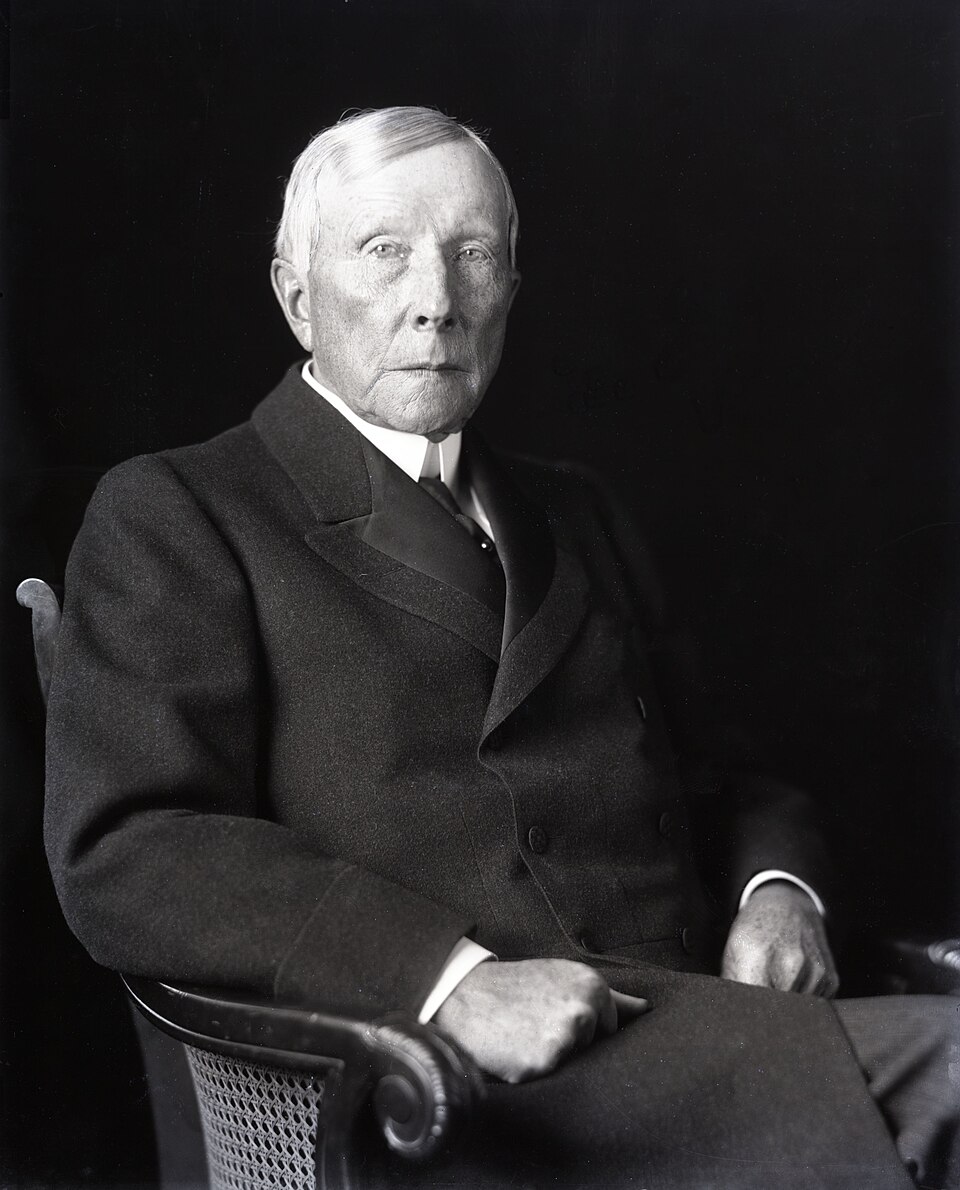
Chewing costs nothing, and Fletcher’s books were ordinary trade volumes, so the doctrine was pitched to a mass audience. The regimen borrowed authority from elite and scientific association. Russell Chittenden of Yale studied Fletcher and lent the doctrine a scientific gloss; prominent adherents, including John D. Rockefeller (who popularised the verb ‘to Fletcherize’) and the novelist Henry James, carried it into moneyed and literary circles.
From “chew more, eat less” to near-immunity
The proposed mechanism was ‘head digestion’ through thorough mastication and insalivation: chewing each mouthful until liquefied was said to extract full nutriment, let the body thrive on far less food, and prevent the absorption of imperfectly prepared matter that Fletcher held to be a source of disease. The physiology was speculative. The step from a real and measurable effect, that more chewing tends to reduce intake, to the sweeping conclusion, near-freedom from disease and a longer and more vigorous life, was asserted rather than demonstrated. No defined disease or mortality endpoint was specified or measured.
The theorist was also the chief witness
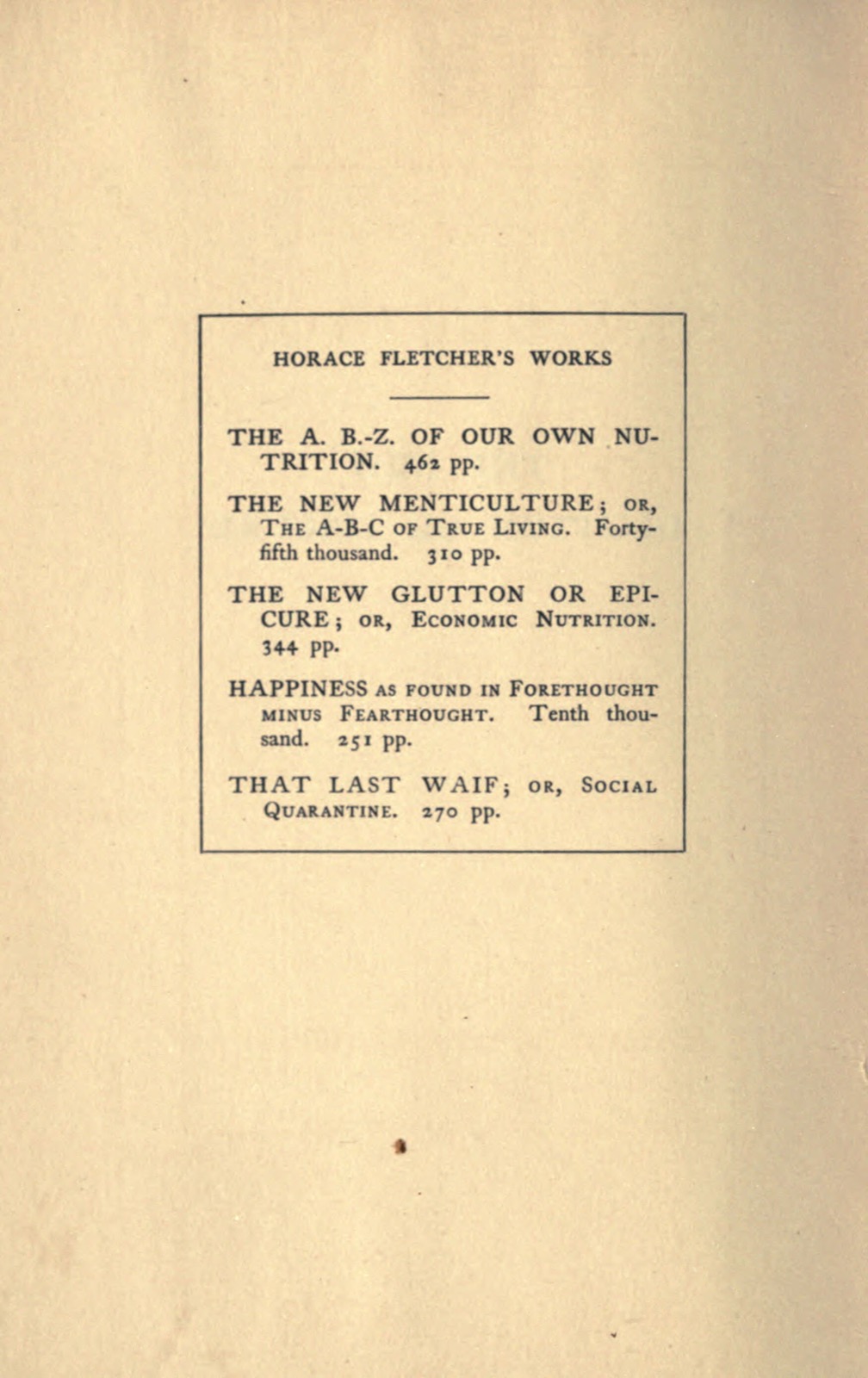
The conflict is authorial and reputational rather than the developer-vendor pattern, and is named on the documented facts. Fletcher was already an independently wealthy retired businessman with no proprietary product to sell; his financial and reputational interest lay in the doctrine itself. Commercially successful books issued by Frederick A. Stokes (The New Glutton or Epicure, 1903; Fletcherism: What It Is, or, How I Became Young at Sixty, 1913) and a paid lecture circuit provided income and standing that depended on the doctrine’s continued currency, which he sustained by supplying himself as a scientific test subject and by cultivating celebrity endorsement. The conflict is that the man whose books and platform profited from Fletcherism was also its principal theorist and chief witness, advancing central health claims for which he produced no controlled evidence.
What held, what failed, and the bronchitis
Fletcherism was not overturned by a single decisive experiment; it split into a part that survived and a part that failed. The surviving part is the narrow surrogate: prolonged chewing does tend to reduce intake, as a controlled 2011 study confirmed (Smit et al., Appetite), and Chittenden’s 1904 studies showed that fitness was compatible with a low protein intake. The failed part is everything Fletcher built on that surrogate. The claims that mastication wards off disease, counters conditions from anaemia to alcoholism, and restores youthful vigour and long life were never demonstrated by controlled outcome studies and are treated in the medical-history literature as faddism (Christen and Christen, J Hist Dent 1997); later medical writers described the liquefied-food regimen as a cause of constipation rather than a guarantor of health. Fletcher’s own death from bronchitis in 1919 is consistent with the absence of the disease-immunity he claimed, and the doctrine faded once his promotion stopped. What was disconfirmed was the leap from a real effect on a surrogate to unmeasured claims about disease and lifespan; the evidence for those claims was insufficient and is labelled insufficient.
The pattern repeats
The same structural machinery appears in different treatments and eras. These cases show the claimed mechanism and how the claim met evidence.
Bennett's rejuvenation system (muscular contractions and self-massage)
The Hay System (food combining / 'food separation')
Order-energy raw-food regimen (Bircher-Benner's 'Lebendige Kraft' nutrition)
More related cases · 8
Part of the lineage
Evidence · 5 sources
- Fletcherism: What It Is, or, How I Became Young at Sixty (1913)
- Physiological Economy in Nutrition (1904)
- Horace Fletcher (1849-1919): The Great Masticator (1997)
- Does prolonged chewing reduce food intake? Fletcherism revisited (2011)
- John D. Rockefeller portrait by George Mountain Edmondson, 1910 (1910)