Arsenic slimming and complexion nostrums
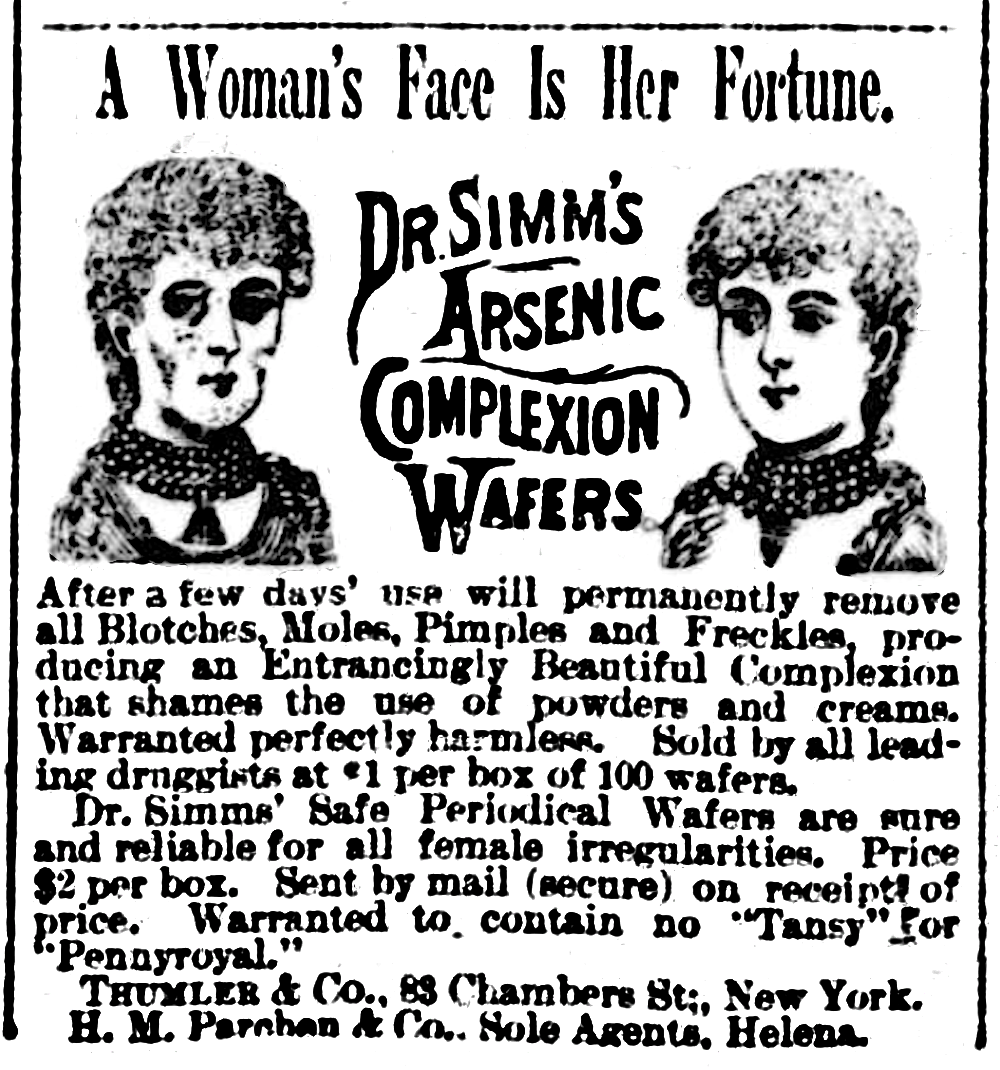
From roughly 1880 to 1920, arsenic was sold as a beauty aid: a cheap daily wafer, sworn safe, that would melt off surplus flesh and whiten the skin. The most-cited brand, Dr. Campbell's Safe Arsenic Complexion Wafers, was fronted by a fictitious doctor. But arsenic is a cumulative poison and an IARC Group 1 carcinogen; the safety premise was false, and food-and-drug law after the 1906 Pure Food and Drug Act drove the nostrums out.
The doctor who never existed
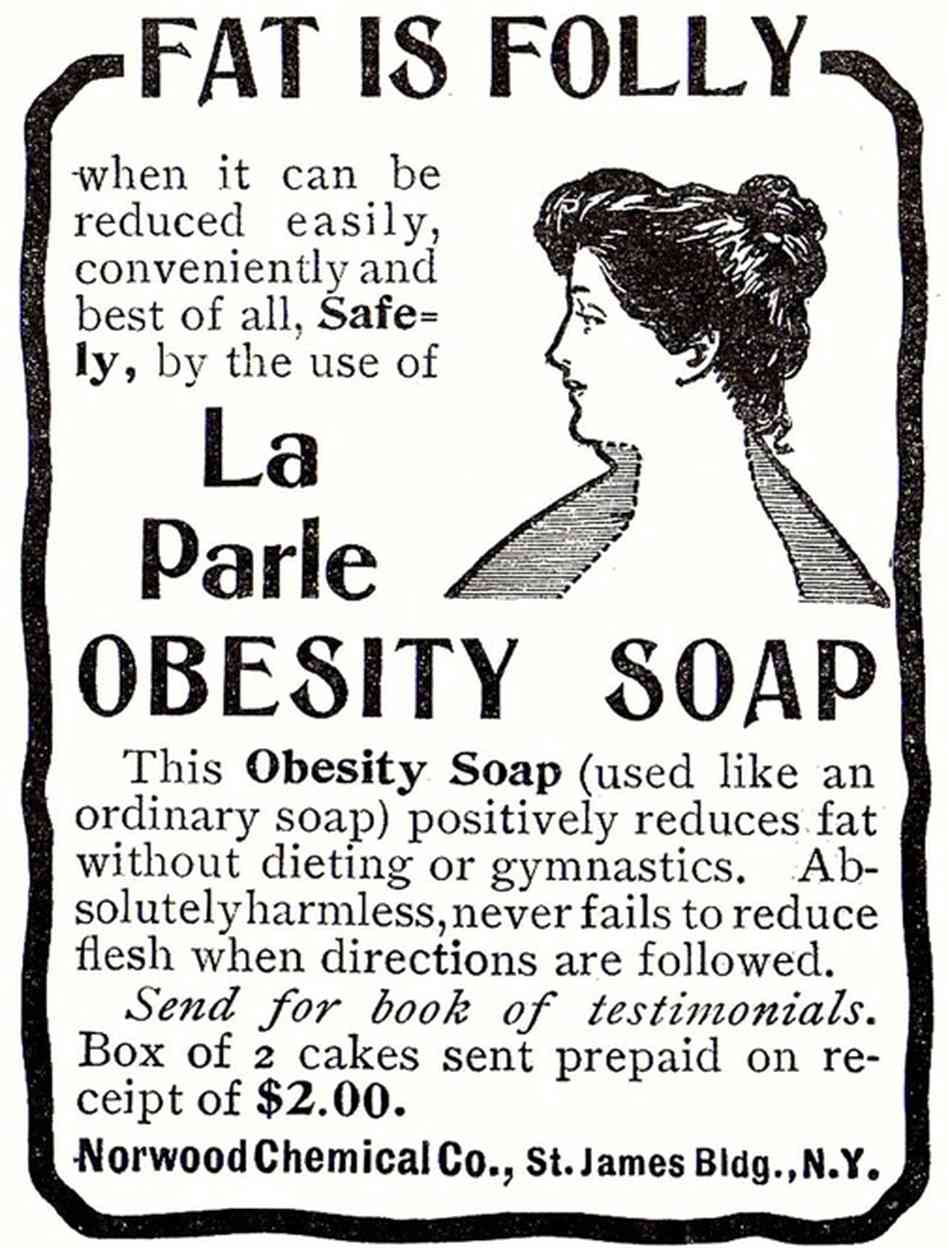
The face on the box was “Dr. Campbell,” and there was no Dr. Campbell. Dr. Campbell’s Safe Arsenic Complexion Wafers, the most-cited American example, sold a poison under the borrowed authority of a doctor who was a brand persona, not a man. The seller was a commercial trade in branded arsenic nostrums, complexion wafers, tonics, arsenical soaps, and slimming ‘arsenic diet’ tablets. Patent-medicine advertising repeated the promise of effortless beauty and slenderness at scale.
Cheap, over the counter, and that was the danger
Most cases in this archive sell scarcity. This one sold the opposite: cheap over-the-counter wafers and tonics, stocked by chemists and shipped by mail order to a mass market, with no gatekeeper to pass. But what the buyer got for the low price was not the harmless cheap regimen of the Cornaro, Hufeland, and Fletcher cases. It was a toxic one. The accessibility was part of the harm: a poison marketed as an everyday beauty aid reached many people who took it daily, over long periods, exactly as directed.
What “stimulates the system” was supposed to mean
The proposed mechanism was that arsenic ‘stimulates the system’, carrying off surplus flesh and clearing and whitening the complexion. It was vague pseudo-physiology with no measured endpoint: no defined change in weight, no defined skin outcome, no account of how a tonic dose produced a slender figure. The idea was not invented from nothing. It borrowed credibility from the mid-nineteenth-century reports of the Styrian ‘arsenic-eaters’, taken to show that regular small doses were tolerable and even good for complexion and stamina, a reading the commercial trade then bolted onto the market for beauty and figure.
A business that needed you to keep swallowing it
The conflict is the ordinary patent-medicine one, named on the documented facts and not overstated. The trade profited from repeat sales of products meant to be taken daily over long periods and advertised as safe, whose active ingredient was a cumulative poison. Because the case covers a trade rather than a single firm, the conflict is structural: the business model depended on continued consumption of arsenic by people who believed it harmless. No controlled safety or efficacy data were offered.
Not one experiment, but the toxicology and the law
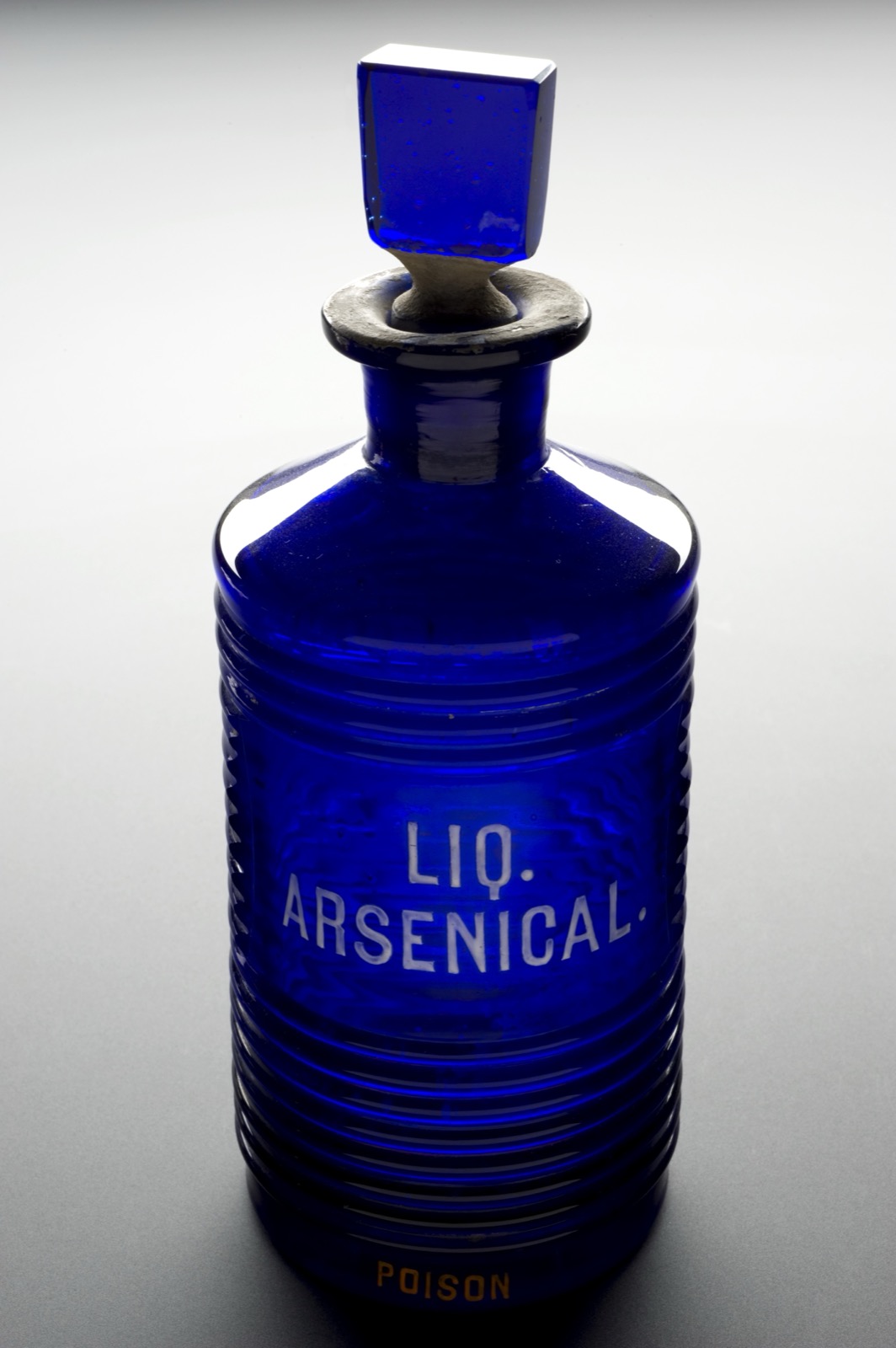
The disconfirmation is toxicological and regulatory rather than a single experiment. Arsenic is a cumulative poison, and the International Agency for Research on Cancer classifies arsenic and inorganic arsenic compounds as carcinogenic to humans (Group 1); chronic ingestion causes the skin lesions, neuropathy, organ damage, and cancers documented in the modern literature. The central premise, that a small daily dose was safe, is false: small doses build a body burden over time. The trade was driven out by the strengthening of food-and-drug regulation (the United States Pure Food and Drug Act of 1906 and its successors) and by the spread of the understanding that arsenic is a poison. There was never sufficient evidence that arsenic safely slimmed the figure or improved the complexion, and the claim is labelled refuted; unlike the cheap-and-harmless regimen cases in this archive, the harm here fell on the body.
The pattern repeats
The same structural machinery appears in different treatments and eras. These cases show the claimed mechanism and how the claim met evidence.
Radithor
Fletcherism (thorough mastication)
Morison's Vegetable Universal Medicine (Hygeian pills)
Part of the lineage
Evidence · 6 sources
- History of Slimming Diets up to the Late 1950s (2022)
- The Arsenic Century: How Victorian Britain Was Poisoned at Home, Work, and Play (2010)
- Arsenic and inorganic arsenic compounds (IARC Monographs Vol. 100C) (2012)
- Arsenic Complexion Wafers advertisement, Helena Independent, 1889 (1889)
- La Parle Obesity Soap advertisement, 1903 (1903)
- Blue ridged glass bottle for arsenic, Europe, 1701-1935 (1935)