Orgone Energy Accumulator
Wilhelm Reich, a Freud-trained Viennese psychoanalyst, told patients a wooden box lined with steel wool and organic fiber could concentrate a cosmic life-force he named 'orgone' and cure ailments from colds to cancer. The U.S. Food and Drug Administration disagreed: a 1954 federal injunction ordered the devices destroyed, and when Reich kept shipping them anyway, a 1956 contempt conviction sent him to Lewisburg federal prison, where he died in 1957.
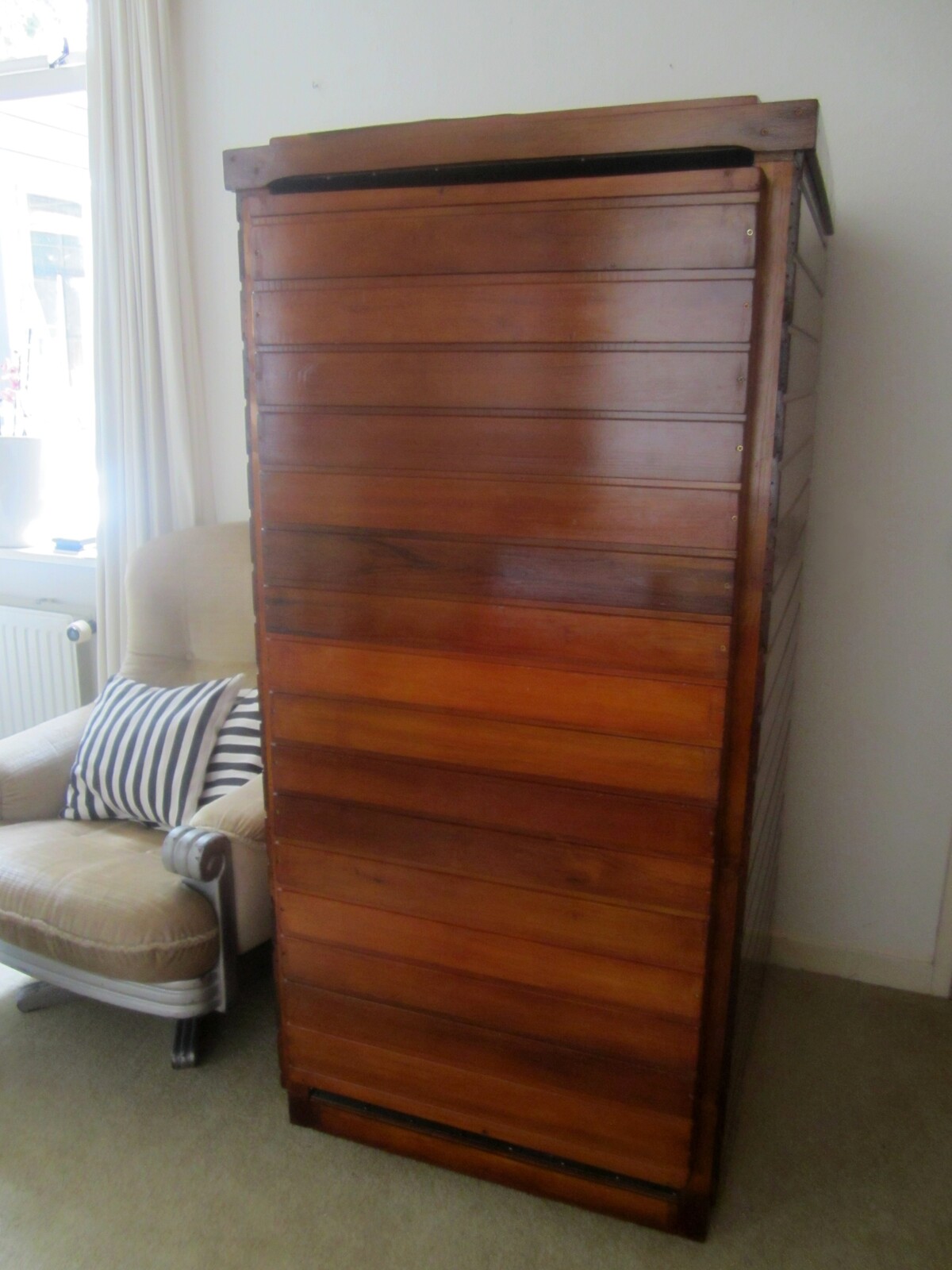
The analyst who found a force no instrument could see
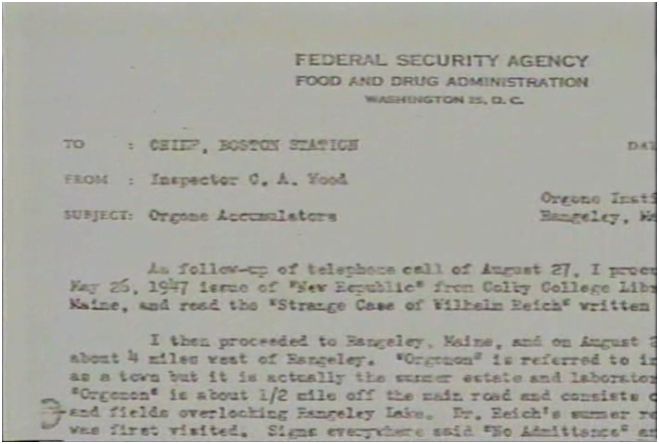
In August 1947, an FDA inspector named C. A. Wood drove out to a half-mile dirt turnoff four miles west of Rangeley, Maine, following up a tip from a New Republic exposé he had read at a local college library. Signs along the road read “No Admittance.” What he found at the end of it was Orgonon: a summer estate and laboratory overlooking Rangeley Lake, built and run by a Viennese-trained physician who, seven years earlier, had begun manufacturing a wooden box he said could capture the physical substrate of life itself. That inspector’s letter, reproduced in the FDA’s own file, is the first documentary trace of a federal investigation that would run for a decade, end in a courtroom, and finish in a prison cell. Wilhelm Reich (1897-1957) had earned the credibility that made such a claim worth investigating in the first place: he trained as a physician in Vienna, joined Sigmund Freud’s inner psychoanalytic circle, and rose to a senior position in the Vienna Psychoanalytic Society before breaking with Freud over his own theory that neurosis was rooted in blocked sexual, or “orgastic,” energy. That break, and the political turmoil that followed it, pushed Reich out of Germany after the 1933 publication of The Mass Psychology of Fascism and eventually to Oslo, Norway, where by the late 1930s he had coined a new term for the energy he believed his clinical work had been circling all along: “orgone.” A 1938 book on the subject, The Bion Experiments on the Origins of Life, drew the first public charges of quackery from the scientific establishment, years before he ever built an accumulator. Reich emigrated to the United States in September 1939, and in 1941 he bought land at Rangeley and built Orgonon, the home and laboratory from which he would direct the Wilhelm Reich Foundation and the Orgone Institute Press for the rest of his life. The credential was real, the break with orthodoxy was already a matter of record, and the private research institute in the Maine woods gave the whole enterprise the outward form of science conducted just out of public view.
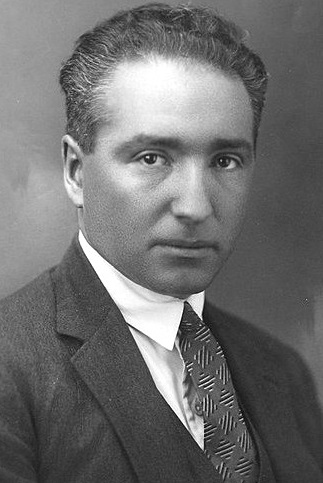
A box you could not buy off a shelf
The Orgone Energy Accumulator was never a retail product. Reich began building it in 1940, and it was manufactured, sold, and rented only from Orgonon itself, or through a small network of physicians Reich had personally certified in what he called “orgonomy.” The device came in several forms: a telephone-booth-sized cabinet built to hold a seated adult, a foot-square “Shooter” box, a foldable “blanket” for use in bed, and a “funnel” attachment for localized treatment, all built from the same alternating layers of organic material (Celotex, plywood, steel wool, glass wool) and metal (galvanized sheet or wire mesh), organic material always on the outside. The FDA’s 1954 complaint records that the Foundation had built a mailing list of roughly 7,500 names and mailed some 7,000 catalogs advertising its books, periodicals, and devices, and that the accumulators themselves were made available for either purchase or rental directly by the defendants. Access to the treatment therefore ran entirely through Reich’s own organization: no independent manufacturer built a competing accumulator, no pharmacy stocked one, and the physicians who prescribed their use had, in the FDA’s own words describing the group that later petitioned to intervene in the case, “studied matters relating to Orgonomy under Dr. Reich” himself.
Warmth, tingling, and a temperature no thermometer confirmed
Reich’s theory held that “orgone” was a real, physical, cosmic life-energy pervading the atmosphere, discoverable by no conventional instrument but concentrated by the accumulator’s construction: organic material at the surface would attract the energy, the metal layer beneath would reflect it inward rather than letting it escape, and a person sitting inside would absorb the concentrated field. The FDA’s complaint, quoting the accumulator’s own labeling, describes the promised sensation in exact terms: the user would become aware of the effect “through feelings of prickling, warmth, relaxation and reddening of the face,” accompanied by a claimed rise in body temperature of a few degrees Fahrenheit (the surviving scan of the complaint is illegible at the exact figure). That is the entire evidentiary apparatus: a subjective feeling and an unverified temperature claim, standing in for a physical force no laboratory ever detected. On that foundation, the labeling built an open-ended list of applications: the complaint names dozens of conditions the accumulator was represented to cure, mitigate, or prevent, among them cancer, leukemia, diabetes, epilepsy, multiple sclerosis, and myocardial infarction, plus general claims of protection against “nuclear radiation” and “epidemics.” Reich extended the same premise to the sky itself. In the summer of 1953, according to the Wilhelm Reich Museum’s own account, blueberry farmers near Rangeley facing drought asked Reich to intervene; he assembled a “cloudbuster” — hollow metal pipes cabled to a body of water, built to draw excess orgone from the atmosphere — and, in the museum’s telling, “rain began within hours and continued over several days.” No meteorological analysis in the record weighs that outcome against ordinary rainfall variability, and nothing in the physics of grounded metal pipes explains how they would summon rain; the cloudbuster is preserved at Orgonon today, alongside the accumulators, as Reich left it.
The income kept coming after the court said stop
Reich was at once the sole author of orgone theory, the designer of the accumulator, and the head of the organization that manufactured, sold, and rented it. The Wilhelm Reich Foundation and the Orgone Institute Press were his; the accumulators and the books that documented their use were the Foundation’s main products. The clearest evidence of how central that revenue was to the enterprise came out at his own criminal trial in 1956, when Ilse Ollendorff — Reich’s wife and the Foundation’s clerk — testified that income from accumulators in the four months immediately after the 1954 injunction was the same as it had been before the injunction was issued. In other words, a standing federal order to stop selling and renting the devices had no measurable effect on the money coming in, because the Foundation and its associates kept shipping them. One of Reich’s own associates, Dr. Michael Silvert, personally trucked accumulators and literature from Maine to New York City while Reich was away in Arizona running cloudbuster experiments in the desert — the specific act of continued commerce that would become the basis of the contempt charge against both men.
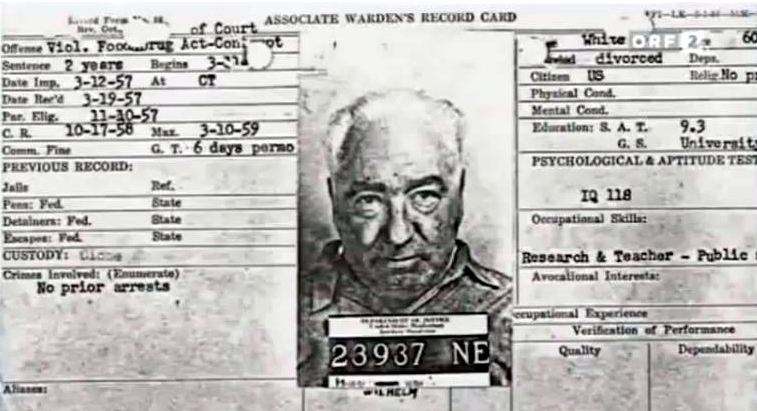
A default judgment, a jury, and a cell in Lewisburg
The FDA filed a complaint for injunction in the U.S. District Court for the District of Maine on February 10, 1954, alleging that the accumulators were adulterated and misbranded because they could not do what their labeling claimed. Reich did not answer the complaint on the merits. Instead, on February 25, 1954, he sent the presiding judge a covering letter for a lengthy “Response” document, summarized in the court’s own record as denying the court’s jurisdiction to inquire into a matter of basic natural science; the letter closes, in Reich’s own words preserved verbatim in the FDA’s file, “I, therefore, rest the case in full confidence in your hands.” He did not appear, and neither did his co-defendants. On March 19, 1954, with the defendants in default, the court entered a permanent injunction, finding the devices incapable of collecting or accumulating any such energy from the atmosphere and finding that the claimed energy itself did not exist. The decree ordered the accumulators recalled and destroyed and most of the associated literature destroyed as well. Fifteen physicians who used orgonomy in their own practices petitioned to intervene in the case; a district judge denied that petition on November 17, 1954, the First Circuit affirmed the denial the following year (221 F.2d 957), and the Supreme Court declined to review it on October 10, 1955. None of that stopped the shipments. By early 1955 the FDA had accused Reich, Silvert, and the Foundation of criminal contempt, and a jury trial opened in Portland, Maine on May 3, 1956, with Reich and Silvert serving as their own lawyers. The jury deliberated twenty minutes before convicting all three defendants. Reich was sentenced to two years in federal prison, Silvert to a year and a day, and the Foundation was fined $10,000. The convictions were affirmed on appeal (239 F.2d 134). On August 23, 1956, FDA agents supervised the burning of roughly six tons of Reich’s books and journals in a New York City incinerator. Reich was incarcerated at Danbury, Connecticut in March 1957 and transferred within days to the federal penitentiary at Lewisburg, Pennsylvania. He died there on November 3, 1957; an autopsy recorded the cause as myocardial insufficiency with sudden heart failure. No instrument was ever built that detected “orgone,” no controlled clinical trial of the accumulator against any of its claimed indications was ever published, and the case did not end with a retraction. It ended with a prison record card and a federal death certificate.
The pattern repeats
The same structural machinery appears in different treatments and eras. These cases show the claimed mechanism and how the claim met evidence.
Electronic Reactions of Abrams (ERA)
I-ON-A-CO
Overbeck's Rejuvenator
More related cases · 1
External references
Evidence · 10 sources
- Orgone Energy Accumulators (FDA Notices of Judgment, Case No. 5391) (1954)
- Wilhelm Reich et al. v. United States (1957)
- Wilhelm Reich: Self-Destined Victim and Social Casualty. A Study of His Trial and Appeal. (1972)
- Biography of Dr. Wilhelm Reich (2026)
- Wilhelm Reich Trial: 1956 (2026)
- Dr. Wilhelm Reich - Orgone But Not Forgotten (2018)
- Wilhelm Reich, photographed by Ludwig Gutmann, Vienna (1943)
- Orgone Energy Accumulator (right-angle, closed) -- modern reconstruction (2012)
- Associate Warden's Record Card for Wilhelm Reich, Lewisburg Federal Penitentiary, March 1957 (1957)
- Letter from the FDA about Wilhelm Reich, August 1947 (1947)