Celestial Bed and Temple of Health
In 1781 James Graham, a Scot who left Edinburgh medical school without a degree, installed a fifty-pound-a-night Celestial Bed at his Pall Mall Temple of Hymen, an electrified, perfumed marriage-bed on 40 glass pillars that he sold as a cure for childlessness and a means of prolonging life. No royal commission was needed to refute it. The money ran out first: bankrupt by 1782, his possessions sold by March 1784, the Temple never reopened.
The showman who never finished his degree
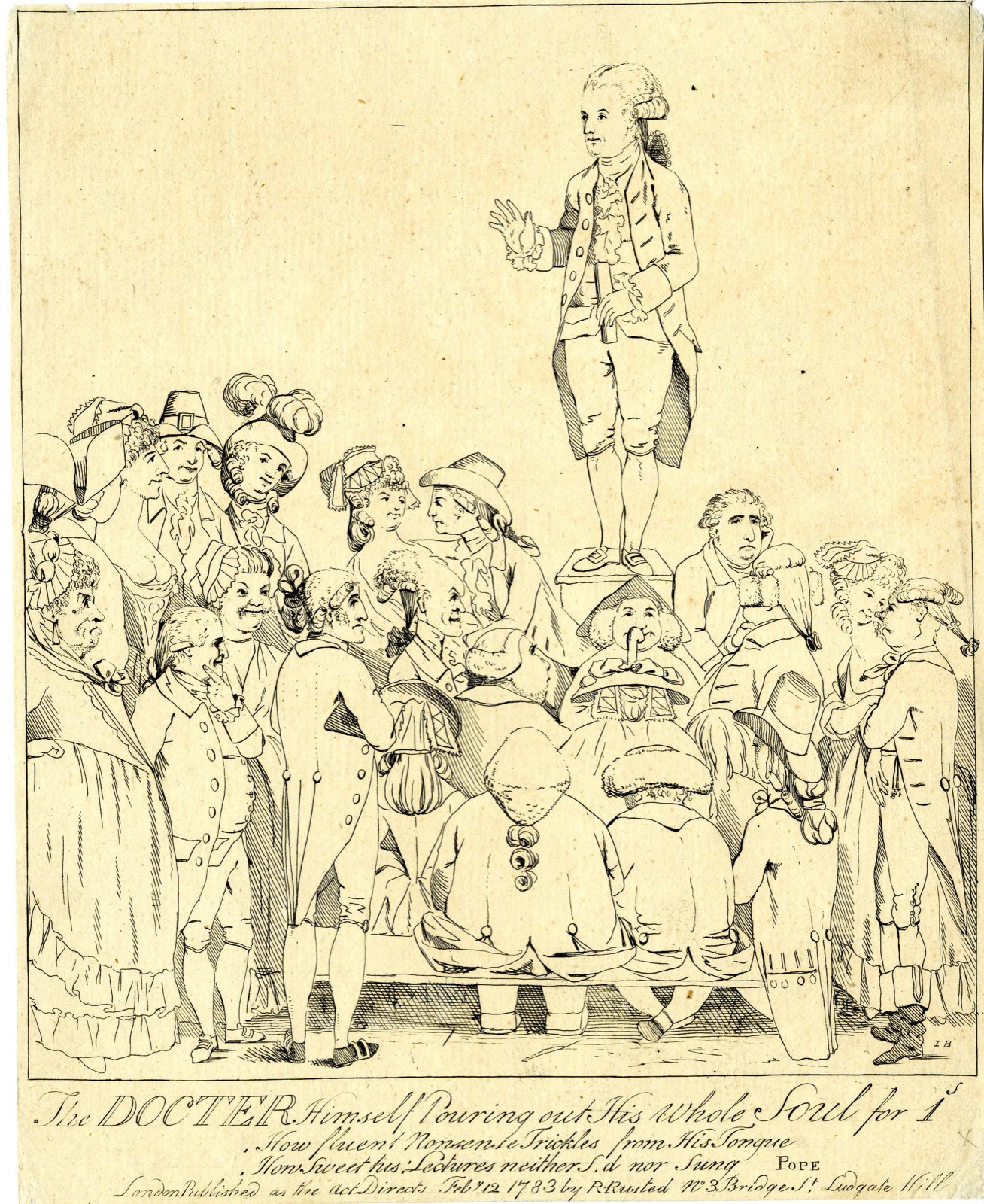
In June 1781, at a townhouse on Pall Mall, James Graham opened a temple to human reproduction and put young women he called Goddesses of Health to work among the electrical machines. He had no medical degree: born in Edinburgh on 23 June 1745, he had left the University of Edinburgh’s medical training without taking one, then styled himself a doctor and built a London career on theatrical electrical-medicine displays. His first venue, the Temple of Health, had opened at the Adelphi in May 1780; the Pall Mall relaunch as the Temple of Hymen added the Lecture on Generation and a small line of branded preparations sold from the same premises. Richard C Sha’s 2010 Medical History review of Lydia Syson’s biography opens with the verdict that ‘It is no easy matter to situate a man who cared more for celebrity and marketing than science or medicine within the history of medicine.’
Fifty pounds for a night in the Celestial apartment
Access ran through ticketed lectures and overnight bed hire at a leased Pall Mall townhouse, priced to the very top of the London market. The Grand State Celestial Bed at the Temple of Hymen, introduced June 1781, was advertised for hire at fifty pounds the night, the figure Amelia Soth’s 30 May 2019 JSTOR Daily article reports from Graham’s own advertising copy inviting any gentleman and his lady desirous of progeny to take an evening in the Celestial apartment on the strength of a fifty-pound bank note. The bed itself is recorded in later scholarship, drawing on contemporary descriptions, as 12 by 9 feet (about 3.7 by 2.7 metres), insulated on 40 glass pillars (the figure given in the Wikipedia biography), surmounted by a dome carrying mechanical music, fresh flowers and a pair of live turtle doves, perfumed from an internal reservoir, and crowned by a sparkling clockwork tableau of Hymen and the biblical motto ‘Be fruitful, multiply and replenish the earth!’ The same Pall Mall premises sold the branded preparations of the medicine line, the principal advertised names of which were Electrical Aether and Nervous Aetherial Balsam.
“Medico, magnetico, musico, electrical”
Graham presented the Celestial Bed and the medicine line as instruments of an electrical and aetherial vital fluid that stimulated the nerves and generative organs and supported the conception, restoration of vigour, and prolongation of life he advertised. Sha quotes the Bed’s promotional billing as ‘medico, magnetico, musico, electrical’. The mechanism was vitalist analogy and theatrical demonstration: glass-insulated supports, an inner tilting frame, mechanical music linked to occupant movement, perfumed vapours, a Hymen tableau, and the same electrical-and-aetherial vocabulary in the bottled preparations. The vocabulary aligned the Bed and the medicines with the contemporaneous Paris animal-magnetism practice of Franz Mesmer, substituting electrical and aetherial fluid for Mesmer’s magnetic fluid. No active principle, controlled dose, or experimental endpoint was ever published for any of the preparations; no controlled trial of the Bed’s conception or longevity claims was conducted.
Every role, and every fee, in one man
Graham was the developer of the Temple of Health and its Temple-of-Hymen successor, the lessee of the premises, the deviser and operator of the Celestial Bed, the deliverer of the Lecture on Generation, and the proprietor of the branded medicine line. Lecture admission, fifty-pound bed hires, and bottled-medicine sales were all collected at the same Pall Mall address. He published no controlled trial and no comparison data for any preparation or for the Bed. The conflict structure was concentrated in a single individual without separation between the lecturer, the apparatus operator, the medicine vendor, and the testimonial-collector. The financial position depended entirely on continued fashionable patronage of a single London establishment; when patronage waned the structure unwound rapidly.
The money ran out before the critics did
The enterprise did not survive its first four London years. Amelia Soth’s 30 May 2019 JSTOR Daily article records that ‘By 1782, Graham was bankrupt’; the Wikipedia biography records that by March 1784 he was forced to sell most of his possessions. The Temple of Hymen did not reopen in any sustained form. Graham resurfaced in 1786 with public earth-bathing exhibitions in Panton Street in London, lecturing buried up to the neck in earth, and at the end of 1792 he began to experiment with extended fasting to prolong his life. He died at his home in Edinburgh in 1794. No replication or independent vindication of the Celestial Bed’s conception or longevity claims followed. The structural disconfirmation is the rapid financial collapse of the device-and-establishment model rather than a controlled investigation comparable to the 1784 Franklin commission on Mesmer.
The pattern repeats
The same structural machinery appears in different treatments and eras. These cases show the claimed mechanism and how the claim met evidence.
Animal magnetism (mesmerism)
Magnetic somnambulism (artificial somnambulism)
Perkins Metallic Tractors
More related cases · 7
Evidence · 7 sources
- Doctor of love: James Graham and his celestial bed [book review] (2010)
- Doctor of Love: James Graham and His Celestial Bed (2008)
- The Prince of Quacks (and How He Captivated London) (2019)
- James Graham (sexologist) (English Wikipedia) (2026)
- The Doctor himself pouring out his whole soul for 1s. Satirical etching by John Boyne, 12 February 1783 (British Museum 1868,0808.4926). (1783)
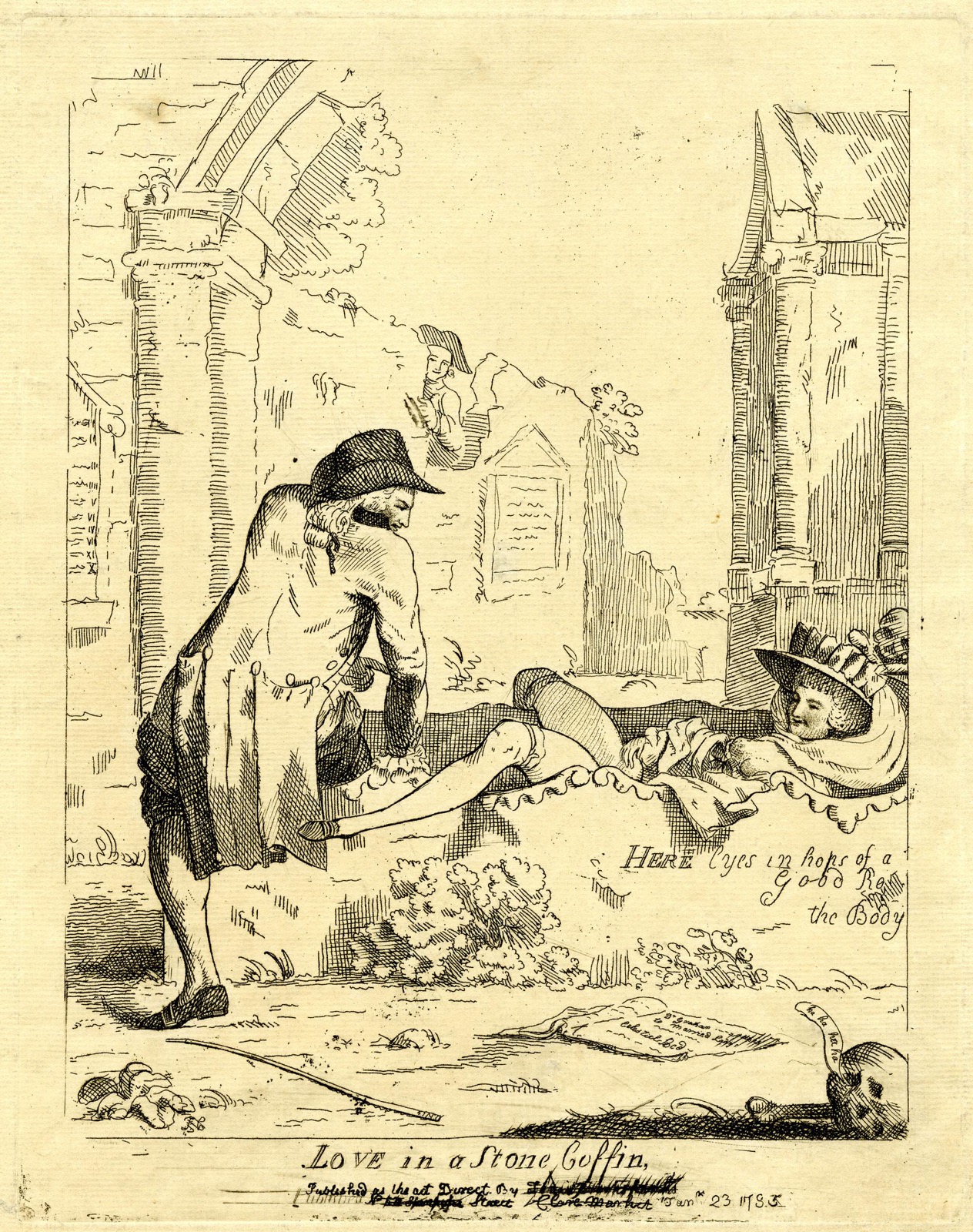
- Love in a stone coffin. Satirical etching, 1785 (British Museum 1868,0808.5412). (1785)
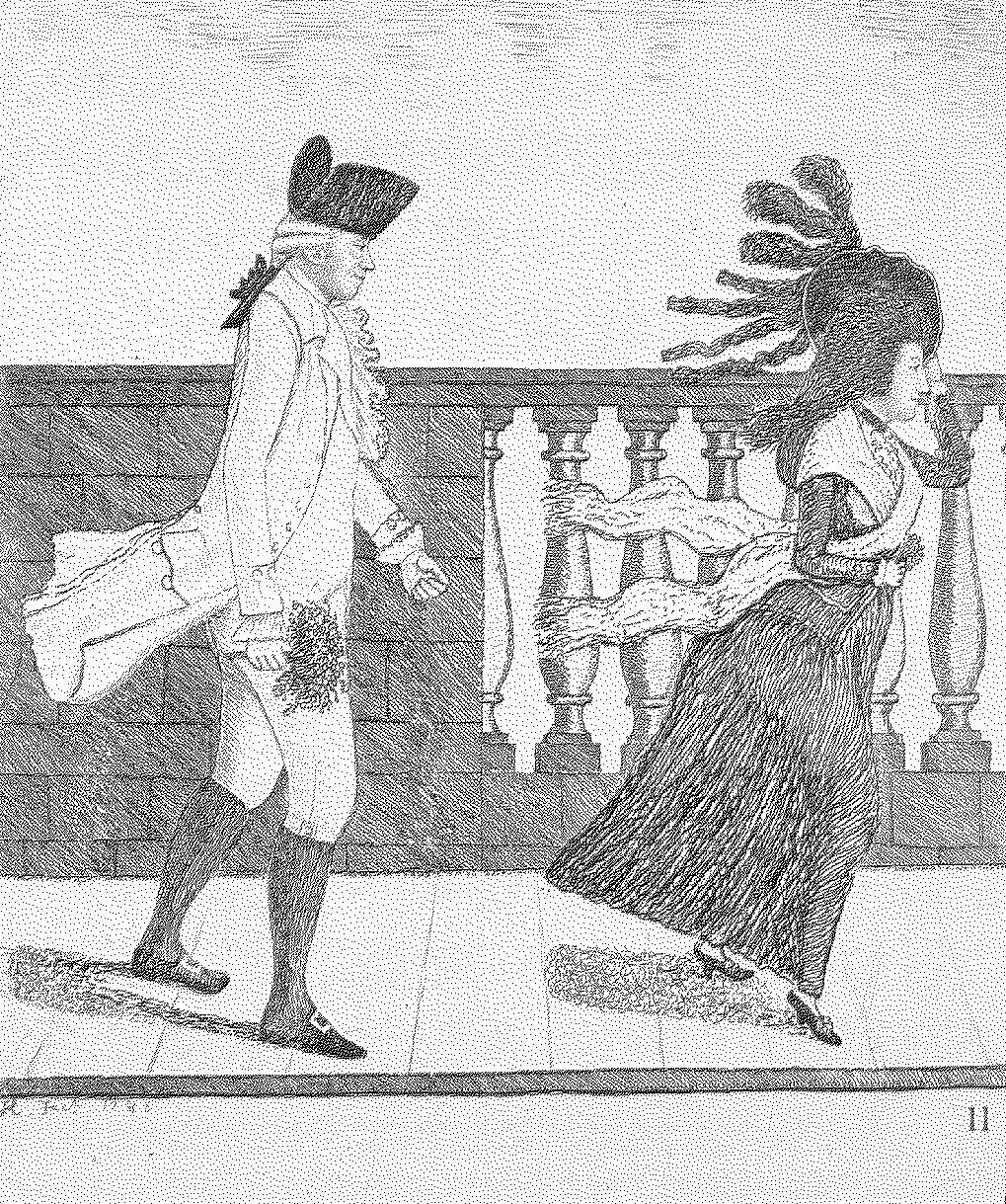
- Dr. James Graham going along the North Bridge in a High Wind. Caricature etching by John Kay, 1785. (1785)