Hauser's "Wonder Foods" diet (Look Younger, Live Longer)
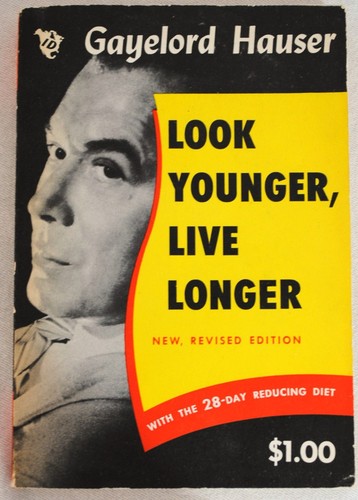
Gayelord Hauser had no medical degree, yet told his readers his five 'wonder foods' would add measurable youthful years to their lives. Time reported he stopped calling himself 'M.D.' after the AMA checked his credentials; in 1951 U.S. marshals seized copies of his own bestseller as unlawful labeling for a molasses brand.
Garbo behind the screen
On a night in February 1942, Greta Garbo sat hidden behind a screen in a ballroom of Manhattan’s St. Regis Hotel, listening to her friend lecture a room of society women on nutrition: “Greta Garbo sat hidden behind a screen in a ballroom of Manhattan’s St. Regis Hotel last week to hear her good friend Bengamin Gayelord Hauser lecture to a roomful of A.W.V.S. socialites,” Time reported. Onstage: “A youngish man with a flashy smile and a broken accent, Bengamin Gayelord Hauser, “food adviser” to many a movie star, cut up fruits & vegetables, stuffed them into an electric chopper, quaffed the juice as he delivered the kind of message that makes M.D.s shudder.” He told the room that “Lack of calcium produces “fear of the dark, nail biting, gossiping."" He had, he said, “been cured of tuberculosis of the hip by eating “36 lemons a day,” for one or two weeks” — his origin story, standing in for a diploma he never earned.
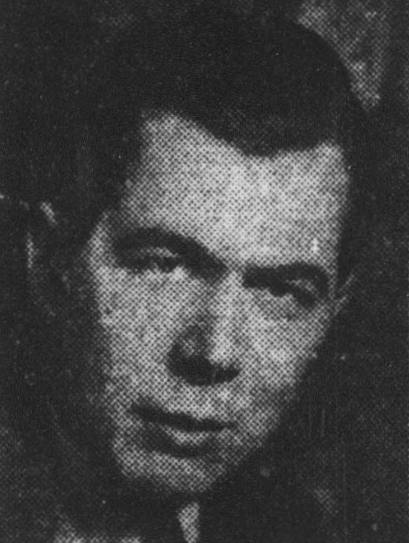
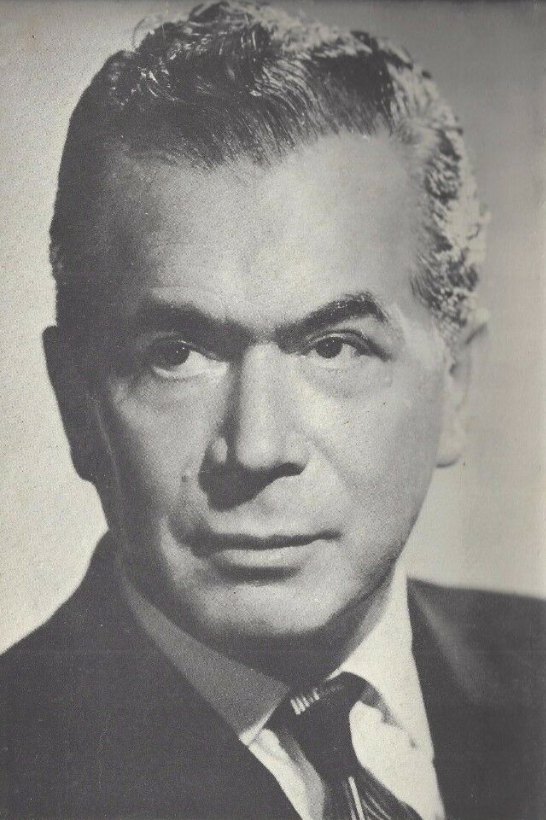
Hauser had none. Born Helmut Eugen Benjamin Gellert Hauser on 17 May 1895 in Tubingen, Germany, and an immigrant to the United States from 1911, his formal training amounted to the Chicago College of Naturopathy and the American School of Chiropractic, supplemented by time spent absorbing “the healing properties of food” among fringe-medicine circles in Dresden and Vienna around 1923 (Thompson et al. 2020). He presented himself as an internationally famous young Viennese scientist and, for years, simply “Dr.” Hauser — until “Hauser stopped calling himself an M.D. when the American Medical Association’s Bureau of Investigation checked up on his credentials.” Afterward he preferred to be known as “a food scientist” (Time, 1942). The missing credential never slowed him down: he joined the Milwaukee food firm Modern Products in 1925, moved to Hollywood in 1927, and by the 1930s and 1940s was personal nutrition adviser to some of the most photographed people alive.
A guru for the guest list
Hauser’s authority was built around named celebrity and society clients rather than a clinical record. Wikipedia’s roster of people who consulted him includes Greta Garbo, Marlene Dietrich, Adele Astaire, Gloria Swanson, Grace Kelly, Ingrid Bergman, Baron Philippe de Rothschild, and the Duchess of Windsor — a client list built from film royalty and titled Europeans. Garbo’s own attendance at his 1942 lecture, seated out of sight behind a screen, captures the public texture of that access: the advice circulated through social prestige and media attention, not controlled clinical evidence.
The books and products traded on that prestige. A mass reader could buy Look Younger, Live Longer and later encounter the same claims at a molasses display, but this bundle does not document a clinic ledger or consultation-revenue model. The supported point is narrower: the celebrity-client roster supplied cachet around the books, lectures, and products.
Five foods, and a theory of glands
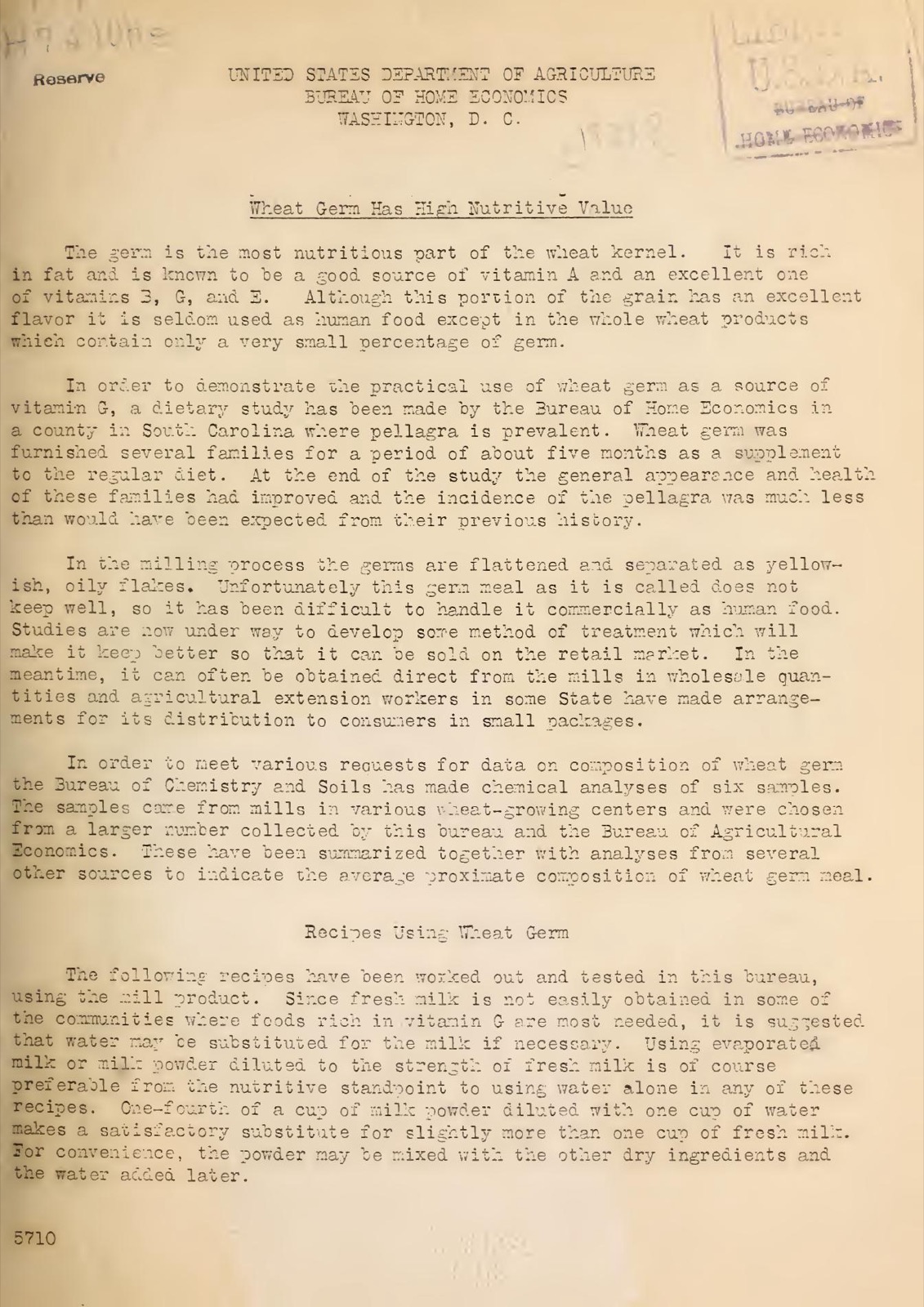
The regimen’s headline claim, carried in the title Look Younger, Live Longer, was that five “wonder foods” — powdered brewers’ yeast, powdered skim milk, yoghourt/yogurt, wheat germ, and black treacle/blackstrap molasses — would add measurable “youthful years” to a reader’s life (hauser-wonder-foods-add-youthful-years). Each food is a genuine, if unremarkable, source of B vitamins, minerals, and protein; that nutritional-sufficiency point is real and is the regimen’s actual kernel. What is not demonstrated is the leap from a diet that supplies nutrients a poor diet lacks to a diet that measurably adds years of life — no controlled trial of the five-food regimen against any aging or mortality endpoint appears anywhere in the record, so the claim is recorded as unproven rather than demonstrated.
Hauser’s gland pitch was more specific still by 1939: Stark records that, in Hauser’s New Health article “Prolong Youth … but without Surgery,” he urged a vitamin-rich diet for gland health and assigned Vitamin D to thyroid function, Vitamin B to pituitary regulation, and Vitamin E to the sex glands. Stark separately notes that Hauser’s 1930 Harmonized Food Selection urged life-giving foods that would feed the glands. The claim here is therefore narrower than a proven biochemical mechanism: Hauser presented diet as a non-surgical route to maintaining glandular youth, against the surgical rejuvenation methods of Serge Voronoff and Eugen Steinach, this archive’s own voronoff-graft-1920-1935 and steinach-vasectomy-rejuvenation-1920-1939 cases. In 1932 he ventured into an entirely different vague mechanism, publishing a book promoting the Bates method of eye exercises as a cure for the need for glasses, a volume Martin Gardner’s 1957 skeptical survey singled out as “the all-time low” among books on the subject (hauser-bates-method-eyesight).
The adviser sold the groceries too
Hauser was not a disinterested adviser recommending foods with no commercial life around him. In 1925 he joined, with his brother-in-law Sebastian Gysin, the Milwaukee firm Modern Products, maker of the herbal laxative Swiss Kriss. Separately, in 1937 the FDA seized three products Hauser had personally endorsed — “Slim” (containing the drugs senna, bladderwrack, and buckthorn bark), “Correcol” (weeds and gum), and Hauser Potassium Broth (alfalfa, okra, beet tops) — declaring them “misbranded and sold under false and fraudulent claims” (Time, 1942).
The clearest documented instance of the book itself functioning as an advertisement came in 1950-51: Nature Food Centres, Inc., a Boston retailer, distributed copies of Look Younger, Live Longer alongside a specific “Plantation” blackstrap-molasses brand, inviting customers to “come in for full information” and then, as “customary practice,” handing them the book. The federal government’s 1951 libel actions treated this as the book functioning as unlawful commercial “labeling” for the molasses. This entry does not claim Hauser personally owned that molasses brand (it was packed by Allied Molasses Co., a separate firm) or that he held an ownership stake in Modern Products; the documented conflict is narrower and still real: Hauser joined a health-products firm, personally endorsed products federal regulators seized, and wrote a bestseller that retailers used at the point of sale for a food his diet promoted.
Seized twice, and still on the shelf
Disconfirmation here came from regulators and professional bodies during Hauser’s own lifetime, not from a single dramatic event. The American Medical Association’s Bureau of Investigation examined his credentials and he “stopped calling himself an M.D.” (Time, 1942). The FDA’s 1937 seizure of three Hauser-endorsed products as misbranded was the first federal action. Then, in 1951, the government moved directly against the bestseller that made his name: in United States v. 8 Cartons, More or Less, Molasses, Etc. (97 F. Supp. 313, W.D.N.Y. 1951), a federal court dismissed one libel over a March 1951 seizure of book-and-molasses shipments, finding mere co-shipment insufficient to prove the book was unlawful “labeling”; but in the companion case, United States v. 8 Cartons, Containing Plantation ‘The Original’ Etc., Molasses (103 F. Supp. 626, W.D.N.Y. 1951), decided months later on a more direct point-of-sale distribution scheme, the publisher’s motion to dismiss was denied and the seizure of 25 copies of the book was allowed to proceed. Neither ruling adjudicated whether Hauser’s dietary claims were true; both establish that federal regulators pursued his flagship book as a vehicle for unproven commercial health claims through the year of its greatest success. Contemporary skeptical literature registered the same pattern from outside government: Martin Gardner’s 1957 survey records that “the Pure Food and Drug Administration seized copies of his best-seller, Look Younger, Live Longer,” on the theory that displaying it beside jars of blackstrap molasses was “a ‘mislabeling’ of the product.”
None of this ended Hauser’s career; he kept writing and lecturing after the 1951 cases and lived until 1984. This case ends in the early 1960s because the claims under review are Hauser’s mid-century wonder-foods, added-years, gland-renewal, and book-driven molasses claims.
The pattern repeats
The same structural machinery appears in different treatments and eras. These cases show the claimed mechanism and how the claim met evidence.
Physical Culture (Macfadden's drugless system)
Soured-milk ('Bulgarian bacillus') longevity therapy
Order-energy raw-food regimen (Bircher-Benner's 'Lebendige Kraft' nutrition)
More related cases · 6
Part of the lineage
Evidence · 13 sources
- Gayelord Hauser (Wikipedia) (2026)
- Medicine: Garbo's Gayelord (1942)
- United States v. 8 Cartons, More or Less, Molasses, Etc. (1951)
- United States v. 8 Cartons, Containing Plantation 'The Original' Etc., Molasses (1951)
- Look Younger, Live Longer (Faber and Faber edition) (1951)
- 'Look Younger, Live Longer': Ageing Beautifully with Gayelord Hauser in America, 1920-1975 (2014)
- Gayelord Hauser, 1930 (Evening Star advertisement) (1930)
- Replace them by Salads and Vegetables: Dietary Innovation, Youthfulness, and Authority, 1900-1939 (2018)
- Fads and Fallacies in the Name of Science (1957)
- Self-help and self-promotion: dietary advice and agency in North America and Britain (2020)
- Gayelord Hauser, 1961 (Mirror, Mirror on the Wall) (1961)
- Wheat germ has high nutritive value (U.S. Bureau of Home Economics, 1931) (1931)
- Look Younger, Live Longer cover image (Open Library, 1950 edition record) (1950)