Gully's Water Cure (Malvern hydropathy)
A Jamaica-born physician turned drugs into the enemy and cold water into the cure, drawing Tennyson, Darwin, and Carlyle to his Malvern clinic. Gully recast Priessnitz's water-cure crisis into a 'ganglionic nervous system' theory a modern historian calls scientifically unjustifiable. Darwin reported recovery; his daughter Annie died in 1851 despite Gully's prognosis. Gully's name was struck from every medical society after the 1876 inquest into Charles Bravo's poisoning exposed his affair with the victim's wife.
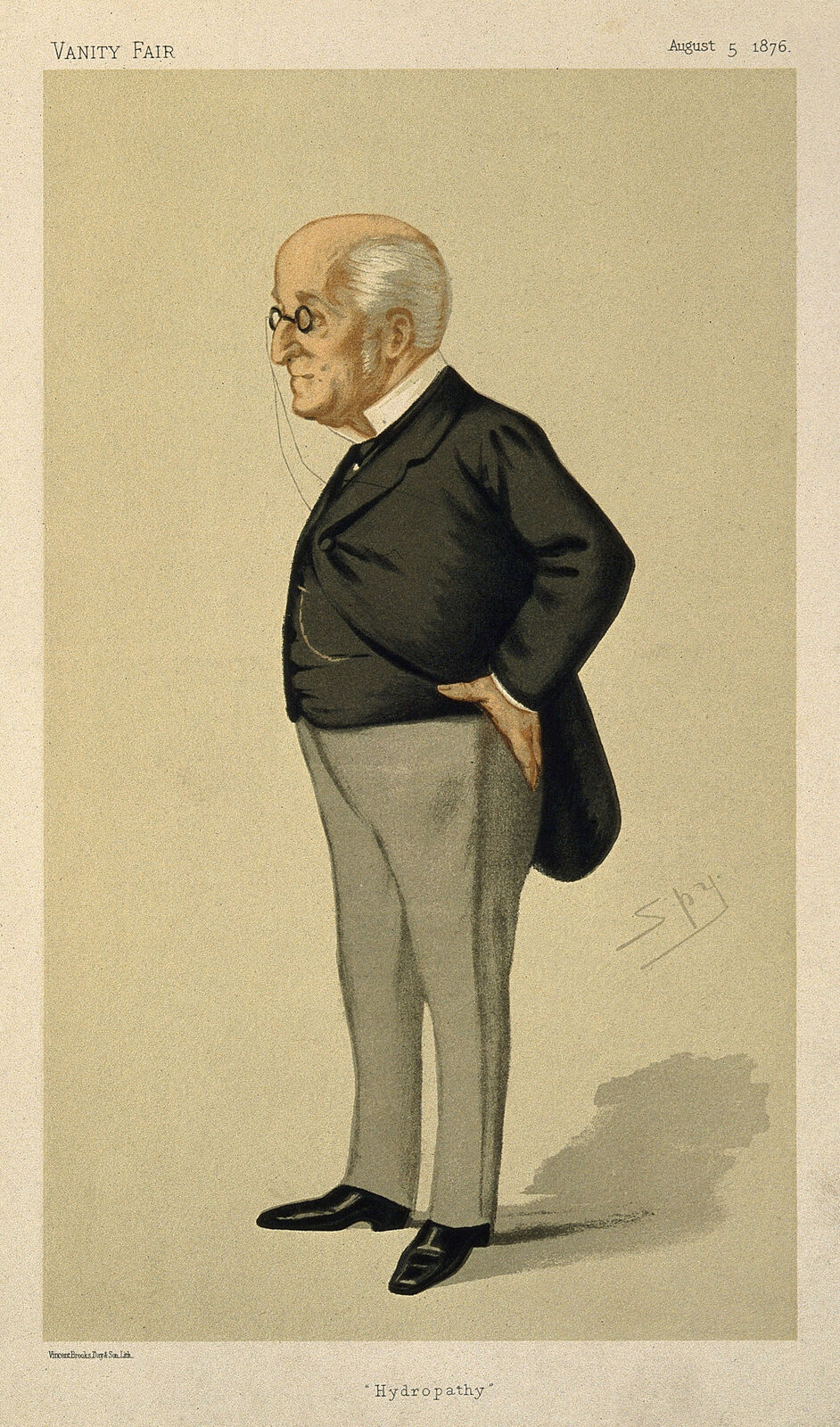
A doctor who declared war on his own profession
In March 1849, Charles Darwin — already ill for over a decade with unexplained vomiting and stomach pain that left him unable to work one day in three — travelled from Kent to a Worcestershire hillside town to put himself under the personal care of a physician who had renounced the orthodox pharmacy. Within days he reported real improvement; within a month he had gone a rare stretch without vomiting, and within sixteen weeks he considered his health substantially restored (Ullman, 2009). The physician was James Manby Gully (1808-1883), born in Kingston, Jamaica, the son of a coffee planter, trained in medicine at Edinburgh and at the École de Médecine in Paris under Dupuytren, taking his Edinburgh M.D. in 1829 and establishing himself as a physician in London from 1830 (Dictionary of National Biography). Around 1837 he and a fellow physician, James Wilson, agreed that the era’s routine of bleeding and heavy drugging was ineffective and potentially harmful (DNB). When Wilson returned from Silesia in 1842 convinced of Vincenz Priessnitz’s cold-water cure, the two men chose Malvern: Wilson opened his practice in June 1842, and Gully followed in October, at Tudor House (Price, 1981, p. 273). Gully proved the more commercially successful of the two, and over the following three decades his patients came to include the poet Alfred Tennyson (1847), Darwin (1849), and the essayist Thomas Carlyle (1851) (Price, 1981, p. 276).
Tudor House, Holyrood House, and the price of the cure
Gully’s patients did not visit for a treatment; they moved in. Men lodged at Tudor House and, once Gully opened a second establishment, women at Holyrood House, both under his personal supervision for weeks or months at a stretch (Price, 1981, p. 273; DNB). Darwin brought his wife Emma and their children and stayed three months on his first visit in 1849, then returned repeatedly through the following years (Ullman, 2009). The regimen was not a casual or occasional expense: 1840s Malvern rates ran 4 to 5 guineas a week, on top of 2 shillings 6 pence to the bath attendants, with a further 2-guinea fee for Gully’s own initial consultation (Marland & Adams, 2009) — a substantial outlay for the period, restricted in practice to patients who could sustain a lengthy residential stay, though the record here does not establish that anyone was formally turned away on grounds beyond ability to pay. What was scarce was less the water than sustained time in the presence of the physician himself: Gully’s own 1863 popular manual was written, by his account, because patients wanted to keep following his method once they had left his personal supervision (Marland & Adams, 2009).
The ganglionic nervous system: Gully’s answer to “why water”
Priessnitz, the untrained Silesian peasant who inspired Wilson and Gully, offered no mechanism beyond a morbid matter that a bodily crisis of boils, diarrhoea, or fever was supposed to expel. Gully, a university-trained physician, wanted a more scientific-sounding answer, and supplied one in his 1846 book, The Water Cure in Chronic Disease. He took the vis medicatrix naturae, the body’s own healing force, as axiomatic, and proposed that it acted through the ganglionic nervous system, centred in the viscera. Treatment worked in two stages: first negative, withdrawing orthodox drugs, alcohol, and other irritants; then positive, applying water externally and internally to influence the ganglionic system through the skin and thereby improve the distribution and quality of the blood (Price, 1981, p. 276). Like Wilson, Gully eventually dropped Priessnitz’s insistence on provoking an acute crisis as unnecessary (Price, 1981, p. 277). Reviewing this theory in 1981, the medical historian Robin Price judged that Gully’s mechanism rested on assumptions modern medicine would regard as scientifically, though not necessarily pragmatically, unjustifiable (Price, 1981, p. 276). Gully supplemented the water cure with small doses of homeopathic medicine for some patients, Darwin among them, who privately doubted that component even while crediting the water cure itself for his own recovery (Ullman, 2009).
Guineas by the week, sold by a critic of medicine-for-profit
Gully built his practice partly on attacking the medical establishment’s financial motives. In his 1846 book, he wrote that no financial interest in the sale of drugs could suppress the truth that the body itself supplies its own agent of restoration, and that medical art only assists that agency (paraphrased from the passage quoted in Price, 1981, p. 276). Yet the establishment he ran to deliver that message charged sustained, premium fees: 4 to 5 guineas a week plus attendants’ charges and a 2-guinea consultation, levied on a clientele of wealthy patients to whom, the historians Hilary Marland and Jane Adams record, he chiefly administered expensive regimes of treatment (Marland & Adams, 2009). Marland and Adams conclude that, despite Gully’s public criticism of orthodox medicine for exploiting patients, his Malvern practice did not center on treating the poor or democratizing the water cure, but instead chiefly administered expensive regimes of treatment to wealthy patients. Attendants, lodging staff, and, after Holyrood House opened, a second establishment’s overheads also drew on the receipts, so Gully was not the sole beneficiary of every pound spent at Malvern — but of the rates the sources record, it is the 2-guinea initial consultation that Marland and Adams tie to Gully himself, and every patient arrived under his own continuing supervision.
What cured Darwin, and what Gully could not promise
The most complete modern verdict on Gully’s system comes from Robin Price’s 1981 peer-reviewed history of English hydropathy in Medical History. Price’s overall assessment attributes the regimen’s real successes to lifestyle factors — fresh air, exercise, a simple diet, and a regular life — the very factors contemporary critics such as the Lancet identified between 1842 and 1852 — rather than to any demonstrated curative action of cold water on the ganglionic nervous system (Price, 1981, p. 279). No controlled study validating Gully’s mechanism or the broad disease-curing claim built on top of it appears in the historical record Price surveys.
Gully’s prognoses did not always hold. In April 1851, Darwin brought his eldest daughter Annie, then ten, to Malvern to consult Gully; Gully predicted she would recover. She died there at midday on 23 April 1851, with Emma Darwin, too heavily pregnant to travel, unable to be at her side (Darwin Correspondence Project; Ullman, 2009). There is no record of what treatment, if any, she received during that final illness (Ullman, 2009). Darwin himself went on crediting the water cure for his own earlier relief, but the record holds both outcomes side by side: a recovery he attributed to Gully’s regimen, and a confident recovery prognosis for his own daughter that did not hold.
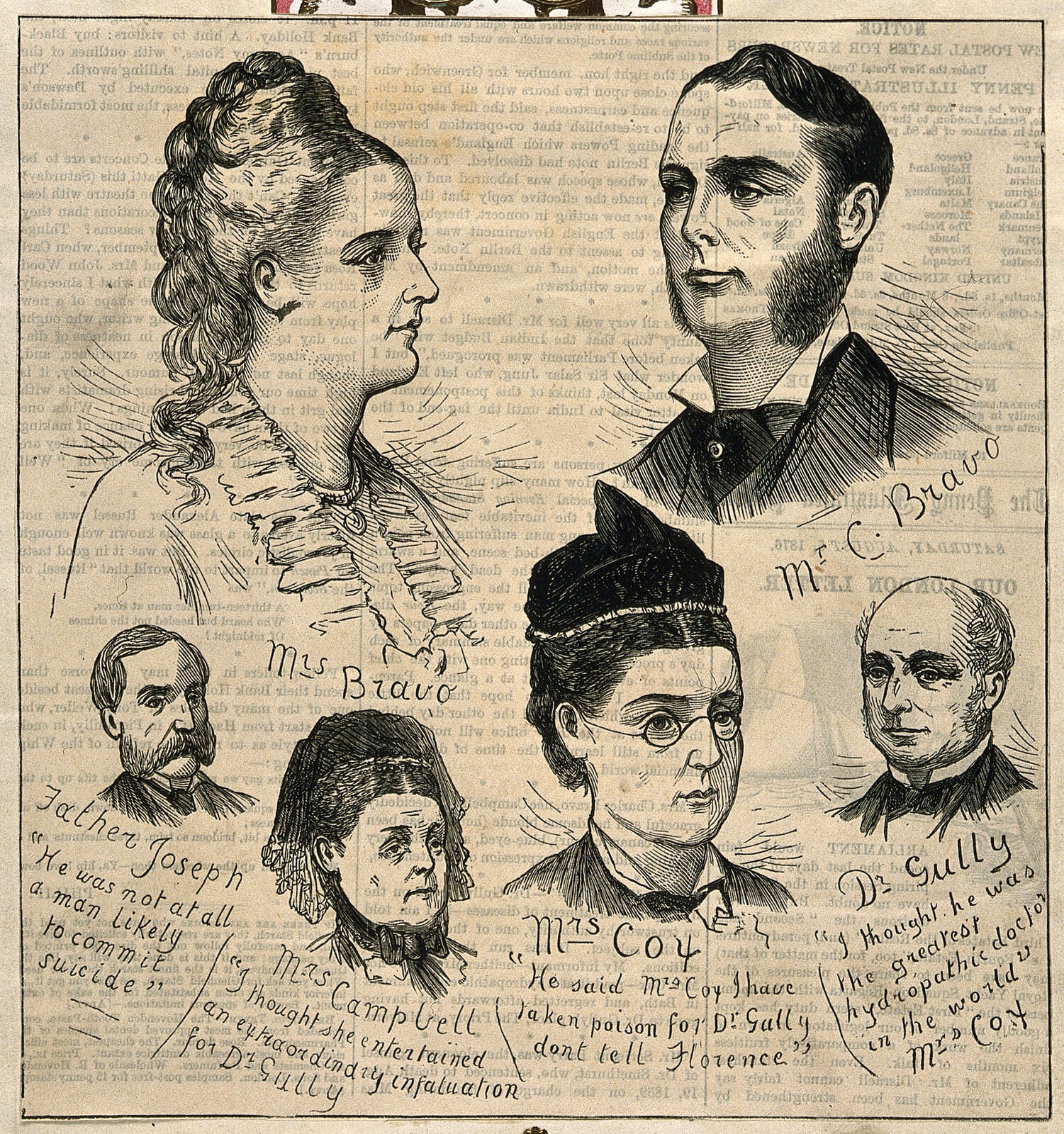
Gully’s own standing collapsed in public disgrace rather than clinical refutation. He resigned his Malvern practice to his partner William T. Fernie in 1872 (DNB). Four years later, his name surfaced repeatedly at the 1876 inquest into the poisoning death of the barrister Charles Bravo, after disclosures of Gully’s earlier affair with Bravo’s widow, Florence; the DNB records that the revelations severely damaged his reputation, and that at the inquest’s conclusion his name was struck from every medical society and journal of the day. He died in 1883, his standing in British medicine never restored — a fall driven by personal scandal, not by any formal disconfirmation of the water cure itself, which by then already rested on assumptions a later historian would call scientifically unjustifiable.
The pattern repeats
The same structural machinery appears in different treatments and eras. These cases show the claimed mechanism and how the claim met evidence.
The cold-water cure (Gräfenberg hydropathy)
Kneipp Cure (hydrotherapy, herbalism, and the 'five pillars')
More related cases · 5
Part of the lineage
External references
Evidence · 10 sources
- Hydropathy in England 1840-70 (1981)
- Gully, James Manby (1890)
- Hydropathy at Home: The Water Cure and Domestic Healing in Mid-Nineteenth-Century Britain (2009)
- The Death of Anne Elizabeth Darwin (1851)
- The Curious Case of Charles Darwin and Homeopathy (2009)
- A Prospectus of the Water Cure Establishment at Malvern: Under the Professional Management of James Wilson and James M. Gully (1843)
- Hydropathy; or, The Cold Water Cure, as practised by Vincent Priessnitz, at Graefenberg, Silesia, Austria (1842)
- Unternehmensgeschichte (Company History) (2026)
- James Manby Gully. Coloured lithograph after Sir L. Ward [Spy], 1876 (1876)
- James Manby Gully. Wood engraving (1876)