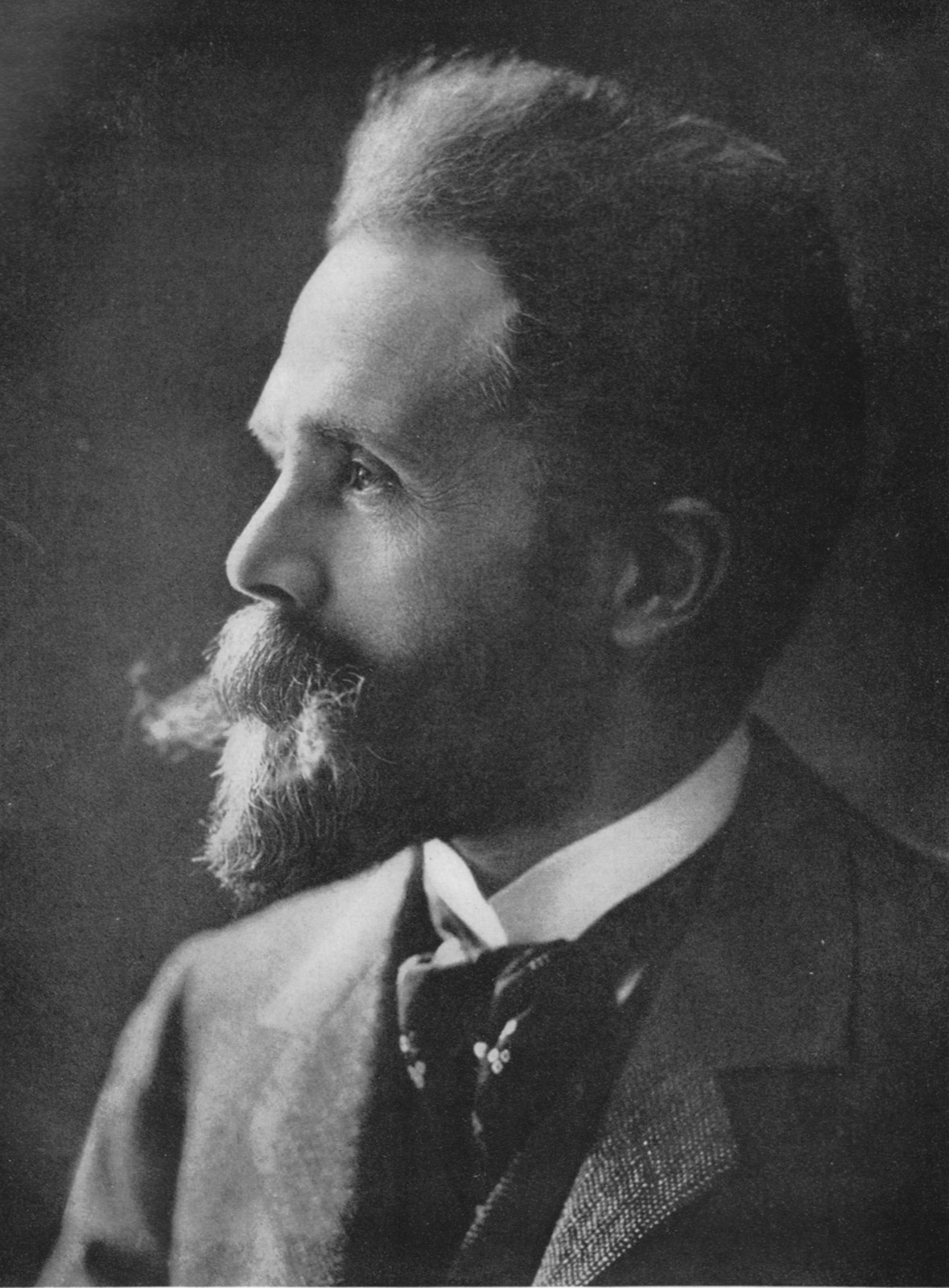
Heinrich Lahmann
Heinrich Lahmann (born 30 March 1860 in Bremen; died 1 June 1905 at Friedrichstal near Radeberg, outside Dresden) was a German physician who abandoned an early course of civil-engineering study for medicine (Greifswald, Munich, Leipzig, Heidelberg), briefly practiced in Stuttgart, then directed a naturopathic institute in Chemnitz before moving to Dresden in 1887 (Deutsche Biographie; GND authority record). On 1 January 1888 he opened his own “Physiatrisches Sanatorium” at Weisser Hirsch, a spa suburb of Dresden, with ten initial staff (Stadtwiki Dresden). It grew rapidly: over 2,000 patients were treated there in 1900 alone, and it is described in the peer-reviewed history-of-medicine literature as the leading sanatorium in the spa town of Weisser Hirsch at Dresden (Beer, Uehleke & Wiebelitz, Evidence-Based Complementary and Alternative Medicine, 2013).
Lahmann’s authority rested on a single theoretical claim, stated in his own 1891 book: that faulty diet produces an abnormal (“dyscrasic”) composition of the blood, which in turn corrupts the composition of every body tissue, and that this “dietetic blood dyscrasia” is the fundamental cause of essentially all disease (Lahmann, 1891). He commissioned the chemist Ragnar Berg to study mineral metabolism in his own laboratory in support of the theory (Stadtwiki Dresden), and built a full regimen around it: a low-salt, largely vegetarian, mineral-rich diet; systematic hydrotherapy; and the “airbath,” prescribed sun-and-air exposure meant to harden the body, first laid out in 1898 and later issued in English translation in 1901 (Deutsche Biographie; Lahmann, 1901). He also designed and sold his own reform clothing, the loose-weave, all-cotton “Dr. Lahmann-Unterkleidung,” on the claim that conventional tight garments were themselves a disease-producing agent (Deutsche Biographie).
The theory did not survive him. Modern medical-historical assessment (Stadtwiki Dresden, quoting a “now outdated view”) places the monocausal blood-dyscrasia doctrine outside accepted medicine, which by Lahmann’s own lifetime was moving toward the germ theory and laboratory-based etiologies his system did not incorporate. eventual_status is recorded as quietly_faded rather than publicly_disconfirmed: no single decisive refutation or regulatory action ended Lahmann’s system in his lifetime (he died in 1905, still directing the sanatorium); the blood-dyscrasia theory instead lost currency gradually as bacteriology and nutritional biochemistry advanced, while parts of the regimen (diet, exercise, fresh air) were absorbed into ordinary health advice without the theory that had been built to explain them.