Chiropractic (vertebral subluxation adjustment)
In 1895 D.D. Palmer said he cured a janitor's deafness with a spinal adjustment, then described chiropractic as knowledge for "the prolonging of life": an unseen 'Innate Intelligence' maintains health, while a misaligned vertebra blocking it causes disease. A 2009 review found the theory fails causation tests; a 2021 review found no benefit for the disorders it studied. Researchers still debunk chiropractic immune-boosting claims.
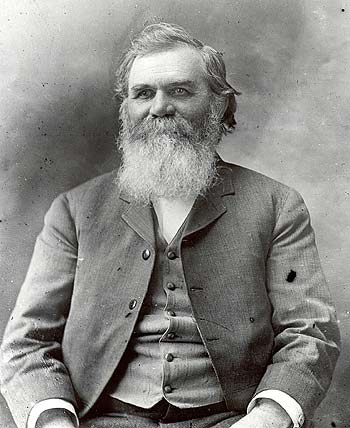
A slap on the back, a discovery for the ages
On 18 September 1895, in his office at the corner of Second and Brady Streets in Davenport, Iowa, a magnetic healer named Daniel David (D.D.) Palmer examined the spine of the building’s janitor, Harvey Lillard, who had been deaf for seventeen years (Batinić et al. 2013). Palmer found what he described as a displaced vertebra, adjusted it, and afterward said Lillard’s hearing had returned. Lillard’s daughter later gave a different account: Palmer had simply slapped her father on the back after telling him a joke, and his hearing improved only in the days that followed (Wikipedia, “D. D. Palmer”). Palmer called the episode the discovery of chiropractic.
Palmer was not a physician. Before Davenport he had worked as a beekeeper, schoolteacher, and grocer, and from the mid-1880s he supported himself as a magnetic healer in Burlington and Davenport; a contemporary 1894 Davenport newspaper article called him “a crank on magnetism” and “a quack” (Wikipedia, “D. D. Palmer”). From the Lillard episode he built a general theory of disease and, in 1897, the Palmer School of Chiropractic in Davenport to teach it, charging a fee (Wikipedia, “D. D. Palmer”; EBSCO Research Starters 2023). His own authority rested on the same claim his school sold: that he had discovered the true cause of disease, and could teach others to find and remove it.
An intelligence you cannot measure
Palmer’s mechanism had two parts, and in the sources reviewed here neither was operationalized as something a second observer could independently verify. The first was “Innate Intelligence,” which Palmer described in his own words as a segment of that Intelligence which fills the universe — an organizing, healing force he held flows through the nervous system and maintains the body (Brown 2010). The second was the “subluxation”: a vertebra out of its proper place, pinching or obstructing that flow of Innate Intelligence and, in Palmer’s theory, thereby causing disease. He framed it in terms of nerve “tone,” writing that the cause of disease is any variation of tone — nerves too tense or too slack (Brown 2010). Correcting the subluxation by manual adjustment was, in his claim, not a treatment for back pain specifically but the cure for disease generally: the secondary chiropractic-history literature characterizes Palmer as having held that vertebral subluxation was the sole cause of all disease, and manipulation the cure for all disease of the human race (Wikipedia, “Chiropractic controversy and criticism”).
Palmer explicitly tied this mechanism to a longevity promise, describing chiropractic as systematized knowledge for “the prolonging of life” (Brown 2010).
Neither Innate Intelligence nor the subluxation it supposedly protected was defined, in the sources reviewed here, in a way that could be measured, counted, or falsified independently of a chiropractor’s own manual palpation. A 2009 peer-reviewed epidemiological review tested the subluxation construct directly against Sir Austin Bradford Hill’s classic criteria of causation — the standard tool epidemiologists use to ask whether a proposed cause actually produces a proposed effect — and found a significant lack of evidence to fulfill the basic criteria of causation, concluding that the construct has no valid clinical applicability to any disease process (Mirtz et al. 2009). Modern reform-minded chiropractors have reached a similar conclusion from inside the profession: the secondary literature quotes reform chiropractor Lon Morgan, DC, describing Innate Intelligence as untestable and unverifiable, an old holdover from an era of limited scientific understanding (Wikipedia, “Chiropractic controversy and criticism”).
The only two students, and the only cure
Palmer did not merely treat patients; he charged others to learn how. His first chiropractic course, taught at his own Palmer School of Magnetic Cure in Davenport, admitted only two students and charged each of them $500 — a very large sum for the time (Batinić et al. 2013). His clinical practice, run from a 40-bed infirmary in downtown Davenport, grew alongside the school: his documented annual income rose from roughly $700 in 1887 to $9,276 by 1898, a more than twelvefold increase in eleven years, equivalent to roughly a quarter of a million 2012 dollars by the cited authors’ own inflation adjustment (Batinić et al. 2013). Palmer was, by his own account, an efficient promoter as well: he reported spending less than $150 total on tens of thousands of circulars, cards, signs, and brochures advertising his cure (Batinić et al. 2013).
In 1906 Palmer was convicted in Iowa of practicing medicine without a license. Rather than pay the fine, he chose jail, telling a reporter that he was not in a cell for lack of principal, but for an abundance of principle (Brown 2010). Soon afterward he sold his interest in the Davenport school to his son, B.J. Palmer, and went on to found further chiropractic schools in California, Oregon, and Oklahoma before his death in 1913 (EBSCO Research Starters 2023). The characterization here is limited to what these sources document: a fee-charging clinic and a chain of schools also paid staff, landlords, and, after 1906, his son and later co-founders, so the conflict named is Palmer’s own enrichment from his practice and his schools, not his exclusive command of chiropractic’s income.
Still practiced, still being debunked
Palmer’s central claim, as the sources document it, was not a claim about back pain. It was a claim about disease in general — infection, deafness, “any disease” — cured by correcting a mechanical fault in the spine. That claim has not held up. Beyond the 2009 finding that the subluxation construct fails basic epidemiological tests of causation (Mirtz et al. 2009), the specific modern version of Palmer’s claim — that manipulating the spine has a physiological effect reaching organs and systems beyond the musculoskeletal frame — was tested directly in 2021. An international Global Summit of 50 researchers from 8 countries, with 28 observers from 18 chiropractic organizations, systematically reviewed six randomized clinical trials (534 participants in total) of spinal manipulative therapy for non-musculoskeletal disorders. Their conclusion: they found no evidence of an effect of SMT for the management of non-musculoskeletal disorders including infantile colic, childhood asthma, hypertension, primary dysmenorrhea, and migraine, a finding they said challenges the validity of the theory that treating spinal dysfunctions with SMT has a physiological effect on organs and their function (Côté et al. 2021). Six of the fifty Summit researchers declined to approve the final report.
Chiropractic did not fade after these findings, the way many of the interventions in this archive did. The school Palmer founded remains active today: its official website advertises Doctor of Chiropractic education and chiropractic clinics (Palmer College of Chiropractic, 2026), while a separate institutional account reports its accreditation and 2025 endowment of $87.85 million (Wikipedia, “Palmer College of Chiropractic”). A 2003 profession-wide survey found that most chiropractors, “straights” and “mixers” alike, still hold views of the cause and cure of disease “consistent with those of the Palmers” (Wikipedia, “Chiropractic controversy and criticism”). A distinct present-day operator, the International Chiropractors Association, published a revised immune-function report during the COVID-19 pandemic (International Chiropractors Association, 2020). Over 150 researchers from 11 countries then reviewed and endorsed a statement rejecting the association’s claim as pseudoscientific, finding no valid clinical scientific evidence that chiropractic care can impact the immune system, and naming the association’s use of unconnected basic-science studies and anecdotal illness reports as recognized pseudoscience warning signs (Côté et al. 2020). More than a century after a janitor’s contested hearing-cure story, the profession Palmer built is still being asked, by its own researchers, to stop making the same kind of claim he made first.
The pattern repeats
The same structural machinery appears in different treatments and eras. These cases show the claimed mechanism and how the claim met evidence.
Homeopathy (Hahnemann's system of medicine)
Animal magnetism (mesmerism)
Magnetic somnambulism (artificial somnambulism)
More related cases · 2
Part of the lineage
Evidence · 13 sources
- Daniel David Palmer, portrait photograph (undated) (2008)
- The Chiropractor (1914)
- Daniel David Palmer (2023)
- D. D. Palmer (Wikipedia) (2026)
- Chiropractic controversy and criticism (Wikipedia) (2026)
- Palmer College of Chiropractic (Wikipedia) (2026)
- Palmer College of Chiropractic homepage (2026)
- Immune Function and Chiropractic — What Does the Evidence Provide? — Revised (2020)
- Old Dad Chiro: his thoughts, words, and deeds (2010)
- Did American social and economic events from 1865 to 1898 influence D.D. Palmer the chiropractor and entrepreneur? (2013)
- An epidemiological examination of the subluxation construct using Hill's criteria of causation (2009)
- The global summit on the efficacy and effectiveness of spinal manipulative therapy for the prevention and treatment of non-musculoskeletal disorders: a systematic review of the literature (2021)
- A united statement of the global chiropractic research community against the pseudoscientific claim that chiropractic care boosts immunity (2020)