METHUSELAH ARCHIVE CASES / HAZZARD-FASTING-CURE-1908-1935
Archive case

The Hazzard Fasting Cure

No medical degree, but a Washington license naming her a "Fasting Specialist" let Linda Burfield Hazzard call herself Doctor and starve patients as treatment.
subjectLinda Burfield Hazzard active1908–1935 ● disconfirmed outcomepublicly disconfirmed

Linda Burfield Hazzard held a Washington "Fasting Specialist" license with no medical degree, called herself Doctor, and promised that withholding food purged the impurities behind disease. At her Olalla sanitarium, which locals named "Starvation Heights," paying patients were starved while she took their land and inheritance. The Washington State Archives records at least fourteen deaths under her care, 1907 to 1913; the starvation of heiress Claire Williamson brought a 1912 manslaughter conviction.
The recurring five-stage cycle
01
Charismatic practitioner
No medical degree, but a Washington license naming her a "Fasting Specialist" let Linda Burfield Hazzard call herself Doctor and starve patients as treatment.
02
Exclusive access
Paying patients were confined at the Olalla sanitarium, "Starvation Heights," cut off from family and outside doctors once the fast had weakened them.
03
Vague mechanism
A blood-impurity and auto-intoxication doctrine holding that withholding food lets the body eliminate impurities until health returns.
04
Financial conflict
Beyond fees and book sales, she took land, inheritance, and power of attorney from patients as they starved under her supervision.
05
Disconfirmation / collapse
A 1912 manslaughter conviction and lost license after Claire Williamson's death; at least fourteen starvation deaths, 1907 to 1913.
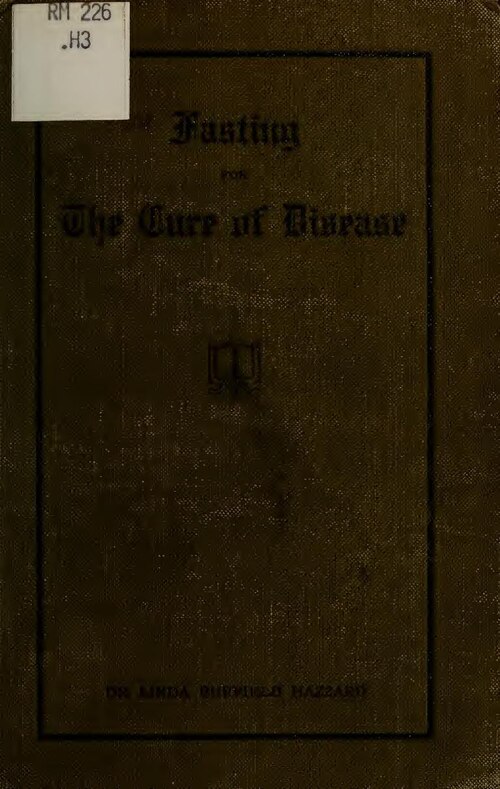
Dark cloth book cover lettered in blackletter 'Fasting for The Cure of Disease' with 'Dr. Linda Burfield Hazzard' at the foot, a small open-book device at center, and a Library of Congress call-number sticker reading RM 226 .H3 at the top left.
FIG 1 Front cover of the 1908 first edition of Fasting for the Cure of Disease by Dr. Linda Burfield Hazzard (Seattle: Harrison Publishing Co.). The Library of Congress copy, with its call-number sticker (RM 226 .H3). Internet Archive scan via Wikimedia Commons, public domain. (1908) PUBLIC DOMAIN source

A license that said Doctor

A Washington license called Linda Burfield Hazzard (1867-1938) a ‘Fasting Specialist’, and she did not hesitate to call herself Doctor. She had little formal training and no medical degree; the license came through a loophole that grandfathered in alternative practitioners (Washington State Archives; Smithsonian Magazine). Her authority rested on that one word, on personal conviction, on her 1908 book Fasting for the Cure of Disease, and on her training with the fasting advocate Dr. Edward Hooker Dewey, with whom she had studied before moving to Washington in 1907 (Washington State Archives).
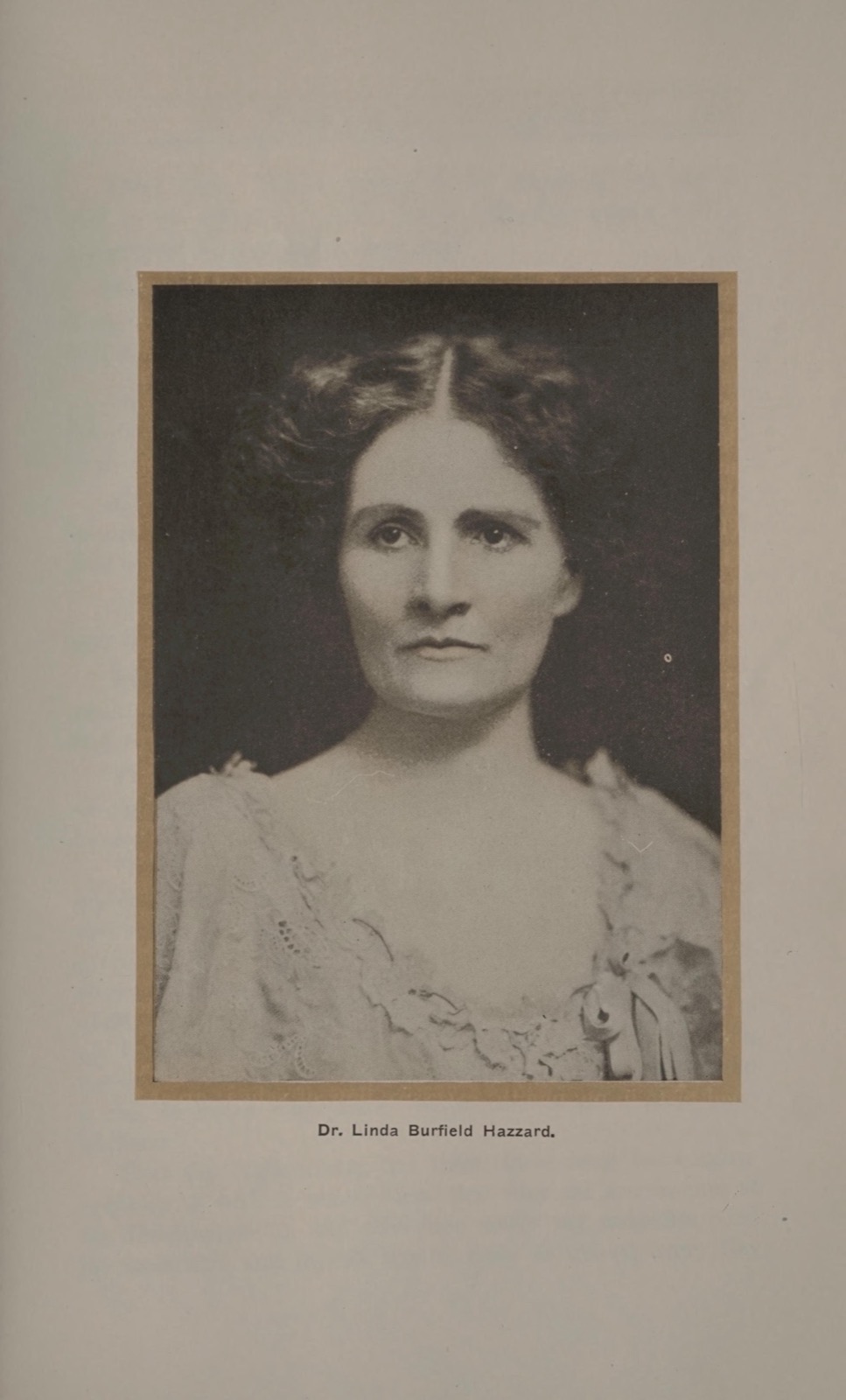
Studio bust portrait of a woman in a light embroidered dress, her dark hair parted in the center and waved, printed below with the caption 'Dr. Linda Burfield Hazzard' on a 1920 encyclopedia plate.
FIG 2 Dr. Linda Burfield Hazzard, reproduced in volume 3 of Macfadden's Encyclopedia of Physical Culture (New York: Physical Culture Publishing Company, 1920). Via Wikimedia Commons, public domain. (1920) PUBLIC DOMAIN source

Inside Starvation Heights

Access took the form of residential confinement at Hazzard’s fasting sanitarium at Olalla, in Kitsap County, which locals came to call ‘Starvation Heights’. Patients paid to be supervised through fasts lasting days to weeks, isolated from family and from outside medical opinion; the wealthy came from a distance, including the British heiresses Claire and Dorothea Williamson, who came to her in 1911. The exclusivity was the supervised, fee-based confinement itself: once a patient was inside the regimen, weakened and cut off, the practitioner’s authority over food, correspondence, and money went largely unchecked.

A coated tongue counted as proof

The mechanism, set out in the 1908 book, was that disease is the body’s effort to cast out impurities that have accumulated in the blood, that auto-intoxication is the underlying harm, and that withholding food lets elimination proceed until natural health returns. There was no measurement and no defined endpoint: progress was read from surrogate and subjective signs, weight loss, a coated tongue and other discharges interpreted as impurities leaving the body, and the patient’s sense of being cleansed. The step from these signs to ‘cure’ was asserted, not demonstrated, and the same blood-impurity logic had been sold by James Morison three generations earlier.

Starved of food and of money

Hazzard charged for residential treatment and sold the book that prescribed it, and she profited from patients beyond their fees. The Washington State Archives records that some patients turned over land, inheritance, or power of attorney to her before they died. In the Williamson case the prosecution described a parallel ‘financial starvation’: forged checks and letters that drained Claire Williamson’s estate while she was being starved (Smithsonian Magazine). The conflict is stated as the records support it. A residential operation also paid for premises, staff, and supplies, so the point is not that Hazzard was the only party who profited but that she took direct financial control of patients who were in her care and physically failing.

A body count a court could read

The regimen did not cure; it starved. The Washington State Archives records that at least fourteen patients in Washington died of starvation under Hazzard’s direct care between 1907 and 1913. The 1911 death of Claire Williamson, whose sister Dorothea survived the same treatment and testified, produced a prosecution in Kitsap County: Hazzard was arrested on August 15, 1911, and on February 7, 1912 she was convicted of manslaughter and sentenced to two to twenty years, surrendering to the penitentiary at Walla Walla in December 1913, with her medical license revoked (Washington State Archives; Smithsonian Magazine). The disconfirmation here is not a quiet failure to replicate but criminal conviction and a body count. Hazzard herself died in 1938 (HistoryLink).
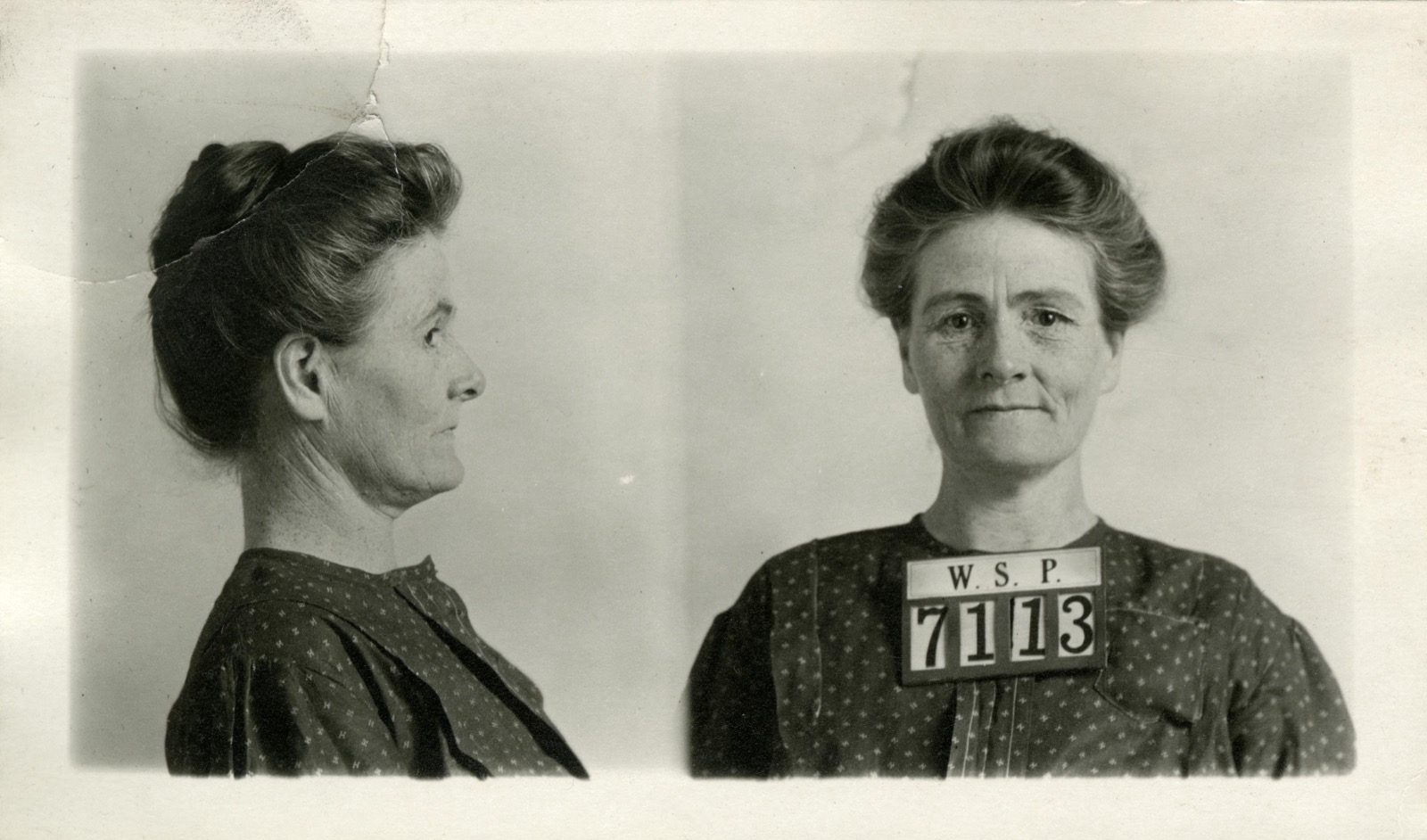
Two-panel penitentiary mug shot, left profile and front view, of a woman in a patterned dress with her hair up, wearing a placard reading 'W.S.P. 7113'; captioned as Linda Burfield Hazzard, 1913.
FIG 3 Washington State Penitentiary admission mug shot of Linda Burfield Hazzard, 1913, taken when she entered the penitentiary at Walla Walla after her manslaughter conviction. The placard reads W.S.P. 7113. Washington State Archives, via Wikimedia Commons, public domain. (1913) PUBLIC DOMAIN source

Notes

Linda Burfield Hazzard (1867-1938) had studied with the fasting advocate Dr. Edward Hooker Dewey and, after moving to Washington in 1907, was licensed by the state as a “Fasting Specialist” through a loophole that grandfathered in alternative practitioners; she had no medical degree but called herself Doctor (Washington State Archives; Smithsonian Magazine). In 1908 she set out her method in Fasting for the Cure of Disease, published at Seattle by the Harrison Publishing Company and held by the Library of Congress (LCCN 09031446). Its argument is the one that organizes the case: disease is the blood encumbered with impurities, the body manifests illness as an effort to expel them, auto-intoxication is the harm, and the cure is to stop eating so elimination can run its course.

What this produced in practice was a residential fasting sanitarium at Olalla, in Kitsap County, that locals came to call “Starvation Heights.” Patients paid to be confined and supervised through fasts lasting days to weeks, taking water and thin vegetable broth, with enemas and massage, while their progress was judged by surrogate signs: weight lost, a coated tongue, discharges read as impurities leaving the body, and the patient’s own sense of being cleansed. None of this is a measured endpoint, and no cure was demonstrated. The regimen belongs to the autointoxication-and-elimination tradition documented elsewhere in this archive, the blood-impurity doctrine James Morison sold as the Hygeian pills, the intestinal-toxin theories Kellogg and Metchnikoff worked in the same years, and the internal-cleansing pitch of Tyrrell’s J.B.L. Cascade.

The financial pattern ran alongside the clinical one. Hazzard charged for treatment and sold the book that prescribed it, and she took direct control of patients’ assets: the Washington State Archives records that some patients turned over land, inheritance, or power of attorney to her before they died. In 1911 two wealthy British sisters, Claire and Dorothea Williamson, entered her care. Claire died that year, reduced by the fast; the prosecution would later describe a “financial starvation” of forged checks and letters that drained her estate while she was being physically starved (Smithsonian Magazine). Dorothea, who survived, testified against Hazzard.

The disconfirmation was not a failure to replicate but a criminal trial. The Washington State Archives records at least fourteen deaths from starvation under Hazzard’s direct care in Washington between 1907 and 1913. Hazzard was arrested on August 15, 1911, tried in Kitsap County for the death of Claire Williamson, and on February 7, 1912 convicted of manslaughter and sentenced to two to twenty years; she surrendered to the penitentiary at Walla Walla in December 1913 and her medical license was revoked. She died in 1938 (HistoryLink). The claim that fasting cures chronic and organic disease was not merely insufficient but refuted by its own results, and the case stands as the point where the surrogate logic of the cleansing regimen, weight and discharge taken for cure, produced deaths a court could count.