Grahamism (the Graham system of diet and hygiene)
Sylvester Graham, a Presbyterian minister with no medical training, told 1830s America that meat, spices, alcohol, and even marital sex overstimulated the nerves and caused disease, insanity, and premature death; a bland diet of coarse whole-wheat bread and cold water was the cure. His masturbation-insanity theory helped provoke riots at his own lectures. He died in 1851, aged only fifty-seven.
The minister who diagnosed a civilization
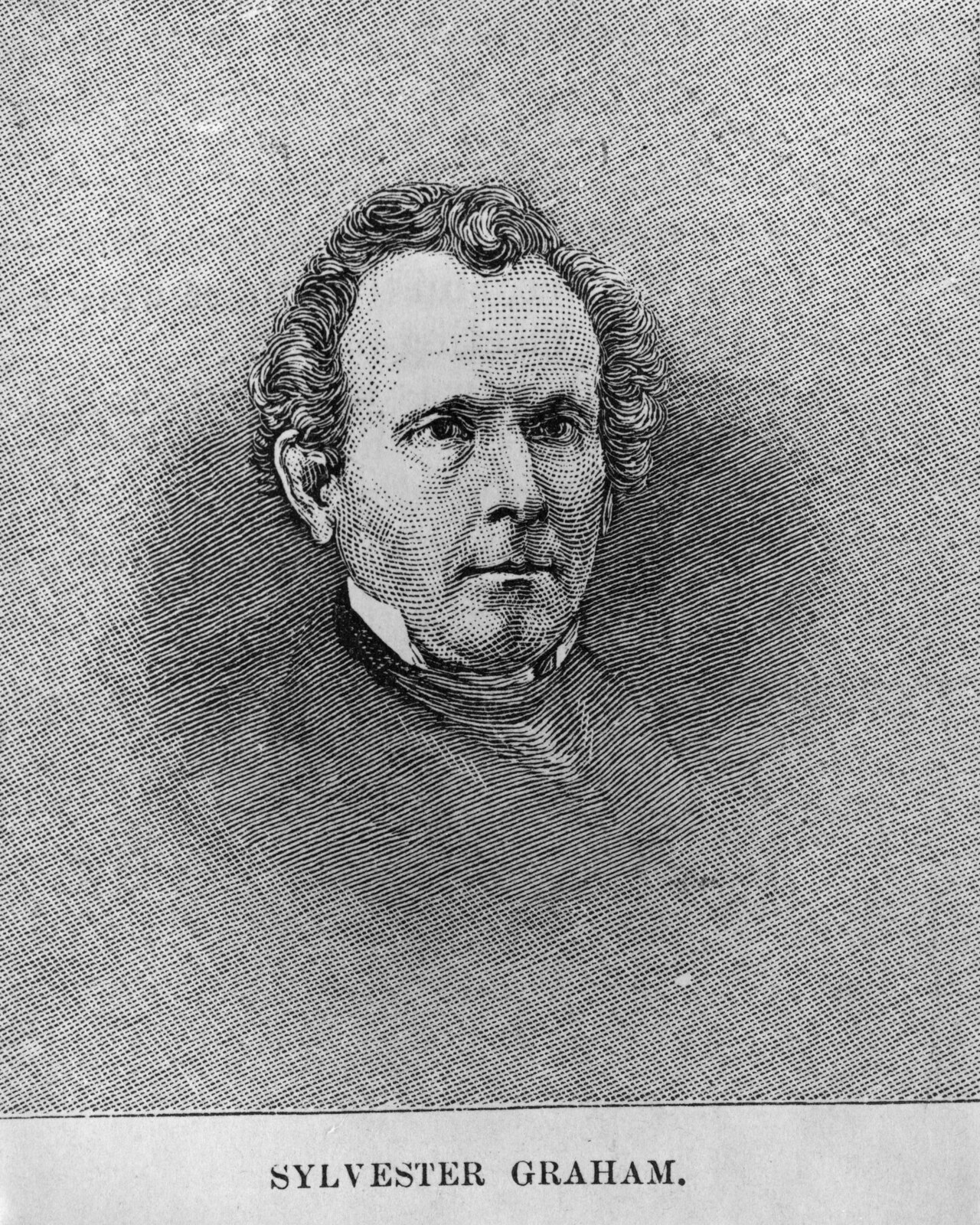
In 1830, a thirty-five-year-old Presbyterian minister named Sylvester Graham (1794-1851), recently and unhappily out of the pulpit, took a paid post as a lecturing agent for the Pennsylvania Temperance Society (Shryock 1931). He had no medical training. Within months he had stopped talking only about liquor and started talking about everything: meat, spices, coffee, tea, tobacco, white bread, and sex, all folded into a single theory of disease. When cholera swept New York City in 1832, Graham was ready with an answer nobody in orthodox medicine could yet give — he lectured that temperance and a plain vegetable diet were the real defense against the epidemic, and the terrified crowds who could get nothing better from their physicians made him a national figure (Shryock 1931). He spent the rest of his working life, roughly two decades, as an independent lecturer and author, drawing on no credential but his own system and his own recovered health.
A lecture so dangerous it needed a locked door
Most of Graham’s material was sold to anyone who would buy a ticket or a book, but his single most explosive offering was deliberately restricted: the “Lecture to Mothers,” a women-only talk on sexual physiology and the dangers of masturbation. Historian April Haynes’s study of the episode, the best-documented scholarly account of the disturbances that followed Graham around the Northeast in the 1830s, describes a lecture that was delivered only three times — and that provoked a riot on all three occasions, beginning in Portland, Maine in 1834 and recurring in other Northeastern cities through 1837, including Boston (Haynes 2015). The trigger was not primarily the price of bread, whatever contemporary newspapers speculated; it was the content of a lecture that put explicit sexual instruction and equal moral authority in front of a female audience, and men who considered that content improper turned out in numbers to stop it. The restriction — women only, delivered rarely, defended when attacked — is what made the lecture a spectacle rather than an ordinary pamphlet topic, and it is the closest thing in this case to the archive’s usual pattern of paywalled or gated access to a cure.
Every twinge of pleasure, a step toward the grave
Graham’s medical theory, which historians now call “excitability,” held that the human nervous system had a natural, low level of activity suited to plain food and quiet living, and that anything which stimulated it beyond that level — meat, condiments, alcohol, coffee, tea, tobacco, rich food, and above all sexual excess — produced disease by a kind of nervous overload that could pass from the affected organ into the whole body (Whorton 2001). Marital intercourse itself was rationed in his system to no more than about once a month for full health; every other outlet was worse. The most severe application of the theory was to masturbation, which Graham held to be more damaging than partnered sex because the solitary habit began earlier, recurred more often, and fed on fantasy rather than a real partner — a chain of “abuses” he wrote would end in mental decay and, ultimately, insanity (Whorton 2001). None of this rested on clinical observation or controlled comparison. It rested on a moral premise — that pleasurable sensation was inherently suspect and that anything immoral had to be unhealthful — dressed in the vocabulary of contemporary nerve physiology.
The prophet paid by the system he alone certified
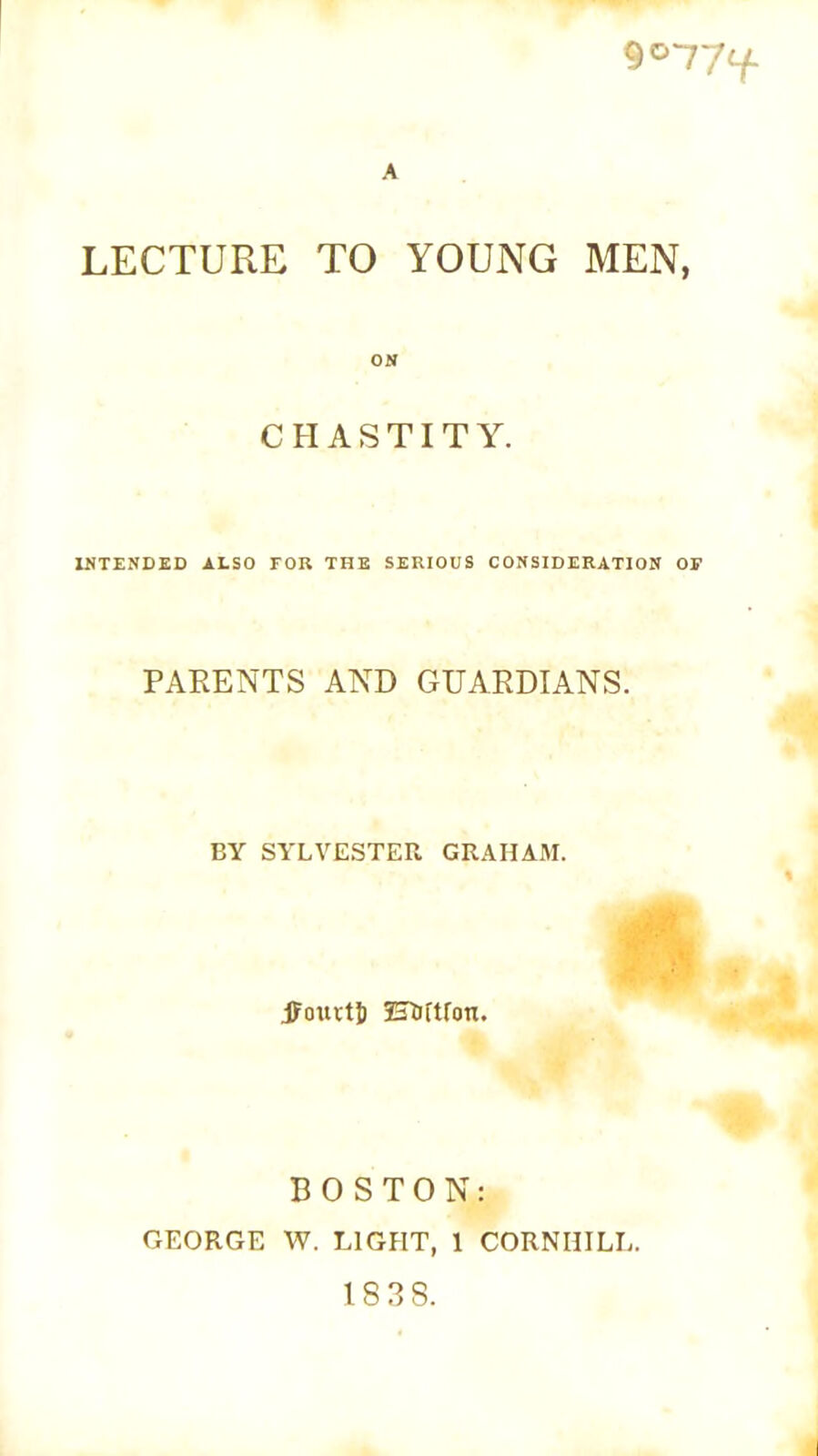
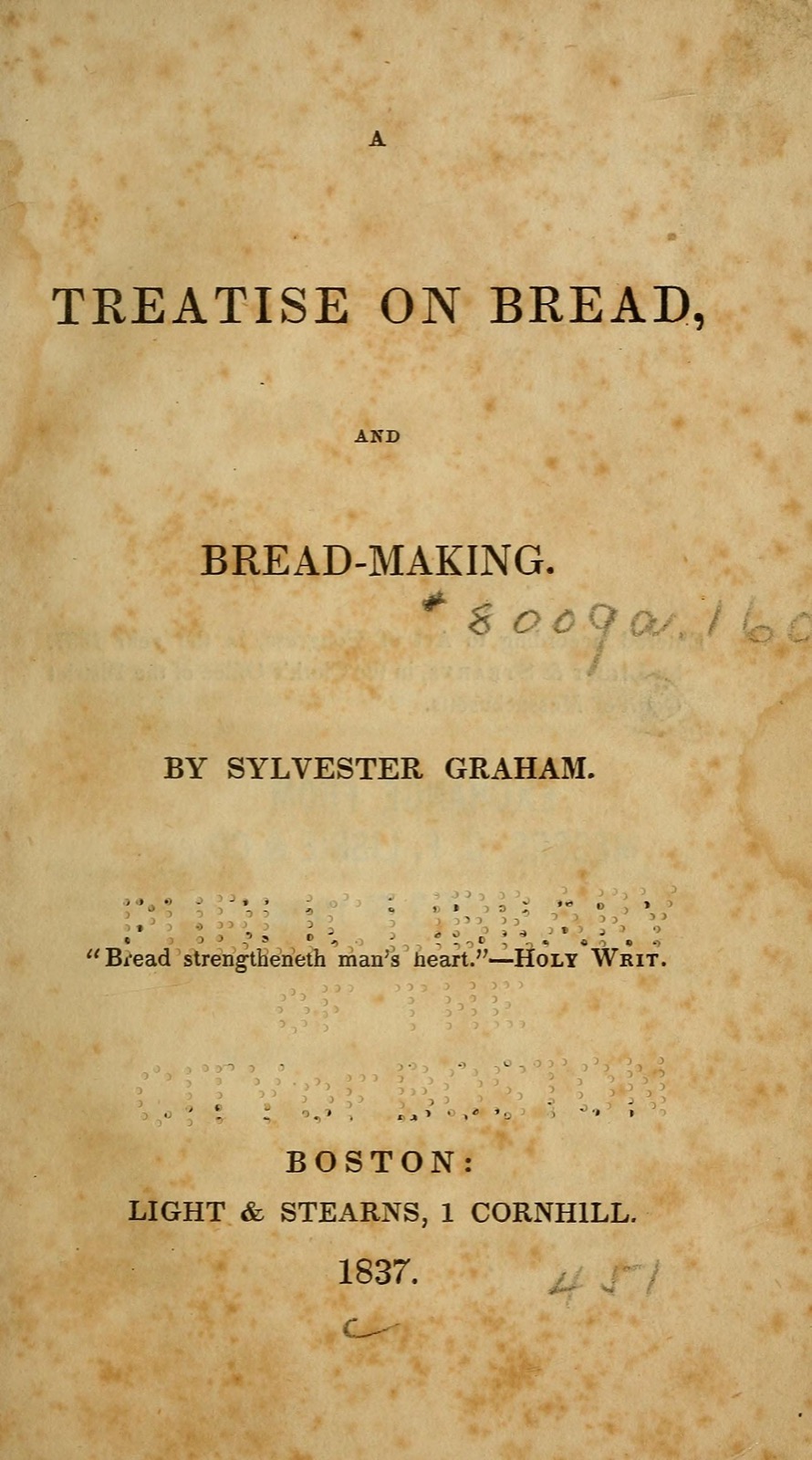
Graham was not the vendor of a manufactured product; his financial interest was authorial, reputational, and institutional rather than proprietary. He supported himself for roughly two decades primarily through paid lecture fees and the sale of his own books and pamphlets, among them A Lecture to Young Men, on Chastity (first delivered 1834, published in further editions through at least 1838) and A Treatise on Bread, and Bread-Making (Boston: Light & Stearns, 1837), and in 1837 he co-founded, with David Campbell, The Graham Journal of Health and Longevity, a periodical whose stated purpose was to “illustrate by facts and sustain by reason and principles the science of human life as taught by Sylvester Graham” (NHA Graham Timeline 2023). His income and public standing therefore depended directly on the continued currency of a system for which he was the sole named authority, and he had every incentive to keep expanding rather than narrowing its claims. Commercial “Graham bread,” “Graham flour,” and the boarding houses that his followers opened in cities including New York and Boston traded on his name and his diet, but the documented record does not show Graham personally owning, licensing, or profiting from those separate ventures; the financial conflict named here is his own, from his own lectures, books, and journal, not theirs.
Fifty-seven years, then silence
No part of the excitability theory was ever demonstrated by controlled observation, and no part of it survived contact with later medicine: the belief that masturbation caused insanity, which Graham did as much as anyone to popularize, is described by the medical historian James Whorton as a “superstition” that took a full century to fade from psychiatric thinking after taking hold in the 1830s (Whorton 2001). Graham himself died in 1851, at the age of fifty-seven — noted at the time in at least one contemporary medical-journal obituary (Buffalo Medical Journal, November 1851) — a death that fell well short of the “extreme old age” his own system promised its strict followers. The institutional apparatus he built, the boarding houses, the journal, the organized following known as Grahamites, did not survive him for long; the movement’s distinct, sectarian form faded within the following decade, even as some of its dietary habits (whole-grain bread, reduced meat, temperance) were absorbed into later reform movements, including the Seventh-day Adventists’ health teaching. What is left standing today is a single narrow kernel entirely apart from Graham’s own reasoning: modern prospective-cohort epidemiology finds that higher whole-grain consumption is associated with reduced cardiovascular, cancer, and all-cause mortality risk (Aune et al. 2016, BMJ) — a real, replicated, but purely correlational dietary finding, unconnected to any theory of nervous excitability, moral stimulation, or the specific disease and longevity claims Graham built his career on.
The pattern repeats
The same structural machinery appears in different treatments and eras. These cases show the claimed mechanism and how the claim met evidence.
Fletcherism (thorough mastication)
Biologic living (the Battle Creek Idea)
Order-energy raw-food regimen (Bircher-Benner's 'Lebendige Kraft' nutrition)
Part of the lineage
Evidence · 11 sources
- Sylvester Graham and the Popular Health Movement, 1830-1870 (1931)
- The solitary vice: The superstition that masturbation could cause mental illness (2001)
- Riotous Flesh: Women, Physiology, and the Solitary Vice in Nineteenth-Century America (2015)
- A Lecture to Young Men, on Chastity: Intended Also for the Serious Consideration of Parents and Guardians (1838)
- Lectures on the Science of Human Life (1877)
- A Treatise on Bread, and Bread-Making (1837)
- Sylvester Graham - Timeline (2023)
- Whole grain consumption and risk of cardiovascular disease, cancer, and all cause and cause specific mortality: systematic review and dose-response meta-analysis of prospective studies (2016)
- Sylvester Graham [portrait] (1880)
- Death of Sylvester Graham (1851)
- A Treatise on Bread, and Bread-Making title page (1837)