Gerson Therapy
In 1958 physician Max Gerson published fifty case histories as proof that his raw-juice and coffee-enema regimen could treat advanced cancer. The National Cancer Institute found his case data insufficient to establish benefit; Memorial Sloan Kettering and Cancer Research UK say evidence does not support the therapy, and clinical reports associate coffee enemas with deaths and septicemia. The Gerson Institute still markets the regimen through clinics and online practitioners.
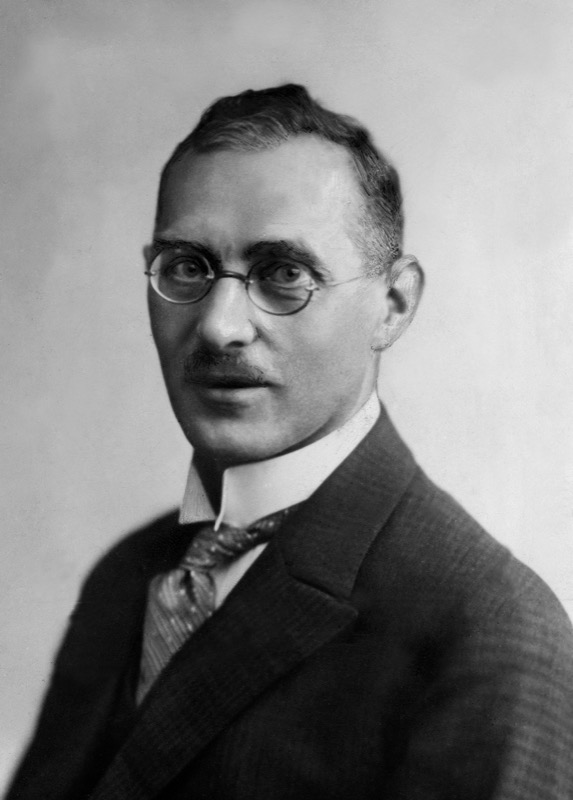
A refugee’s cure for the incurable
Max Gerson was born on 18 October 1881 in Wongrowitz, a market town in Prussian Poland, one of nine children in a Jewish family. He studied medicine in Breslau, Wurzburg, and Berlin, graduating from the Albert Ludwig University of Freiburg in 1909, and began practicing internal medicine in Bielefeld. He first built his reputation as his own patient: plagued by migraines, he devised a strict low-sodium, high-potassium diet that relieved them, then extended the same regimen to patients with skin tuberculosis in the late 1920s. In 1928 he began applying it to cancer. When the Nazis took power in 1933 he fled Germany for Vienna, then France in 1935, then London in 1936, before settling in New York City in 1938, where he passed the state’s medical boards and opened a private practice on Park Avenue. His parents and seven of his eight siblings did not escape Europe and were killed in the Holocaust. His malpractice insurance was discontinued in 1953, and after a series of investigations that the New York County Medical Society had opened in 1947, the society suspended him for two years in 1958 for advertising his “secret” treatment on a radio talk show. In that same year, 1958, Gerson published A Cancer Therapy: Results of Fifty Cases, stating that he aimed to demonstrate an effective cancer treatment even in advanced cases and reporting that roughly half of his most severe, previously terminal cases “could be improved and saved.” He died of pneumonia in New York City on 8 March 1959, a year after the book appeared, at age 77.
Three clinics, then two years at home
The Gerson Institute lists three licensed residential clinics: Health Institute de Tijuana, Mexico, founded in 2001; Gerson Health Centre near Budapest, Hungary, founded in 2009; and Gerson Shangri-La in Sichuan, China, founded in 2023. Clinic admission is not the therapy’s only current route. The Institute’s clinic page says patients continue the prescribed protocol at home for at least twenty-four months after discharge and describes the therapy as taking place primarily at home. A separate Institute page offers web-based case management to eligible patients who cannot travel, using an international network of Certified Gerson Practitioners who evaluate cases, prescribe individual protocols, and conduct most consultations online. The access point is therefore controlled practitioner approval, not confinement to three residential sites.
Toxins, sodium, and a theory that never held up
Gerson’s explanation for how his regimen worked rested on a specific but never-validated claim about cell chemistry: that cancer and other chronic disease arise when cells lose potassium and accumulate excess sodium, and that a strict low-sodium, high-potassium diet, combined with up to thirteen glasses of raw fruit and vegetable juice a day, could restore the balance. Coffee enemas, taken as often as five times daily, were said to work through a separate mechanism, dilating the liver’s bile ducts so that toxins could be excreted. Neither claim was ever demonstrated. Memorial Sloan Kettering Cancer Center states that “this proposed toxin build-up has never been proven, nor has the diet’s ability to remove such toxins from the body.” The National Cancer Institute’s own clinical summary notes that no laboratory or animal study supporting the mechanism has ever appeared in the scientific literature. A 1992 peer-reviewed critique published in the Journal of the American Medical Association examined the rationale directly; a later academic evidence review concluded that its theoretical rationale did not withstand scrutiny.
A nonprofit built around the protocol
No source reviewed quantifies what Max Gerson personally charged patients at his Park Avenue practice or earned from his 1958 book. The documented conflict is narrower: he authored the regimen, selected the fifty cases presented as evidence, and sold the book that promoted them. The present-day Gerson Institute is a registered 501(c)(3) nonprofit, incorporated under the legal name Cancer Curing Society. NCI’s evidence summary states that the Institute does not own or operate treatment facilities but maintains a licensing program for treatment centers. Its federal filing for the fiscal year ending June 2025 reported $479,069 in revenue and $700,471 in expenses, including $255,102 in program-service revenue, $10,761 in royalties, and $51,665 in net inventory sales. ProPublica’s filing summary also reports transactions disclosed on Schedule L, the IRS schedule for loans, grants, and business transactions involving interested parties; the summary does not establish wrongdoing or identify the transactions’ purpose.
Case reports, not proof
The rejection of Gerson’s claims began within his own lifetime. The National Cancer Institute reviewed ten case histories in 1947 and fifty in 1959, concluding that the available information did not establish benefit because most cases did not meet basic criteria for evaluating clinical benefit. A New York County Medical Society committee reached a negative conclusion in 1947, and the society suspended Gerson in 1958. The American Cancer Society published assessments against the therapy in 1973 and 1993. A 1995 retrospective melanoma-survival analysis was later found to lack proper tumor staging and to be unreliable. No prospective, controlled study of Gerson therapy in cancer patients has been reported in a peer-reviewed journal. NCI’s adverse-effects summary says three deaths that seemed related to coffee enemas had been reported: one death after treatment at a Gerson clinic could not be directly linked because further testing was unavailable, while two others were attributed after autopsy to electrolyte imbalance. A separate Western Journal of Medicine report documented septicemia after coffee-enema use. NCI also records that the FDA banned injectable crude liver extract in 1989 after Campylobacter contamination. Memorial Sloan Kettering now states: “The Gerson regimen does not treat or prevent cancer.” Cancer Research UK says: “There is no evidence to prove that Gerson therapy works as a cure for cancer.” The Gerson Institute nevertheless still tells visitors that the therapy “boosts the body’s own immune system to heal cancer, arthritis, heart disease, and allergies,” while separately saying that it cannot guarantee effectiveness for every individual.
The pattern repeats
The same structural machinery appears in different treatments and eras. These cases show the claimed mechanism and how the claim met evidence.
Hoxsey herbal tonic and escharotic paste
Essiac (herbal cancer tea)
More related cases · 5
Evidence · 25 sources
- Max Gerson (English Wikipedia) (2026)
- Gerson's Magic Bullet (2025)
- A Cancer Therapy: Results of Fifty Cases and The Cure of Advanced Cancer by Diet Therapy — A Summary of Thirty Years of Clinical Experimentation (1958)
- Gerson Therapy (PDQ): Health Professional Version (2016)
- Gerson Therapy (PDQ): Patient Version (2015)
- Gerson Regimen (2023)
- Gerson therapy (2022)
- Gerson Therapy (2026)
- A critique of the rationale for cancer treatment with coffee enemas and diet (1992)
- Unproven methods of cancer management. Gerson method of treatment for cancer. (1973)
- Questionable methods of cancer management: 'nutritional' therapies (1993)
- Deaths related to coffee enemas (1980)
- Campylobacter sepsis associated with "nutritional therapy"--California (1981)
- Polymicrobial enteric septicemia from coffee enemas (1984)
- The Gerson Institute (homepage) (2026)
- Licensed Gerson Clinics (2026)
- Web Based Case Management (2026)
- Gerson Institute (Cancer Curing Society) — Nonprofit Explorer Form 990 filings (2025)
- Background History of the Gerson Clinic (2006)
- Gerson regimen (2010)
- Max Gerson portrait published in Tempo (1929)
- Case of the United States versus the Hoxsey Cancer Clinic; opinion of the United States Court of Appeals for the Fifth Circuit (1952)
- Hoxsey Herbal Therapy (2021)
- Essiac/Flor Essence (PDQ(R)): Health Professional Version (2002)
- Unconventional therapies for cancer: 1. Essiac (1998)