Thomsonian Botanic System
Samuel Thomson, an unschooled New Hampshire farmer, patented in 1813 a one-cause theory of disease and sold $20 'family rights' to a botanic system of steaming and heavy lobelia doses. Acquitted of murder in 1809, his movement still saw a fellow Thomsonian practitioner convicted of manslaughter for a lobelia overdose in 1837. The patent lapsed in 1852, moribund; the historian's verdict is that even Thomson's own medicines failed him in the end.
The root that made him famous, the trial that nearly ended him
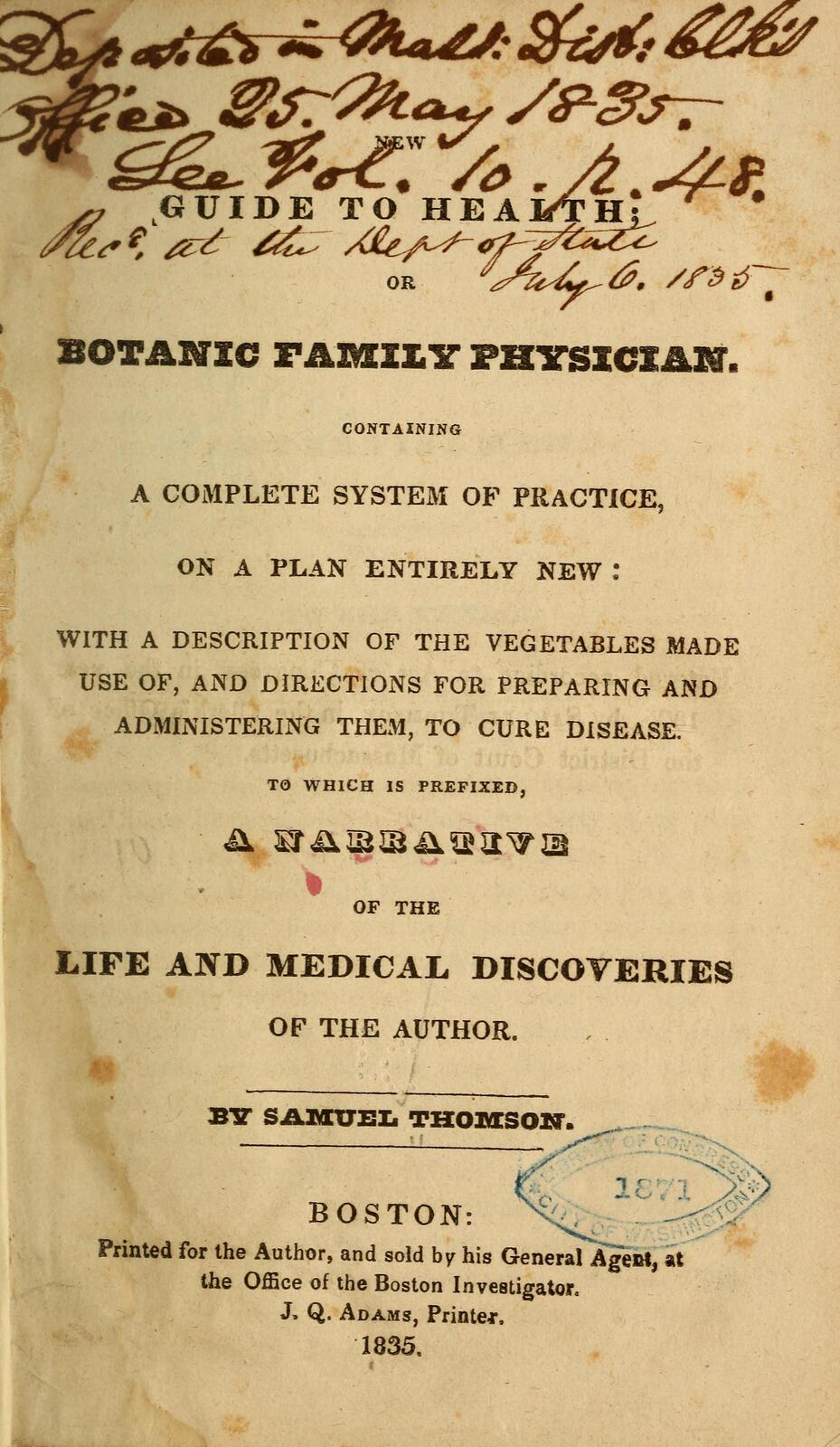
On 20 December 1809, in a crowded Salem courtroom, a defense attorney bit into and swallowed a root that a prosecution witness had just sworn under oath was a deadly poison. The defendant, a self-taught herb doctor named Samuel Thomson, stood charged with murdering a young patient, Ezra Lovett, with that same root some years before (Thomson’s own narrative is inexact about the interval). The court then called the era’s leading American botanist, Manasseh Cutler, who examined the sample and testified it was not lobelia at all but ordinary marsh rosemary. The jury acquitted Thomson within minutes (Thomson 1835; Young 1961).
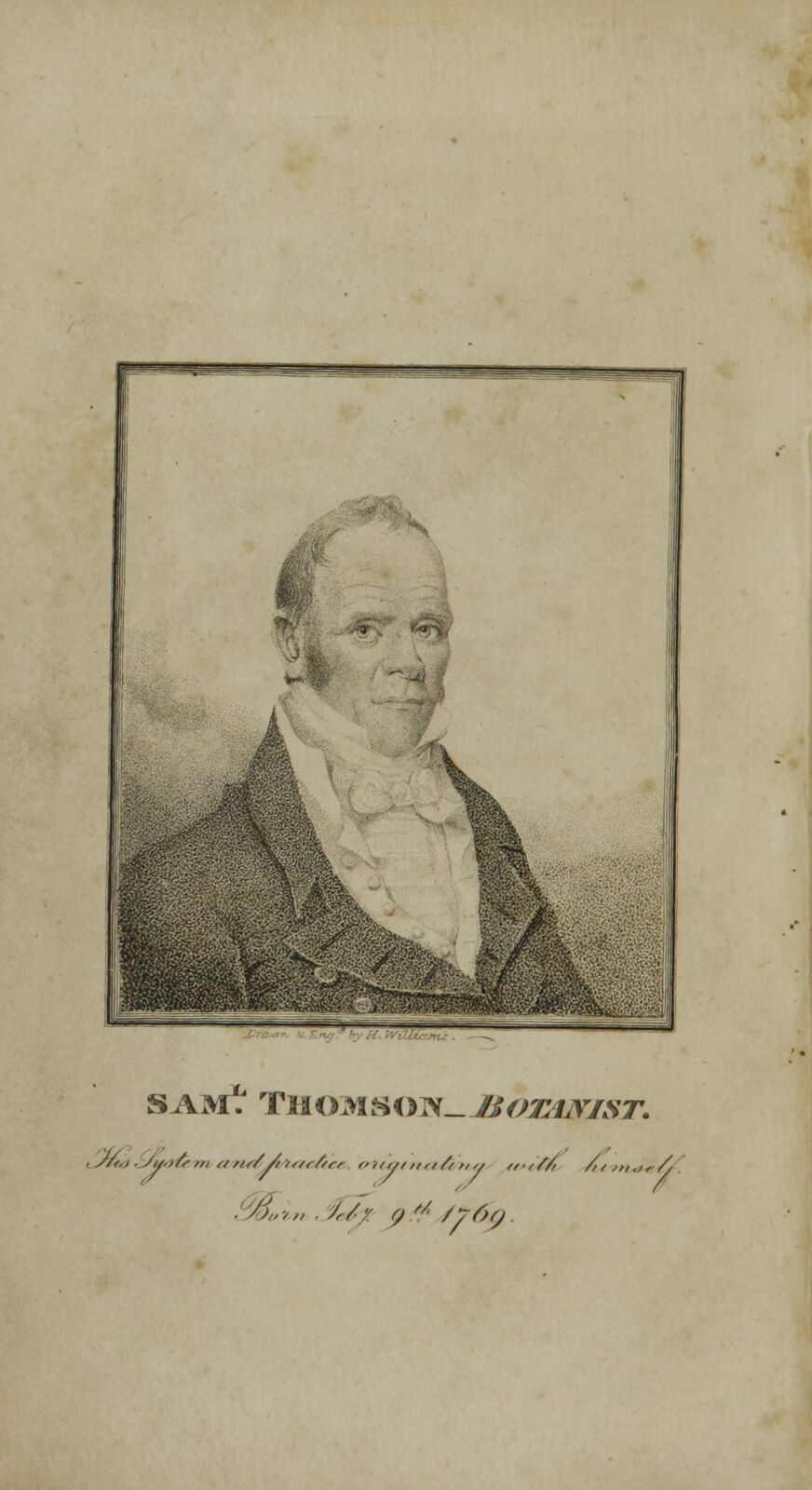
Thomson (1769-1843) was born on the New Hampshire frontier, lame from birth and largely unschooled; by his own account he discovered lobelia inflata, an emetic plant, as a boy in the fields, and used to feed it to other boys for the sport of watching them vomit (Thomson 1835). He credited root doctors with curing him and his wife after regular physicians had failed them both, and turned that conviction into a public practice. By 1806 he was treating yellow-fever patients in Boston and New York City, and his methods first acquired the name Thomsonian during that period (Flannery 2002). Regular physicians in his area, offended by his growing popularity and his open contempt for a regular practice that dosed patients with mercury, arsenic, nitre, antimony, and opium, began circulating word that his lobelia had killed patients, and in 1809 had him arrested for murder (Thomson 1835; Young 1961). His acquittal, and the botanical mix-up that produced it, became part of his own legend: a persecuted natural healer vindicated against the regulars, Young’s word for the orthodox physicians who opposed him.
A patent, a family right, and a $500 oath of secrecy
Thomson’s system was not scarce; it was engineered for scale. After New England states began passing laws restricting unlicensed medical practice, Thomson traveled to Washington in early 1813 and, after a skeptical Patent Office clerk objected that a medicine claimed to cure every disease in general terms was quackery, obtained on 3 March 1813 a federal patent that he described as securing him the exclusive right to his own system and medicine (Thomson 1835; Young 1961). He then sold family rights: twenty dollars bought a household his New Guide to Health manual and the standing right to prepare and use his six numbered remedies on themselves, organized locally into Friendly Botanic Societies whose members were bound not to share the formulas with outsiders (Young 1961). Physicians and medical students could also buy in, at $500 each, after swearing before a justice of the peace to keep the system secret (Young 1961).
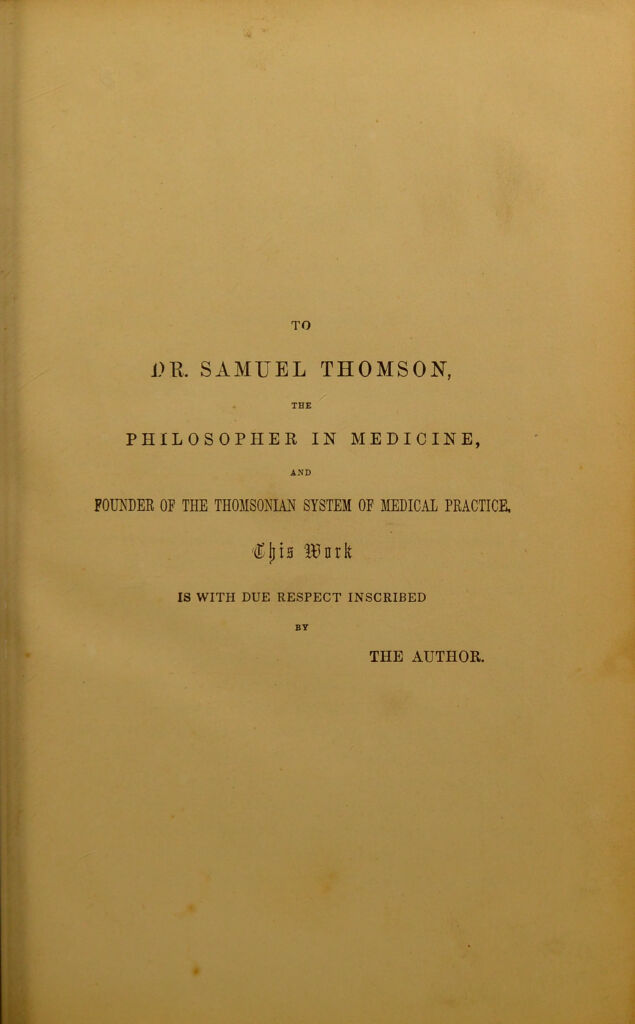
By 1839 Thomson claimed to have sold 100,000 family rights; contemporary regular physicians estimated botanical converts at roughly a third of Ohio’s population, and the governor of Mississippi put the figure at half his state (Young 1961). Long after Thomson’s 1843 death, sympathetic physicians were still publishing books to keep the system’s commercial and devotional life going: J. W. Comfort’s 1850 Practice of Medicine on Thomsonian Principles carried a full-page dedication to Thomson as the founder of the Thomsonian system of medical practice (Comfort 1850). This was the reverse of an elite clinic: a mass-market license and membership structure, monetized through patent monopoly, book sales, and admission fees rather than through scarcity or price.
One cause, cold; one cure, heat
Thomson’s medicine rested on a single borrowed idea: that all disease has one general cause, and can be removed by one general remedy (Thomson 1835). Echoing the four-element physiology of ancient Greece, he held that all bodies are made of earth, air, fire, and water, that cold, or a lessening of the body’s natural heat, is the cause of all disease, and that restoring that natural heat is the only route to health (Thomson 1835). He pursued this directly with steam baths and hot botanicals like cayenne pepper, and indirectly with emetics, purgatives, and enemas meant to clear the body of every obstruction so a natural perspiration and heat-balance could return (Thomson 1835).
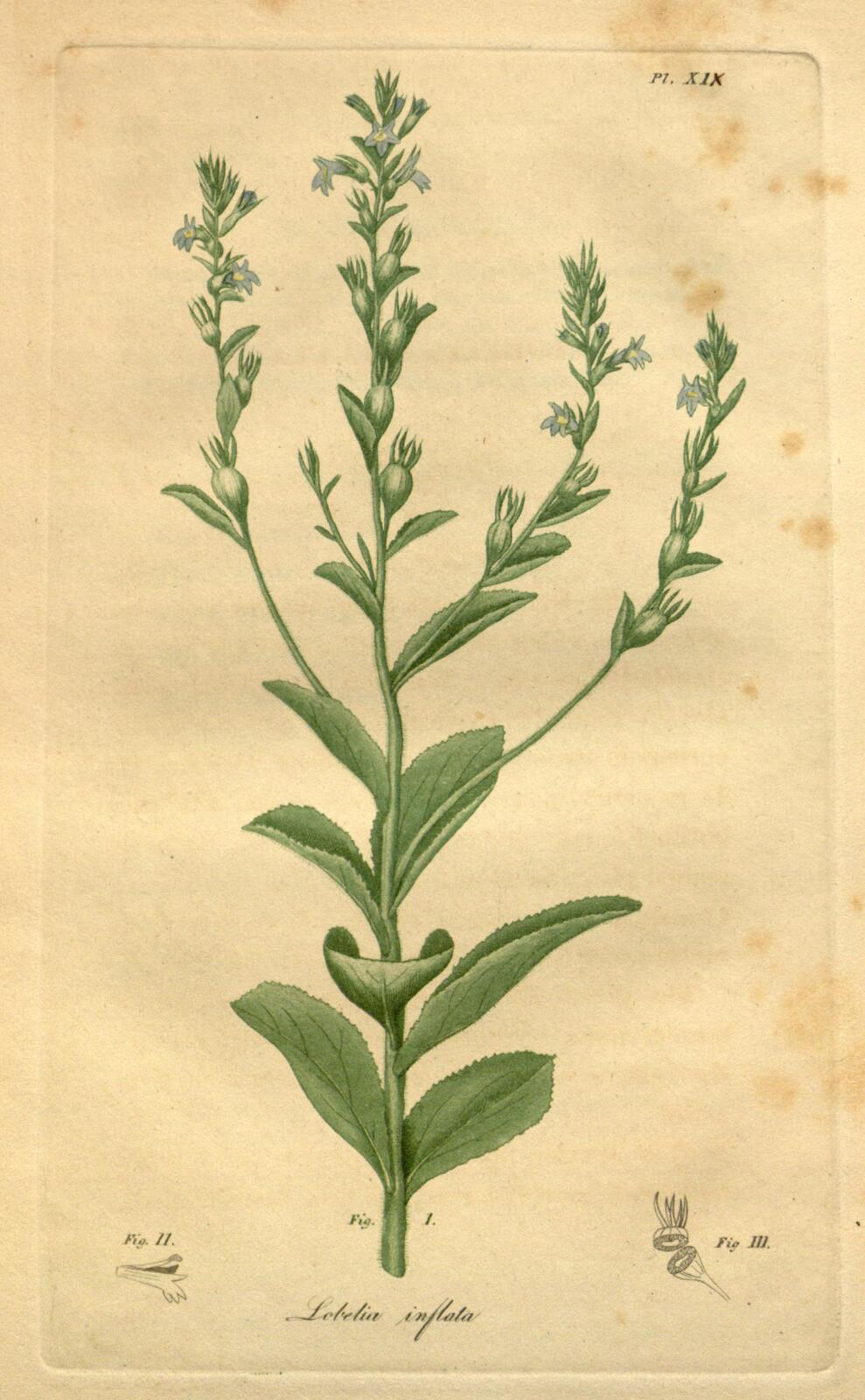
His favorite remedy, and the first of the six numbered medicines named in his patent, was lobelia inflata. Lobelia’s active alkaloid, lobeline, is a nicotinic-receptor ligand that also disrupts vesicular monoamine storage; it reliably triggers vomiting, a real pharmacological action but not a demonstration that clearing bodily obstructions cures yellow fever, cholera, or any other named disease (Dwoskin and Crooks 2002). No element of Thomson’s theory is described as measured against a control or comparison group in the sources examined for this case; his evidence was his own recovery, his wife’s recovery, and the testimonial cures reported in his own New Guide to Health (Thomson 1835).
The inventor, the patent holder, and the plaintiff were the same man
Thomson’s income depended directly on the system whose merit he himself proclaimed. He was simultaneously the system’s sole inventor, the holder of its 1813 patent (renewed in 1823 after a court found his original specification too vague to support an infringement suit, and again in 1836), the author of the New Guide to Health that every family-right purchaser needed to buy, and the plaintiff in the lawsuits that policed all of it (Young 1961). He sued repeatedly to protect this income: against disloyal Thomsonians who pirated his manual, agents who went into business for themselves, and manufacturers who compounded unauthorized Thomsonian botanicals (Young 1961).
The conflict is the developer-proprietor pattern named on the documented facts: by 1839 Thomson claimed 100,000 family rights sold at $20 each, with a further $500 fee charged to any physician who wanted to use his remedies, so his prosperity tracked the number of rights, books, and lawsuits he could win, not any external measure of whether the system cured disease (Young 1961). The characterization is held to what the sources support; Thomson’s own sons and licensed agents also drew income from the system, so the conflict named here is his own direct, documented financial dependence on a system whose merit he himself proclaimed, not exclusive command of all its proceeds.
The system that outlived neither its founder nor his followers
Young’s history, the standard scholarly account of American patent medicine before federal regulation, describes no controlled trial of Thomson’s one-cause theory or his numbered remedies; the record it documents instead accumulated the ordinary evidence of a system that did not work as billed. Thomson himself was indicted for murder in December 1809 after the patient Ezra Lovett died following a Thomsonian course of treatment; he was acquitted only when the substance the prosecution produced as “lobelia, a deadly poison” was identified in court by the botanist Manasseh Cutler as marsh rosemary (Thomson 1835). The danger the prosecution alleged was not hypothetical: in 1837, a different Thomsonian practitioner in New York was convicted of manslaughter for causing a patient’s death with an excessive dose of lobelia, the very fate Thomson himself had escaped in 1809 — a direct refutation of Thomson’s own insistence that lobelia was harmless at any dose (Young 1961; Dwoskin and Crooks 2002).
Thomson’s patent, renewed in 1836, expired in 1852, by which point the Thomsonian movement was fading fast, its simple body-heat theory abandoned even by the botanical practitioners who succeeded him (Young 1961). James Harvey Young’s assessment, in the standard scholarly history of American patent medicine, is direct: whatever its role for good, Thomsonianism was not a sound system of medicine for the American people (Young 1961). A 2024 tertiary overview reaches the same conclusion in plainer terms, finding that a great many of Thomson’s ideas simply lack scientific evidence (Weidow 2024). Thomson died in 1843 still taking his own remedies; Young’s verdict is blunt: even his own medicines failed him in the end (Young 1961).
The pattern repeats
The same structural machinery appears in different treatments and eras. These cases show the claimed mechanism and how the claim met evidence.
Evidence · 10 sources
- New Guide to Health; or, Botanic Family Physician (1835)
- A Narrative of the Life and Medical Discoveries of Samuel Thomson (1822), frontispiece portrait (1822)
- The Toadstool Millionaires: A Social History of Patent Medicines in America before Federal Regulation (chapter 4, Samuel Thomson) (1961)
- The Early Botanical Medical Movement as a Reflection of Life, Liberty, and Literacy in Jacksonian America (2002)
- A novel mechanism of action and potential use for lobeline as a treatment for psychostimulant abuse (2002)
- The Practice of Medicine on Thomsonian Principles (3rd ed., 1850), dedication page (1850)
- American Medical Botany, Plate XIX (Lobelia inflata) (1817)
- Samuel Thomson (2024)
- Morisoniana; or, Family adviser of the British College of Health: being a collection of the works of Mr Morison, the Hygeist (1829)
- Medicine, Quackery and the Free Market: The 'War' Against Morison's Pills and the Construction of the Medical Profession, c.1830-c.1850 (2007)