Gonzalez enzyme regimen
Nicholas Gonzalez promoted pig-pancreas enzymes with diet, supplements, and coffee enemas as a cancer treatment. In inoperable pancreatic cancer, a 2010 Journal of Clinical Oncology comparison, changed in 2001 from a randomized plan to an observational study, reported median survival of 14 months with gemcitabine-based chemotherapy and 4.3 months with enzyme treatment. Linda L. Isaacs and the Nicholas Gonzalez Foundation still offer the program, separately, to patients with cancer.
An invitation and eleven patients
In 1993 the National Cancer Institute invited Nicholas Gonzalez, a New York physician in private practice, to present a series of cases. A 2010 Journal of Clinical Oncology paper records the invitation, that he had begun to evaluate proteolytic enzyme therapy in 1981, and that the invitation led him to undertake a case series. Among 11 patients with inoperable pancreatic adenocarcinoma in that later series, it says, he reported 81 percent survival at one year and 45 percent at two years, with four of the 11 alive at three years. The National Cancer Institute then funded a randomized trial.
Born in Flushing, New York, on 28 December 1947, he received an M.D. from Cornell University Medical College in 1983 and was in private practice in New York City from 1987. He had a Brown University degree in English literature and had worked as a journalist, starting at Time Inc. He died at his home in New York City on 21 July 2015, aged 67.
In 1994 New York’s medical-conduct board ruled against him. Its record, captured by the Internet Archive in 2011, says the Review Board sustained the Hearing Committee’s 27 June 1994 determination finding him guilty of negligence and incompetence on more than one occasion and failure to maintain accurate patient records. The record describes probation with retraining and two hundred hours of hospice community service, states that he had satisfied the terms of the order, and records a consent order effective 25 September 1998 that extended the community-service deadline to 31 December 2000.
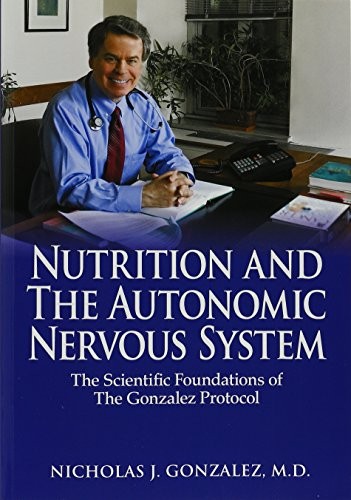
A 2017 book followed under his name: Nutrition and the Autonomic Nervous System, subtitled The Scientific Foundations of the Gonzalez Protocol, from New Spring Press, dated 24 October 2017 in Open Library’s record. The foundations went to press two years after their author’s death and seven years after the 2010 survival figures below.
One office, or a network
The National Cancer Institute summary, which says it is no longer being updated, describes the regimen as available only to private patients of its New York-based practitioner. The 2011 board record gives his address as 36A East 36th Street, Suite 204, New York, New York 10016. Two successors found on 3 November 2026 carry the method, and each describes the arrangement differently.
On 3 November 2026 the practice pages of Linda L. Isaacs, M.D., offered individualized nutritional programs for patients with cancer and other illnesses, and said she and the late Dr. Nicholas Gonzalez worked together for more than twenty years. Her About page says she moved from New York City to Austin, Texas, in 2019. Her costs page says the therapy she offers is available only in her office, and that she does not endorse any other practitioner, protocol, or supplement line.
The same day, the Nicholas Gonzalez Foundation’s site offered The Gonzalez Protocol®, described as an individualized diet matched to metabolic type, high-dose pancreatic enzyme supplementation, daily detoxification routines, and spiritual support, working together to address cancer, chronic disease, and whole-body healing. It said its network of Gonzalez Guardians, certified medical and naturopathic doctors, practice around the world, and it invited readers to apply to work with a certified Gonzalez doctor on a protocol for their specific cancer or condition. Isaacs’s About page says the Foundation was created by Gonzalez’s widow, Mary Beth Gonzalez, and that Isaacs is not and has never been involved with it.
Enzymes, diet, and coffee enemas
In the National Cancer Institute summary’s account, oral pancreatic enzymes derived from pigs are the primary agents in the regimen thought to have direct antitumor effects, alongside specific diets, vitamin and mineral supplements, extracts of animal organs, and coffee enemas, with the diets based on a theory of autonomic dominance. The same account gives the lineage. Scottish embryologist John Beard, after observing the invasive activity of trophoblasts in 1902, proposed that pancreatic enzymes might limit cancer, but could not establish experimentally that they had anticancer effects, and the theory was never broadly accepted. Gonzalez learned, as a second-year medical student, of the approach of a Texas dentist, William Donald Kelley, who held that primordial germ cells are the single cause of all cancers and that pancreatic enzymes are able to suppress or destroy cancers. Gonzalez’s 2010 book about him, One Man Alone, is subtitled An Investigation of Nutrition, Cancer, and William Donald Kelley. The Foundation’s site says he built his approach on Beard’s and Kelley’s work.
The regimen uses coffee enemas on the premise that coffee absorbed through the intestinal wall improves liver and gallbladder function and helps remove toxic waste from tumor breakdown. The summary states that there is no scientific evidence that coffee enemas have any specific effects on increased liver function, on tumor-breakdown detoxification, or a role in the treatment of any cancer.
The 2026 Isaacs homepage says the program consists of changing the diet, taking supplements, and detoxification routines, and that all three components are essential. Diets range from nearly vegetarian to red meat two or three times a day. Cancer patients take 150 to 200 capsules a day, including a pancreas product made from pig pancreas and developed for this program. Coffee enemas are done twice daily, and the page says they are believed to enhance liver function. It says some patients develop muscle aches or flu-like symptoms, which may be caused by release of waste materials and stored toxins.

The price of the program
Gonzalez practiced privately in New York City from 1987. His successors publish their prices. On 3 November 2026 Isaacs’s costs page gave a total fee of $4,600 for the two-session initial evaluation, $1,000 for each re-evaluation, required every six to twelve months, and supplements, which patients may buy through Fullscript or from the makers, running about $1,200 a month for a cancer patient and considerably less for other patients. The page says many insurers, including Medicare and Medicaid, will not reimburse any part of the services, and that she has opted out of Medicare. The Foundation’s application page puts doctors’ fees for the initial evaluation and first six months at $8,000 to $12,000, varying by clinic and patient, with supplements at about $1,200 a month for a cancer patient, and warns that patients must also buy fresh organic food and detoxify their homes. Its homepage sends readers to a separate site, Gonzalez Guidance, for Dr. Gonzalez’s Glandular Supplements and the Gonzalez Metabolic Type Test, and promotes his books, including Conquering Cancer and Nutrition and the Autonomic Nervous System.
Patients chose, and survival diverged
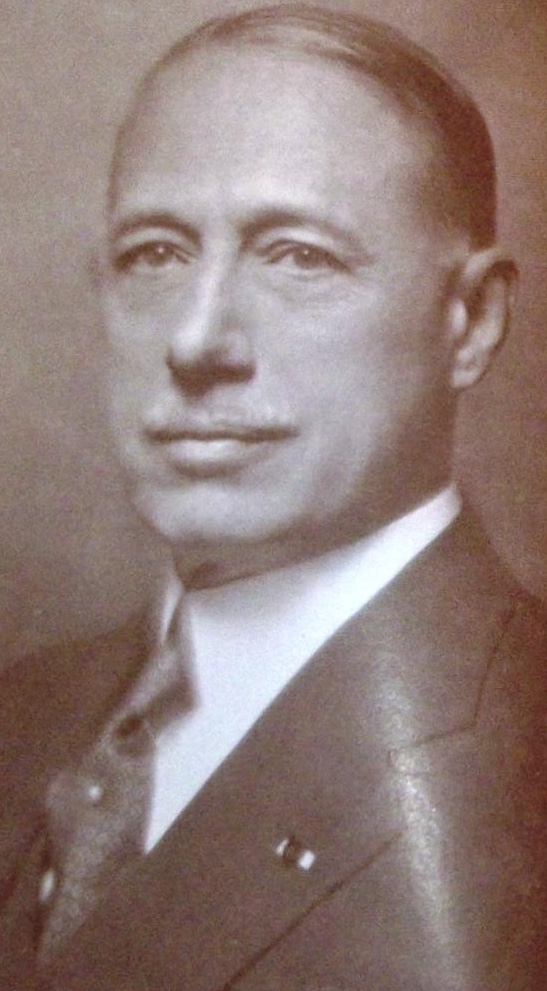
The enzyme idea had already been tested in New York. In 1909 the surgeon William Seaman Bainbridge published a report for the New York Skin and Cancer Hospital on the enzyme treatment as outlined by Beard, drawn from three years of clinical and laboratory observation. His summary records that control cases given injections of glycerin and water, or sterile water alone, plus the same regime, did as well as those on the full enzyme treatment. It warns that injected trypsin may be a direct menace to life. Its last three deductions are that the treatment, given according to Beard’s suggestions, does not check the cancerous process, does not prevent metastasis, and does not cure cancer. Those were injected and oral preparations of 1909, not the later regimen; the National Cancer Institute put the question to patients again, in New York, eighty-nine years later.
The National Cancer Institute, in 1998, sponsored a randomized phase III trial of proteolytic enzyme therapy versus chemotherapy. The Journal of Clinical Oncology paper states that most eligible patients refused random assignment, and that the trial was changed in 2001 to a controlled observational study. The protocol was amended on 5 July 2001. On 17 October 2005 the stopping rule was met and the study was closed to accrual. Fifty-five patients with inoperable pancreatic cancer enrolled: 23 chose gemcitabine-based chemotherapy, and 32 chose enzyme treatment made up of pancreatic enzymes, nutritional supplements, detoxification, and an organic diet. Columbia investigators saw the patients. Enzyme patients were seen by the participating alternative practitioner, whom the paper’s methods do not name. The National Cancer Institute summary says the paper does not list Dr. Gonzalez as an author or identify him as participating, but that he published comments on his website indicating his participation and detailing his concerns about how the study was conducted, including patient compliance with the prescribed treatment in the enzyme arm.
Among patients with inoperable pancreatic cancer who chose their treatment, the 2010 comparison reported median survival of 14 months on gemcitabine-based chemotherapy and 4.3 months on enzyme treatment. The paper also reported a 9.7-month gap, an adjusted mortality hazard ratio of 6.96 for the enzyme group compared with the chemotherapy group, one-year survival of 56 percent and 16 percent, and better quality-of-life ratings in the chemotherapy group. Its conclusion says patients who chose gemcitabine-based chemotherapy survived more than three times as long, 14.0 versus 4.3 months, and had better quality of life than patients who chose proteolytic enzyme treatment. The National Cancer Institute summary calls the existing clinical data limited, with conflicting results, and says no data on the regimen’s effectiveness for patients with other types of cancer have been reported, despite claims that a variety of cancers can be treated.
Isaacs answers the trial directly. An article on her site, first published in 2001 and since updated, says the study was ineptly managed by the academicians involved, that most patients assigned to the nutritional protocol did not comply, and that it failed to answer the questions it was meant to address. The Foundation’s homepage says his work was funded by the NIH and produced some of the most promising results in the medical literature for pancreatic cancer. In inoperable pancreatic cancer, the 2010 comparison reported 4.3 months against 14, and for other cancers the National Cancer Institute summary reports no effectiveness data. Both operations still offer the program to patients with cancer.
The pattern repeats
The same structural machinery appears in different treatments and eras. These cases show the claimed mechanism and how the claim met evidence.
Gerson Therapy
Hoxsey herbal tonic and escharotic paste
Essiac (herbal cancer tea)
More related cases · 2
Part of the lineage
External references
Evidence · 14 sources
- Library of Congress name authority: Gonzalez, Nicholas J., 1947-2015 (2017)
- Pancreatic Proteolytic Enzyme Therapy Compared With Gemcitabine-Based Chemotherapy for the Treatment of Pancreatic Cancer (2010)
- Gonzalez Regimen (PDQ): Health Professional Version (2018)
- New York Board for Professional Medical Conduct posting for Nicholas Gonzalez, MD (1994)
- Dr. Linda Isaacs practice homepage (2026)
- Nutrition and the Autonomic Nervous System cover image (Open Library, New Spring Press edition record) (2017)
- One Man Alone cover image (Open Library, New Spring Press edition record) (2010)
- The Enzyme Treatment for Cancer (Bainbridge, 1909) (1909)
- William Seaman Bainbridge (portrait reproduced in Ancestry of William Seaman Bainbridge, 1950) (1950)
- Appointments and Costs (Dr. Linda Isaacs practice) (2026)
- About Dr. Linda Isaacs (2026)
- Deciding Whether to Pursue an Alternative Cancer Therapy (Isaacs) (2026)
- The Gonzalez Protocol: Nicholas Gonzalez Foundation homepage (2026)
- Apply to work with a Gonzalez Certified Doctor (Nicholas Gonzalez Foundation) (2026)