Breuss Cancer Cure
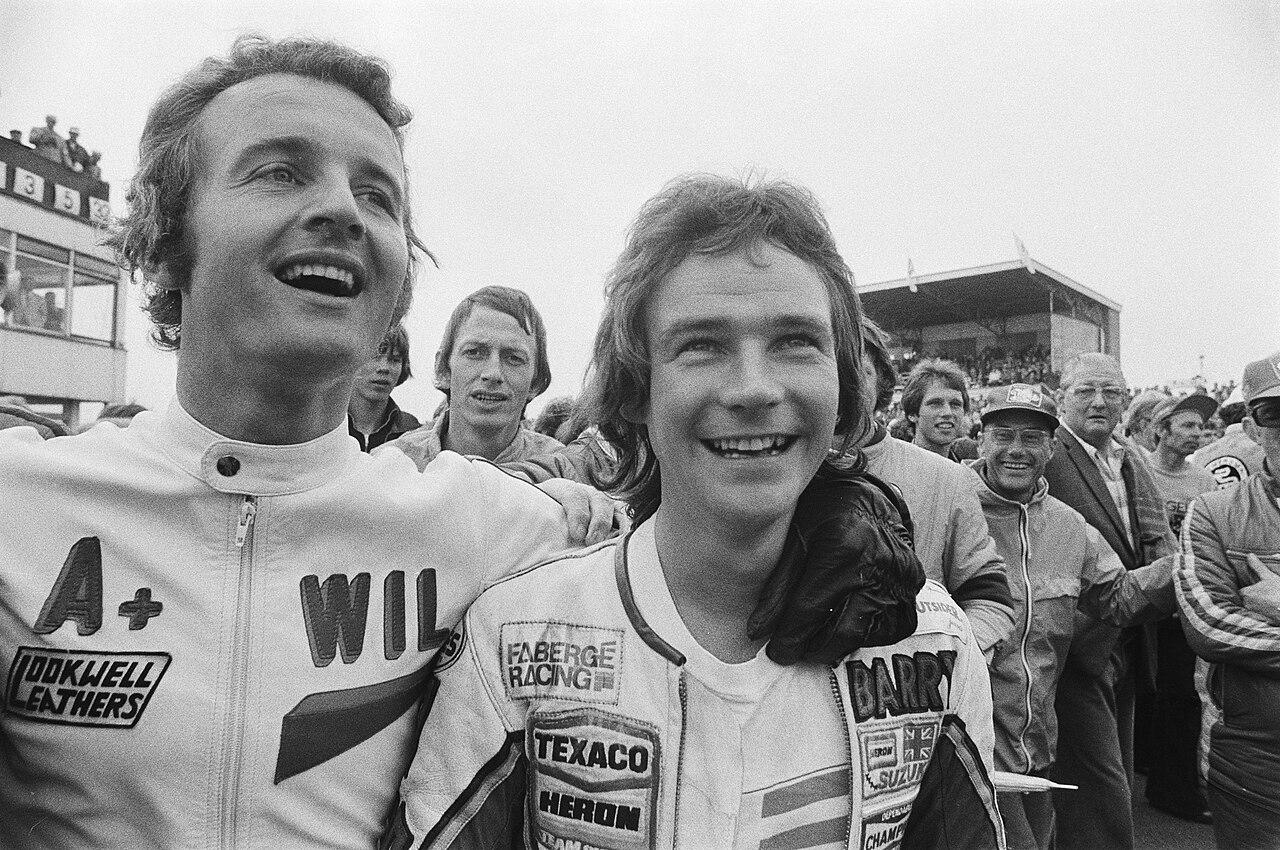
On 10 September 2002 the Guardian reported that the former world champion motorcyclist Barry Sheene, 51, had refused conventional care for throat and stomach cancer and was drinking juice from a 42-day regimen Rudolf Breuss published in 1978. NAFKAM's 16 January 2023 assessment found the efficacy claims unsupported by clinical trials and a potential risk of malnutrition. A bookstore offered the English-language book on 2 November 2026.
An electrician’s book, and a motorcycle champion
On 10 September 2002 the Guardian reported that Barry Sheene, 51, had refused conventional medical treatment for throat and stomach cancer and, as part of a regimen the paper attributed to Rudolf Breuss, was drinking a mixture of organic carrots, beetroot, celery, Chinese radish, and potato. The paper called Breuss an Austrian naturopath born in 1899 and said he had devised a strict 42-day diet of natural juices and herbal teas meant to nourish the body while starving the cancer. It also said he claimed to have cured thousands of people of cancers that had defied conventional treatment. The same article dates his death to 1991 at age 92; the German authority file, below, files it a year earlier.
The German Integrated Authority File names him Breuß, Rudolf, profession Heilpraktiker, geographic area Österreich, born 24 June 1899 and died 17 May 1990. NAFKAM’s 16 January 2023 assessment, by Barbara Wider for the CAM Cancer Collaboration, uses the English form Rudolph Breuss, gives the years 1899-1990, and says he first worked as an electrician and later as a naturopath. He described the regimen, the same assessment says, in a 1978 book, Cancer - Leukemia and Other Apparently Incurable Diseases, Advice on the Prevention and Treatment of Many Diseases, and in another edition he wrote in 1990. The marketed promise is a 42-day fast on special vegetable juices and teas for cancer, the regimen that book describes.
NAFKAM reports his own scale claims without treating them as counted results. He claimed that he successfully treated more than 2000 patients since 1950. He estimated that since 1986 an additional 40,000 patients with cancer and other seemingly incurable diseases had been healed by his methods. As proof he cited testimonials and thank-you letters written from 1971 to 1985. He also believed, in the 1990 book as NAFKAM cites it, that about one million people could be healed if cancer research and orthodox medicine were with him rather than against him. Those figures remain his claims. The counted part is a stack of letters. The projected part is a million people, conditional on orthodox medicine changing sides.
Access and distribution
Breuss also published printings himself. The German National Library holds a 1980 printing of Krebs: Leukämie und andere scheinbar unheilbare Krankheiten mit natürlichen Mitteln heilbar whose publisher field is R. Breuß, Siedlerweg 4, Bludenz, and a 1986 printing whose publisher field is R. Breuss, Winkelweg 6, Bludenz, priced at DM 13.30. By 2 November 2026 the same catalogue listed 26 records under his name, among them French, Italian, Czech, Slovak, Russian and Polish editions. The Polish one, from 2018, was translated by a Franciscan friar, Marcelin Jan Pietryja, and published by the Herbarium of St Francis at the Franciscan friary in Katowice-Panewniki.
The Guardian of 10 September 2002 told readers the book was available from Amazon.co.uk.
On 2 November 2026 Booktopia offered the English-language paperback on an open order page with an Add to Cart control. The page titles the book Breuss Cancer Cure, with the subtitle Advice for the Prevention and Natural Treatment of Cancer, Leukemia and Other Seemingly Incurable Diseases, names Rudolf Breuss as the author, dates the paperback 1 December 1998, and gives 130 pages. It states that the copy ships in 5 to 10 business days. The listing reached that day was a public order form, not a closed clinic list. NAFKAM says the first English translation appeared in 1995 and a later English edition in 2019. The 1998 date is the date Booktopia prints for the paperback it was offering, not a finding that 1998 was the first English edition.
Solid food, juice, and water veins
NAFKAM states that, on Breuss’s theory, cancer requires solid food to survive in the body. The same assessment says there are no reliable scientific data to support that claimed mode of action. The Guardian’s 2002 account of the diet is the practical twin of the theory: juices and teas meant to nourish the body while starving the cancer.
NAFKAM’s dosage section says Breuss required cancer patients, for 42 days, not to drink or eat anything other than the juices and teas he recommended. The juices it names are beetroot, carrots, celeriac, and black radish, with potatoes where the patient had been diagnosed with cancer of the liver. Vegetables were to be organically grown, sediments removed, and the maximum amount of juice 500 ml a day. He allotted three teas, sage, kidney, and cranesbill. Sugar was not permitted. For leukemia, patients were to drink the teas and juices but could eat other food except meat soup, beef, pork, and reheated food, citing the 1990 book. It adds that the 1995 English translation instead names beef soup, pork, chemical food additives, burnt food, and fats. At the stated ceiling of 500 ml a day, a full 42-day course comes to at most 21 litres of juice, for a patient on the full fast. He also told patients not to lie above so-called water veins, which the assessment glosses as sources of ground radiation. People with diabetes were to continue insulin, and hawthorn tincture for the heart was among additional instructions the assessment dates to 1987, citing his 1990 book and the 1995 English translation.
One million, one and a half million, two million
His documented commercial vehicle was the book. Since his death, the assessment notes, further editions have appeared, most recently a revised new edition of Die Breuss-Kur – das Original in August 2022, and translations exist. The Guardian in 2002 pointed readers to a copy on Amazon.co.uk. On 2 November 2026 the Booktopia page above was still taking a public order for the English paperback.
NAFKAM’s 16 January 2023 page also states that the juices were produced and promoted by the Swiss firm Biotta and sold in health food stores, drugstores and online, and that several spa hotels offer Breuss fasting. On 2 November 2026 Biotta’s own shop listed Biotta Breuss, an organic vegetable juice in 500 ml bottles that the page says is based on Rudolf Breuss’s original recipe. That page makes no cancer claim; its stated health claim is potassium for normal blood pressure. It also describes the recipe as a secret to this day, a few lines above an ingredients list that names beet, carrot, celery, potato and radish juice.
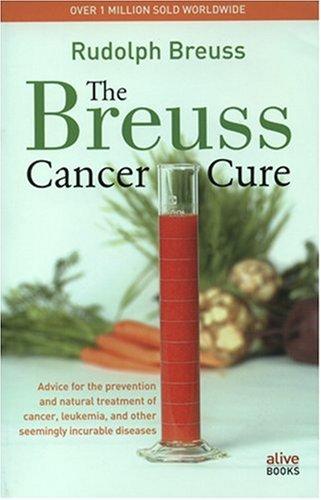
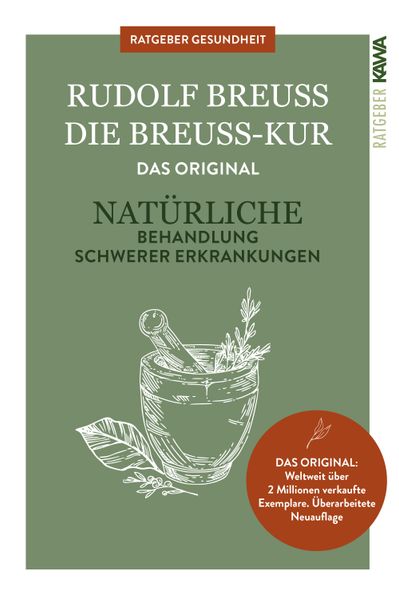
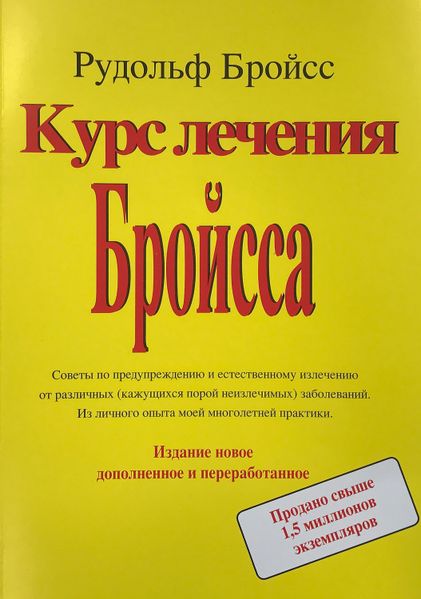
The covers keep their own count. The Open Library cover image for the Alive Books English edition carries the banner “Over 1 million sold worldwide.” The cover of the 2017 Russian translation, from the German National Library’s cover service, carries a sticker claiming, in Russian, over 1.5 million copies sold. The 2022 Kampenwand edition, Die Breuss-Kur: das Original, priced at EUR 13.80 in Germany, carries a roundel claiming, in German, over 2 million copies sold worldwide. None of the covers says who counted. They are printed claims, not sales data. Ordered by the dates of their catalogue records (1995, 2017, 2022), the number goes up each time. The clinical record NAFKAM describes for the regimen itself has not moved: one uncontrolled eight-patient series from 1984, and, citing a 2014 review, no further studies published.
What the 2023 assessment and a 2012 group review found
NAFKAM’s 16 January 2023 assessment states that the claims of efficacy are not supported by evidence from clinical trials and that there are no reliable scientific data to support the claimed mode of action. It says the recommended fast could be dangerous for cancer patients, with a potential risk of general malnutrition. It also says that, as Breuss bans conventional cancer treatment while patients undergo his treatment, there is a risk that patients will discontinue conventional treatment. The regimen the book still sells has therefore been assessed, in January 2023, as unsupported by clinical trials, without reliable data for its mechanism, and carrying a reported risk of malnutrition.
NAFKAM’s summary of Douwes 1984, an uncontrolled series of eight cancer patients with metastatic disease, says the authors reported two complete and two partial remissions, that patients felt better than expected during the intervention and experienced less pain, that one patient died during the trial and two died shortly following completion, and that the authors did not attribute the deaths to the intervention. Citing a 2014 review, it adds that no further studies have been published, and that case reports it found on the internet lack valid documentation. It also reports that Senn and Jungi described rapid and dangerous cachexia in several patients, and that Douwes and colleagues observed weight loss of 9 to 16 kg.
A separate open abstract, Hübner and colleagues in Deutsche Medizinische Wochenschrift, issued 14 November 2012, names the cancer diet of Breuß among the diets most often mentioned in their German search, together with the Budwig diet, Gerson’s regimen, a low-carbohydrate diet, and macrobiotics. For that set of diets they wrote that they did not find any scientific publication of a clinical study which describes positive results regarding survival, and that data show malnutrition and side effects. Their conclusion, that there is no indication to consume a cancer diet of that kind, is a group finding. It is not a trial of the Breuss regimen by itself.
In the Guardian article, Sarah Turner, identified as a senior nurse at Cancer Research UK, is reported as warning that prolonged adherence to a restricted diet such as Breuss’s could lead to malnutrition. The paper also quotes her saying the charity does not recommend alternative therapies, on the stated ground that, on the whole, the scientific or medical evidence to prove the claims is lacking. That is one nurse’s comment in a newspaper, not a charity guideline.
The pattern repeats
The same structural machinery appears in different treatments and eras. These cases show the claimed mechanism and how the claim met evidence.
The Hazzard Fasting Cure
The Brandt Grape Cure
Gerson Therapy
More related cases · 1
Evidence · 11 sources
- Breuss Cancer Cure (2023)
- GND 128623721, Breuß, Rudolf (2018)
- Fruit cure for cancer? (2002)
- Wie sinnvoll sind „Krebsdiäten“? (2012)
- Breuss Cancer Cure, Booktopia listing (2026)
- The Breuss Cancer Cure cover image (Open Library, Alive Books edition record) (1995)
- Deutsche Nationalbibliothek catalogue records under Breuß, Rudolf (2026)
- Die Breuss-Kur: das Original (2022) cover image (Deutsche Nationalbibliothek cover service) (2022)
- Wil Hartog and Barry Sheene at the 1977 Dutch TT, Assen (Anefo press photograph) (1977)
- Kurs lečenija Brojssa (2017) cover image (Deutsche Nationalbibliothek cover service) (2017)
- Biotta Breuss vegetable juice, Biotta AG product page (2026)