Catalyn
Royal Lee of Milwaukee shipped Catalyn on 23 October and 2 November 1933. The bottle listed vitamins A through G; the circular named dropsy, goiter, and heart trouble. A jury found the shipments misbranded; the Seventh Circuit affirmed on 22 November 1939. On 28 February 1945 the FTC ordered the vitality and disease advertising stopped. On 28 October 2026 Standard Process still offered Catalyn as Lee's 1929 whole-food multivitamin - and disclaimed disease claims.
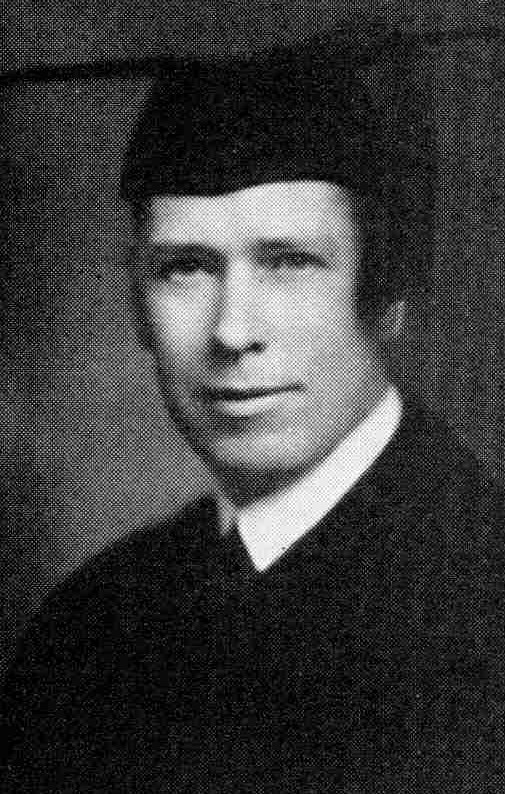
The Milwaukee seller and the 1933 bottle
Royal Lee, trading as the Vitamin Products Company of Milwaukee, shipped Catalyn on 23 October and 2 November 1933 - a tablet with a vitamin alphabet on the label and a disease list in the circular. The Seventh Circuit’s opinion of 22 November 1939 says a jury found him guilty on four misbranding counts under the 1906 Food and Drugs Act, and it affirms that judgment. Counts 1 and 3 concerned disease statements on the labels, wrappers, and enclosures, illustrated in the opinion by dropsy, goiter, heart trouble, and stomach ulcers, within a charge of more than fifty ailments. A blue circular said the tablets were effective for pernicious anemia, dropsy, goiter, heart trouble, underweight, pneumonia, Bright’s disease, St. Vitus dance in children, and stomach ulcers. Booklets said Catalyn was recommended and guaranteed for goiter, heart trouble, insomnia, anemia, and dropsy. Stephen Barrett’s article of 1 December 2022 describes Lee as a nonpracticing dentist, Royal S. Lee (1895–1967), who founded and operated the company. On 28 October 2026 Standard Process called him Dr. Royal Lee and said that since 1929 its founder understood health to begin with the whole-food complex.
Vitamins on the label, and what the assay reported
The bottle label, as the 1939 opinion reports it, said Catalyn contained vitamins A, B, C, D, E, F, and G in such proportions as to restore normal metabolism where abnormality was present. Counts 2 and 4 charged that the content statements were misleading about definite vitamin proportions. Government testimony in the opinion said the tablets did not contain vitamins A, C, or D, and that a user would have to take 150 tablets a day to meet the daily minimum of the B factor that was found. Physicians testified that the preparation lacked therapeutic merit and that, even assuming the named vitamins were present, any value would be confined to vitamin-deficiency cases, excluding anemia, dropsy, goiter, leakage of a heart valve, pneumonia, Bright’s disease, and stomach ulcers. The 1945 findings add the company’s own vitality theory: slogans presented Catalyn as nature’s source of vitality and as a life-and-health-building product, and the Commission found it was a preparation compounded by man, not a product of nature, and was not a competent supplement for building normal vitality and resistance when taken as directed, except that vitamin D and, to a limited extent, vitamin A were set aside in the deficiency finding.
The man trading as the company
The 1939 opinion names Lee as the individual trading as the Vitamin Products Company, and the shipments were his product. The 1945 findings say his principal office and place of business was 2023 West Wisconsin Avenue, Milwaukee, and that he caused the preparations, when sold, to be transported to purchasers in other states. The 1962 notice of judgment names Vitamin Products Co. and Royal Lee, president. That notice covers shipments from Milwaukee to Oakland, California, Wayne, Pennsylvania, and St. Louis, Missouri, between 24 November 1958 and 10 September 1959. Lee pleaded nolo contendere on the counts for Vitamin G and Cyroplex wafers. The company pleaded nolo contendere on the counts for all of the products named in the notice. The disposition on 23 April 1962 was a suspended one-year term of imprisonment and three years of probation for Lee, and a fine of 7000 dollars for the company. Catalyn is not in that notice’s product list. Barrett wrote on 1 December 2022 that the company Lee founded was still family owned and was by then called Standard Process. The company’s own Who We Are page says four generations later his vision continues to guide it. Those are the seller’s and the critic’s accounts of continuity. Neither is an ownership record.
The judgment, the order, and the tablet still on offer
The 1939 court held that guilt on the Catalyn counts was amply proved and affirmed the judgment. On 28 February 1945 the Commission ordered Lee to stop representing that Catalyn, taken as directed, was a competent treatment for the disease list in the advertisements, that it would insure vitality or health, or that it was a product of nature. Those are the meanings the findings gave his vitality slogans. The findings say dissemination of some of those advertisements stopped in 1939 and dissemination of others stopped later. The order’s disease list includes Bright’s disease, goiter, heart trouble, high blood pressure, and low vitality. On 28 October 2026 the Standard Process product page still offered Catalyn, said it was introduced in 1929, called it Dr. Royal Lee’s first product, and described it as whole-food nutrition for overall well-being and energy metabolism. The footer said Standard Process sells through health care professionals, gave a Palmyra, Wisconsin address, and said the products are not intended to diagnose, treat, cure, or prevent any disease. Barrett wrote on 1 December 2022 that from the mid-1980s he had not seen Standard Process make therapeutic claims directly, that the claims had instead come through distributors, lecturers, and publishers, and that he advises people to stay away from the products and from anyone who sells them. A search on 28 October 2026 for an FDA warning letter or an independent review of current Catalyn wording returned the company page, reseller listings, a video review, and articles about warning letters in general. It did not return a warning letter or a clinical assessment of that 2026 wording. The historical findings stand for the labeling and advertising they judged. They are not restated here as a finding about the 2026 nutrient panel.
The pattern repeats
The same structural machinery appears in different treatments and eras. These cases show the claimed mechanism and how the claim met evidence.
Peruna
Dr. Kilmer's Swamp Root
Hadacol
Part of the lineage
Evidence · 7 sources
- United States v. Lee, 107 F.2d 522 (7th Cir. 1939) (1939)
- In re Vitamin Products Company, 40 F.T.C. 139 (1945) (1945)
- FDA Notice of Judgment 7203, Vitamin Products Co. and Royal Lee (1962) (1962)
- Standard Process Catalyn product page and Who We Are page, fetched 28 October 2026 (2026)
- Stephen Barrett, The Shady History of Royal Lee and Standard Process Laboratories (updated 1 December 2022) (2022)
- Marquette Hilltop, 1924, vol. 10, page 82 (1924)
- Royal Lee, DDS (Ancestral Nutrition Foundation, 24 September 2018) (2018)