Hadacol
Louisiana State Senator Dudley LeBlanc mixed his first batch of Hadacol in wine barrels in 1943 and sold it as relief for hidden vitamin deficiency -- and, in testimonials, for anemia, arthritis, cancer, diabetes, and nine more named ailments. By 1951 the FTC called the claims false, misleading, and deceptive, and LeBlanc sold out for a sum sources dispute, leaving the buyers a bankrupt shell.
Mixed in a barn, sold by a senator
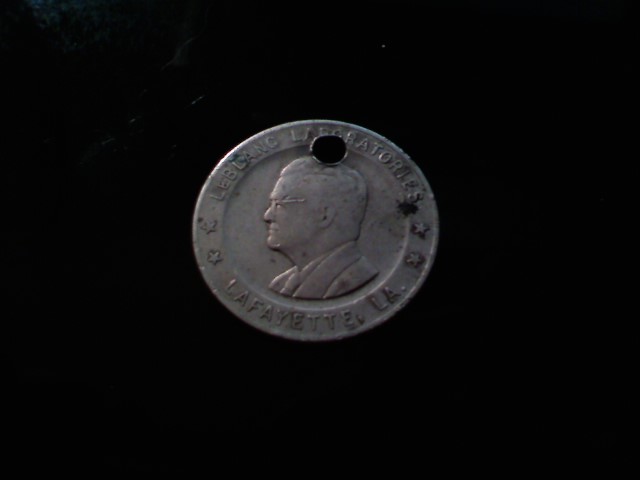
In 1943, Dudley J. LeBlanc mixed his first batch of a new tonic in wine barrels in his barn near Lafayette, Louisiana, assisted, he later said, by two “pretty Cajun girls” who stirred the mixture with oars (Carlson 2018). By then he had already been elected to the Louisiana House of Representatives in 1924 and to the state senate in 1940, where he sponsored a popular old-age pension law (Carlson 2018); Gisclair’s account adds that he also served one term on the Louisiana Public Service Commission, went on to serve four nonconsecutive terms as a Louisiana state senator representing Vermilion Parish, and ran unsuccessfully for governor (Gisclair 2018). That reputation for salesmanship and elected political authority — not any medical credential — became the tonic’s chief selling point. “Hell, you can’t buy LeBlanc,” Governor Earl Long, brother of the assassinated “Kingfish” Huey Long, once said of him. “You can only rent him” (Carlson 2018). LeBlanc called his tonic Hadacol, put his own Senate title and photograph on its advertising, and by 1949 was generating roughly $2.5 million a year in sales (Carlson 2018).
Money can’t buy admission — box tops can
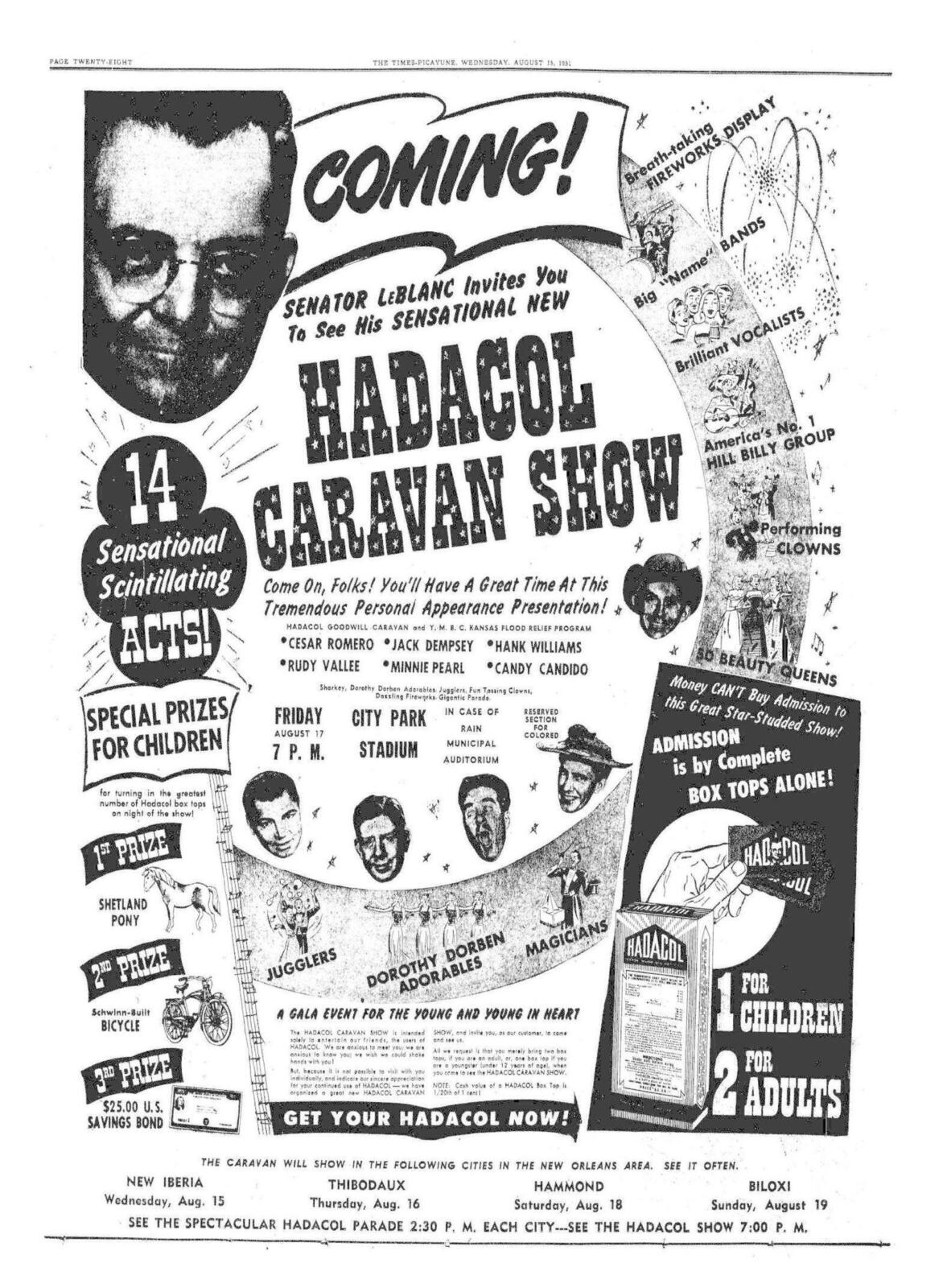
Hadacol was not exclusive; it was everywhere. The tonic sold nationally through ordinary retail stores in $1.25 eight-ounce bottles and $3.50 family-size 24-ounce bottles (Carlson 2018), and in the summer of 1951 LeBlanc took the promotion on the road with the Hadacol Caravan, a traveling variety show that barnstormed Deep South cities. A full-page advertisement in the New Orleans Times-Picayune on August 15, 1951 invited readers to see his sensational new Hadacol Caravan Show, promising fourteen acts including Cesar Romero, Jack Dempsey, Hank Williams, Rudy Vallee, Minnie Pearl, and Candy Candido, a troupe of dancers, jugglers, magicians, fifty beauty queens, and a fireworks display, plus prizes — a Shetland pony, a Schwinn bicycle, a $25 savings bond — for the children who turned in the most Hadacol box tops (hadacol-caravan-ad-times-picayune-1951). The ad states the mechanism plainly: admission could not be bought with money and required complete Hadacol box tops alone — one for a child, two for an adult (hadacol-caravan-ad-times-picayune-1951). Access ran straight through the product: to see Jack Dempsey or hear Hank Williams for free, a family first had to buy Hadacol.
A vitamin deficiency behind every ailment
Hadacol’s formula combined B-complex vitamins (B1, B2, B6, B12), iron, calcium, phosphorus, and honey with a roster of minor minerals, diluted with dilute hydrochloric acid and, by volume, roughly 12 percent alcohol — “roughly the kick in wine,” as Carlson (2018) puts it — which LeBlanc called a “preservative” (Carlson 2018; Gisclair 2018). The tonic was marketed, at its narrowest, “as a balm for vague ailments like indigestion, insomnia, and irritability” (Carlson 2018) — a framing of ordinary discomfort as hidden vitamin deficiency, correctable by the tablespoon. LeBlanc’s advertising and the testimonials he published did not stop at vague complaints: they claimed Hadacol relieved or cured anemia, arthritis, asthma, cancer, diabetes, epilepsy, gallstones, hay fever, heart trouble, high blood pressure, pneumonia, strokes, and ulcers (Gisclair 2018), and Carlson separately reports testimonials crediting the tonic with curing arthritis, cancer, and beriberi (Carlson 2018). No source in this bundle documents a clinical study of Hadacol supporting any of those disease-specific claims. Correcting an actual, diagnosed vitamin deficiency is real medicine; Hadacol’s marketing applied that principle, undemonstrated, to a list of largely unrelated and often life-threatening diseases in customers who were never shown to be deficient in anything.
A fortune sold, and a debt he was accused of hiding
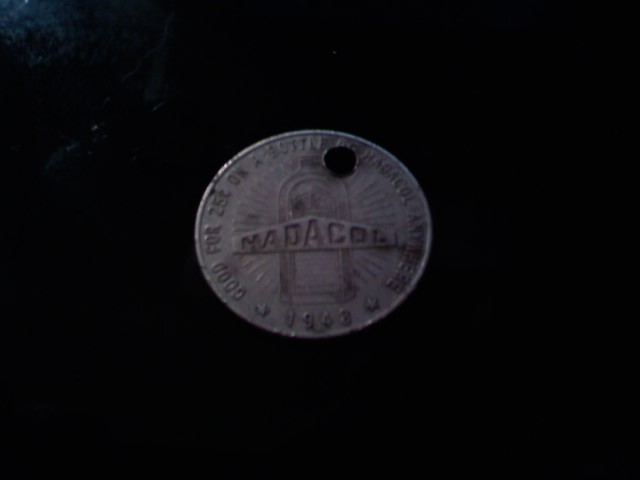
The claims made LeBlanc rich. For the fifteen months ending March 1951, the company recorded $25 million in sales and $2.5 million in reported profits (Gisclair 2018). In late summer 1951, LeBlanc sold his ownership interest to a group of New York investors identified by one account as the Maltz Cancer Foundation of New York — and the three sources in this bundle report the price itself very differently. Gisclair dates the sale to late August and puts the price at $8.2 million, with LeBlanc ultimately collecting only about two-thirds of that after the buyers went bankrupt. Carlson dates the announcement to September and reports it was first given at $8 million, but that LeBlanc later said the real price was only $250,000 plus a share of future profits. Time, writing contemporaneously that October, gives a third figure again: the buyers had paid LeBlanc only $250,000 down, against a price previously announced at $1,100,000 (Gisclair 2018; Carlson 2018; Time 1951). The reason for the buyers’ bankruptcy surfaced within weeks regardless of which price applied. Time reported the new owners found a $1.8 million second-quarter loss where LeBlanc had reported a $3.6 million profit, and accused him of concealing roughly $2 million in unpaid bills and $656,151 in federal tax debt, and of listing $2,272,000 in “accounts receivable” that largely did not exist (Time 1951). Carlson’s independently sourced account gives closely consistent figures: $2.2 million owed to suppliers and more than $650,000 in unpaid federal taxes (Carlson 2018). LeBlanc avoided fiduciary responsibility or liability for the collapse (Gisclair 2018).
False, misleading, and deceptive
Hadacol’s fall was as fast as its rise. While the tonic was still selling briskly, the Federal Trade Commission was already investigating LeBlanc for deceptive sales practices (Carlson 2018); by October 1951, Time reported the FTC had gone further and challenged Hadacol’s marketing claims outright as “false, misleading and deceptive” (Time 1951). The FTC’s specific objection targeted the cancer and diabetes cure claims (Gisclair 2018), and the FDA eventually pulled Hadacol from store shelves entirely (Gisclair 2018). The Caravan played its last date in Dallas on September 17, 1951, closing with a performance by Hank Williams (Gisclair 2018). LeBlanc was not finished: the following year he finished seventh in the 1952 Louisiana Democratic gubernatorial primary, and in 1957 federal investigators charged him with tax evasion, a case he beat (Carlson 2018). He tried once more to sell a near-identical tonic under a new name, Kary-On; almost nobody bought it (Carlson 2018).
The pattern repeats
The same structural machinery appears in different treatments and eras. These cases show the claimed mechanism and how the claim met evidence.