EPFX / QXCI / SCIO device
In 1984 an out-of-work math instructor in Colorado began selling a homemade box that, by the late 1980s, was said to diagnose and destroy disease by radio frequency — allergies to cancer. On paper it was biofeedback; Barrett wrote it mainly reflects skin resistance. The Seattle Times counted a Puyallup fair booth and a 1996 fraud indictment. The names kept changing; in 2026 QX World offers a QUEX ED it calls the same line.
A homemade box and a disease list
In 1984 an out-of-work math instructor in Colorado began selling a homemade device that, by the late 1980s, was said to diagnose and destroy disease by firing radio frequencies into the body — allergies to cancer, take your pick. Christine Willmsen and Michael J. Berens’s Seattle Times investigation, published 18 November 2007, reported that late-1980s pitch and the radio-frequency claim. On paper, the reporters wrote, the company registered in 1989 as a maker of biofeedback machines, so the boxes could be sold as stress-relieving tools; the law did not allow claims that they diagnosed or treated disease. On the sales floor the same investigation and Barrett’s reading of the later QXCI/SCIO pitch show straps and a screen.
Stephen Barrett’s reading of the hardware is unromantic: the box mainly reflects skin resistance. Skin conductance is a real measurement. It is also a poor proxy for leukemia, AIDS, or whatever else the operator’s screen happened to name that afternoon. The Seattle Times later counted clinics, a fair booth in Puyallup, and a 1996 fraud indictment; by then the seller was in Budapest. The names kept changing — EPFX, QXCI, SCIO. In 2026 QX World offers a QUEX ED through a representative form and describes that unit as the same line of technology as the SCIO and EDUCTOR.
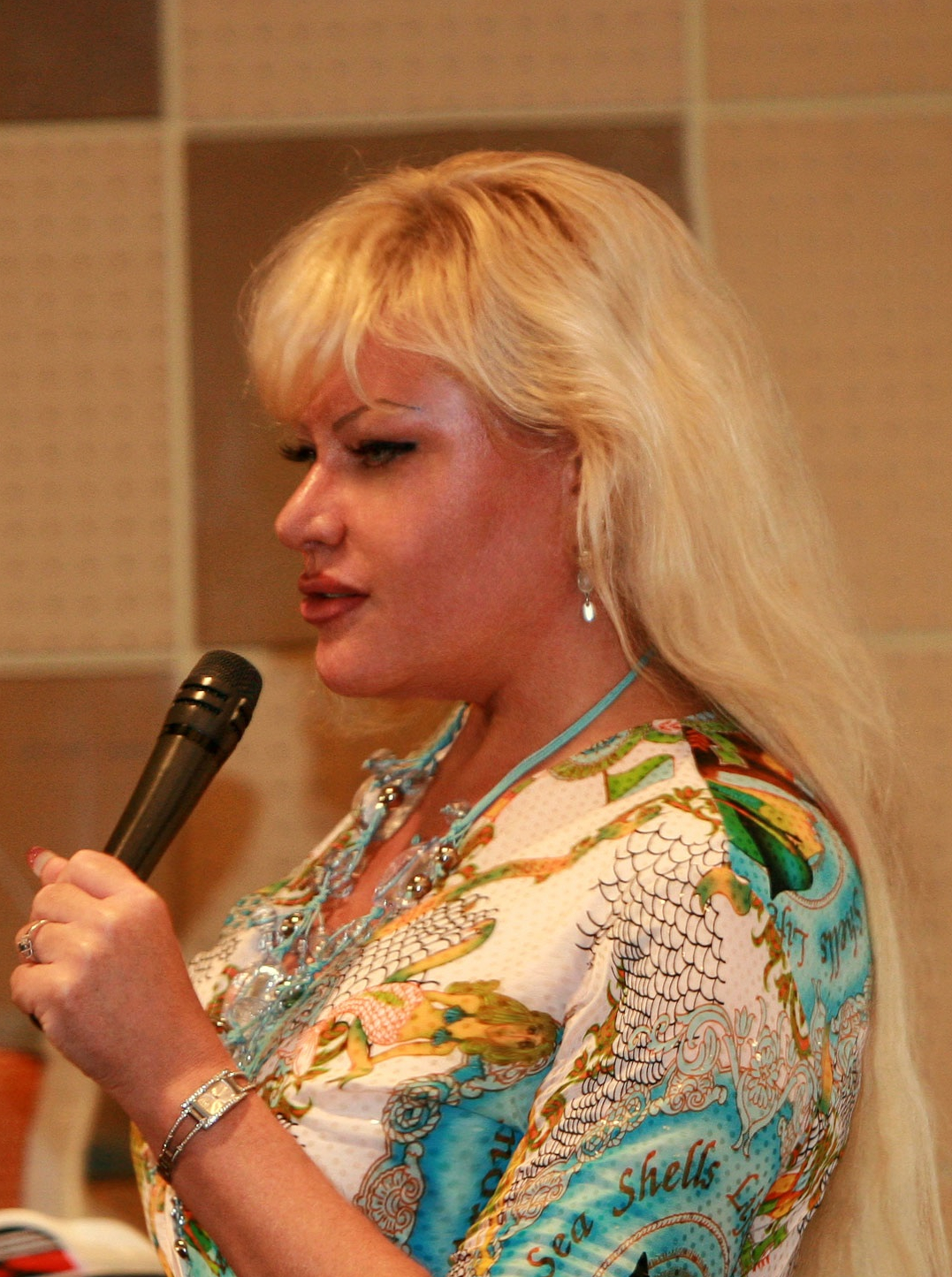
The Seattle Times article, naming her William Nelson, reported that at 33 the seller had been a part-time mathematics instructor at Youngstown State, and that Nelson’s claims of NASA work, a 1968 Olympic alternate berth, and eight doctorates did not check out. Barrett wrote that he could not find a physician listing. The article also reported the stage name Desiré Dubounet. English Wikipedia gives the birth as William Charles Nelson on 19 June 1951 in Warren, Ohio, citing an archived biography. HVG gives the birth name and the year 1951. In the 2007 article she is 56 and in Budapest, and the sales empire reached 32 countries. At an EPFX conference in Budapest the year before, the reporters wrote, she explained how she had used the EPFX to cure cancer and AIDS.
Clinics, a fair booth, a representative form
The reporters wrote that more than 10,000 of the devices had been sold in the United States, and company officials said more had been sold in the Northwest than in any other region. Nelson said the worldwide figure was 17,000, and the devices then cost 19,900 dollars. Those figures date from 2007.
The article described ordinary clinics and a public booth. In Tulsa, JoAnn Burggraf, 58, sat in a chair while Sigrid Myers wrapped straps around her forehead, wrists, and ankles and connected them to the EPFX and a computer. Sessions were 60 dollars an hour. At the 2007 Western Washington Fair in Puyallup a booth treated more than 400 people at 20 dollars for half an hour. Nelson said a plate on the device could read a hair, saliva, or blood sample and send frequencies to a person at a distance.
On 29 October 2026 the QX World product page offered the QUEX ED to professionals through a contact form naming QX World Kft, plus a where-to-buy link, with no public cart price.
Skin resistance, sold as balance
Barrett wrote that the device is claimed to balance bio-energetic forces the scientific community does not recognize as real, and that it mainly reflects skin resistance. His article, revised 12 July 2009, treats the QXCI, the EPFX, and the SCIO as names for that device. Explanations he records say the box sends small electrical impulses through the straps and then sends frequencies back. A Tulsa session in the 2007 investigation shows the same hardware in a room: straps, a shoe-box-sized unit, a computer screen, and a setting the operator called zap mode.
The registration did not match the disease pitch. In 1989, the reporters wrote, the company registered with the FDA as a maker of biofeedback machines, so the machines could be sold as stress-relieving tools, and the law did not allow claims that they diagnosed or treated disease. Barrett writes that Eclosion Corporation of Commerce City, Colorado, received 510(k) clearance to market the EPFX as a biofeedback device, and he regards the biofeedback label as a ploy.
Import Alert 80-06, published date 6 March 2025, carries a note dated 1/4/2008 on the Mandelay Kft listing: the EPFX has a premarket notification for therapeutic biofeedback to control stress and to teach a patient to relax, and it was not given marketing clearance to read subtle energy fields or for electro-dermal screening.
Who was paid
She sold the machines, and top sellers could receive commissions, cruises, and cars. Eclosion, the company the article names as the Budapest business, remained registered with the FDA in 2007. Barrett, writing in 2009, names a manufacturer, QX Ltd of Budapest, and gives a 2002 price of 13,000 dollars for the interface, software, manual, and basic training.
QX World’s history page, fetched 29 October 2026, is the company’s account of the later firms. It says she was the majority shareholder of MAITREYA Kft, founded in 1996, that the SCIO reached the market in 2003 with Pentavox hardware and her software, that she assigned her shares on 4 November 2011, and that in June 2017 QX World bought the SCIO and EDUCTOR hardware rights from Pentavox. The page also argues against rival sellers. The 2007 article names Eclosion, Barrett names QX Ltd, the import alert names Mandelay Kft and the Quantum Alliance, and the 2026 QUEX ED contact form names QX World Kft. In a comparison page updated 8 September 2026, QX World says the QUEX ED comes from the same line of technology as the SCIO and EDUCTOR, which it calls legacy platforms.
An indictment, a skin reading, a model still offered
The FDA ordered Nelson to stop selling the machine and making false claims, the reporters wrote, and she refused. In 1992 the agency ordered a stop to the false claims and later a recall, and sales as a healing machine continued. Barrett writes that Eclosion issued a recall notice in 1992 for the software of 139 devices. The 2007 article reports an indictment on nine counts of felony fraud in 1996 and says Nelson fled, without dating the departure. Barrett places the move to Hungary in 1993, and writes that the June 1996 charge was mail fraud, docket 96-CR-209-ALL, filed 25 June 1996, with a later fugitive listing. English Wikipedia’s Dubounet article says the nine counts were not in relation to the EPFX and cites the Seattle Times. The Times article states the nine counts but not their subject. QX World’s history page says she moved to Budapest in 1992.
Barrett wrote that the reading mainly reflects skin resistance, which is not related to the body’s health, and that use can cause unnecessary expense and delay of appropriate treatment. That is his assessment of the EPFX, QXCI, and SCIO. The 2007 article reported patient episodes without calling the device the cause of death. JoAnn Burggraf died in October 2005 within hours of a hospital admission, and tests showed undiagnosed leukemia; her son Bryan Burggraf said she had told him the device would make her well. Jerry Burggraf, who had leukemia and chemotherapy and began EPFX sessions in 2004, died in March 2005 at 59. Karen McBeth spent 17,000 dollars on a home machine and died on 3 September 2005. Her husband, Al Bergstein, a retired Microsoft manager, looked at the EPFX source code, which the reporters wrote appeared to generate results randomly. Sigrid Myers said that, legally, she was not supposed to say it, but the device could zap away disease. The Oregon Board of Chiropractic Examiners had prohibited chiropractors from using the EPFX, and its director, Dave McTeague, called it hocus-pocus. Janet Zibell received a Washington cease-and-desist and agreed not to use the device to diagnose or treat illness. Officials at St. John’s Hospital in Springfield, Missouri, said its two devices were used for stress relief. The reporters paraphrased the National Institutes of Health as saying energy-medicine research might hold promise and that the devices and treatments had not been scientifically validated.
HVG, in an article whose URL date is 29 December 2025, quoted Viktoria Dubounet’s 27 December post that Desire had died the previous afternoon; HVG gives her age as 74. English Wikipedia states 26 December 2025. QX World’s history page, fetched ten months later, still calls her retired.
The 6 March 2025 import alert still lists the EPFX, the QXCI, the SCIO, and other named items for Mandelay Kft. It lists EPFX software for the Quantum Alliance in Calgary, with an FDA note dated 24 September 2008 that the firm’s website represented the device as adequate and effective and that this was false or misleading because the device is not adequate or effective for its stated purposes. The alert does not name the QUEX ED or QX World. In a 24 September 2021 column, Joe Schwarcz of McGill University’s Office for Science and Society quoted the QXCI’s marketing and called it hogwash. QX World’s QUEX ED page fetched on 29 October 2026 describes an energy-balancing and biofeedback device, including a Disease Dictionary and a Degen Scan the seller says reads subtle energies. QX World Kft sells it as the current model of the line Barrett, the FDA alert and Schwarcz addressed under its older names; none of those three names the QUEX ED. A web search on 29 October 2026 for independent criticism of the QUEX ED found only seller and clinic pages.
The pattern repeats
The same structural machinery appears in different treatments and eras. These cases show the claimed mechanism and how the claim met evidence.
Electronic Reactions of Abrams (ERA)
Rife frequency generator (Rife machine)
Part of the lineage
Evidence · 10 sources
- How one man's invention is part of a growing worldwide scam that snares the desperately ill (2007)
- Some Notes on the Quantum Xrroid (QXCI) and William C. Nelson (2009)
- Import Alert 80-06: Detention Without Physical Examination of Medical Devices with False or Misleading Labeling (2025)
- QUEX ED product page, QX World (2026)
- Early history of QX World (2026)
- „Az aranykor anyja volt” – meghalt Desire Dubounet magyar–amerikai drag queen (2025)
- Desiré Dubounet (2026)
- File:Desiré Dubounet at the 2010 Biofeedback & Wellness Congress in Cancún.jpg (2010)
- QUEX ED vs EDUCTOR vs SCIO: Which Biofeedback Device Should You Choose? (2026)
- Claptrap! (2021)