Buchinger therapeutic fasting
Otto Buchinger, a German physician, opened a fasting clinic in 1920 and taught a juice-and-broth fast as treatment. Clinics carrying his name still sell that fast and describe it as one of the most powerful therapeutic interventions to promote longevity. A 2022 review says the long-term longevity benefits of fasting are not well understood. A clinic study reports short-term changes in weight and blood pressure.
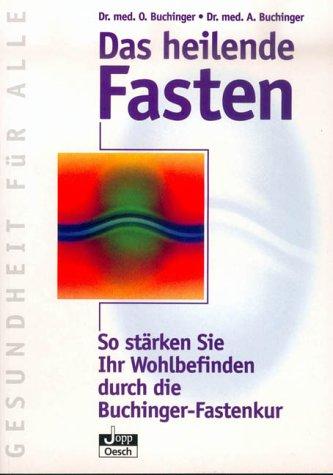
A navy physician who opened clinics
In 1919 a German navy physician, discharged two years earlier with rheumatism, undertook a 19-day fast under Dr. Gustav Riedlin in Freiburg. English Wikipedia, which carries a January 2015 citation-needed banner and a January 2019 possible conflict-of-interest banner, records Otto Buchinger as that physician: born on 16 February 1878 in Darmstadt, trained in law and medicine at Ludwigs University, and opened Kurheim Dr. Otto Buchinger in Witzenhausen in 1920. Quoting his daughter Maria, the article records his own account that he could move his joints again. That is his account as the article relays it, not a separate clinical confirmation. In 1935 he opened a sanatorium in Bad Pyrmont. In 1953 he opened a clinic in Überlingen on Lake Constance, where he worked with his daughter Maria and a son-in-law spelled Helmut Wilhelm. He died on 16 April 1966 in Überlingen, West Germany, at age 88, having set the method out in a 1935 book. The 2026 homepage is signed by Leonard Wilhelmi, Victor Wilhelmi, and Katharina Rohrer-Zaiser, who describe themselves as the fourth generation continuing the method.
A deep cleansing, as the clinics describe it
The clinic method page states that the fast stimulates autophagy and detox enzymes, resulting in a deep cleansing of the cells and tissue.
The clinic homepage states that fasting is one of the most powerful therapeutic interventions to promote longevity.
The method page says a person voluntarily goes without food for a time and lives mainly on fat reserves. It says the four-day return to ordinary meals is a period of regeneration, also called rejuvenation, and that dormant stem cells are activated during that return. It says a stay should last at least 10 days. It lists metabolic syndrome, obesity, hypertension, type 2 diabetes, rheumatoid arthritis, and migraine among indications, and it places multiple sclerosis, Parkinson disease, prevention of Alzheimer’s disease, cancer, chemotherapy, and radiation therapy under the heading “Currently in Research.” Those headings are the clinic’s list. They are not results of trials reported on the page. The programme page says the Buchinger Med Programme is built around the fasting method of Dr. Otto Buchinger (1878-1966) and that fasting guests are offered herbal teas, vegetable consommes, and fruit juices. This 2026 wording is the clinic’s current description. It is not a text from 1920. A 2022 review describes the published protocol as juice, vegetable broth, honey, and fluids, at about 200 to 250 kilocalories a day.
The clinic funded the safety study
PLOS ONE states that the 2019 study was financed by Amplius GmbH and that Françoise Wilhelmi de Toledo is a member of the clinic directory board and managing director of Amplius.
The paper says Amplius conceives, coordinates, and develops fasting research on behalf of the Buchinger Wilhelmi Clinic, and that the company’s task is to develop a research department for the clinics in Überlingen and Marbella, who are the funders. It also says three other authors were or had been employed by the clinic, or were paid by Amplius as a consultant. The 2026 homepage sells residential programmes and a home FASTING BOX, and it labels Françoise Wilhelmi de Toledo in a research-department portrait. Staff and suppliers are paid as well. The documented overlap is that the seller of the fast also financed the tolerability study.
Short-term changes, and an open longevity question
A 2022 review in Nutrients states that the long-term health and longevity benefits of fasting are not well understood and that data on the effects of fasting on health and longevity are scant.
The review’s section on the Buchinger-Wilhelmi example names Otto Buchinger, his daughter Maria Buchinger, and a son-in-law Helmut Wilhelmi, and says the German and Spanish clinics were both still operating when the reviewers opened the clinic site on 16 November 2021. It recounts that he treated his joint rheumatism by fasting. That is the review’s retelling of his account. The review summarizes a 1,422-person observational study of fasts lasting 4 to 21 days as suggesting short-term changes. Its abstract says controlled trials that measure mortality from any cause are absent, and that misinformation is pervasive.
A 2025 review in Endocrine Reviews states that the evidence base supporting fasting interventions to promote metabolic health in humans is limited and that the clinical evidence is not yet sufficient to widely recommend fasting.
That 2025 review does not name Buchinger Wilhelmi. It says caloric restriction without overt starvation prolongs lifespan in model organisms, and that human trials have mainly reported short-term cardiometabolic signals, often alongside weight loss. It says testing whether caloric restriction or intermittent fasting extends life in humans is challenging, and that longevity is not a practical endpoint for human trials. Those limits are about fasting research as a class.
The 2019 PLOS ONE paper, by Wilhelmi de Toledo and colleagues, followed 1,422 people at the Überlingen clinic through fasts of 4 to 21 days at about 200 to 250 kilocalories a day. It reports reductions in weight, abdominal circumference, and blood pressure, adverse effects in less than 1 percent of participants, and it calls that fast safe and well tolerated. It does not report lifespan. Most participants in that study came from upper social classes with high education.
The pattern repeats
The same structural machinery appears in different treatments and eras. These cases show the claimed mechanism and how the claim met evidence.
Part of the lineage
Evidence · 9 sources
- Buchinger Wilhelmi homepage (English) (2026)
- Buchinger Wilhelmi therapeutic fasting and nutritional strategies (2026) (2026)
- The Buchinger Med Programme (2026) (2026)
- Otto Buchinger (English Wikipedia) (2026)
- Traditional and Medical Applications of Fasting (2022)
- A Critical Assessment of Fasting to Promote Metabolic Health and Longevity (2025)
- Safety, health improvement and well-being during a 4 to 21-day fasting period in an observational study including 1422 subjects (2019)
- Das heilende Fasten. So stärken Sie Ihr Wohlbefinden. (2002)
- Fasting for the Cure of Disease (1908)