Bragg live-food regimen
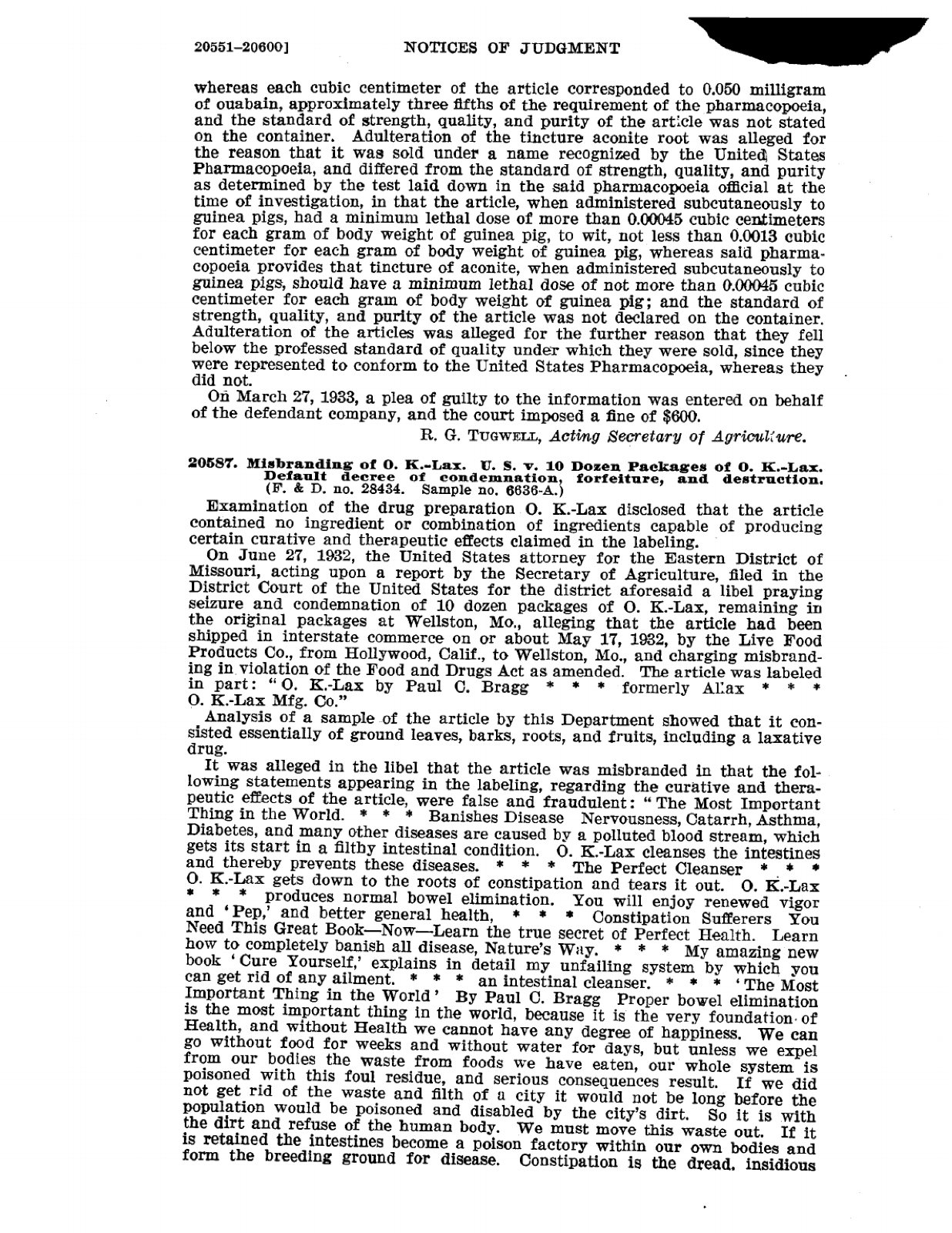
In 1932 a laxative labeled O. K.-Lax by Paul C. Bragg promised that cleaning out the intestine would prevent asthma and diabetes and bring renewed vigor. The federal record is Notice of Judgment 20587. It says the article could not produce certain claimed effects, and it records a 15 February 1933 court order to destroy the seized packages. The record reports no test of the claims in any person; the evidence offered was the label.
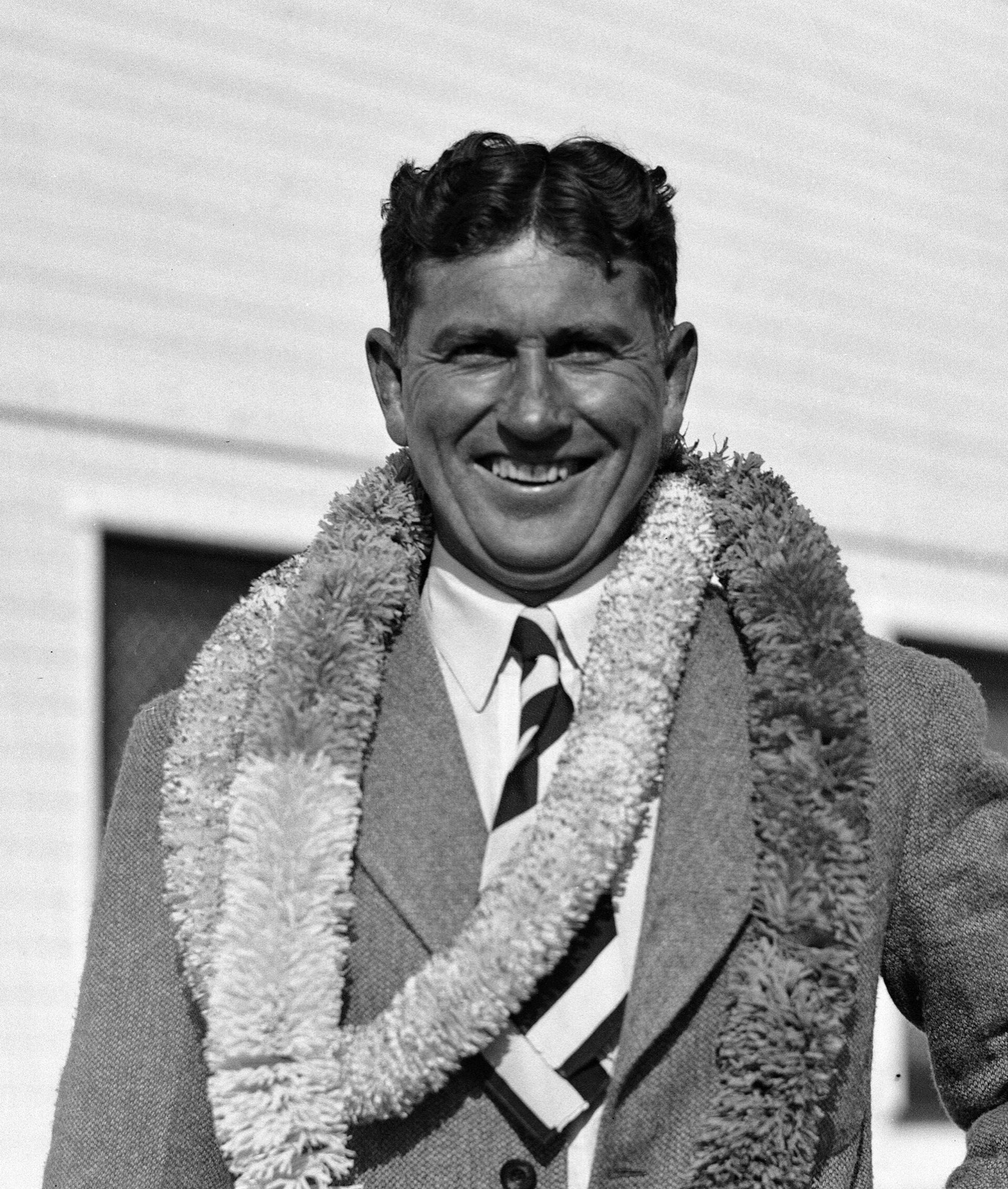
His name on the package
On or about 17 May 1932 the Live Food Products Co. shipped ten dozen packages from Hollywood, California, to Wellston, Missouri. The notice of judgment says they were labeled in part “O. K.Lax by Paul C. Bragg.” Paul Chappuis Bragg was the promoter named on that label. Wikipedia states that genealogical research places his birth on 6 February 1895 in Batesville, Indiana, and that he claimed a birth year of 1881. Fourteen years is a generous rounding error. He died of a heart attack in the emergency room of South Shore Hospital in Miami on 7 December 1976, aged 81. The article says there is no documentation to back up the advanced degrees he claimed in interviews.
The label also advertised a book, Cure Yourself, which in the wording the notice quotes explains “my unfailing system”. A text in the labeling headed The Most Important Thing in the World, by Paul C. Bragg, calls proper bowel elimination “the very foundation of Health” and recommends eating foods in their natural state. That is a personal regimen published in his name, not a laboratory series. Sanford Bennett’s case in this archive is an earlier example of the same pattern: a personal routine set out in his own books, with his own photographs as the demonstration. Bragg’s 1932 demonstration was the package.
A package across state lines
Nothing in the 1934 notice describes a closed clinic or a screened clientele. The goods were an ordinary interstate shipment from Hollywood: ten dozen packages that the libel says were still in their original packages at Wellston. The labeling pointed buyers to a book that explained the system, so a reader could follow it at home. One shipment, one Missouri town, one book plug.
From a filthy intestine to named diseases
The labeling, as quoted in the notice, said that nervousness, catarrh, asthma, diabetes and many other diseases are caused by a polluted blood stream which gets its start in a filthy intestinal condition, and that O. K.Lax cleanses the intestines and thereby prevents these diseases. It added that the buyer would enjoy renewed vigor and better general health. The step from a cleansed intestine to preventing asthma and diabetes is asserted on the label and is not tested in the notice. The notice reports no blood test and no asthma or diabetes outcome in any person; its only reported bowel counts in a person are testimonials printed in the labeling. The labeling, for the record, called one bowel movement a day an erroneous idea and asked for at least two or three. The same label also promises to get rid of any ailment, which is general wording. The claims this case uses are the named diseases and the promise of renewed vigor.
The shipper and the name on the label
The shipper in the notice is the Live Food Products Co. The label carries Paul C. Bragg’s name and points to his book. Wikipedia states that his food manufacturing company was Live Food Products, Inc., later Bragg Live Foods, Inc. This page does not treat the 1932 “Co.” and the later “Inc.” as one corporation. What the records do show is a commercial interest: the firm that shipped the packages and the man named on them were selling the goods whose wording carried the disease and vigor claims. The notice does not describe his state of mind.
What the notice found
The notice opens with the Department’s examination. The article contained no ingredient or combination of ingredients capable of producing certain curative and therapeutic effects claimed in the labeling. Analysis found ground leaves, barks, roots and fruits, including a laxative drug. In other words, a laxative. The libel alleged that the quoted statements were false and fraudulent. No claimant appeared. On 15 February 1933 the court entered judgment of condemnation and forfeiture and ordered the product destroyed. The notice itself was issued in February 1934. Those are two different dates.
A postscript, which is not a continuation. A company under the Bragg name survives and sells apple cider vinegar. Wikipedia says Bragg Live Food Products, Inc. was sold in 2019 to an investment group led by Swander Pace Capital, and that the new ownership continues to sell apple cider vinegar. The Bragg Live Foods homepage, fetched 4 November 2026, says its aim is to make wellness accessible to everyone, calls that Paul Bragg’s guiding principle, and says the firm continues that mission today. It does not print the 1932 asthma paragraph, and it does not sell O. K.-Lax. Truth in Advertising reported on 6 June 2024 that none of the apple-cider-vinegar products it reviewed linked to studies supporting their claims. Its update of 12 August 2024 said the company had removed several disease-treatment testimonials after a TINA.org inquiry, but that numerous other disease-treatment claims remained on the Bragg Live Foods site, including testimonials claiming its products can treat or alleviate the symptoms of diabetes. The 1933 decree is not a ruling on that vinegar, and this archive does not treat the vinegar as the 1932 intervention. The word diabetes appears on the 1932 label and in the 2024 report, ninety-two years apart.
The pattern repeats
The same structural machinery appears in different treatments and eras. These cases show the claimed mechanism and how the claim met evidence.