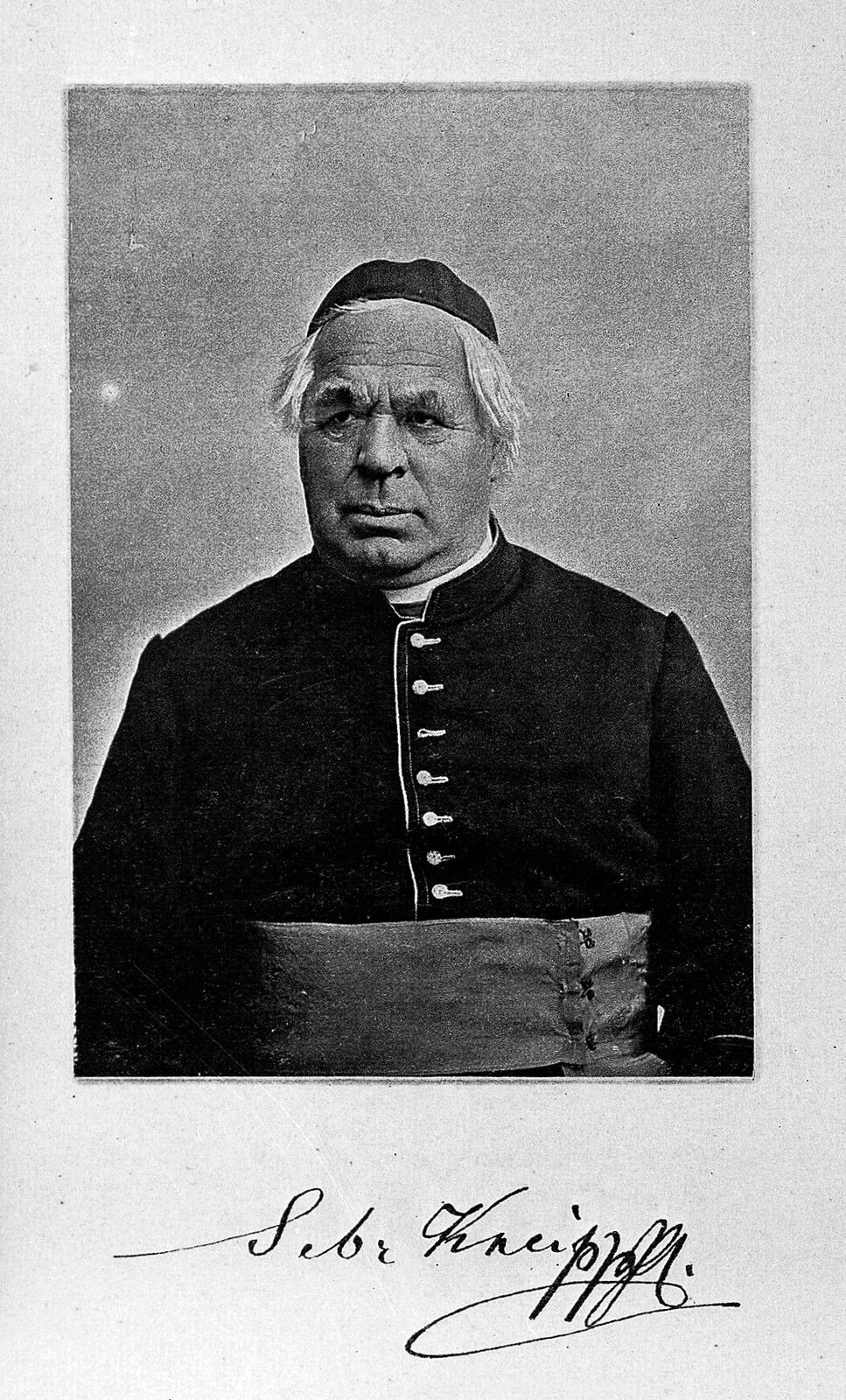
Sebastian Kneipp
Sebastian Kneipp was born 17 May 1821 in Stephansried, Bavaria, the son of a weaver, and worked as a weaver himself before entering the priesthood (Catholic Encyclopedia, 1910; Czeranko, 2019). As a theology student he contracted tuberculosis — “often synonymous with death” at the time (Czeranko, 2019) — and treated himself with the cold-water immersions described in a small book by Dr. Johann Siegmund Hahn, later crediting that book with saving his life (Czeranko, 2019). Ordained a Catholic priest in 1852, he became confessor to the Dominican convent at Wörishofen in 1855 and its parish priest around 1880-1881 (Catholic Encyclopedia, 1910; Bad Wörishofen official history, n.d.). His 1886 book Meine Wasserkur (My Water Cure) made him internationally famous; Bad Wörishofen’s own history states plainly: “The foundation stone of the health resort in Wörishofen has been laid.” He died at Wörishofen on 17 June 1897.
Kneipp is treated in the medical-historical literature as a transitional figure between lay hydrotherapy and organized naturopathy: unlike some contemporaries in Germany’s Natural Cure Movement, he accepted vaccination and conventional medication and sought recognition from the medical establishment rather than rejecting it outright (Ko, 2016). That stance helped his method outlive him as an organized practice — the modern Kneipp-Bund and its international affiliates still certify “Kneipp health resorts” and train practitioners under his name — even as the commercial enterprise that began with his signed name-and-portrait license became, and remains, a separate, ongoing business.