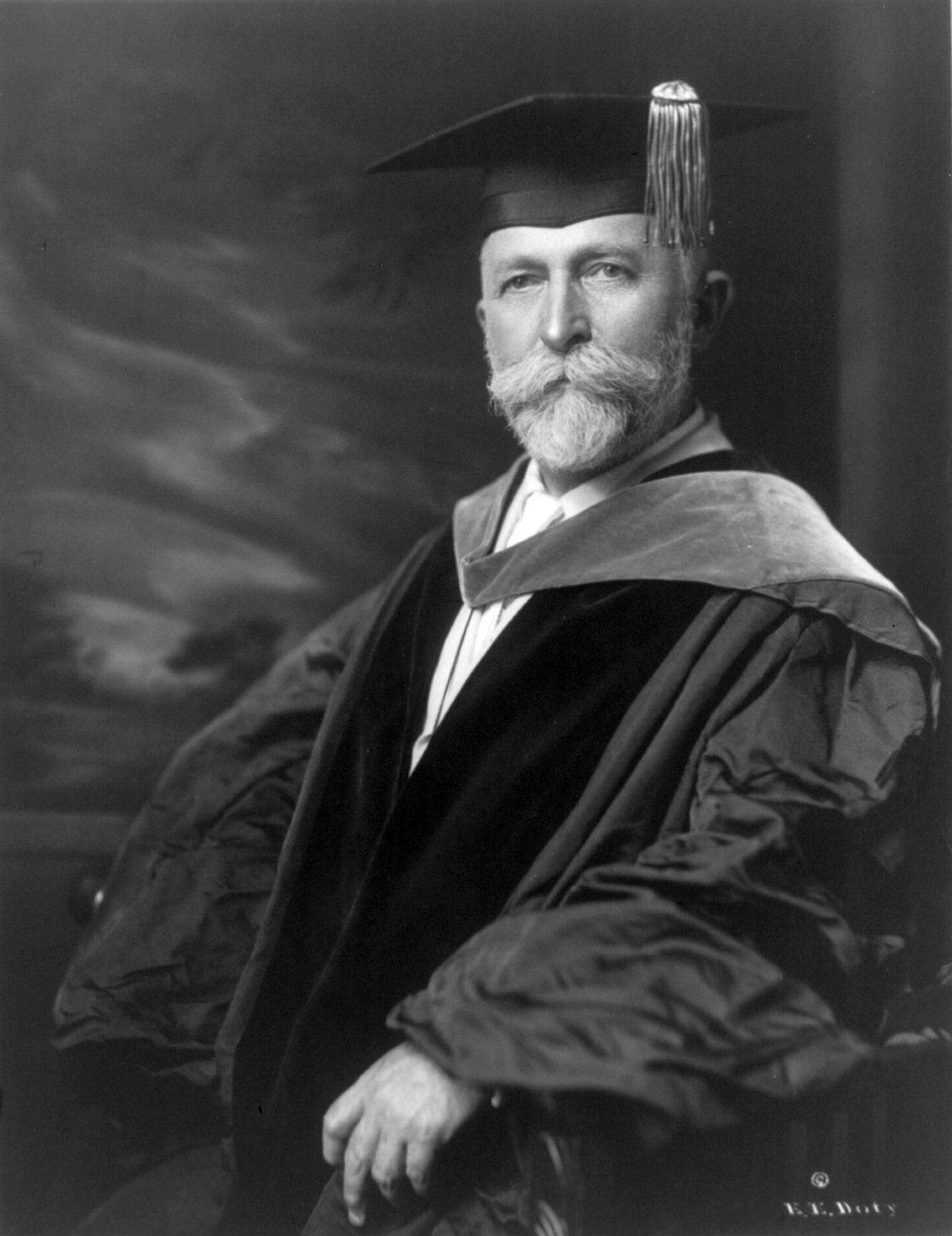
John Harvey Kellogg
"Intestinal toxaemia or autointoxication is the most universal of all maladies, and the source of autointoxication is the colon with its seething mass of putrefying food residues."
John Harvey Kellogg (1852-1943) trained at Bellevue Hospital Medical College and from 1876 directed the Battle Creek Sanitarium in Michigan, which he built from a small Adventist health institute into a large residential health resort. He is the promoter in this case for the program he called ‘biologic living,’ or the Battle Creek Idea: a coordinated regimen of antitoxic vegetarian diet, bowel regularity and colon hygiene, hydrotherapy, exercise, fresh air, and abstinence from alcohol and tobacco, organized around the theory of intestinal autointoxication. He set out the theory in Autointoxication; or, Intestinal Toxemia (1919), the practical colon-hygiene program in Colon Hygiene (1916), and the institutional system in The Battle Creek Sanitarium System (1908). The publicly_disconfirmed status applies to the autointoxication mechanism on which the longevity claim rested, not to every element of the regimen: abstinence from alcohol and tobacco and regular exercise have independent later support, but the colon-autointoxication rationale was undermined by experimental work in the 1910s and abandoned by mainstream medicine in the 1920s (Whorton, 2000). The key quotation is Kellogg’s own statement of the theory (from The Itinerary of a Breakfast, 1920), as reproduced verbatim in the secondary literature (Mathias, 2018). Kellogg’s brother Will, who managed the Sanitarium’s food operations, went on to found the corn-flake company that bears the family name; that commercial story is separate from the longevity claim documented here.