METHUSELAH ARCHIVE PRACTITIONERS / GAYLORD WILSHIRE
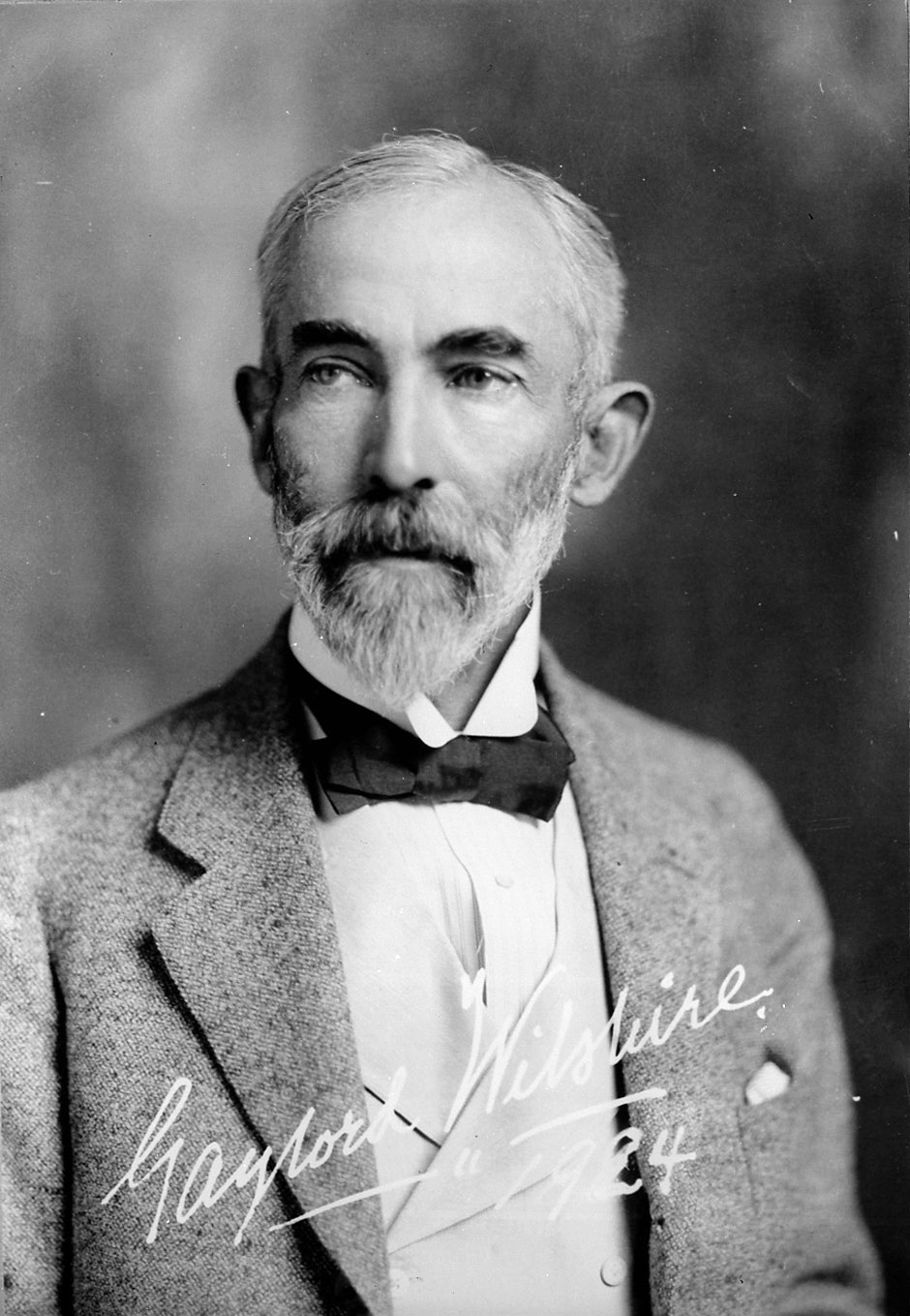
Black-and-white studio portrait of an older man with a full white beard, in a tweed jacket, wing collar, and bow tie; a handwritten signature reading 'Gaylord Wilshire 1924' runs across the lower part of the image.
PUBLIC DOMAIN source

Gaylord Wilshire

individual · Los Angeles and San Francisco, California, USA; died New York City
lived:1861–1927
active:1925–1927
type:individual
role:promoter
location:Los Angeles and San Francisco, California, USA; died New York City
eventual status:publicly_disconfirmed
FINANCIAL CONFLICTS
Wilshire was the named inventor of the I-ON-A-CO, the president of the Iona Company that manufactured and sold it, and its public lecturer and radio pitchman; his own advertising styled him 'Inventor of I-ON-A-CO' and 'President Iona Co.' According to Morris Fishbein's 1932 Fads and Quackery in Healing, the belts were sold for $55 cash or $65 on time payments and thousands were sold by his methods of promotion (press advertising, free office and home demonstrations, weekly lectures, and radio). What the source supports is the concentration of inventor, company head, and promoter in one person and a direct-to-consumer sales model that bypassed the medical profession. Earlier in his career, Fishbein records, Wilshire had promoted gold-mine ventures to socialists on instalment terms, and Jesse La Tour's 2024 Fullerton Observer profile records that he and his brother speculated in Southern California real estate, the venture for which Wilshire Boulevard is named.
INTERVENTIONS PROMOTED
EXTERNAL REFERENCES
NOTES

Henry Gaylord Wilshire (1861 to 1927) was an American real-estate developer and socialist, not a physician. Jesse La Tour’s 2024 Fullerton Observer profile records that Wilshire and his brother speculated in Southern California real estate, that Wilshire Boulevard in Los Angeles is named for the Wilshire brothers, and that he was a prominent socialist who published his own magazine. In the mid-1920s he turned to medical merchandising, marketing the I-ON-A-CO electromagnetic belt as a restorer of health that magnetized the iron in the body and improved tissue oxygenation. He sold it directly to the public through company offices in San Francisco and Oakland, free demonstration treatments, weekly public lectures he gave himself, radio talks over station KTAB, and a mail-order booklet, styling himself the inventor of the device. Morris Fishbein, editor of the Journal of the American Medical Association, characterized him as a charlatan in his 1932 Fads and Quackery in Healing and recorded that the device sold for $55 to $65 and that thousands were sold. His eventual status is publicly disconfirmed: the American Medical Association’s Bureau of Investigation, under Arthur J. Cramp, dismissed the I-ON-A-CO as quackery and rechristened it the ‘magic horse collar.’ Fishbein records that Wilshire died of kidney disease in a New York hospital shortly after launching the device, in 1927, and that imitators brought out similar belts following his death.