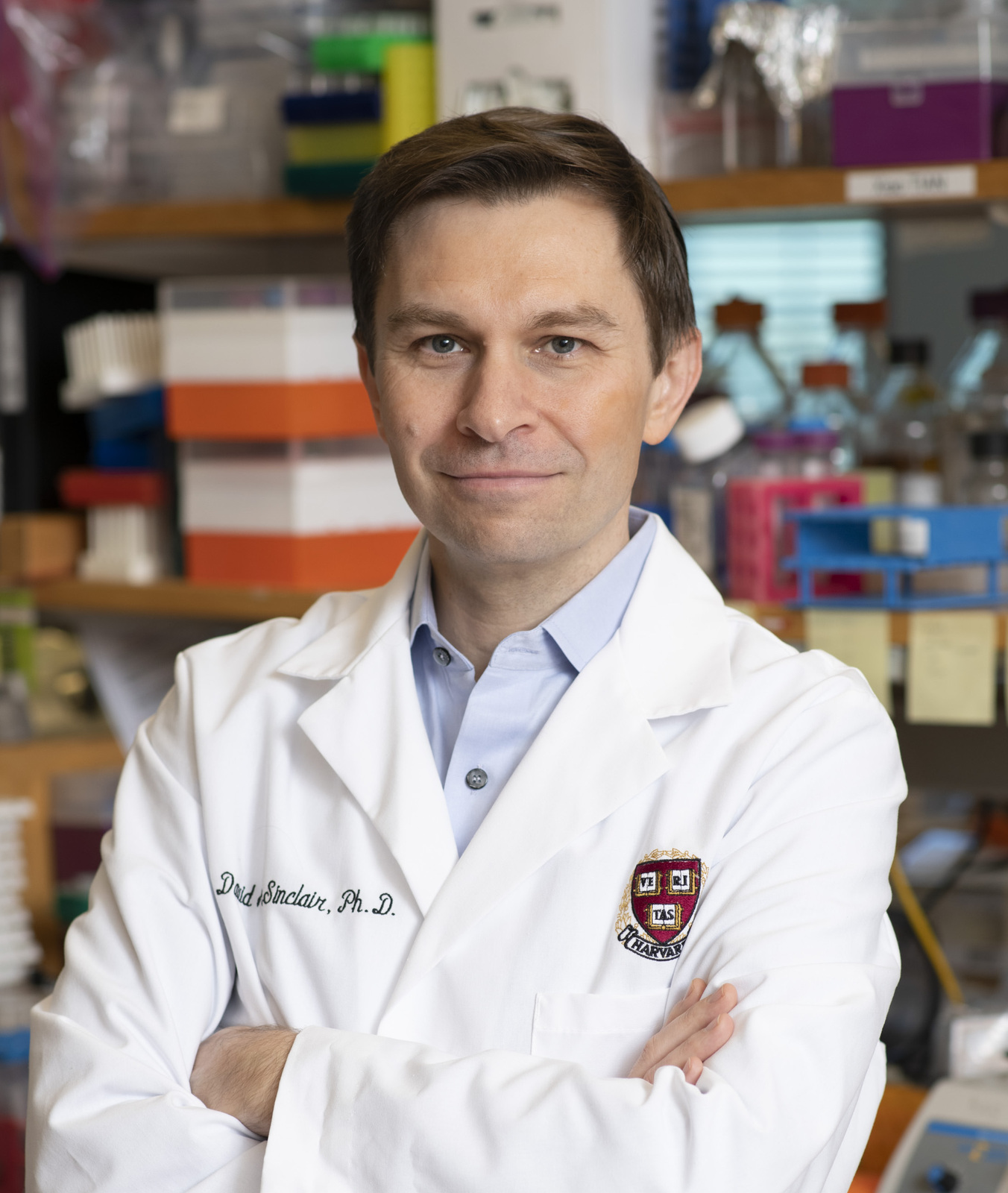
David A. Sinclair
"[Resveratrol is] as close to a miraculous molecule as you can find."
David Sinclair earned his PhD in molecular genetics at the University of New South Wales in 1995 and is now a professor of genetics at Harvard Medical School and founding director of the Paul F. Glenn Laboratories for the Biological Mechanisms of Aging. His 2003 report, with colleagues, that resveratrol activates the sirtuin enzyme SIRT1 and extends yeast lifespan launched a wave of commercial and popular interest in longevity genes, culminating in Sirtris Pharmaceuticals’ $720 million sale to GlaxoSmithKline in 2008; a 2010 independent study later showed the reported SIRT1 activation was an artifact of the original screening assay, a company drug trial was halted for a serious adverse event, and GSK shut down the Sirtris research program in 2013. Sinclair’s public profile survived that reversal; his 2019 book Lifespan: Why We Age—and Why We Don’t Have To (Atria Books) became a bestseller, and he publicly advocated NAD+-boosting compounds, principally NMN, which he has said he takes daily himself. Documented company relationships include founder, investor, inventor, adviser, and board roles. In 2024 he resigned as president of the Academy for Health and Lifespan Research — a body of longevity researchers he had co-founded and led — after a company he co-founded with his brother, Animal Bioscience, issued a press release quoting him claiming a dog supplement had been “proven to reverse aging in dogs,” a claim other longevity researchers, including University of Washington’s Matt Kaeberlein, publicly called unsupported by the underlying data; Kaeberlein resigned his own Academy membership over the episode, separately describing it as the textbook case of a scientist selling snake oil.