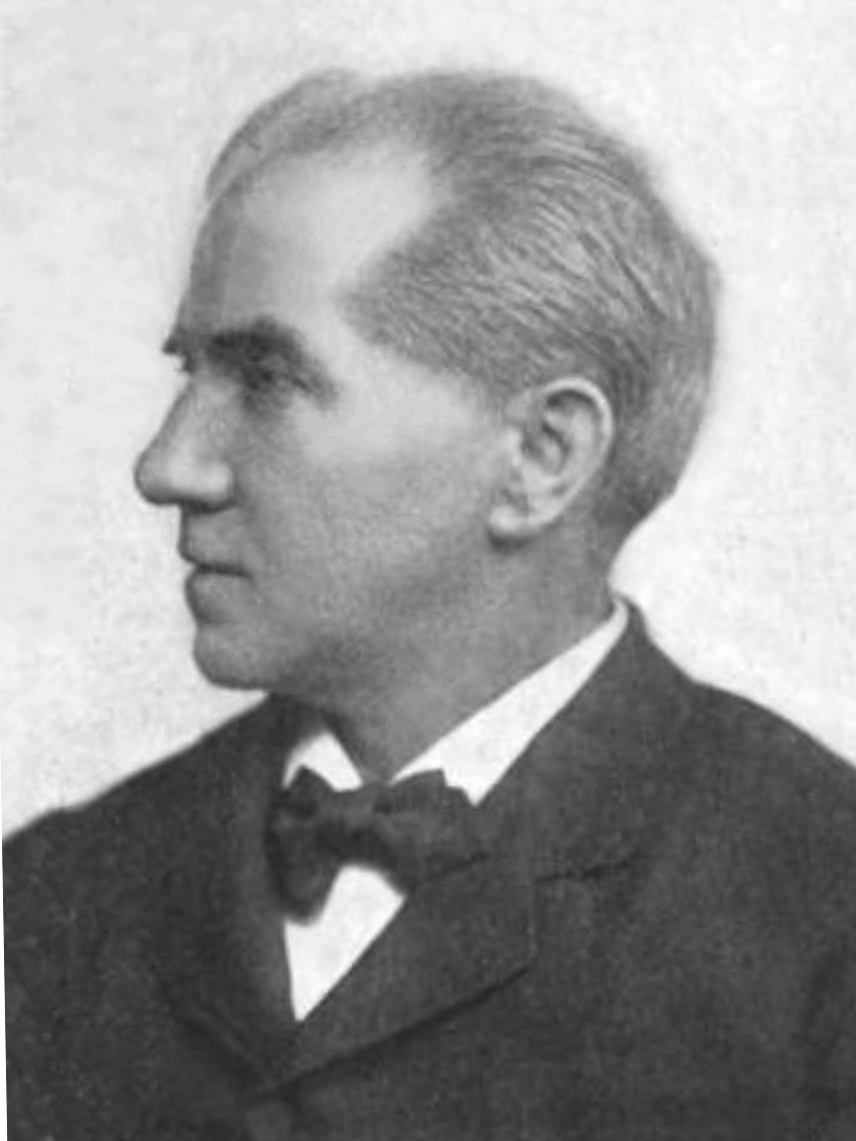
Charles Alfred Tyrrell
"there is only one disease, although its manifestations are various, and there is only one cause for it, and that is the retention of waste matters in the system"
Charles Alfred Tyrrell (1843-1918) was the New York promoter of the J.B.L. Cascade, a home enema appliance sold under the autointoxication theory of disease. Per the AMA’s records he was born in 1843 and took a diploma from the Eclectic Medical College of New York in 1900, at age 57 (a library-catalog authority record gives his birth as 1846, a minor discrepancy noted rather than resolved here; the 1843 figure is supported by both the AMA and Wikidata). He styled himself ‘Professor’ and ‘M.D.’ and presided over Tyrrell’s Hygienic Institute, which sold the Cascade, an antiseptic tonic, his book The Royal Road to Health, and a separate eye device, the ‘Ideal Sight Restorer.’ His longevity-adjacent pitch was disease prevention and the preservation of health through daily internal bathing: a single cause of disease (retained intestinal waste) met by a single proprietary remedy.
The publicly_disconfirmed status reflects two distinct failures. The enabling theory, intestinal autointoxication, was rejected in the early 20th century, with Walter C. Alvarez (JAMA, 1919) arguing that putrefactive products are not absorbed from the bowel in harmful quantities, and later reviews (Sullivan-Fowler 1995; Ernst 1997) treating autointoxication and colonic irrigation as discredited. The device-level claims were investigated and condemned by the American Medical Association, which also exposed his inventorship claim: United States patent records showed that Henry M. Guild, not Tyrrell, invented and patented the appliance in 1903. Tyrrell persisted in his enterprises until his death in 1918 (Ferry 1986).