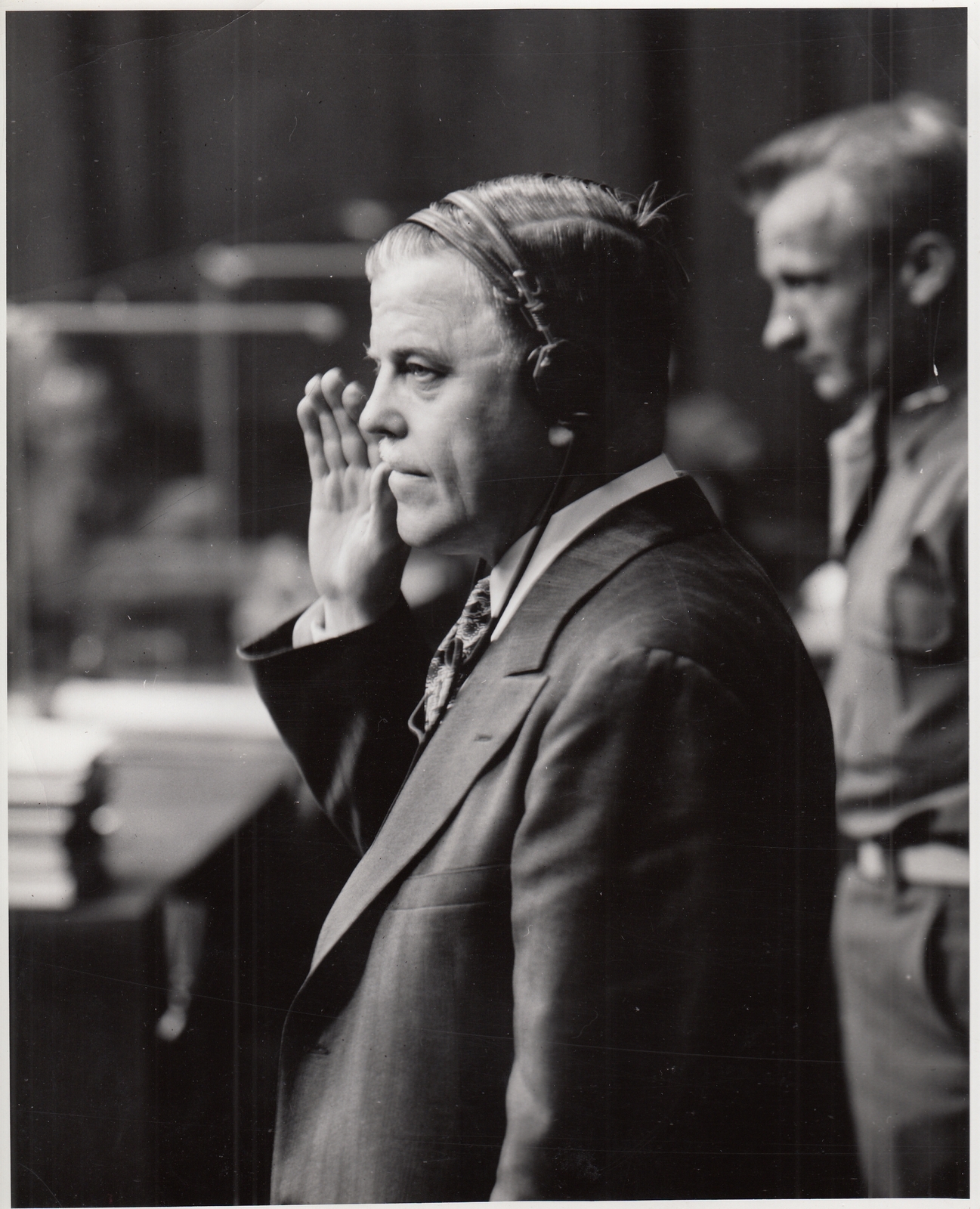
Andrew C. Ivy
Andrew Conway Ivy (25 February 1893 to 7 February 1978) was a physiologist and physician who, by the mid-1940s, had become one of the most prominent medical scientists in the United States. He served as Chairman of the Division of Physiology and Pharmacology at Northwestern University from 1926 to 1945, then as Vice President of the University of Illinois overseeing its colleges of medicine, dentistry, pharmacy, and nursing. He was president of the American Physiological Society (1939–1941), discoverer of cholecystokinin and other gastrointestinal hormones, and a co-author of what became the Nuremberg Code. He published more than 1,500 scientific papers (Gale, Missouri Medicine 2023, PMID 38144930). By his own later account, he was ‘probably the most famous doctor in the country’ at the height of his career in the late 1940s; that assessment, attributed to Moreno, appears in the Gale 2023 Missouri Medicine retrospective.
In 1949, Ivy was approached by Stevan Durovic, a Yugoslav physician who presented a substance he claimed to have derived from the blood of Argentinean horses inoculated with Actinomyces bovis. Ivy agreed to investigate and soon became the drug’s most prominent advocate, lending his scientific reputation to a compound whose composition he did not independently verify. He held a press conference in Chicago in 1951 announcing favorable results in 22 cancer patients, without peer review of his methodology (Ward, Bull Hist Med 1984, PMID 6370345). When the American Medical Association found the data unpersuasive in its October 1951 status report (JAMA 1951, PMID 14873580), Ivy accused the AMA of bias rather than revising his conclusions.
The Krebiozen affair occupied the last three decades of Ivy’s professional life. He served on and later led the Krebiozen Research Foundation’s board while simultaneously acting as its principal scientific advocate, without disclosing this arrangement publicly. He was indicted in December 1964 alongside the Durovic brothers on 49 counts and acquitted after an eight-month trial in January 1966. After the acquittal, Ivy eventually severed his formal ties with Durovic (Gale 2023, PMID 38144930), but his scientific reputation did not recover. He died in Oak Park, Illinois, on 7 February 1978, at age 84.