METHUSELAH ARCHIVE PRACTITIONERS / ANA ASLAN
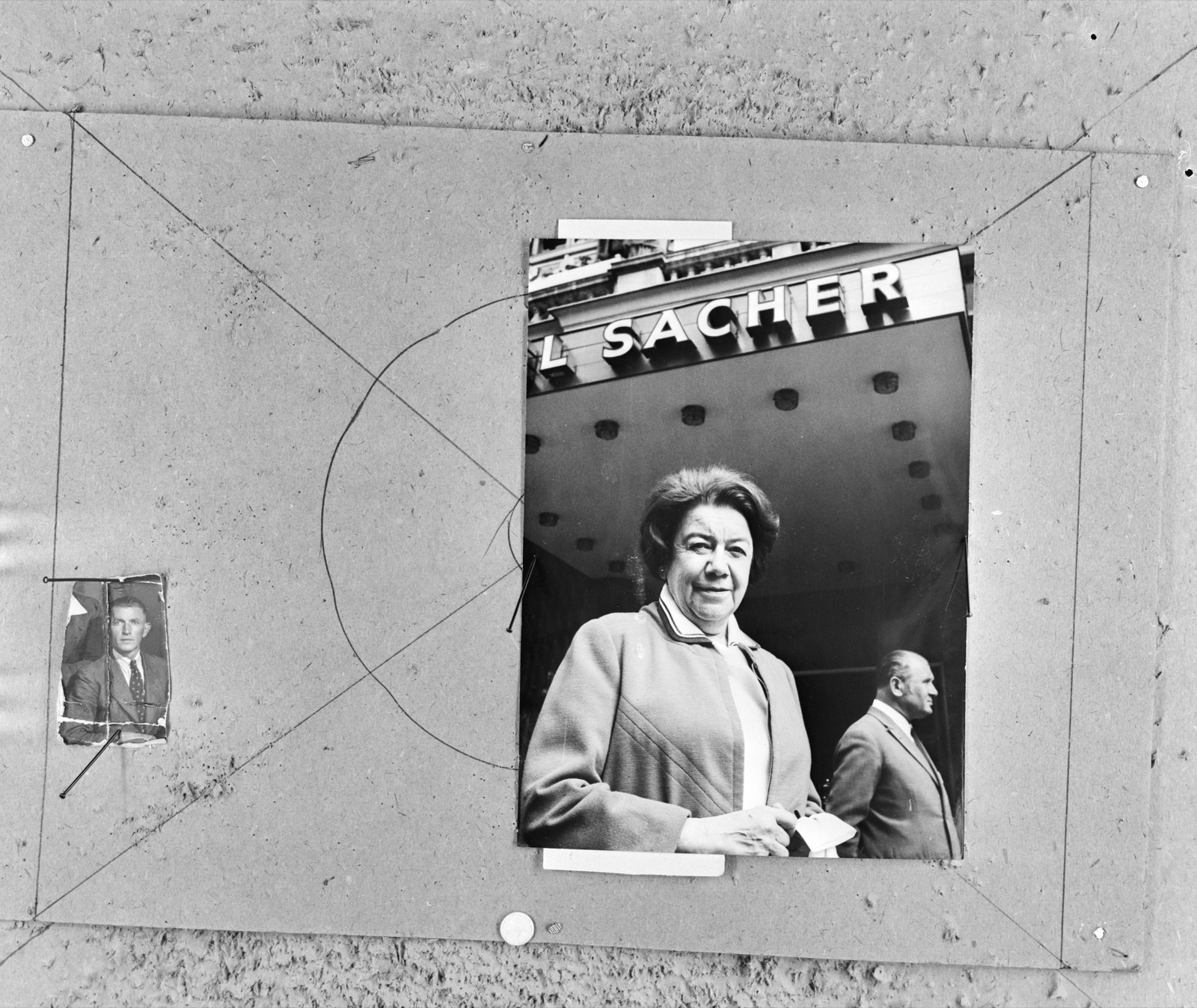
Black-and-white press-agency contact scan: an older woman in a light coat with a dark collar, hair pulled back, standing and facing the camera below an illuminated 'Sacher' hotel sign in Vienna, with a smaller unrelated portrait of a young man taped at the left edge.
PUBLIC DOMAIN source

Ana Aslan

individual · Bucharest, Romania (National Institute of Geriatrics and Gerontology)
lived:1897–1988
active:1949–1988
type:individual
role:promoter
location:Bucharest, Romania (National Institute of Geriatrics and Gerontology)
eventual status:publicly_disconfirmed
FINANCIAL CONFLICTS
Aslan was the developer of the Gerovital H3 anti-aging claim, the director of the Bucharest state institute that produced and administered the therapy (she headed the National Institute of Geriatrics and Gerontology from 1958 until her death in 1988), and the scientific authority who validated it. The conflict in this case is structural and institutional rather than narrowly personal: under the Romanian state, Gerovital became a national geriatric program and a source of export and treatment revenue, with developer, producing institute, and credentialing authority concentrated around one person and one state body. The bundle states this concentration of roles rather than asserting a personal commercial profit or an exhaustive accounting of the program's finances.
INTERVENTIONS PROMOTED
EXTERNAL REFERENCES
NOTES

Ana Aslan (1 January 1897, Braila, to 20 May 1988, Bucharest) was a Romanian physician who became the international face of procaine therapy for aging. Working under the gerontologist Constantin Ion Parhon, she repurposed buffered procaine (the local anesthetic Novocain) as a systemic anti-aging agent, branded Gerovital H3, from around 1949 to 1951. She directed the National Institute of Geriatrics and Gerontology in Bucharest (its director from 1958 until her death) and organized the Romanian Society of Gerontology and Geriatrics in 1959, building Gerovital into a national geriatric program that drew foreign patients to Romania.

Her own 1965 Journal of Gerontology paper reported that long-term procaine extended the lifespan of albino rats, the experimental basis for the human anti-aging claim. The systemic human evidence was reviewed and rejected by Ostfeld, Smith, and Stotsky in 1977, who found no convincing value beyond a possible antidepressant effect. Aslan died in 1988; the Gerovital name survives on two tracks, as a procaine-free Romanian cosmetic line (Farmec) and as a procaine medicine, a 2% procaine hydrochloride Gerovital H3 injectable bearing her name and manufactured by Zentiva, documented as commercially available under a Romanian marketing authorization in a 2020 study. The geriatric institute she led continues to operate under her name.