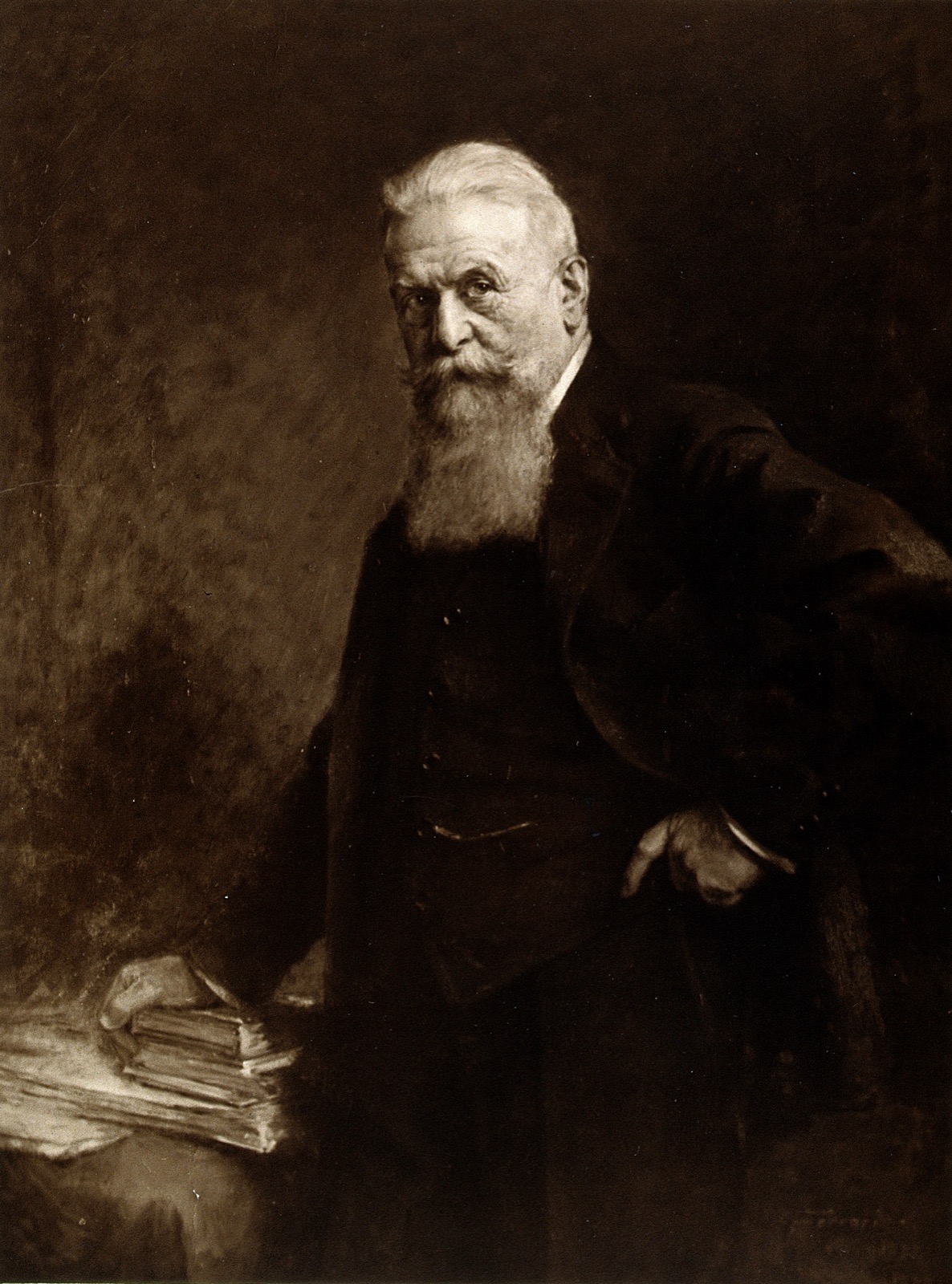
Eugen Steinach
"The operations were performed in the conviction that by the vasoligation the internal secretion of the puberty gland would be stimulated."
Eugen Steinach (28 January 1861 to 14 May 1944) was an Austrian physiologist born in Hohenems, County of Tyrol. He studied natural science at the University of Geneva and completed his medical degree at the University of Vienna in 1886. From 1912 he directed the physiological division of the Biologische Versuchsanstalt in Vienna’s Prater district. His experimental work in the 1900s and 1910s established that testicular interstitial cells are the source of male sex hormones, and he conducted sex-reversal experiments in rodents. The first human vasoligation performed on his theoretical basis occurred in 1918, conducted by Robert Lichtenstern. By the early 1920s the procedure had spread across Europe and, through American practitioners including Harry Benjamin and Charles H. Chetwood, to the United States.
Steinach’s scientific standing during the vasoligation era was ambiguous. He was under active Nobel Prize consideration between 1920 and 1938, nominated at least nine times, and the Nobel Committee judged aspects of his endocrinological research as potentially prizeworthy while ultimately withholding the award. His forced exile from Vienna in 1938 following the Nazi annexation of Austria ended his access to institutional platforms; he died in Territet, near Montreux, Switzerland, on 14 May 1944 at age 83.
The vasoligation procedure was abandoned from roughly 1935 onward as synthetic testosterone became available and no mechanistic evidence supported the claimed hormone shift. Steinach’s core physiological discoveries regarding interstitial cells and sex hormones remained valid contributions to endocrinology; his clinical extrapolation to vasoligation-as-rejuvenation did not survive evidentiary scrutiny.