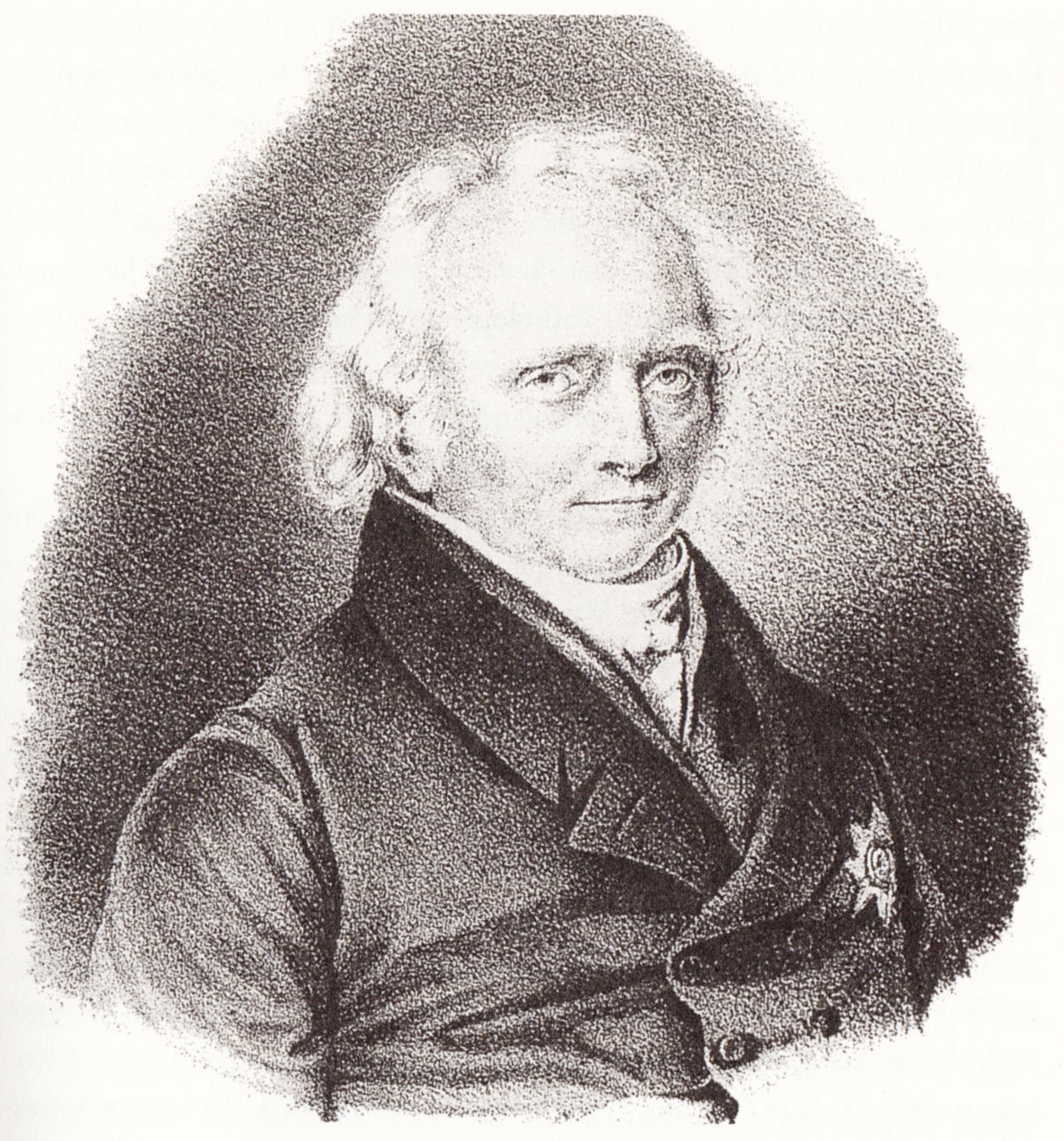
Christoph Wilhelm Hufeland
Christoph Wilhelm Hufeland (1762-1836) was born in Langensalza on 12 August 1762 and died in Berlin on 25 August 1836. He practised medicine at Weimar, where the Neue Deutsche Biographie records that he attended the leading figures of Weimar classicism (Wieland, Herder, Goethe, and Schiller) as their physician. In 1793 he was called to a professorship of medicine at Jena, and in 1801 he was called to Berlin as royal physician (Leibarzt) to the royal family, director of the Collegium Medicum, and first physician at the Charité, succeeding C.G. Selle; in 1810 he became professor of special pathology and therapeutics and the first dean of the medical faculty at the new Berlin university. He founded and edited the Journal der practischen Arzneykunde from 1795.
The publicly_disconfirmed status applies to the central mechanism of his longevity doctrine, the vital force (Lebenskraft), and not to his medical reputation in general, much of which endures. Hufeland is the founder of longevity medicine as a self-conscious medical project: his treatise Die Kunst, das menschliche Leben zu verlängern (Jena, 1797; retitled Makrobiotik from the third edition of 1805) gave the field its name and its program. The doctrine held that life is the operation of an innate vital power, that vital operation consumes that power, and that a regimen of moderation, sleep, exercise, clean air, and tranquillity retards the consumption and so prolongs life. The vital-force premise was a mechanism-only claim with no controlled-outcome support, and the vitalist framework was progressively displaced as mechanistic and physico-chemical physiology advanced (De Klerk 1979; Encyclopaedia Britannica, “Vitalism”). Hufeland’s own span (he died at 74) was good for his era but not extraordinary, and he made no controlled demonstration that the regimen extended life. What survived was a subset of the hygienic advice, which overlaps with later preventive medicine; what was disconfirmed was the vital-force mechanism on which the life-extension claim rested.